



Why vehicle radiator quality matters more than price
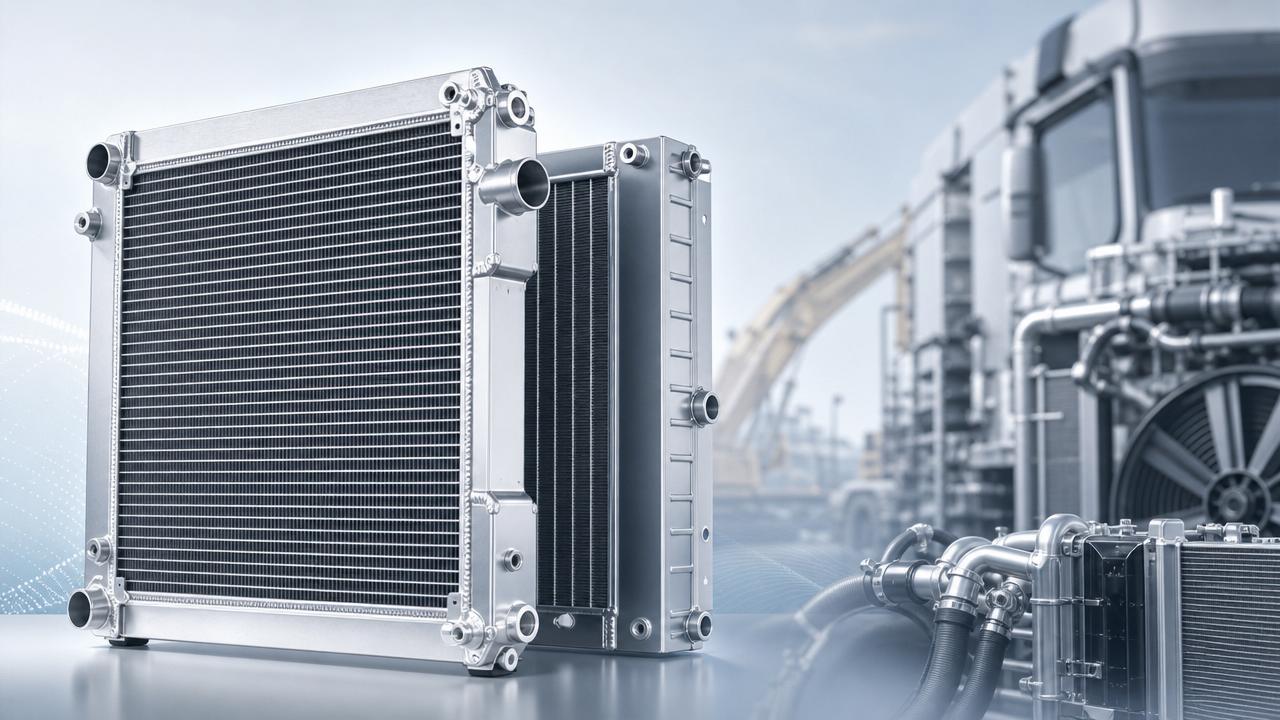
For procurement professionals, choosing a vehicle radiator based on price alone can lead to higher long-term costs, unstable supply, and performance risks. A high-quality vehicle radiator delivers better heat dissipation, durability, and compatibility for heavy trucks, construction machinery, and new energy applications. Understanding why quality matters more than upfront savings is essential for making reliable, cost-effective purchasing decisions.
Why does vehicle radiator quality directly affect procurement results?
A vehicle radiator is not a simple metal assembly. In the auto parts industry, it is a heat management component that protects engines, power systems, and surrounding parts from thermal stress.
For buyers, the real issue is not the unit price on a quotation sheet. The real issue is whether the radiator can maintain stable cooling performance under load, vibration, dust, temperature swings, and long operating hours.
When a low-cost vehicle radiator fails early, procurement teams face repeat purchasing, warranty disputes, delayed maintenance, and operational downtime. That chain reaction often costs much more than the original savings.
- Poor brazing quality can lead to leakage under pressure and thermal cycling.
- Low-grade raw materials can reduce corrosion resistance and shorten service life.
- Inaccurate dimensions may create installation problems, rework, and inventory mismatch.
- Weak thermal performance can increase overheating risk in heavy-duty or stop-and-go applications.
This is why experienced purchasing managers evaluate vehicle radiator quality as part of a total cost and risk control strategy, not just a line-item expense.
What quality means in practical procurement terms
Quality in a radiator purchase usually includes material consistency, core structure stability, heat transfer efficiency, sealing reliability, fitment accuracy, and supplier process control. These factors determine whether the part performs well beyond inspection day.
Price vs quality: where do hidden costs usually appear?
The following comparison helps procurement teams see how a low initial price may translate into a higher operating cost across the service cycle of a vehicle radiator.
For procurement personnel, the lesson is clear. If the application involves commercial fleets, construction machinery, or high-utilization vehicles, a cheaper vehicle radiator can quickly become the more expensive choice.
Why total cost matters more than invoice price
Total cost includes logistics, installation labor, claims management, emergency replacement, lost vehicle availability, and reputation risk. These costs rarely appear in supplier brochures, but they strongly influence real procurement performance.
Which technical indicators should buyers inspect before selecting a vehicle radiator?
Buyers often receive quotations that look similar. The practical difference usually appears in technical details. A structured review can reduce quality disputes and improve supplier comparison.
Core technical points worth checking
- Material grade: Aluminum quality influences corrosion resistance, weight, and long-term structural reliability.
- Tube and fin design: This affects airflow, heat rejection, and cooling performance in congested engine compartments.
- Brazing quality: Stable joining technology helps prevent cracks, weak seams, and coolant leakage.
- Pressure resistance: The product should match the actual operating environment and system requirements.
- Dimensional accuracy: Mounting points, inlet and outlet positions, and assembly tolerances must fit the target vehicle platform.
- Compatibility: The radiator should match heavy trucks, buses, machinery, or new energy systems without repeated modification.
These indicators help a procurement team move from price-based buying to specification-based buying. That shift improves consistency across batches and reduces after-sales friction.
The table below can be used as a practical vehicle radiator evaluation checklist during RFQ comparison or supplier audit discussions.
A supplier that answers these questions clearly is usually easier to work with in long-term sourcing programs. Technical transparency is often a stronger sign of reliability than a very low quote.
How do application scenarios change the quality requirements?
Not every vehicle radiator works equally well in every operating environment. Procurement should match quality requirements to the real duty cycle, not to generic catalog descriptions.
Typical use cases in the parts market
Heavy trucks need reliable thermal control during long-distance hauling, steep gradients, and frequent engine loading. Construction machinery may face dust, impact, vibration, and long idle periods followed by high thermal demand.
Public transportation fleets need dependable cooling because service interruptions affect route schedules and maintenance planning. New energy platforms also require precise heat management to support system stability and component life.
In this context, a specialized part such as Radiator for Ankai fits public transportation needs where optimal thermal management for both traditional diesel and new energy electric buses is important for reducing downtime and extending system life.
The following table shows how application conditions can change vehicle radiator selection priorities for procurement teams.
A buyer who understands application-specific risk is far more likely to select the right vehicle radiator the first time. That lowers claim rates and improves fleet or equipment availability.
What procurement mistakes make low prices risky?
Common misconceptions in radiator sourcing
- Assuming all vehicle radiator products with similar dimensions perform the same in real conditions.
- Comparing suppliers only by unit price without checking materials, joining process, or batch stability.
- Ignoring installation tolerance and focusing only on catalog photos or basic drawings.
- Underestimating lead time risk, especially when replacement demand is urgent or project schedules are fixed.
- Treating after-sales response as secondary, even though claims handling can consume significant internal resources.
In the parts business, the cheapest source can be costly when the radiator arrives with inconsistent welds, poor fitment, or unstable supply. Procurement success depends on evaluating product quality and supplier execution together.
How can buyers assess a radiator supplier beyond the quotation?
The quality of a vehicle radiator is tied closely to the capabilities of the manufacturer. Buyers should look at development speed, production focus, product range, and communication efficiency.
Liaocheng Xinde Auto Parts Co., Ltd., established in 2018 with a registered capital of 5 million RMB and a total investment of 50 million RMB, focuses on research, production, and global sales of water tank radiators, intercoolers, construction machinery radiators, and related components for heavy trucks and new energy radiator modules.
For procurement teams, this specialization matters. A supplier dedicated to radiator and thermal management components is generally better positioned to understand structure, compatibility, and performance requirements across commercial and industrial vehicle applications.
The company has also developed rapidly and received provincial and municipal honors including High-tech Enterprise, Civilized and Honest Enterprise, and Trustworthy Unit for Consumers. While buyers should still verify project-specific requirements, these recognitions support the image of a fast-growing and credibility-focused manufacturer.
Supplier review checklist for procurement teams
- Confirm product specialization in radiators, intercoolers, and related thermal assemblies.
- Ask for material, process, and fitment confirmation before volume purchase.
- Review whether the supplier can support heavy truck, machinery, and new energy applications.
- Check communication speed for sample development, drawing review, and delivery planning.
- Discuss claim handling, replacement response, and batch traceability in advance.
How does product design influence service life and downtime?
A high-quality vehicle radiator protects more than cooling efficiency. It supports uptime, maintenance planning, and asset life. Better thermal management reduces stress on engines, charge air systems, and adjacent components.
For bus and public transportation applications, premium-grade aluminum and advanced brazing technology are particularly valuable because they help balance heat rejection, structural stability, and operating continuity. This is one reason products like the Radiator for Ankai can be relevant when procurement requires durable thermal solutions for both diesel and electric bus platforms.
From a lifecycle perspective, longer radiator stability means fewer emergency replacements, fewer route interruptions, and better spare parts planning. Buyers should view this as measurable operational value, not merely a technical feature.
What standards and compliance points should buyers discuss?
Radiator procurement often involves application-specific drawings, pressure requirements, material expectations, and customer inspection standards. Even when no special certification is mandatory, clear compliance communication reduces sourcing risk.
Useful discussion points during sourcing
- Material consistency and traceability for incoming raw materials.
- Leak testing or pressure testing methods used before shipment.
- Drawing confirmation and sample approval procedure for fitment-sensitive parts.
- Packaging and transport protection to prevent fin damage and handling deformation.
- Change control communication if any material or process adjustment is planned.
These topics may seem basic, but they often separate a stable sourcing relationship from a problematic one. In the vehicle radiator business, process discipline is a major part of product quality.
FAQ: what do procurement teams usually ask about vehicle radiator selection?
How do I know if a higher-priced vehicle radiator is worth it?
Compare more than the quote. Review material quality, brazing process, thermal design, fitment accuracy, expected service life, and supplier responsiveness. If the product reduces failure risk and downtime, the higher initial cost may produce lower total ownership cost.
Which vehicle radiator applications are most sensitive to quality issues?
Heavy trucks, construction machinery, buses, and new energy platforms are all sensitive because they operate under demanding thermal conditions. Frequent load changes, vibration, dust, and route reliability requirements make radiator stability especially important.
What should I request before placing a bulk order?
Ask for drawing confirmation, material details, sample validation if needed, process overview, lead time information, and packaging details. For a vehicle radiator, these steps help prevent fitment disputes and performance complaints after delivery.
Is aluminum always the better choice?
Not always in every design context, but premium-grade aluminum is widely valued for heat transfer, lightweight characteristics, and corrosion performance. Buyers should still assess the full structure and process quality, not just the material label.
How can I reduce supply risk when sourcing radiators internationally?
Choose a supplier with clear specialization, stable communication, defined production capability, and experience in global sales. Confirm specification details early, align inspection expectations, and discuss delivery schedules before finalizing the purchase order.
Why choose us for vehicle radiator sourcing?
If your procurement target is long-term value instead of short-term price alone, working with a focused radiator manufacturer can simplify decision-making. Liaocheng Xinde Auto Parts Co., Ltd. concentrates on radiator-related product development and supply for heavy trucks, construction machinery, and new energy applications.
Our practical support can center on the issues buyers care about most: parameter confirmation, product selection, drawing review, application matching, delivery cycle discussion, sample support, and quotation communication for different order volumes.
If you are comparing vehicle radiator options for fleet maintenance, aftermarket distribution, OEM support, or project procurement, you can contact us with your application details. Share the target model, operating condition, quantity plan, and technical expectations, and we can help you evaluate suitable radiator solutions with a clearer balance between quality, cost, and supply reliability.