



What causes condenser leaks in daily vehicle use
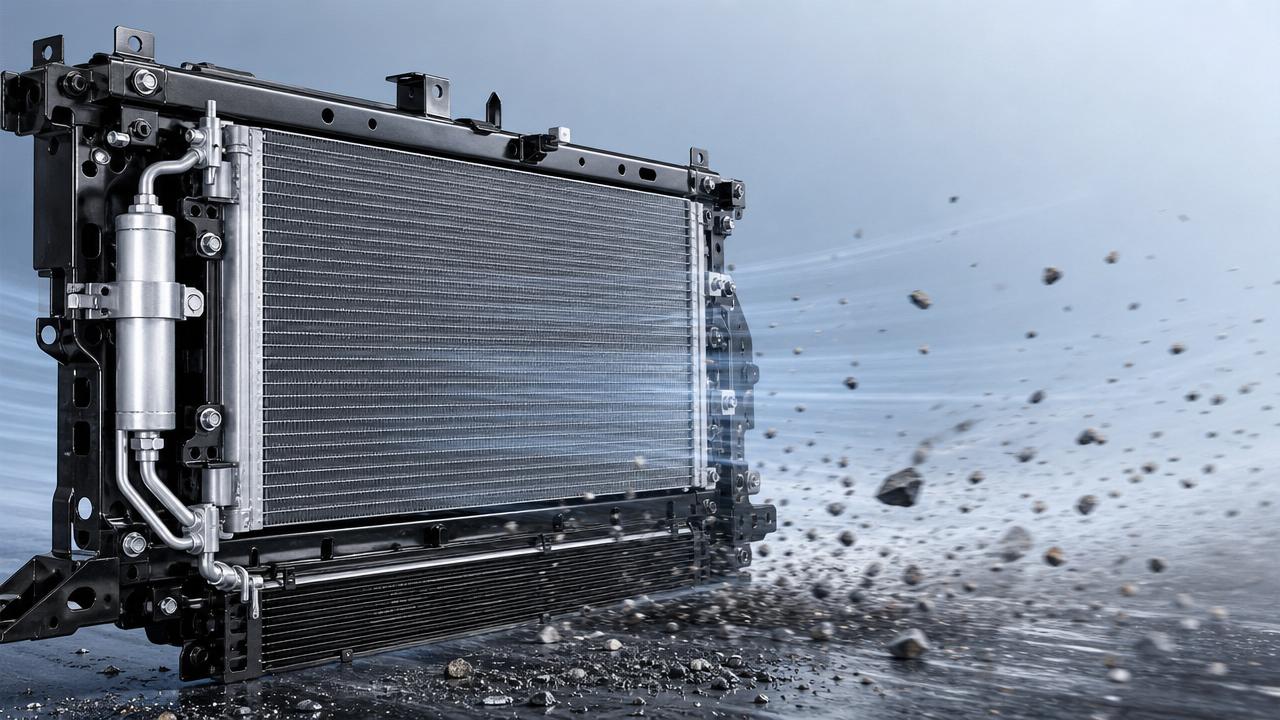
A leaking Condenser can quietly reduce cooling performance, raise repair costs, and signal deeper vehicle system issues. In daily driving, factors like road debris, vibration, corrosion, and poor maintenance often contribute to Condenser leaks over time. Understanding these common causes helps vehicle owners, fleet managers, and parts buyers identify problems early and make smarter maintenance and replacement decisions.
For information-focused buyers in the auto parts sector, Condenser leakage is not only a repair issue but also a sourcing and lifecycle question. A failed Condenser can affect cabin comfort, compressor load, refrigerant retention, and downtime planning, especially in heavy-duty transport and mixed fleet operations.
In the broader thermal management field, manufacturers such as Liaocheng Xinde Auto Parts Co., Ltd. focus on radiators, intercoolers, construction machinery radiators, and related cooling components for heavy trucks and new energy radiator modules. That industry background matters because Condenser durability is closely linked to material choice, brazing quality, tube strength, fin density, and application matching.
Why Condenser leaks develop during normal vehicle use
A Condenser sits near the front of the vehicle, where it faces airflow, road impact, moisture, and temperature cycling every day. In many passenger and commercial vehicles, this component operates under repeated pressure changes and ambient temperatures ranging from below 0°C in winter to above 40°C in summer.
Because of that location and duty cycle, leaks usually begin as small weaknesses rather than sudden large failures. Pinholes, seam fatigue, tube cracks, header damage, and joint failure are the most common patterns. In practice, a leak may start with only a slow refrigerant loss over 2 to 8 weeks before performance drops become obvious.
Road debris and stone impact
Front-mounted Condenser cores are vulnerable to stones, gravel, broken tire fragments, and metal debris. At highway speeds of 60 to 100 km/h, even small particles can bend fins or puncture thin tubes. Repeated impact weakens localized areas and may create leaks that are difficult to detect during a quick visual check.
Vehicles used on construction roads, mining routes, or unpaved logistics corridors face a higher risk. Heavy trucks and work vehicles can accumulate fin damage faster than city-use cars, especially when protective grilles are missing or airflow openings are oversized.
Vibration, mounting stress, and frame movement
Not all Condenser leaks come from direct impact. Daily vibration from engine operation, road irregularities, braking, and chassis flex can gradually stress brazed joints and tube connections. After thousands of kilometers, small alignment errors in brackets or mounts can transfer load into the core.
This is especially relevant in commercial vehicles that carry variable loads. A unit running 8 to 12 hours per day on mixed roads may see much more structural movement than a private vehicle. If rubber mounts harden or fasteners loosen, the Condenser can experience concentrated stress at 2 or 3 repeated contact points.
Corrosion from moisture, salt, and contaminants
Corrosion is another frequent cause of Condenser leakage. Water, road salt, mud, insect residue, and chemical cleaner deposits can collect between fins and tubes. Over time, these contaminants trap moisture and accelerate surface breakdown, particularly in coastal regions or winter road-salt environments.
Galvanic effects may also contribute when dissimilar metals, damaged coatings, or contaminated fittings are present. In fleets exposed to seasonal de-icing salt for 3 to 5 months each year, corrosion risk rises noticeably if washing intervals are too long.
The table below shows how common daily-use factors affect Condenser leak risk and what buyers or maintenance teams should watch for.
The main takeaway is that Condenser leakage is usually cumulative. One impact event can start the weakness, but vibration, contamination, and delayed inspection often turn a minor defect into a replacement issue.
Operational and maintenance mistakes that accelerate Condenser failure
Daily use alone does not explain every Condenser leak. In many cases, service practices and operating conditions shorten component life. A unit designed to perform reliably for years can fail early if airflow is restricted, system pressure is unstable, or the wrong maintenance method damages the core.
Blocked airflow and rising system pressure
When dirt, bugs, leaves, or mud clog the Condenser surface, heat rejection drops. That increases operating pressure and thermal stress. Under high ambient conditions, especially above 35°C, the system may run longer cycles and place extra load on weakened areas of the Condenser.
For vehicles in dusty logistics zones or construction fleets, a cleaning interval of every 2 to 4 weeks may be more realistic than waiting for seasonal service. Delayed cleaning not only reduces cooling but also increases the chance that hidden corrosion will spread.
Improper cleaning tools and harsh chemicals
A Condenser can be damaged during maintenance. High-pressure water applied at the wrong angle can flatten fins and reduce airflow. Strong alkaline cleaners or incompatible chemical agents may strip protective surfaces, leaving aluminum more exposed to corrosion.
Best practice is to use moderate pressure, controlled spray distance, and cleaning agents suitable for heat exchanger surfaces. In many workshops, avoiding direct close-range pressure within 10 to 15 cm of the fin face can reduce accidental deformation.
Overcharging refrigerant or ignoring pressure imbalance
A Condenser is not isolated from the rest of the air-conditioning circuit. If the system is overcharged, contaminated, or affected by compressor issues, pressure spikes can stress the core and fittings. Leaks that appear to be “material defects” sometimes trace back to charging errors or unstable operating conditions.
This is why informed buyers often review not only the Condenser itself but also the service process around installation, vacuuming, leak testing, and refrigerant charging. Skipping 1 of these 4 steps can reduce the value of even a well-made replacement part.
Three common maintenance misconceptions
- Assuming weak cooling always means low refrigerant, without checking for Condenser damage.
- Cleaning only the visible front surface while leaving packed debris between layers.
- Replacing the Condenser but reusing damaged mounts, worn seals, or contaminated lines.
For buyers evaluating replacement quality, adjacent thermal components also matter. In heavy-duty applications, stable cooling system design across the radiator and charge-air path supports overall reliability. For example, a truck operator reviewing core build and fitment may also compare products such as RADIATOR FOR SCANIA , model 1776026, sized 860*928*40, when planning broader front-end cooling module maintenance.
How to identify a leaking Condenser early
Early identification lowers repair cost and reduces unexpected downtime. A slow Condenser leak often shows indirect symptoms first, not a dramatic failure. For information researchers and procurement teams, knowing these signs helps distinguish between routine service needs and component replacement planning.
Visible and performance-related warning signs
Drivers may notice weaker cabin cooling, longer pull-down time, or unstable vent temperature during idle. Technicians may observe oily residue on the core, UV dye traces, or pressure decay during testing. In some vehicles, cooling at speed still feels acceptable while idle performance drops first.
That pattern matters because airflow can temporarily mask Condenser inefficiency. A small leak may not become obvious until the refrigerant charge falls below an effective threshold. Depending on climate and vehicle use, that can happen over several days or several months.
A practical 6-point inspection routine
The following checklist gives fleet managers and workshop teams a structured way to assess Condenser condition during routine service or pre-replacement evaluation.
This type of checklist improves decision quality. It helps buyers avoid replacing the wrong part and helps maintenance teams decide whether cleaning, mounting correction, or full Condenser replacement is the most cost-effective response.
What buyers should evaluate when sourcing a replacement Condenser
Once leakage is confirmed, the next question is not simply price. For B2B buyers, a replacement Condenser should be evaluated on fitment accuracy, material consistency, durability under vibration, and supply reliability. A lower initial cost can become more expensive if failure returns within one service cycle.
Core technical factors
Tube structure, fin spacing, brazing quality, header strength, and anti-corrosion treatment all affect service life. Dimensional tolerance also matters. Even small mounting deviation can create installation stress, while poor fin geometry can reduce airflow and raise operating pressure.
In commercial procurement, buyers often compare at least 4 dimensions: material quality, production stability, delivery lead time, and after-sales technical support. If the application includes heavy trucks or demanding road conditions, vibration resistance should be discussed before ordering.
Supplier capability and consistency
A capable manufacturer should be able to explain product application range, inspection checkpoints, packing method, and replacement compatibility. Companies active in the thermal management segment, including radiator and intercooler production, are often better positioned to understand front-end cooling module interaction rather than treating the Condenser as an isolated spare part.
Liaocheng Xinde Auto Parts Co., Ltd., established in 2018 with registered capital of 5 million RMB and total investment of 50 million RMB, operates in this broader cooling-parts field. Its business focus on radiators, intercoolers, construction machinery radiators, and related components for heavy trucks and new energy radiator modules reflects the kind of manufacturing background many B2B buyers look for when assessing supplier specialization.
A practical sourcing checklist
- Confirm OE or application matching, including mounting points and connection layout.
- Check whether the core is suited to the vehicle’s duty cycle and airflow environment.
- Review corrosion-resistance considerations for coastal, winter-salt, or high-dust regions.
- Ask about inspection procedures for leakage, pressure holding, and dimensional consistency.
- Evaluate packaging and transport protection, since front-end heat exchangers are impact-sensitive.
For fleets maintaining several thermal components at once, it can be efficient to review Condenser and radiator procurement together. In some replacement programs, buyers compare Condenser specifications alongside truck cooling parts such as RADIATOR FOR SCANIA to simplify sourcing, compatibility review, and shipment planning.
Reducing future Condenser leak risk in real operating environments
The best long-term result comes from combining correct part selection with preventive maintenance. In daily vehicle use, even a quality Condenser needs protection from recurring impact, blocked airflow, and mounting fatigue. Small process improvements can significantly reduce repeat failures.
Preventive steps for vehicle owners and fleet teams
- Inspect the front cooling stack every 30 to 45 days in dusty or gravel-heavy operations.
- Wash off salt, mud, and trapped debris before corrosion spreads into tube areas.
- Replace damaged brackets, isolators, and seals during Condenser service, not later.
- Use leak testing and controlled charging procedures after installation.
- Record repeat refrigerant loss events to identify patterns before major failure occurs.
When replacement is better than repair
Minor external damage does not always require immediate replacement, but widespread corrosion, multiple puncture points, or seam fatigue often make repair uneconomical. If more than one leak zone is present or if the core has severe fin collapse across a broad area, replacement usually offers better reliability.
This is particularly true for commercial vehicles where downtime costs exceed part price. A lower-risk maintenance decision is often to replace the weakened Condenser and inspect the full cooling stack at the same service interval.
Condenser leaks in daily vehicle use are most often caused by a combination of front-end exposure, vibration, corrosion, pressure stress, and maintenance gaps rather than a single isolated event. Buyers who understand these mechanisms can diagnose problems earlier, choose replacement parts more carefully, and reduce repeat failures across passenger, commercial, and heavy-duty applications.
If you are evaluating cooling-system components for trucks, machinery, or fleet maintenance programs, a supplier with experience in radiators, intercoolers, and related heat-exchange parts can provide more practical application guidance. Contact us now to discuss product details, request a tailored solution, or learn more about reliable cooling component options for your market.