



Why radiator core materials can change product lifespan
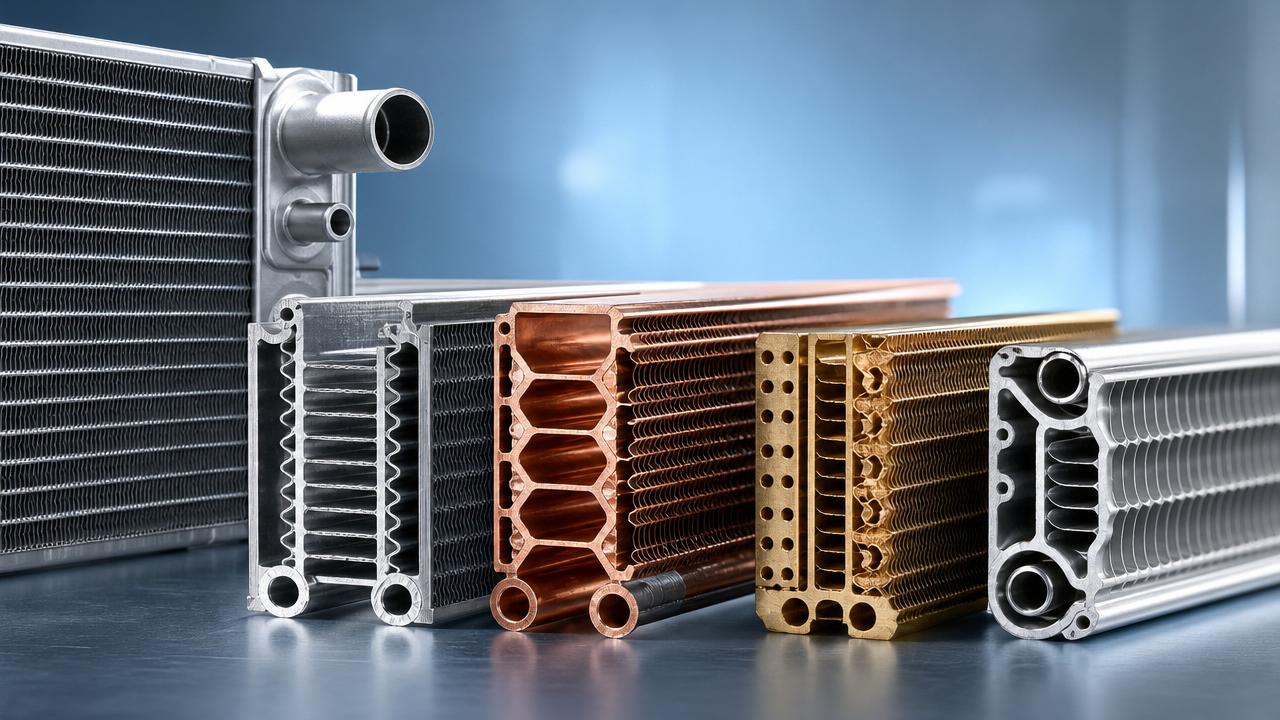
For quality control and safety managers, the choice of radiator core material is more than a cost decision—it directly affects durability, heat transfer efficiency, and operational reliability.
Different radiator core materials respond differently to pressure, corrosion, vibration, and temperature cycles, which can significantly influence product lifespan.
Understanding these material differences is essential for reducing failure risks and ensuring consistent performance in demanding automotive and heavy-duty applications.
Understanding radiator core material and lifespan
A radiator core is the heat exchange center of the full cooling assembly.
It usually includes tubes, fins, headers, and joining points that move heat from coolant to ambient air.
When discussing radiator core performance, material choice shapes both thermal behavior and mechanical stability over time.
In parts manufacturing, the most common radiator core materials are aluminum, copper-brass, and hybrid structures.
Each option offers a different balance of weight, conductivity, brazing quality, corrosion resistance, and repairability.
Product lifespan depends on more than initial heat transfer.
A radiator core must survive road shock, coolant chemistry changes, pressure pulses, and repeated hot-cold cycling.
If the material cannot tolerate these stresses, leaks, fin collapse, joint cracking, or efficiency loss may appear early.
Why radiator core materials attract industry attention
The cooling system now operates under tougher conditions than in earlier vehicle generations.
Heavy trucks, construction machinery, and new energy platforms all demand compact, efficient, and durable thermal management parts.
This has made radiator core selection a strategic issue across the auto parts sector.
- Higher operating temperatures increase thermal fatigue risk.
- Lightweight vehicle design favors thinner and lighter radiator core structures.
- Longer service intervals raise the importance of corrosion resistance.
- Rough duty cycles create more vibration and pressure stress.
- Global supply decisions require stable quality across production batches.
Liaocheng Xinde Auto Parts Co., Ltd. focuses on radiators, intercoolers, and heavy-duty cooling modules for global applications.
Its development path reflects the wider market trend toward stronger process control, better materials, and more durable cooling components.
How different radiator core materials influence service life
Aluminum radiator core structures
Aluminum is widely used because it is light, cost-efficient, and suitable for modern brazed core manufacturing.
A well-made aluminum radiator core can deliver strong heat dissipation with lower total vehicle weight.
Its lifespan depends heavily on brazing quality, alloy control, wall thickness, and coolant compatibility.
Poorly controlled aluminum cores may fail through pitting corrosion, seam weakness, or stress cracking at tube joints.
Copper-brass radiator core structures
Copper-brass designs have long been valued for repairability and thermal conductivity.
In some demanding environments, this radiator core type still performs well where service repair access matters.
However, it is heavier and may be less suitable for systems seeking strict mass reduction.
Its long-term lifespan also depends on solder joint integrity and protection from corrosive contamination.
Hybrid and application-specific core designs
Some applications use mixed material strategies or specialized coatings to balance durability and efficiency.
In these cases, the radiator core is designed around operating pressure, airflow limitation, and installation space.
The best material is not universal.
It should match real service conditions rather than only laboratory thermal ratings.
Key lifespan factors linked to radiator core selection
These factors show why a radiator core cannot be judged by raw material price alone.
A lower-cost material may create higher lifecycle cost if downtime, leakage, or replacement frequency rises.
Application value across automotive and heavy-duty parts
Material selection affects reliability in passenger vehicles, trucks, off-road machines, and new energy cooling modules.
A radiator core for urban delivery use may prioritize weight and fuel efficiency.
A radiator core for mining or construction duty may prioritize structural durability and contamination tolerance.
- Passenger vehicles: compact packaging and stable thermal efficiency.
- Heavy trucks: strong anti-vibration performance and long route reliability.
- Construction machinery: resistance to dust, shock, and high load cycles.
- New energy systems: precise heat control and module integration.
This is also why product matching matters.
For example, a properly specified Radiator for HONDA should align material design with actual cooling loads, vibration conditions, and service expectations.
Typical material choices by operating scenario
Practical evaluation points before finalizing a radiator core
Several checks help reduce lifespan uncertainty before volume production or replacement sourcing.
- Review alloy grade, tube thickness, and fin design consistency.
- Verify brazing or soldering quality through pressure and leak testing.
- Assess corrosion performance using coolant and salt exposure simulations.
- Check vibration endurance under realistic installation conditions.
- Compare lifespan expectations with total maintenance cost, not only purchase price.
It is also useful to compare sample products from the same category.
If one Radiator for HONDA shows better joint finish, coating stability, and airflow design, lifespan often improves accordingly.
Material choice as a long-term reliability decision
The radiator core is a small part with a major influence on system reliability.
Its material determines how well the product handles heat, pressure, corrosion, and daily operating shock.
Choosing the right radiator core material supports longer service life, fewer failures, and more stable cooling performance.
A careful review of operating environment, manufacturing quality, and maintenance conditions leads to better outcomes than price comparison alone.
The next practical step is to evaluate current radiator core specifications against real duty cycles, then confirm whether material upgrades can reduce lifecycle risk.