



Radiator module integration can simplify service planning
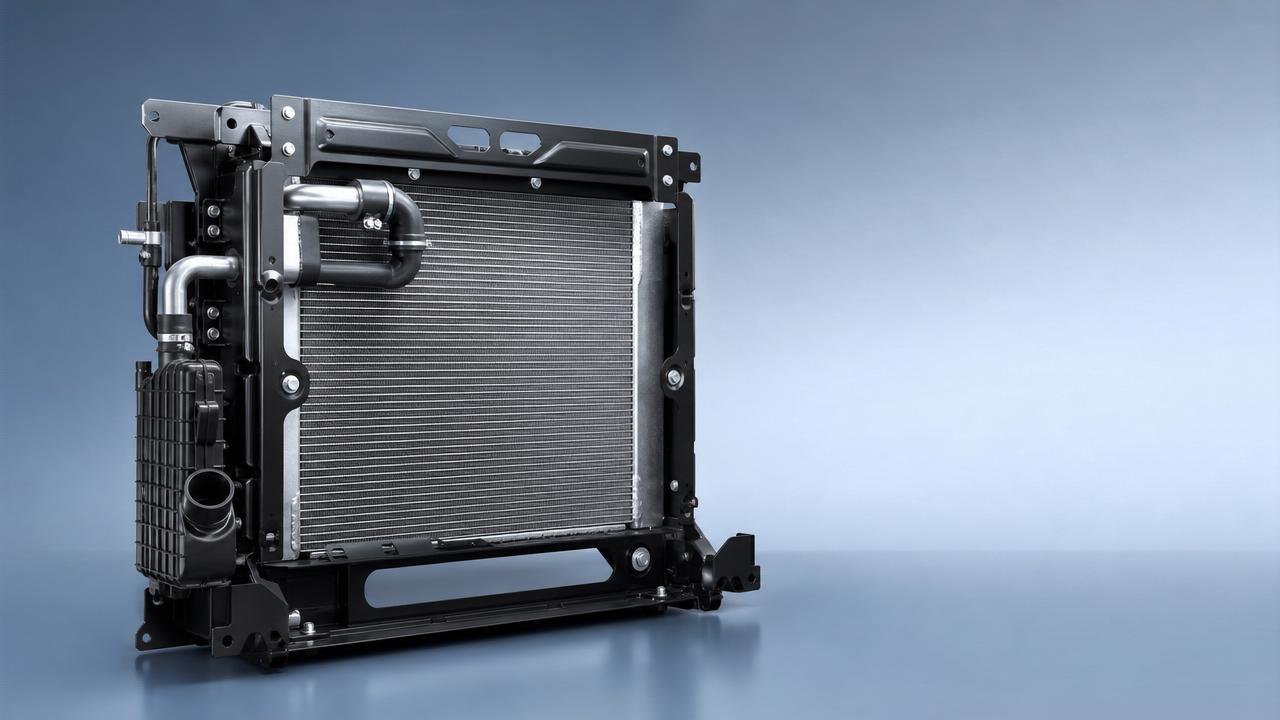
For project managers and engineering leads, every maintenance decision affects uptime, cost, and delivery schedules. A well-designed radiator module can simplify service planning by improving component integration, reducing replacement complexity, and supporting faster diagnostics in heavy-duty and new energy applications. Understanding how modular cooling systems work is essential for choosing reliable parts and building more efficient maintenance strategies.
Why does a radiator module matter so much in service planning?
In the parts industry, cooling performance is not only an engineering issue. It is also a planning issue. When a radiator module is designed as an integrated unit, project teams can predict maintenance windows more accurately, reduce field labor, and avoid fragmented sourcing.
For heavy trucks, construction machinery, and new energy vehicles, cooling systems often work under variable load, vibration, dust, and temperature stress. In such environments, a radiator module that combines key cooling elements in a logical service layout helps maintenance teams inspect, diagnose, and replace parts faster.
This matters to engineering leads who must balance performance, budget, spare parts availability, and delivery risk. A modular cooling system can reduce the number of disconnected decisions across procurement, installation, and after-sales support.
- It shortens service path analysis because interfaces are grouped instead of scattered across separate assemblies.
- It improves maintenance predictability because component compatibility is addressed earlier in the design and sourcing process.
- It helps control downtime because technicians can isolate cooling issues with fewer removal steps.
- It supports lifecycle cost management because replacement planning becomes more standardized across fleets or projects.
What is usually included in a radiator module?
The exact configuration depends on vehicle type and thermal load, but a radiator module often involves the radiator core, tanks, brackets, airflow structure, mounting points, and in some cases intercooling or auxiliary thermal components. For project managers, the key question is not only what is included, but how well those parts work together during service.
Which service pain points can modular cooling design solve?
A radiator module directly affects several operational bottlenecks. If service planning is difficult, the problem is often not a single failed part. It is poor integration between components, unclear access, uncertain interchangeability, or unstable supply of matching parts.
The table below connects common project-side maintenance problems with modular design responses. It can help engineering teams evaluate whether a cooling assembly will simplify future service work or create hidden complexity.
For project leaders, the biggest advantage is not simply replacing one part with one module. It is creating a maintenance structure that is easier to standardize, train, document, and budget across multiple assets.
Why do hidden service costs often come from poor integration?
When cooling components are sourced separately, the engineering burden moves downstream. Teams must verify mounting fit, airflow path, hose routing, vibration tolerance, and operating compatibility. Those checks consume time, and if overlooked, they usually reappear later as rework, leakage, heat imbalance, or delayed commissioning.
How should project managers compare integrated and non-integrated cooling solutions?
A radiator module is not always the lowest line-item purchase. However, total project value is rarely determined by unit price alone. A useful comparison should include installation effort, service accessibility, replacement path, and long-term parts coordination.
The following comparison table highlights decision factors that matter in procurement reviews, especially for heavy-duty fleets, construction equipment, and new energy platforms where downtime is expensive.
This comparison shows why many engineering teams adopt a radiator module even when the initial quote looks higher. Less rework, faster service, and fewer compatibility disputes often produce better total lifecycle economics.
What technical details should be checked before selecting a radiator module?
Selection should start from application demands, not catalog convenience. For project managers, technical review must connect operating conditions with service strategy. A cooling assembly that looks adequate on paper may still create problems if the service path is poor or if parts replacement requires unnecessary disassembly.
Key evaluation points
- Thermal load range: Confirm the expected working temperature, engine or system load, and duty cycle rather than relying on nominal compatibility.
- Core structure and material suitability: Review resistance to vibration, corrosion exposure, and operating environment such as dust, mud, or urban stop-start heat accumulation.
- Mounting and dimensional fit: Check bracket positions, inlet and outlet layout, surrounding clearance, and access space for future removal.
- System integration logic: Understand whether the radiator module supports clean airflow management and reasonable coordination with intercooling or other thermal components.
- Serviceability: Ask how long routine inspection or replacement typically takes and which adjacent parts must be removed first.
These checks are especially important in cross-border sourcing, where dimensional mismatch or unclear documentation can delay production or maintenance plans. A capable supplier should be able to discuss fitment logic and service implications, not only product availability.
Application-specific thinking
Heavy trucks demand durability under long-distance load and thermal cycling. Construction machinery needs stronger tolerance to dust, impact, and idle-to-load temperature swings. New energy applications require more attention to compact packaging and thermal consistency. In all three cases, a radiator module should be assessed as a service system, not a stand-alone part.
How can sourcing teams reduce procurement risk in the parts industry?
Procurement risk in cooling components usually comes from unstable supply, inconsistent workmanship, vague technical communication, or weak after-sales response. Project managers need a supplier that can support both specification review and practical service planning.
Liaocheng Xinde Auto Parts Co., Ltd., established in 2018 with registered capital of 5 million RMB and total investment of 50 million RMB, focuses on the research, production, and global sales of water tank radiators, intercoolers, construction machinery radiators, related heavy truck components, and new energy radiator modules. For buyers, that specialization matters because it aligns manufacturing capability with real thermal management applications.
The company’s rapid development and recognition at provincial and municipal level, including honors such as High-tech Enterprise, Civilized and Honest Enterprise, and Trustworthy Unit for Consumers, suggest an operating model built around manufacturing discipline and market responsiveness. For engineering buyers, that is relevant when evaluating continuity, communication quality, and supply-side reliability.
A practical supplier screening checklist
- Verify whether the supplier understands your application category, such as heavy truck, construction machinery, or new energy thermal systems.
- Ask for dimensional confirmation and interface details before discussing price alone.
- Review how the radiator module supports replacement planning, spare parts stocking, and fault diagnosis.
- Clarify lead time, sample support, packaging method, and export communication process.
- Check whether the supplier can discuss common field failures and propose preventive measures.
Which procurement factors influence cost more than unit price?
When teams compare quotations, they often focus first on piece price. Yet in service-heavy applications, the more important cost drivers are installation time, downtime exposure, parts mismatch, and replacement frequency. A radiator module can improve the cost profile if it lowers those hidden expenses.
The cost-oriented table below helps project managers discuss purchasing decisions in total-value terms rather than using a narrow price comparison.
A lower quote may still become the more expensive option if installation takes longer, field troubleshooting is slower, or replacement components do not align with the original service plan. That is why a radiator module should be reviewed as a cost-control tool, not just a purchased item.
What common mistakes do engineering teams make when choosing a radiator module?
Many avoidable failures begin during specification and sourcing. The part may be technically usable, but not operationally efficient. For project managers, the following mistakes often create downstream service problems.
- Choosing by reference model only, without confirming actual thermal duty and mounting environment.
- Ignoring maintenance access, which increases future labor even if initial installation seems acceptable.
- Separating procurement from engineering review, leading to mismatch between quote compliance and real-world use.
- Assuming any modular product automatically improves service. In reality, layout quality and fitment discipline still matter.
- Underestimating lead time impact when spare parts for cooling components are not standardized early.
In some replacement programs, teams may also review application-specific items such as radiator for benz when platform compatibility and service availability are part of the maintenance strategy. The key is to judge the part by fitment, cooling duty, and service pathway rather than marketing language.
FAQ: what do buyers and project leads usually ask?
How do I know if a radiator module is suitable for heavy-duty use?
Start with operating load, thermal cycling frequency, vibration level, and contamination exposure. Then check whether the module layout supports durable mounting and practical maintenance access. Heavy-duty suitability is not just about material selection. It is also about whether service can be performed without excessive disassembly.
What should be confirmed before requesting a quotation?
Provide application scenario, core dimensions if available, inlet and outlet orientation, mounting method, expected operating conditions, and any service constraints. If the radiator module will be used in fleet maintenance or project-based replacement, also state desired delivery timing and spare parts planning expectations.
Is a radiator module always better than separate parts?
Not always. The better choice depends on service objectives. If your project values faster maintenance, simpler stock management, and reduced fitment risk, an integrated radiator module often performs better. If the system is highly customized and service access is already optimized, separate parts may still be workable.
How important is supplier specialization in cooling components?
It is very important because thermal systems are sensitive to application detail. A focused manufacturer is usually better prepared to discuss radiator layout, intercooling coordination, heavy truck duty, and new energy cooling demands. That level of discussion helps procurement teams avoid specification gaps.
Why choose us for radiator module planning and supply?
For project managers and engineering leads, the value of cooperation lies in clarity and execution. Liaocheng Xinde Auto Parts Co., Ltd. focuses on radiator-related parts including water tank radiators, intercoolers, construction machinery radiators, heavy truck cooling components, and new energy radiator modules. This specialization supports more practical communication on application fit, replacement logic, and sourcing stability.
If you are evaluating a radiator module for a heavy truck platform, machinery project, or new energy cooling application, you can discuss specific needs such as parameter confirmation, model matching, delivery cycle, sample support, customization direction, packaging requirements, and quotation details. If your project also involves targeted replacement demand such as a second review of radiator for benz, application data can be checked against service planning goals.
A good cooling solution should not stop at the product drawing. It should make maintenance easier, procurement safer, and delivery planning more predictable. That is exactly why the right radiator module deserves early technical review and direct supplier discussion.