



Why an Agricultural Radiator Clogs Faster in Dusty Fields
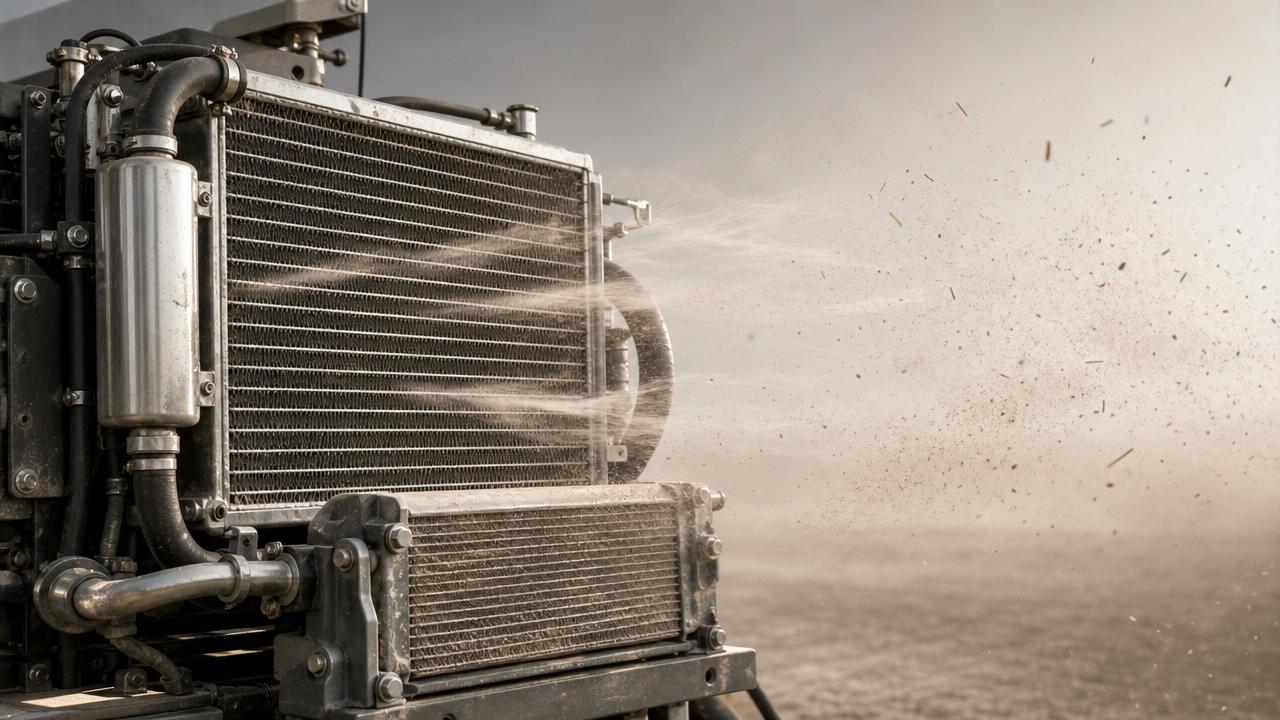
Why an Agriculturaal radiator clogs faster in dusty field conditions
In dusty fields, an Agriculturaal radiator can clog much faster than many operators expect, reducing cooling efficiency and putting engines under extra stress.
Fine chaff, soil, and crop debris easily build up on the core, especially during long working hours in harsh conditions.
Understanding why this happens is the first step to preventing overheating, cutting downtime, and keeping agricultural machinery running reliably when performance matters most.
For parts-intensive equipment, cooling performance is not only about engine temperature. It also affects fuel efficiency, maintenance intervals, and the working stability of core components.
Liaocheng Xinde Auto Parts Co., Ltd. focuses on radiator, intercooler, and heavy-duty cooling component development, combining research, production, and global sales for demanding applications.
Field environment judgment: not all dust loads affect an Agriculturaal radiator the same way
A dry wheat field and a loose soil harvesting area create very different blockage patterns. The same machine may face completely different cooling risks within one season.
An Agriculturaal radiator often clogs fastest when fine dust mixes with plant fibers. This combination creates a mat across the fins instead of a loose layer.
Operators usually notice rising temperature first. However, the earlier warning sign is reduced airflow through the radiator pack, especially under full engine load.
Key field variables that change clogging speed
- Crop residue density around the machine
- Soil dryness and particle fineness
- Crosswind direction against fan intake
- Engine load duration during peak work
- Radiator fin spacing and core design
Typical application scenario 1: harvesting dry crops with floating chaff
During grain harvesting, lightweight chaff stays airborne for long periods. Cooling fans pull this material directly toward the radiator surface.
In this scenario, an Agriculturaal radiator does not fail because of mud or liquid contamination. It fails because fibrous debris forms an insulating blanket.
Once the outer fin layer is covered, more dust sticks to it. Heat rejection drops quickly even if coolant quality remains normal.
Core judgment points in dry harvest work
- Temperature rises mainly during long steady runs
- Debris appears dry, soft, and layered on the face
- Cleaning restores airflow immediately
Typical application scenario 2: tillage and soil preparation in loose, dusty ground
Tillage generates dense fine dust. Unlike chaff, these particles are smaller and can settle deeper between fins and adjacent cooling modules.
An Agriculturaal radiator in soil preparation work often clogs from the inside of the cooling pack outward. Surface cleaning alone may not remove the compacted material.
This condition becomes worse when oil mist or moisture is present. Dust sticks harder and forms a stubborn layer with lower air permeability.
Core judgment points in soil-heavy work
- Dust is fine, dense, and evenly packed
- Temperature increases even after quick blowing
- Multiple coolers may trap material together
Typical application scenario 3: mixed operations with long daily working hours
Some machines move between transport, harvesting, idling, and field turning. This changing duty cycle creates uneven heat load and repeated debris accumulation.
In mixed operations, an Agriculturaal radiator may seem acceptable in the morning but become restricted by late afternoon. Time under load matters as much as field type.
Machines with compact engine bays are especially vulnerable. Restricted service space also makes routine cleaning less effective if performed too late.
Why the cooling pack design changes blockage behavior
Radiator clogging is not caused by debris alone. Structural details strongly influence how fast particles settle, bond, and block airflow paths.
A high-efficiency core can improve heat transfer, but smaller passages may capture more contamination in severe field conditions.
The arrangement of radiator, intercooler, condenser, and oil cooler also matters. Front modules often trap debris before airflow reaches the rear core.
In heavy-duty cooling applications, robust engineering similar to RADIATORS FOR SCANIA shows how size, core thickness, and airflow path affect service performance.
Different scenarios, different cooling needs
Scenario-based advice to reduce Agriculturaal radiator blockage
Use inspection points that match the field
- Check the radiator face every few hours in chaff-heavy harvesting
- Inspect between cooling layers in dusty tillage conditions
- Monitor temperature trend, not only peak temperature
Match cleaning method to contamination type
- Dry fibrous debris often responds well to low-pressure air cleaning
- Packed dust may require deeper access and careful reverse-direction cleaning
- Avoid aggressive methods that bend fins and reduce airflow permanently
Choose cooling parts with realistic field tolerance
When selecting replacement parts, consider operating environment, core layout, and maintenance access, not only basic fitment.
For reference, some heavy-duty designs use dimensions such as 970*760*56 and models like OEM 1100631 or 64072 to balance cooling area and installation needs.
Common misjudgments that shorten Agriculturaal radiator service life
One common mistake is assuming coolant problems are always responsible for overheating. In dusty agriculture, blocked airflow is often the first real cause.
Another error is cleaning only the visible front surface. Dust can sit between modules where airflow loss remains severe.
A third misjudgment is waiting until alarms appear. By then, the Agriculturaal radiator may already have reduced engine efficiency for many working hours.
Some also choose a replacement core based only on price. Poor fin durability or unsuitable structure can increase clogging frequency and maintenance burden.
Action steps for better cooling reliability in dusty fields
Start by identifying the dominant contaminant in each working scenario. Chaff, fine soil, and mixed residue require different inspection and cleaning routines.
Create a simple service schedule tied to field hours, not just calendar dates. This approach works better for seasonal agricultural equipment.
Review whether the current cooling module design supports the actual environment. Access, fin protection, and pack arrangement all influence long-term results.
For demanding heavy-duty cooling applications, studying proven component solutions such as RADIATORS FOR SCANIA can help evaluate structure, durability, and thermal capacity.
A cleaner Agriculturaal radiator means more stable temperature control, fewer shutdowns, and better protection for valuable powertrain parts in extreme field conditions.