



Why agricultural radiator makers are drawing attention
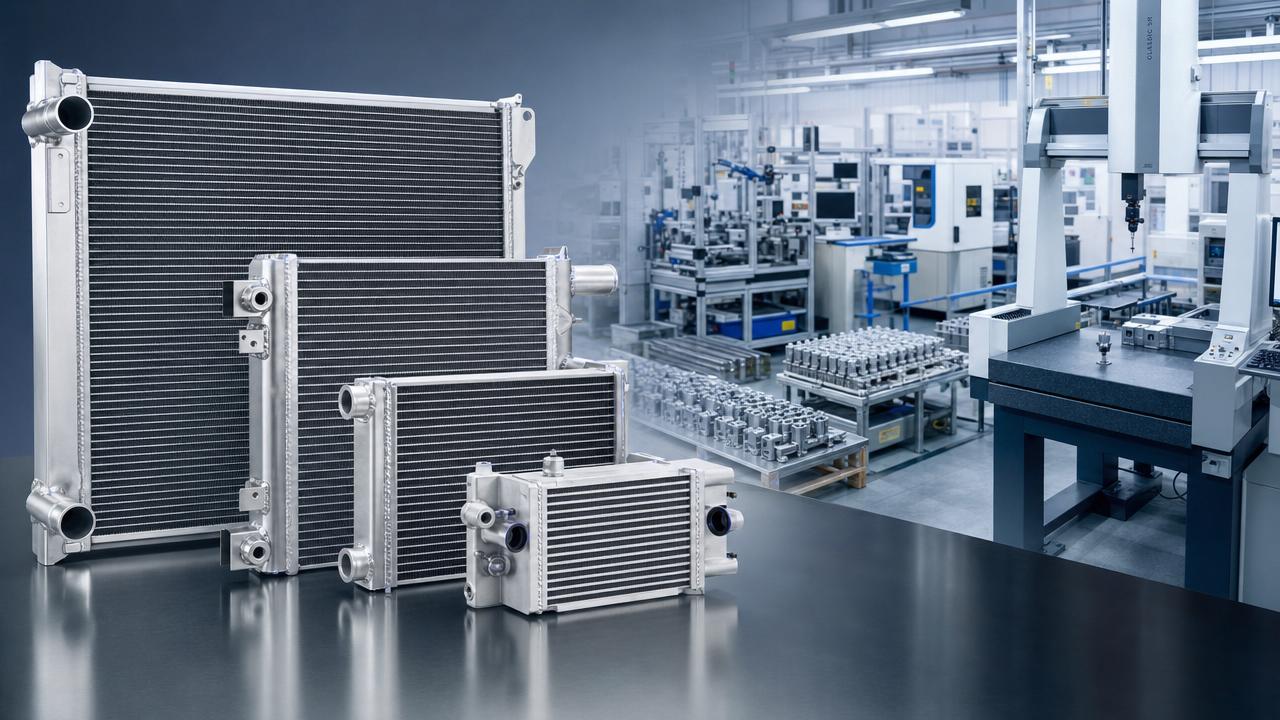
Why are Agriculturaal radiator manufacturers attracting more attention from business evaluators? As global demand rises for durable cooling systems in heavy-duty and agricultural equipment, buyers are focusing on suppliers with proven R&D strength, stable production capacity, and reliable export performance. Companies like Liaocheng Xinde Auto Parts, with expertise in radiators, intercoolers, and new energy modules, reflect how quality, scalability, and industry credibility are shaping purchasing and investment decisions.
For procurement teams, sourcing managers, and investment reviewers, the radiator segment is no longer a low-visibility parts category. In agricultural machinery, cooling performance directly affects engine stability, uptime, fuel efficiency, and maintenance cost across seasonal operating cycles that often run 8 to 12 hours per day.
This shift explains why Agriculturaal radiator suppliers are being evaluated with greater rigor. Buyers now examine manufacturing consistency, material control, thermal design capability, export readiness, and after-sales responsiveness instead of comparing unit price alone. In practical terms, one weak radiator can disrupt an entire equipment platform.
Liaocheng Xinde Auto Parts Co., Ltd., established in 2018 with a registered capital of 5 million RMB and total investment of 50 million RMB, has drawn interest because it operates in precisely the segments that matter most: water tank radiators, intercoolers, construction machinery radiators, heavy truck cooling components, and new energy radiator modules.
For business evaluators, the real question is not simply who can supply. It is who can support long-term platform reliability, stable volume delivery, and cross-market compliance while remaining commercially scalable. That is where the best Agriculturaal radiator manufacturers stand out.
Why the Agriculturaal radiator segment is gaining strategic importance
Agricultural equipment operates under a demanding mix of heat, dust, vibration, load changes, and irregular maintenance conditions. Radiators in tractors, harvesters, sprayers, and support vehicles must maintain effective heat dissipation even when ambient temperatures range from 5°C to 45°C and contamination risk remains high throughout the working day.
That operating reality raises the value of a capable Agriculturaal radiator manufacturer. A supplier that can manage tube-fin design, brazing quality, leak control, and core durability helps reduce field failure risk, especially during harvest windows where 24 to 72 hours of downtime may have a direct commercial impact.
From low-cost sourcing to lifecycle evaluation
In the past, many buyers treated radiators as interchangeable parts. Today, evaluation models are broader. They include thermal efficiency, corrosion resistance, fitment accuracy, repair frequency, and supplier communication speed. A part that is 8% cheaper at purchase may become more expensive if replacement intervals shorten or warranty claims increase.
Business evaluators typically review at least 4 dimensions: technical capability, production capacity, delivery reliability, and commercial support. When the supplier serves both heavy truck and construction machinery markets, that often indicates broader engineering experience and stronger adaptation to high-load operating conditions.
Common drivers behind increased market attention
- Longer machine operating cycles, often 10 to 14 hours during peak season
- Higher engine thermal loads due to performance and emissions requirements
- Growing export demand for durable replacement and OEM-compatible components
- More emphasis on supply chain resilience after repeated logistics disruptions
- Closer scrutiny of after-sales response within 24 to 48 hours
The table below shows why an Agriculturaal radiator is now assessed as a critical component rather than a routine spare part.
The core takeaway is that radiator selection affects both machine performance and procurement risk. As a result, evaluators increasingly prefer suppliers that combine technical depth with repeatable delivery systems.
What business evaluators look for in Agriculturaal radiator manufacturers
A strong supplier profile is built on evidence, not slogans. When assessing an Agriculturaal radiator factory, commercial teams often request product scope details, process capability, capacity indicators, quality control checkpoints, and examples of market-facing responsiveness. The goal is to reduce uncertainty before sample approval or contract commitment.
1. Product range linked to real equipment categories
Manufacturers with broader cooling system experience are often more attractive because they understand varied operating loads. Liaocheng Xinde Auto Parts focuses on water tank radiators, intercoolers, construction machinery radiators, heavy truck parts, and new energy radiator modules. That cross-sector exposure is useful because agricultural applications often share durability demands with heavy-duty equipment.
For evaluators, this matters in 3 ways: better engineering transfer, more flexible production planning, and improved compatibility with OEM or aftermarket customization needs. It also indicates the supplier is not dependent on a single narrow market segment.
2. R&D and process discipline
In radiator manufacturing, design quality does not depend only on raw materials. It also depends on fin geometry, core structure, joining consistency, and pressure reliability. Business evaluators usually check whether the supplier can support drawing review, sample development, and application-based modification within a practical cycle such as 2 to 4 weeks.
A supplier with genuine R&D capability can discuss coolant pathways, thermal load balancing, and vibration resistance in technical terms. This reduces the risk of repeated redesigns and helps buyers manage total development cost.
3. Capacity and growth credibility
Rapid expansion can be positive if it is supported by investment and process maturity. Liaocheng Xinde Auto Parts was established in 2018 and reports 50 million RMB in total investment. For evaluators, that level of capital commitment often signals production intent, equipment investment, and a willingness to support scale rather than operate as a small trading intermediary.
The company has also received provincial and municipal honors including High-tech Enterprise, Civilized and Honest Enterprise, and Trustworthy Unit for Consumers. These recognitions should not replace technical validation, but they do provide additional signals of operating credibility and market discipline.
A practical 6-point checklist for evaluator review
- Confirm radiator application range and target machinery segment
- Review sample lead time, usually 7 to 20 days depending on complexity
- Check quality control points such as leakage and pressure verification
- Assess documentation support for export and aftermarket identification
- Compare communication speed during quotation and technical clarification
- Verify whether batch consistency can be maintained over 3 to 6 months
The next table converts these checkpoints into a procurement-oriented review framework that buyers can use during supplier comparison.
This framework shows that supplier strength is measurable. The best results usually come from manufacturers that are transparent, responsive, and technically specific during evaluation, not just aggressive on price.
How Liaocheng Xinde Auto Parts fits current buyer expectations
The market is paying attention to suppliers that can bridge manufacturing competence with export-oriented business support. Liaocheng Xinde Auto Parts fits this profile because its business scope covers multiple radiator-related categories tied to heavy-duty and industrial equipment, and because its growth has been backed by meaningful capital investment since 2018.
A focused yet expandable cooling parts portfolio
The company’s specialization in water tank radiators, intercoolers, construction machinery radiators, and new energy modules gives buyers a practical advantage. It means one supplier may support several adjacent purchasing needs, which can simplify supplier management, lower communication friction, and improve platform coordination for importers or distributors handling multiple product lines.
For some buyers, mixed-product sourcing is especially valuable when demand fluctuates by quarter or by region. Combining radiator and intercooler sourcing can reduce procurement fragmentation and make it easier to align packaging, delivery windows, and order consolidation.
Signals of credibility beyond product claims
In B2B evaluation, credibility often comes from a combination of factory specialization, investment level, and third-party recognition. While honors do not replace inspection, they may support risk assessment when combined with technical dialogue and sample performance review. Buyers generally want at least 3 forms of confidence: business legitimacy, operational continuity, and product consistency.
The company’s honors at the provincial and municipal level suggest a visible operating footprint. For evaluators comparing several China-based radiator suppliers, that can be a useful secondary filter before moving into sample approval, audit, or pilot order stages.
Where adjacent products can support broader sourcing strategy
Some procurement teams reviewing cooling system suppliers also look at related road-vehicle applications for benchmarking quality, fitment precision, or portfolio breadth. In that context, a product such as radiator for benz may signal the supplier’s ability to serve branded vehicle requirements in addition to industrial or agricultural segments.
That does not mean agricultural buyers should evaluate passenger or commercial vehicle parts by the same criteria. It means product diversification can indicate broader manufacturing familiarity, especially where core fabrication, leak control, and thermal management principles overlap.
Key risks to manage when selecting an Agriculturaal radiator supplier
Even when a supplier appears capable, business evaluators should still control for operational and technical risk. In radiator sourcing, the most common issues tend to emerge in 5 areas: inconsistent materials, unstable batch quality, slow communication, packaging weakness, and poor issue traceability after shipment.
Technical risks
A radiator may pass visual inspection and still perform poorly in service if airflow resistance is too high, sealing is unstable, or vibration durability is weak. Buyers should define at least 3 acceptance checkpoints before purchase: dimensional fit, pressure integrity, and surface finish suitable for transport and installation.
Commercial and logistics risks
Lead times in this segment often range from 15 to 35 days for routine production, but delays can occur if drawings are unclear or packaging plans are not fixed early. Export buyers should confirm carton or pallet protection, shipping mark accuracy, and replacement procedures before mass order release.
How to reduce exposure
- Start with a pilot order before rolling into quarterly volume
- Document 3 to 5 critical dimensions for pre-shipment verification
- Agree on claim response timelines, ideally within 48 hours
- Use sample testing to compare thermal stability under realistic load
- Review packaging standards for sea freight and inland transit
These steps are simple, but they significantly improve sourcing predictability. For business evaluators, a supplier’s willingness to work through these controls is often as important as the quotation itself.
What this means for procurement and investment decisions
The growing attention on Agriculturaal radiator manufacturers reflects a broader change in the parts market. Cooling components are now recognized as performance-critical, service-sensitive, and commercially strategic. For OEM buyers, distributors, and investment reviewers, the most valuable suppliers are those that can combine engineering understanding, production discipline, and dependable communication.
Liaocheng Xinde Auto Parts stands out because it aligns with several of today’s core decision criteria: specialization in radiators and related modules, investment-backed growth, multi-category manufacturing focus, and visible business credibility. For evaluators looking at long-term sourcing stability rather than one-off transactions, these are meaningful indicators.
If you are reviewing Agriculturaal radiator suppliers for OEM support, aftermarket distribution, or cross-border sourcing, now is the right time to compare technical capability, lead-time discipline, and portfolio fit in greater detail. Contact the team to discuss your application, request a tailored quotation, or explore a customized cooling solution for your equipment program.