



What buyers asked most about vehicle radiator at shows
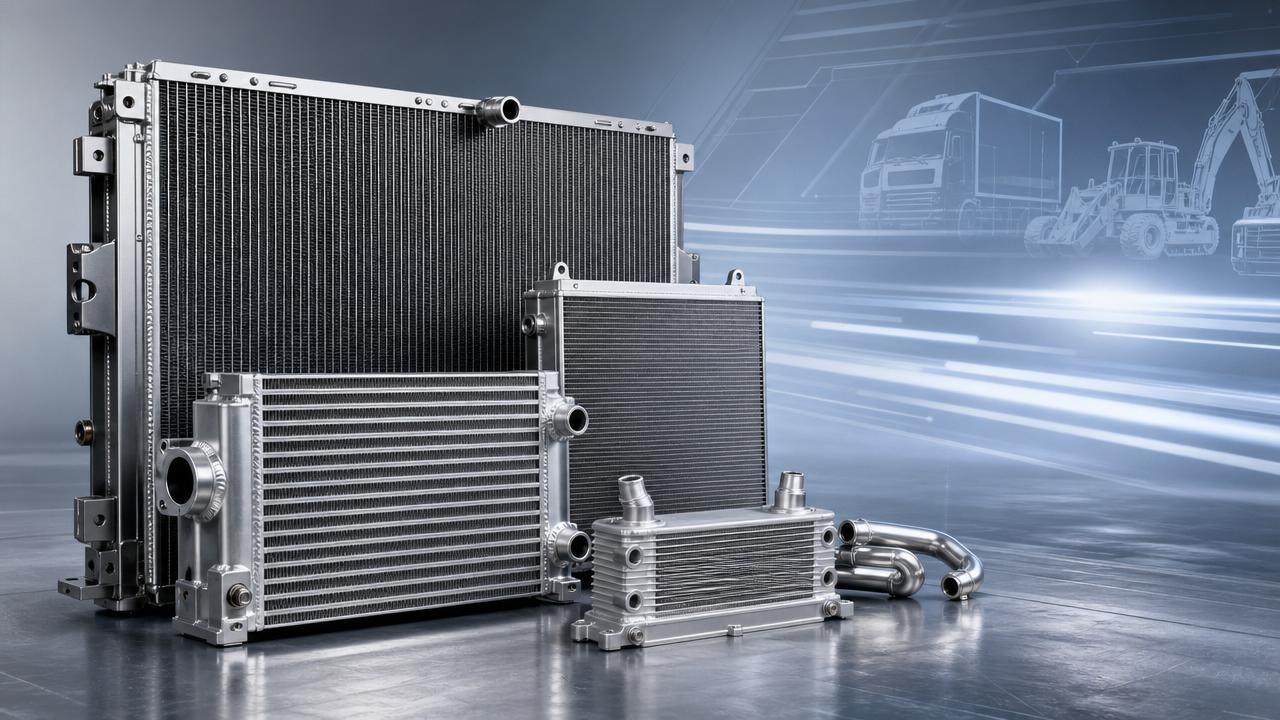
At trade shows, one topic kept coming up: how to choose the right vehicle radiator for performance, durability, and long-term value. Buyers wanted clear answers about cooling efficiency, material quality, fitment, and supplier reliability. This article explores the most common questions raised at exhibitions and offers practical insights for researchers comparing heavy truck, construction machinery, and new energy cooling solutions.
For most information-stage buyers, the core search intent behind Vehicle radiator questions is simple: they want to know how to compare options intelligently before contacting suppliers or placing trial orders. They are not looking for theory alone. They want practical criteria that reduce technical risk, cost surprises, and quality uncertainty.
The questions that matter most are usually about heat rejection performance, raw material quality, pressure resistance, vibration durability, application fitment, after-sales support, and whether a supplier can deliver consistent production quality. In other words, buyers are trying to separate products that merely look acceptable from those that will perform reliably in real operating conditions.
The most useful content, therefore, is not a generic overview of cooling systems. It is a decision-oriented guide that explains what experienced buyers ask, why they ask it, and how those questions reveal long-term value. That is the focus of this article.
Why did buyers ask so many questions about the vehicle radiator?
A vehicle radiator may appear to be a standard component, but in practice it directly affects engine or system stability, uptime, maintenance intervals, and operating cost. At exhibitions, buyers often compare several suppliers within a short time, so they ask pointed questions designed to quickly evaluate reliability.
This is especially true in heavy trucks, construction machinery, and new energy applications. These segments face demanding thermal loads, harsh environments, long working hours, and strong expectations for component life. A poor radiator choice can lead to overheating, power loss, coolant leakage, unexpected downtime, and unhappy end users.
Because of this, buyers are not just asking, “What is the price?” They are asking, “Will this radiator keep performing under pressure, vibration, dust, high ambient temperatures, and sustained workloads?” That shift in questioning is important, because it reflects a more mature procurement mindset.
What performance indicators did buyers care about most?
The most frequent topic was cooling efficiency. Buyers wanted to understand whether a radiator could maintain stable operating temperatures in real-world use, not just under ideal lab conditions. This often led to questions about core design, fin structure, tube layout, airflow management, and coolant flow characteristics.
Cooling performance is rarely the result of one factor alone. It depends on the interaction of heat transfer area, material conductivity, pressure drop, fluid dynamics, and installation conditions. A good supplier should be able to explain these trade-offs clearly, rather than making broad claims without technical support.
Another major concern was durability. Buyers regularly asked about burst pressure, fatigue resistance, corrosion resistance, and vibration testing. This is logical, because a radiator operating in a truck or construction machine faces repeated thermal cycling and mechanical stress. Long-term reliability matters more than a short-term performance claim.
Some buyers also asked about performance consistency between samples and mass production. A sample that performs well is not enough if welding quality, core assembly, material thickness, or leak testing standards vary in production. For serious buyers, consistency is a key part of value.
How do buyers judge radiator material quality?
Material quality was one of the clearest signals buyers used to assess product credibility. They wanted to know what grade of aluminum or other thermal materials were used, how thickness was controlled, and whether corrosion resistance had been considered for different operating environments.
Good material selection affects more than lifespan. It also influences heat transfer, pressure tolerance, structural stability, and repairability. Premium thermal materials can support better cooling efficiency, but only when matched with sound engineering and proper manufacturing control.
Trade show visitors often asked for evidence rather than adjectives. Instead of accepting terms like “high quality,” they looked for technical details: brazing quality, fin density, tank strength, surface finish, and testing procedures. These details help them judge whether a supplier understands the product beyond sales language.
For researchers comparing suppliers, a useful rule is this: if the discussion remains vague around materials, you probably need deeper verification. Strong suppliers are usually comfortable discussing raw material standards, performance logic, and quality checkpoints in specific terms.
Why is fitment such an important issue in radiator selection?
Fitment concerns came up repeatedly because even a well-made vehicle radiator loses value if it does not integrate correctly into the target system. Buyers asked about dimensions, mounting points, inlet and outlet positions, compatibility with surrounding components, and adaptation for different vehicle platforms.
In heavy-duty and machinery applications, installation space can be limited and airflow paths can be highly sensitive. A small mismatch in radiator dimensions or connection layout can increase installation time, reduce cooling efficiency, or create maintenance difficulties later. That is why buyers look closely at application accuracy.
For replacement and repair markets, fitment is even more practical. Buyers need confidence that the component can be installed without unnecessary modification. This becomes increasingly important when sourcing across regions, where model references, local naming, and platform differences can create confusion.
A useful example in the passenger and new energy segment is Radiator for AION. Products in this category are often evaluated not only for replace-and-repair suitability, but also for cooling efficiency, stable integration, and sustained performance under demanding workloads.
What did buyers want to know about supplier reliability?
At trade shows, many questions were actually about the supplier rather than the radiator itself. Buyers wanted to know whether the manufacturer had real production capability, engineering experience, export understanding, and a reliable quality management process. Product quality and supplier quality are closely linked.
This is especially relevant when buyers are still in the information research stage. They may not be ready to purchase immediately, but they want to identify which manufacturers deserve deeper engagement. Questions about factory scale, technical team strength, inspection methods, and production lead times help narrow the field.
Liaocheng Xinde Auto Parts Co., Ltd., established in 2018, operates as a professional manufacturer focused on water tank radiators, intercoolers, construction machinery radiators, and related cooling components for heavy trucks and new energy radiator modules. That industry focus matters, because specialization usually leads to stronger application understanding.
The company’s rapid development, investment scale, and recognition as a High-tech Enterprise and other trusted local honors may also help researchers assess credibility. While awards alone do not guarantee fit for every project, they can indicate operational maturity when combined with technical capability and product evidence.
How do experienced buyers compare price with long-term value?
One of the most revealing exhibition questions was not “Who is cheapest?” but “What am I really paying for?” In the radiator business, a lower initial price can hide future costs related to leakage, overheating, frequent replacement, warranty claims, and equipment downtime.
Buyers with more experience tend to evaluate total value across several dimensions: service life, thermal stability, maintenance frequency, installation convenience, claim rate, and procurement consistency. When these factors are considered, the lowest quoted price is often not the most economical option.
This is why technical transparency matters so much. A supplier who can explain how design choices affect cooling efficiency and durability makes it easier for buyers to justify decisions internally. That is particularly useful for distributors, fleet-related buyers, and parts researchers preparing supplier comparison reports.
For example, some products are positioned around high-performance operation using advanced fluid dynamics, premium thermal materials, and uncompromising stability. Those advantages may support stronger long-term value if they translate into measurable field performance instead of remaining only catalog language.
What questions help researchers avoid sourcing mistakes?
If you are still comparing options, the most practical approach is to ask structured questions. Start with application fit: what vehicle or machinery platform is the radiator designed for, and what operating conditions were considered during development? This prevents early mismatches.
Next, ask how cooling performance is validated. Was the product tested under realistic thermal loads? What pressure and leak tests are performed? How is vibration durability evaluated? Specific answers here often reveal whether the supplier has genuine engineering discipline.
Then ask about production consistency. Are key materials standardized? How are welding and brazing quality controlled? What inspections happen before shipment? If the supplier exports globally, ask how they handle documentation, communication, and issue resolution after delivery.
Finally, ask for evidence relevant to your target market. A good vehicle radiator for one operating environment may not be ideal for another. Road conditions, climate, duty cycle, and maintenance habits all matter. The right product is the one that matches real use, not just the one with the broadest marketing claim.
How are new energy cooling needs changing buyer expectations?
Buyers interested in new energy applications asked more detailed questions about thermal management integration, system stability, and continuous performance under variable load conditions. This reflects a market trend: cooling systems are becoming more application-specific and more closely tied to overall vehicle efficiency.
In these cases, buyers often look beyond conventional radiator selection criteria. They want to understand how a cooling module supports peak system performance, how packaging constraints are handled, and whether the supplier can adapt designs for evolving platform requirements.
This shift creates opportunities for manufacturers that invest in research, product development, and application knowledge. It also raises the standard for communication. Buyers increasingly expect suppliers to explain not only what the product is, but how it supports system-level performance and long-term reliability.
In some cases, a targeted solution such as Radiator for AION reflects this direction, where replacement needs, performance expectations, and thermal stability requirements must all be balanced within a specific fitment context.
What should buyers conclude after asking these trade show questions?
The main takeaway is that the best vehicle radiator is rarely identified by appearance or quotation alone. The better choice usually becomes clear when you evaluate cooling efficiency, durability, material quality, fitment accuracy, production consistency, and supplier credibility together.
For information researchers, trade show questions are valuable because they reveal what matters in actual purchasing decisions. If a supplier can answer clearly, technically, and consistently, that is often a strong sign of capability. If answers stay generic, more caution is warranted.
In heavy truck, construction machinery, and new energy markets, radiator performance has a direct effect on reliability and operating value. That is why serious buyers ask detailed questions. They are not being difficult; they are protecting uptime, reputation, and long-term cost control.
Ultimately, the smartest way to compare options is to focus on evidence. Look for suppliers that combine engineering understanding, stable manufacturing, and application-specific support. That approach leads to better decisions than chasing the lowest price or the broadest promise.