



Excavator radiator solutions showcased for harsh jobs
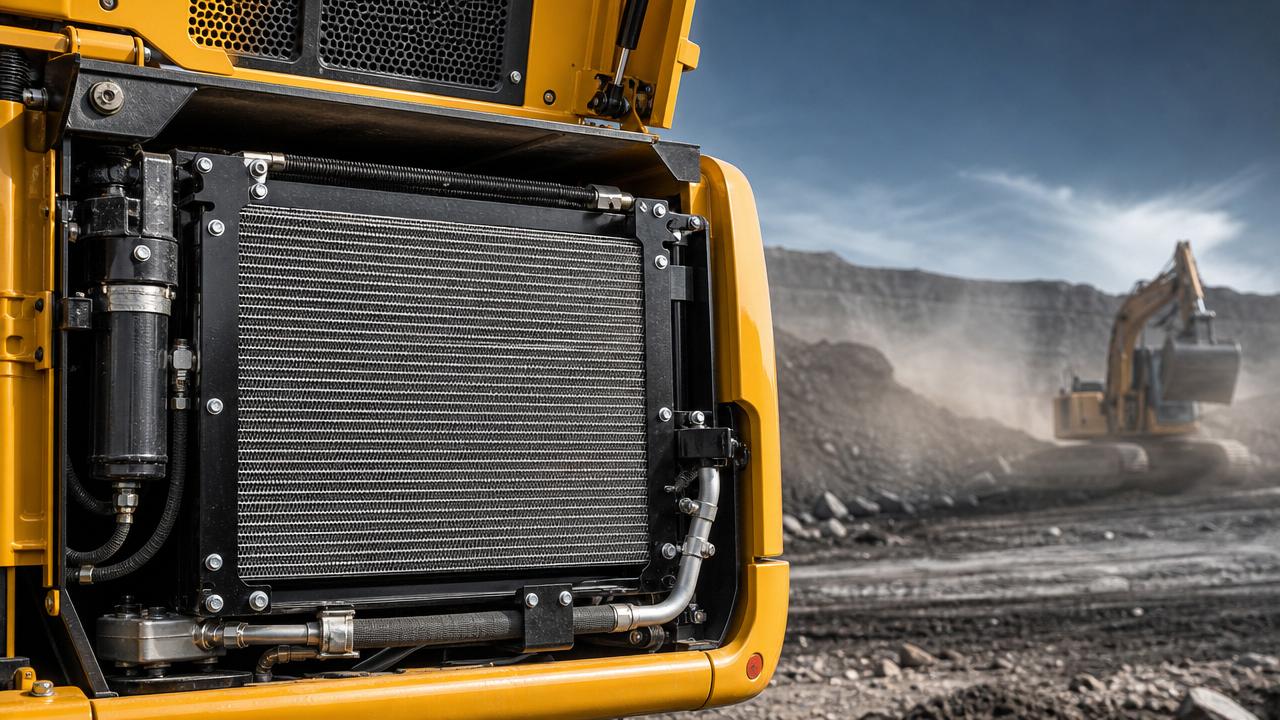
For project managers facing extreme heat, dust, and nonstop workloads, choosing the right Excavator radiator can directly impact uptime and cost control. Backed by strong R&D and manufacturing expertise, Liaocheng Xinde Auto Parts Co., Ltd. showcases durable radiator solutions designed for harsh construction environments, helping heavy equipment maintain stable cooling performance and reliable operation across demanding job sites.
Why does an Excavator radiator matter more on harsh job sites?
On a busy project, an excavator is not judged by catalog data alone. It is judged by whether it keeps working during long shifts, high ambient temperature, heavy dust, and repeated stop-and-go cycles. In these conditions, the Excavator radiator becomes a core risk-control component rather than a simple replacement part.
For project managers, radiator failure is rarely an isolated issue. It can trigger overheating alarms, reduced engine efficiency, hydraulic heat accumulation, unplanned shutdowns, delayed earthmoving schedules, and higher labor standby costs. When one machine stops, downstream tasks such as hauling, grading, and foundation preparation may also slow down.
Liaocheng Xinde Auto Parts Co., Ltd., established in 2018 with a registered capital of 5 million RMB and a total investment of 50 million RMB, focuses on the research, production, and global sales of water tank radiators, intercoolers, construction machinery radiators, related heavy truck components, and new energy radiator modules. Its rapid development and provincial and municipal honors reflect strong manufacturing discipline that matters when buyers need stable supply and practical cooling solutions.
- High heat load from continuous digging, lifting, and travel increases coolant temperature and raises pressure on the cooling core.
- Dust, mud, and debris block airflow passages, reducing heat dissipation and making routine maintenance more frequent.
- Remote jobs demand durable components because emergency replacement, technician travel, and downtime all increase total project cost.
What problems should project managers identify before buying an Excavator radiator?
Procurement mistakes often come from treating all cooling units as interchangeable. In reality, the right Excavator radiator depends on the machine’s thermal load, engine compartment layout, airflow path, working cycle, and service environment. A low-cost part that does not match these conditions can become expensive very quickly.
Before comparing suppliers, managers should clarify the operating profile of each machine. A quarry excavator running in dust and vibration has very different cooling demands from a city-site machine working shorter shifts. Matching the part to the use case is the first step toward controlling maintenance frequency and lifecycle cost.
Key failure risks that affect cooling performance
- Insufficient core capacity for sustained high-load operation during summer or enclosed site work.
- Weak resistance to vibration, causing leakage at joints, tanks, or mounting points.
- Poor fin geometry or clogging tolerance, leading to reduced airflow under dusty conditions.
- Inconsistent manufacturing quality, which creates fitment issues and delays installation.
These are not minor technical details. They are schedule risks. In parts procurement for heavy equipment, the best buying decision is usually the one that balances thermal performance, durability, fit consistency, delivery confidence, and service support.
How do harsh applications change Excavator radiator requirements?
An Excavator radiator used in mild weather and low-dust municipal work may perform adequately with standard configurations. Harsh jobs demand more. The cooling system must maintain stable heat rejection while tolerating contamination, pressure cycling, and rough handling over long operating hours.
The following table helps project teams link working conditions to practical radiator selection priorities.
The table shows why site conditions must drive cooling component decisions. A project manager who buys according to operating reality usually reduces emergency maintenance events and avoids hidden schedule losses.
Which technical factors should be checked during selection?
Technical review does not need to become a deep engineering exercise, but several factors deserve close attention when comparing an Excavator radiator across suppliers. These points directly affect fit, durability, and service life in the field.
Core selection criteria
- Material consistency. Stable raw material quality supports better thermal transfer and structural reliability during long service cycles.
- Joint and sealing reliability. Poor sealing often causes leakage after vibration, thermal expansion, or pressure fluctuation.
- Fitment accuracy. Mounting points, inlet and outlet positions, and overall dimensions must match equipment requirements to reduce installation risk.
- Maintenance accessibility. In dusty environments, easy cleaning and inspection help preserve cooling efficiency over time.
- Batch stability. For fleets and multi-project procurement, consistency across repeated orders is essential.
Manufacturers with dedicated R&D and organized production processes are better positioned to support these requirements. This is especially relevant when buyers need recurring orders, application guidance, or adaptation for different machinery platforms.
How can managers compare options beyond purchase price?
A low quotation may look attractive at the procurement stage, but the true cost of an Excavator radiator is measured across operation, maintenance, and downtime. Project owners and equipment managers should compare solutions using total value, not just unit price.
The comparison below shows how different purchasing approaches affect project outcomes.
For project managers, this comparison supports a simple conclusion: the most economical choice is often the option that prevents lost production hours, repeat labor, and urgent spare-part logistics.
What procurement checklist helps avoid the wrong Excavator radiator?
A structured procurement checklist helps teams make faster and more accurate decisions. It also improves communication between site management, purchasing staff, mechanics, and suppliers.
Recommended buying checklist
- Confirm machine model, application environment, and whether the equipment works in high-dust or high-temperature conditions.
- Check current failure pattern, such as leakage, clogging, overheating, or structural damage, before ordering a replacement.
- Review installation dimensions, interface positions, and mounting structure to reduce field modification.
- Ask about manufacturing capability, batch consistency, and support for recurring fleet orders.
- Clarify delivery time, packaging protection, and whether samples or parameter confirmation can be arranged in advance.
For buyers managing mixed fleets, a supplier that understands both construction machinery radiators and broader heavy-duty cooling applications can often provide more practical cross-platform advice.
How does manufacturing capability support radiator reliability?
In the parts industry, a radiator is only as reliable as the manufacturing system behind it. Design intent matters, but process control, material sourcing, and production consistency determine whether the product performs as expected after installation.
Liaocheng Xinde Auto Parts Co., Ltd. focuses on research, production, and global sales in cooling-related components, including water tank radiators, intercoolers, construction machinery radiators, heavy truck cooling parts, and new energy radiator modules. This product coverage gives the company a practical view of different thermal management demands across industries and machine categories.
What buyers should expect from a capable manufacturer
- Clear communication on application matching instead of generic substitution advice.
- Stable production planning for repeat orders and large project schedules.
- Support for technical confirmation when operating conditions are severe or unusual.
- A quality-oriented approach suitable for export and long-term cooperation.
The company’s rapid development and recognition as a High-tech Enterprise, Civilized and Honest Enterprise, and Trustworthy Unit for Consumers provide additional context for buyers seeking a stable and credible long-term parts partner.
Can one product inquiry fit into a broader fleet cooling strategy?
Many project teams begin with a single urgent replacement, then discover that standardizing cooling-part sourcing improves maintenance planning across the whole fleet. This is where a targeted product inquiry can support a broader procurement strategy.
For example, when assessing specific replacement needs, some buyers also review related references such as radiator for volvo xd 031 to compare fitment logic, sourcing process, and category coverage from the same supplier. This approach can simplify future parts management when fleets include multiple equipment types.
A supplier with broad radiator and intercooler experience is often better prepared to help managers align emergency replacement with medium-term stock planning, reducing fragmented purchasing behavior.
What common mistakes shorten Excavator radiator service life?
Even a well-built Excavator radiator can underperform if it is selected or maintained incorrectly. Some failures blamed on product quality are actually caused by mismatch, contamination, or weak maintenance routines.
Frequent mistakes on construction sites
- Choosing only by price without checking actual heat load, job duration, or environmental exposure.
- Ignoring airflow blockage from dust, mud, and debris until overheating becomes frequent.
- Replacing the radiator without investigating related causes such as fan issues, coolant contamination, or system pressure abnormalities.
- Failing to plan spare availability for remote or schedule-critical projects.
These mistakes are preventable. Better technical confirmation before purchase and better inspection discipline after installation usually deliver stronger returns than emergency troubleshooting.
FAQ: what do project managers usually ask about an Excavator radiator?
How do I know whether an Excavator radiator is suitable for my site conditions?
Start with three variables: ambient temperature, dust level, and daily operating hours. Then confirm machine model, working cycle, and the current failure mode. If the excavator works long shifts in dusty heat, prioritize cooling capacity, clogging resistance, structural durability, and reliable fitment rather than only low price.
What should be confirmed with the supplier before placing an order?
Ask for dimensional confirmation, interface location verification, application matching, production lead time, packaging method, and support for sample or drawing review if needed. For project-based procurement, also confirm whether repeat supply can remain consistent across batches.
Is a more expensive Excavator radiator always the better choice?
Not always. The better choice is the one that fits the actual machine and working condition while lowering downtime risk. A moderately priced, properly matched radiator often performs better than either an under-specified low-cost option or an unnecessarily upgraded part without clear application benefit.
How important is supplier specialization in cooling components?
It matters because specialized manufacturers usually understand thermal management, fitment variation, and the demands of heavy-duty applications more clearly. This is valuable when your team needs guidance on model selection, replacement logic, or recurring procurement for mixed equipment fleets.
Why choose us for harsh-job cooling solutions?
For project managers and equipment decision-makers, the main goal is not simply buying a part. It is protecting uptime, reducing maintenance uncertainty, and keeping field operations on schedule. Liaocheng Xinde Auto Parts Co., Ltd. supports that goal with focused experience in radiators, intercoolers, construction machinery cooling parts, heavy truck components, and new energy radiator modules.
If you are evaluating an Excavator radiator for harsh conditions, you can consult on practical topics that affect procurement outcomes:
- Parameter confirmation for machine model, interface position, and installation dimensions.
- Product selection based on temperature, dust exposure, work intensity, and maintenance access.
- Delivery cycle discussion for urgent replacement, planned stocking, or project-based batch demand.
- Customized solution review when standard parts must meet unusual site conditions or fleet requirements.
- Sample support, quotation communication, and coordination for long-term procurement planning.
When uptime, cost control, and reliable cooling matter, a well-matched radiator solution can deliver value far beyond the purchase order. Early technical communication helps prevent mismatch, accelerate delivery decisions, and support more dependable equipment operation on demanding job sites.