



Why a Radiator Core for Heavy Trucks Fails Under Long Hauls
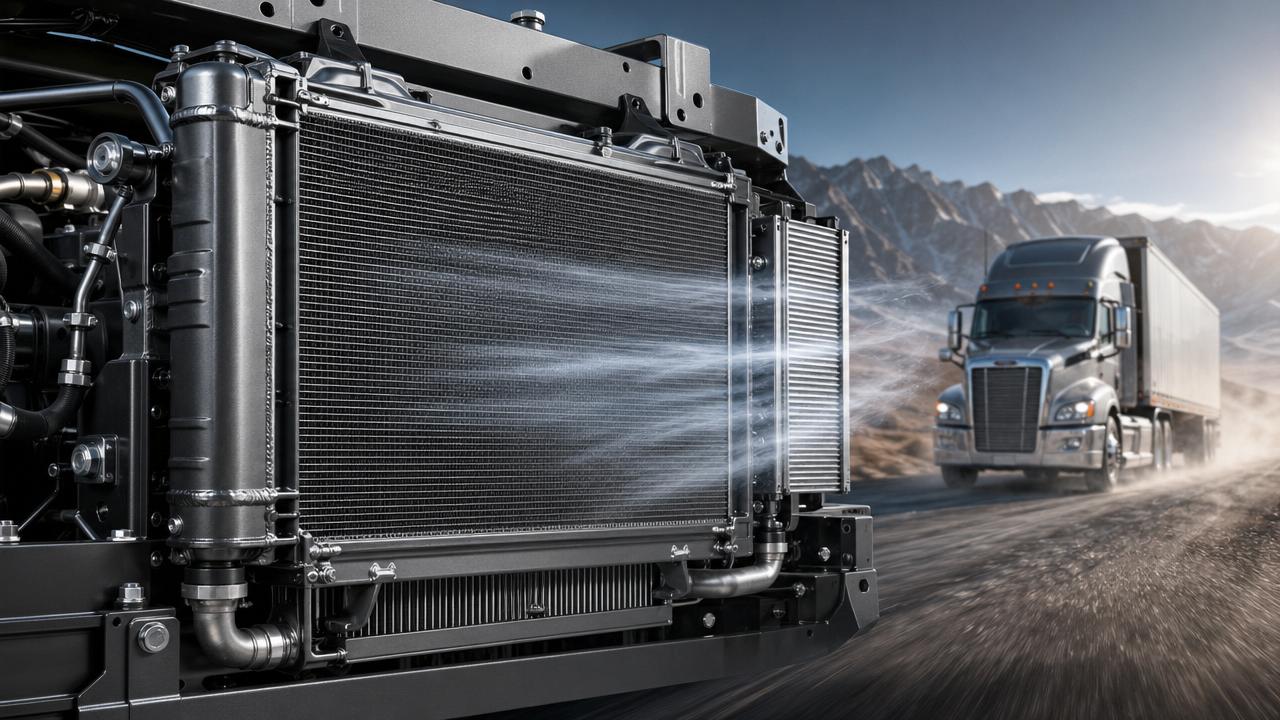
A radiator core for heavy trucks often fails on long hauls because it is exposed to constant thermal stress, road vibration, dust blockage, coolant problems, and sustained high engine load for many hours without enough recovery time. For operators, the key issue is not just why failure happens, but how to recognize early warning signs and prevent a roadside breakdown. In most cases, radiator core damage does not come from a single event. It develops gradually through overheating cycles, internal corrosion, tube blockage, fin damage, or weak joints that finally give way when the truck is under pressure.
If you use a truck for long-distance work, understanding how a radiator core for heavy trucks wears out can help you avoid engine overheating, lost delivery time, and expensive emergency repairs. The good news is that many failures show clear patterns before total breakdown. By knowing what to inspect, what operating habits increase risk, and what kind of replacement quality matters, operators can make better maintenance decisions and improve reliability on long routes.
What operators really need to know about radiator core failure on long hauls
When drivers and operators search for the cause of radiator problems, they usually want a practical answer: why did the truck overheat even though it seemed fine before the trip? The most accurate answer is that long hauls amplify every weakness in the cooling system. A small coolant restriction, a slightly clogged core, a loose mounting point, or a low-quality repair may not show obvious problems during short runs. But after many hours of climbing, idling, stop-and-go traffic, and hot weather, the radiator core reaches its limit.
The radiator core is the part that actually transfers heat from the coolant into the air. If the tubes are restricted, the fins are bent or dirty, or the soldered or brazed joints are weakened, heat exchange drops quickly. Once cooling efficiency falls below what the engine needs under heavy load, coolant temperature rises, pressure increases, and weak points begin to fail. This is why operators often notice overheating on hills, in traffic, or near the end of a long route rather than at the start of the day.
From an operator’s point of view, the most important issue is not technical theory. It is recognizing that radiator core failure is often progressive. A truck may first show slightly higher operating temperature, more frequent fan engagement, coolant smell, minor leakage, or reduced air conditioning performance in combined cooling packages. Ignoring these early signs often turns a manageable repair into a major roadside incident.
Why heat is the number one enemy during long-distance trucking
Heat is the basic reason any radiator core for heavy trucks fails faster on long hauls. A heavy truck running for extended periods carries more weight, burns more fuel, and generates more thermal load than during local trips. If the route includes mountain roads, high ambient temperature, slow-moving traffic, or repeated starts and stops, the cooling system must continuously remove large amounts of heat without pause.
Every heating and cooling cycle causes expansion and contraction in the core materials. Over time, this repeated movement weakens tube-to-header joints, seams, and thin fin structures. The longer the truck runs under load, the more severe this stress becomes. A core that still works in normal conditions may start leaking or lose efficiency once these thermal cycles become intense and continuous.
High heat also magnifies existing contamination problems. Scale inside the tubes, mud between fins, or oil residue from nearby systems reduces heat transfer. Under moderate conditions, this may only reduce performance slightly. Under long-haul conditions, the same contamination can push the radiator beyond its safe operating margin. That is why trucks that seem acceptable in city work can become unstable on full-load highway operations.
How vibration and road shock slowly damage the radiator core
Long-haul trucks do not just battle heat. They also face constant vibration. Poor road surfaces, uneven loads, engine movement, and chassis flex all create repeated mechanical stress. The radiator core is a relatively delicate heat exchanger, and even a strong assembly can suffer fatigue if mounting systems, brackets, or surrounding supports are worn or misaligned.
Over time, vibration can crack joints, rub through contact points, loosen mounting hardware, and damage tubes near connection areas. This type of failure is often misunderstood because the leak may appear to be sudden. In reality, the structure has usually been weakening for a long period. A truck may run thousands of kilometers with hidden fatigue until one severe vibration event finally opens a visible leak.
Operators should also remember that replacing only the radiator without correcting bracket wear, cushion deterioration, or fan shroud misalignment can lead to repeat failure. A new core installed into a vibration-prone environment may not last as expected. Good cooling reliability depends on both part quality and installation condition.
Dust, insects, mud, and debris: the silent blockers of cooling efficiency
External blockage is one of the most common and most preventable causes of radiator core trouble. Heavy trucks operating on construction routes, freight corridors, mining roads, agricultural roads, or dusty logistics networks often pull large amounts of debris through the cooling pack. Dirt collects on the fin surface and restricts airflow, which is just as dangerous as internal coolant blockage.
When airflow through the core drops, the radiator cannot release heat efficiently. Engine temperature rises, the fan works harder, and fuel efficiency may suffer. If the truck also has an intercooler and condenser in the same front package, contamination in one area can affect the entire cooling system. Operators may think the issue is thermostat-related or due to coolant quality, when the first problem is actually blocked airflow.
Improper cleaning can make things worse. High-pressure washing at the wrong angle can flatten fins and reduce airflow permanently. Aggressive chemical cleaning can also damage surface protection. The best approach is regular inspection and careful cleaning based on the operating environment. Trucks on dusty long-haul routes need more frequent cooling pack checks than trucks on cleaner paved highways.
Coolant quality and internal corrosion are major hidden causes
Many radiator core failures begin inside the system where operators cannot easily see them. Wrong coolant mixture, poor-quality water, overdue coolant replacement, or mixing incompatible coolant types can all cause corrosion, scale buildup, and sludge formation. Once deposits start restricting the narrow passages in the core, the radiator loses capacity and hot spots develop.
Corrosion is especially damaging because it weakens metal from the inside. Tubes may become thinner, joints may deteriorate, and small particles can circulate through the system, causing additional wear or blockage. In some cases, operators only discover the problem when the radiator begins leaking or when the truck repeatedly overheats despite the coolant level appearing normal.
Routine coolant management is not a minor detail. It is one of the most cost-effective ways to protect a radiator core for heavy trucks. Using the manufacturer-recommended coolant, maintaining the correct concentration, replacing fluid at the proper interval, and checking for contamination can significantly extend service life. If coolant looks rusty, oily, or full of particles, that is already a warning that the core may be under attack.
Overloading and hard operating conditions accelerate failure
Heavy trucks are built for demanding work, but there are still limits. Frequent overloading, steep grades, long idling periods, extreme ambient temperatures, and towing stress all increase cooling demand. The radiator core may be properly designed, yet still fail early if the truck is consistently operated beyond its normal thermal envelope.
On long hauls, overloading is particularly harmful because it raises engine temperature for many hours at a time. That means the radiator is not dealing with a short burst of heat, but a sustained and elevated heat load. If airflow is reduced or coolant circulation is already compromised, this creates the exact conditions where core fatigue and overheating become more likely.
Operators should also consider speed and engine behavior. Running at low speed with high engine load can sometimes be harder on cooling than stable cruising. Repeated acceleration in traffic, extended hill climbing, and long waits with the engine running all place extra burden on the radiator. Good driving habits can therefore contribute directly to radiator life.
What warning signs should operators never ignore?
The earlier a problem is identified, the better the chance of avoiding severe damage. One of the first warning signs is a gradual rise in normal operating temperature. If the gauge consistently sits higher than before, especially during climbs or in warm weather, the cooling system may already be losing efficiency.
Other important signs include coolant loss without an obvious major leak, sweet coolant smell after shutdown, visible stains around the radiator, white deposits near seams, bent fins, fan running more often, or steam under heavy load. In some cases, the heater performance may become unstable, which can point to coolant flow issues elsewhere in the system.
Operators should also watch for repeated top-ups. A truck that needs frequent coolant addition is telling you something is wrong. Even a small leak can become a major rupture during a long run. Waiting until the truck overheats badly can damage the engine, head gasket, hoses, and other expensive components far beyond the cost of the radiator itself.
How to inspect a radiator core before a long trip
A practical pre-trip inspection can reduce the risk of failure significantly. First, check coolant level only when the system is safe and cool. Then inspect the radiator face for dirt, blocked fins, insect buildup, or signs of physical damage. Look carefully at the tanks, seams, hose connections, and surrounding mounts for wet areas, dried residue, or rubbing marks.
Next, examine whether the radiator is mounted securely. Damaged cushions, loose fasteners, or misaligned brackets can create vibration fatigue. Check hoses for swelling, cracks, or hardness. If the fan shroud is damaged or mispositioned, airflow through the core may be reduced. Also pay attention to whether the cooling pack appears packed with dust between layers, not just on the visible front face.
If the truck has a history of high temperature, pressure testing and coolant condition analysis are smart preventive steps. These checks can reveal leaks, cap problems, or chemical contamination before the truck is sent out on a long route. Preventive inspection takes far less time than dealing with a stranded vehicle on the road.
Why replacement quality matters more than many operators expect
Once a radiator core is badly damaged, replacement is often the safest solution. But not all replacement units offer the same durability. Material quality, brazing or welding consistency, tube and fin design, dimensional accuracy, and vibration resistance all affect service life. For trucks working long distances, using a radiator designed for the correct thermal load is essential.
This is where working with an experienced manufacturer becomes important. Liaocheng Xinde Auto Parts Co., Ltd. focuses on radiators, intercoolers, construction machinery radiators, and related cooling components for heavy trucks and new energy applications. For operators and fleet users, that specialization matters because cooling parts for heavy-duty use must perform in real-world heat, dust, and load conditions rather than only on paper specifications.
For example, when matching parts to truck models, fitment and cooling dimensions should not be treated casually. A product such as XD045 MAN F2000 19.603 is intended for truck application and includes size parameters of 1065*688*48. For operators, details like this help confirm that the replacement radiator is not just similar, but suitable for the specific platform and cooling package requirements.
Practical ways to extend radiator core life on long hauls
The best prevention strategy is consistent and simple. Keep the cooling pack clean, use the right coolant, follow replacement intervals, inspect mounts and hoses, and act on temperature changes early. Do not wait for visible steam or complete overheating before investigating. By that point, radiator damage may already be severe.
Driving behavior also matters. Avoid unnecessary idling in hot conditions, reduce overload where possible, and monitor the temperature gauge closely during climbs or slow traffic. If temperature starts rising abnormally, responding early may prevent a minor problem from becoming a major failure. That could mean stopping to inspect, clearing visible blockage, or arranging service before continuing a high-stress route.
Finally, choose replacement parts from suppliers that understand heavy-duty cooling systems. A radiator core for heavy trucks must handle more than basic heat exchange. It must survive vibration, contamination, pressure variation, and sustained thermal demand. The right part, properly installed and maintained, can reduce downtime and improve confidence on long routes.
Conclusion: most long-haul radiator failures are preventable
A failing radiator core rarely comes without warning. In most cases, the root causes are prolonged heat stress, vibration fatigue, blocked airflow, poor coolant condition, internal corrosion, or demanding operating conditions that expose existing weakness. Long hauls do not create these problems from nothing, but they do reveal them quickly and often at the worst possible time.
For operators, the most useful takeaway is clear: treat rising temperature, coolant loss, and airflow blockage as early action points, not minor inconveniences. A radiator core for heavy trucks is central to engine reliability, and small warning signs deserve immediate attention. Good inspection habits, proper coolant care, and correct replacement choices can make the difference between smooth transport and expensive roadside downtime.
When you understand how and why radiator cores fail, you are in a much better position to prevent trouble, protect the engine, and keep the truck working reliably over long distances. That knowledge turns cooling system maintenance from a reactive repair task into a practical part of safe and efficient truck operation.