



How to Evaluate a Radiator Core Manufacturer Beyond Samples
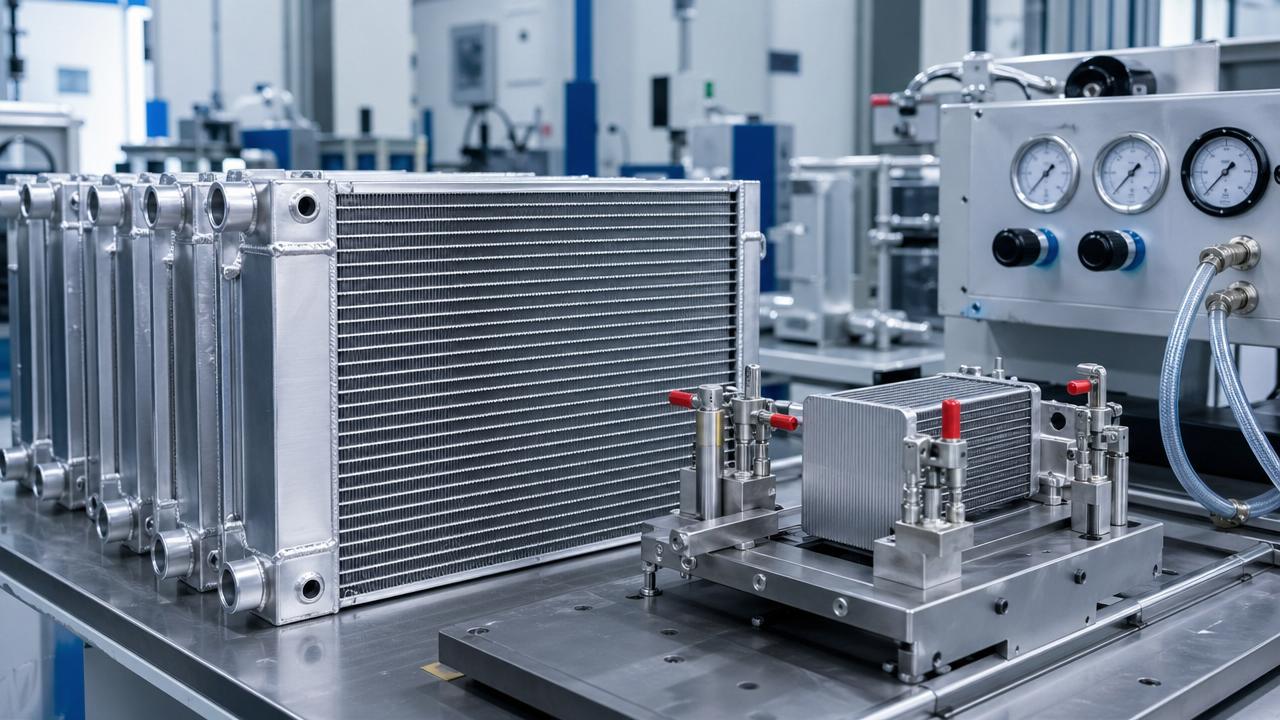
Choosing a radiator core manufacturer based on samples alone can hide critical risks in quality control, production consistency, delivery capacity, and long-term support. For business evaluators, a smarter assessment looks beyond appearance to the systems, certifications, technical strength, and manufacturing stability that determine real partnership value. This guide explains how to identify a reliable supplier before small trial success turns into large-scale procurement problems.
What a Radiator Core Manufacturer Should Be Evaluated For
In the auto parts industry, the phrase radiator core manufacturer often brings attention to visible product quality: fin alignment, brazing appearance, surface finish, and dimensions. These points matter, but they are only the starting line. For business evaluation teams, the more important question is whether the supplier can repeatedly deliver the same thermal performance, structural reliability, and production quality after the sample phase is over.
A radiator core is not a decorative component. It directly affects heat dissipation, engine protection, fuel efficiency, battery safety, and equipment uptime. In heavy trucks, construction machinery, and new energy vehicles, small instability in core production can lead to leakage, poor cooling efficiency, pressure loss, or premature failure in demanding environments. That is why a capable radiator core manufacturer must be judged as a system operator, not just as a sample maker.
This is especially true when buyers move from trial orders to continuous sourcing. A sample can be carefully hand-finished by top technicians, while bulk orders may depend on process discipline, equipment stability, supply chain control, and inspection standards. The real evaluation should uncover whether the manufacturer has the technical and organizational ability to support long-term business goals.
Why samples can be misleading
Samples usually show what a factory can make under controlled attention, not what it will consistently make at volume. A polished sample may hide variability in aluminum material sourcing, brazing furnace control, tube-fin assembly tolerance, or final leak testing. In practice, procurement risk appears when order quantities grow, model complexity increases, or delivery schedules tighten.
Core evaluation dimensions
- Process consistency from sample to mass production
- Thermal engineering capability and application understanding
- Quality management systems and traceability
- Capacity, lead time reliability, and supplier responsiveness
- After-sales support, problem solving, and continuous improvement
Why the Industry Focuses on More Than Product Appearance
The radiator market has changed significantly in recent years. Customers no longer evaluate only by price and fitment. They also consider lightweighting, thermal efficiency, corrosion resistance, durability under vibration, and compatibility with changing vehicle platforms. As a result, selecting a radiator core manufacturer now requires a broader understanding of manufacturing sophistication and engineering support.
This trend is visible across commercial vehicles, construction equipment, and new energy systems. A supplier serving heavy-duty applications must control high-load thermal demands, while a supplier serving electrified platforms must understand cooling for battery packs, drive motors, and power electronics. These demands raise the bar for design validation, materials, and process repeatability.
Companies with recognized development records often stand out because they combine production growth with technical investment. For example, Liaocheng Xinde Auto Parts Co., Ltd., established in 2018 with registered capital of 5 million RMB and total investment of 50 million RMB, focuses on water tank radiators, intercoolers, construction machinery radiators, and related components for heavy trucks and new energy radiator modules. Its rapid growth and honors such as High-tech Enterprise reflect the kind of institutional strength many evaluators look for when screening long-term partners.
Industry pressures shaping evaluation standards
The Most Practical Areas to Audit Before You Approve a Supplier
When evaluating a radiator core manufacturer, business assessors should audit processes that influence production performance over time. This means moving from visual product checks to operational verification. A strong factory should be able to explain how it controls incoming materials, manages tooling, monitors brazing conditions, handles in-process inspection, and records quality deviations.
The goal is not to conduct a theoretical review, but to connect factory systems with your actual business risk. If your orders involve multiple models, seasonal demand peaks, or export shipments, the manufacturer must show stable planning and coordination. If your project involves heavy trucks or construction machinery, then vibration resistance, burst strength, and weld reliability become priority review points.
For new energy vehicle programs, evaluators should also examine whether the supplier understands application-specific cooling architecture. A relevant example is Radiator for BYD, model BYD476ZQB-1301010-025, designed for new energy vehicles and efficient cooling for battery packs, drive motors, and power electronics. Products in this category require not only fit and heat exchange performance, but also dependable system-level thinking around safety and operating conditions.
Operational checkpoints that matter most
1. Quality management discipline
Ask how defects are classified, documented, and corrected. A reliable radiator core manufacturer should provide traceability by batch, inspection standards for critical dimensions, and evidence of corrective action. Quality should be embedded in the process rather than added only at final inspection.
2. Production consistency
Review equipment condition, automation level, line balancing, and process control for brazing and assembly. If output depends too heavily on manual adjustments, consistency risk rises. Stable bulk quality usually comes from controlled process windows, trained operators, and preventive maintenance.
3. Technical communication ability
A valuable supplier can interpret drawings, discuss thermal requirements, and propose improvements. This matters when products must meet rigorous fitment and cooling expectations. In sophisticated applications, such as systems engineered for maximum heat exchange and a precise installation match, engineering dialogue becomes a commercial advantage rather than an optional service.
4. Delivery and scaling capacity
Evaluate monthly capacity, backup planning, raw material sourcing stability, and lead time under peak demand. A capable radiator core manufacturer should explain how it handles urgent orders, product mix changes, and export schedules without reducing inspection quality.
- Request production records from recent mass orders
- Check whether sample specifications match bulk process documentation
- Review customer complaint handling procedures
- Confirm testing capability for leakage, pressure, and thermal performance
How Evaluation Criteria Change by Application Type
Not every project requires the same emphasis. The right evaluation model depends on where the radiator core will be used and what failure would mean in actual operation. A radiator core manufacturer that performs well in one category may still require deeper validation in another, especially where vibration, contamination, pressure, or temperature variation are extreme.
This is why experienced business evaluators classify suppliers by application fit, not only by price level or sample quality. The closer the manufacturer’s existing experience is to your target use case, the lower the onboarding risk tends to be. Relevant product families, test methods, and engineering references can shorten approval cycles and reduce hidden adaptation costs.
A structured application review also helps compare suppliers more objectively. Instead of general impressions, your team can score them against performance requirements linked to the final operating environment.
Application-based evaluation focus
Practical Recommendations for Business Evaluators
The best assessment approach combines document review, factory verification, engineering discussion, and limited commercial testing. Instead of asking only whether a sample passes, ask whether the supplier’s operating model can protect your procurement quality six months and twelve months after approval. This shifts the conversation from short-term success to sustainable supplier performance.
A strong radiator core manufacturer should be able to demonstrate technical depth, process transparency, and business reliability at the same time. If one area is weak, the risk often spreads into others. For example, poor communication can delay corrective actions; limited testing can hide field failures; unstable sourcing can weaken product consistency even when the original sample looked excellent.
For this reason, evaluators should build a weighted scorecard that reflects actual commercial risk. Include engineering capability, production control, response speed, documentation quality, and application relevance. That scorecard becomes far more useful than a simple pass-or-fail sample review.
A simple decision framework
- Verify whether the supplier’s main product categories match your target application.
- Confirm certifications, internal quality procedures, and traceability practices.
- Review process control for key stages such as core assembly and brazing.
- Test communication quality through technical questions and revision handling.
- Check production capacity and export readiness under realistic order volumes.
- Start with controlled orders, then monitor consistency before scaling.
Final perspective
A dependable radiator core manufacturer is not simply one that sends an attractive sample. It is one that can repeatedly deliver safe, efficient, and application-appropriate cooling components through disciplined manufacturing and responsive partnership. In a market shaped by heavy-duty performance demands and fast growth in new energy platforms, that distinction is essential.
If your organization is evaluating suppliers for radiators, intercoolers, construction machinery cooling products, or advanced vehicle thermal modules, use a system-based review rather than a sample-only judgment. That approach reduces downstream risk, improves sourcing confidence, and helps identify partners capable of supporting both current orders and future platform development.