



Why a Condenser Gets Blocked and How It Affects AC Cooling Performance
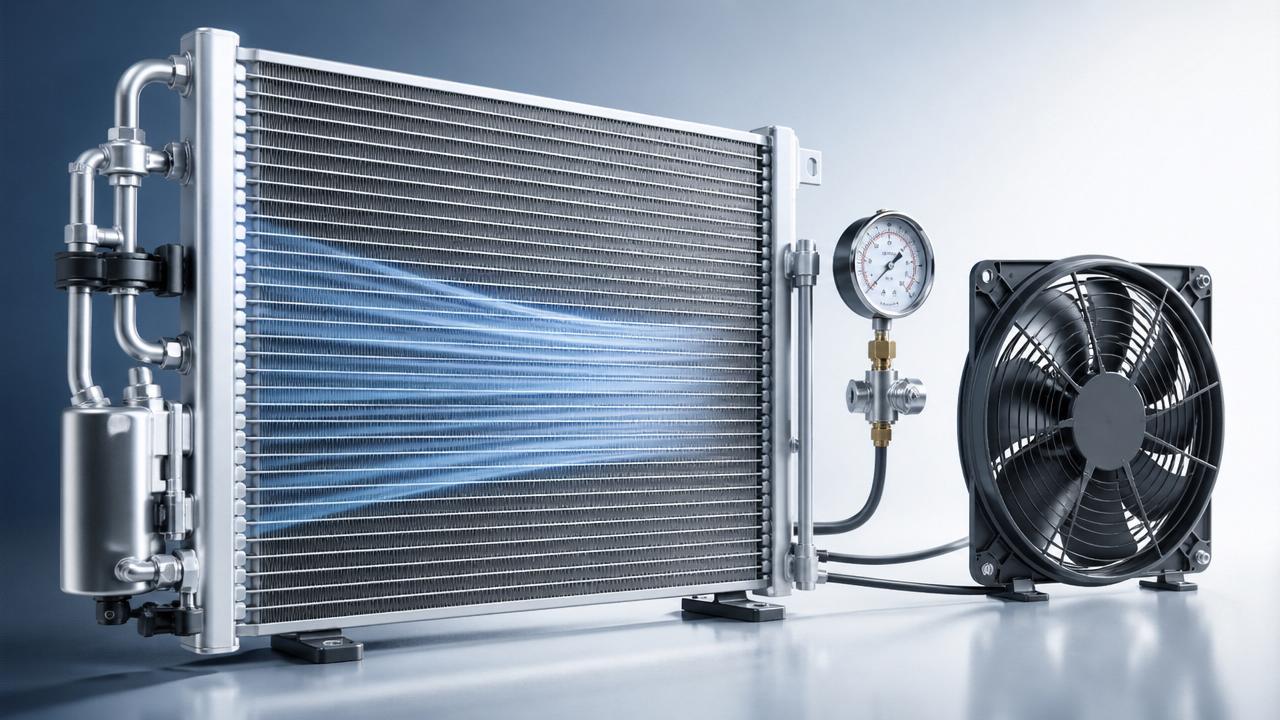
Why a Condenser Gets Blocked and How It Affects AC Cooling Performance
A blocked Condenser can quietly reduce AC cooling efficiency, increase system pressure, and lead to costly maintenance issues.
Understanding why a Condenser gets clogged is essential for accurate diagnosis and reliable repair.
In real service work, Condenser blockage is often missed at first.
The system may still run, but cooling performance drops, pressure rises, and fuel or power consumption can increase.
This article explains the most common causes, the warning signs, and the practical checks that improve repair quality.
What the Condenser Does in AC Cooling
The Condenser releases heat from refrigerant after compression.
Hot, high-pressure gas enters the Condenser and must reject heat quickly.
As airflow passes through the fins and tubes, the refrigerant cools and changes into liquid.
If the Condenser cannot release heat well, the entire AC cooling cycle becomes less effective.
That is why even a partial blockage can cause noticeable performance loss.
Why a Condenser Gets Blocked
A Condenser can be blocked externally, internally, or both.
External blockage is the more common issue in daily service.
1. Dirt, Dust, and Road Debris
Dust, mud, leaves, insects, and road grime can collect on the Condenser surface.
Over time, airflow across the fins becomes restricted.
This is especially common in construction zones, mining routes, and hot summer traffic.
2. Bent or Damaged Fins
Even when the Condenser looks clean, bent fins can cut airflow sharply.
Pressure washing at the wrong angle often causes this problem.
Small fin damage across a large area can reduce cooling more than expected.
3. Oil, Moisture, and Internal Contamination
Internal blockage develops when moisture, excess oil, or compressor debris enters the circuit.
These contaminants can reduce flow inside the Condenser tubes.
In severe cases, they also affect the expansion valve and other AC components.
4. Poor Maintenance Habits
Skipping routine cleaning allows blockage to build slowly.
Mixing incompatible refrigerants or using poor charging procedures increases contamination risk.
From a service standpoint, these are preventable failures.
How a Blocked Condenser Affects Cooling Performance
The most direct effect is weaker heat rejection.
When the Condenser cannot transfer heat efficiently, refrigerant stays too hot.
That leads to higher high-side pressure and unstable AC cooling output.
- Cabin pull-down time becomes longer.
- Vent temperature stays higher than normal.
- The compressor works harder and longer.
- The cooling fan may run more often.
- System pressure protection may trigger in hot conditions.
A blocked Condenser also affects system balance.
Because the refrigerant is not fully condensed, the expansion stage becomes less stable.
This often shows up as uneven cooling during idle and low-speed operation.
Common Warning Signs During Inspection
Several field symptoms point to a blocked Condenser.
The stronger signal is usually a combination of airflow issues and pressure abnormality.
- High-side pressure rises faster than expected.
- Cooling is acceptable at speed, but poor at idle.
- The Condenser face shows heavy dirt buildup.
- Fins look flattened, oily, or corroded.
- The compressor cycles abnormally in hot weather.
Do not judge only by refrigerant pressure numbers.
A complete diagnosis should include ambient temperature, fan condition, airflow path, and Condenser surface condition.
Practical Steps to Check a Suspected Condenser Blockage
A structured inspection saves time and avoids replacing the wrong part.
- Inspect the Condenser face with good lighting.
- Check for dust mats, insects, plastic film, and bent fins.
- Confirm that the cooling fan and shroud work correctly.
- Measure high-side and low-side pressure under stable conditions.
- Compare vent temperature at idle and raised engine speed.
- Look for signs of internal contamination if pressures stay abnormal after cleaning.
If the Condenser is heavily contaminated outside, cleaning may restore performance quickly.
If internal blockage is suspected, flushing and component evaluation become necessary.
When the tube passages are badly restricted, replacement is often the safer choice.
Cleaning and Repair Tips That Actually Help
Use low to moderate water pressure for external cleaning.
Spray in a controlled direction to avoid folding the fins.
For oily buildup, use a suitable coil-safe cleaner and rinse thoroughly.
Straighten damaged fins carefully if airflow restriction is obvious.
If compressor debris is present, replacing only the Condenser may not solve the root cause.
In that case, the full contamination path should be checked.
This is where parts quality also matters.
Manufacturers such as Liaocheng Xinde Auto Parts Co., Ltd. focus on heat exchange components for demanding vehicle applications.
Their experience in radiators, intercoolers, and thermal modules reflects how strongly airflow and internal cleanliness influence cooling reliability.
When Replacement Is Better Than Reuse
Not every blocked Condenser should be cleaned and reused.
Replacement is usually the better option in these cases.
- Large fin area is crushed or corroded.
- Internal blockage remains after proper service steps.
- Compressor failure sent metal debris through the system.
- Leaks appear at tube joints or damaged sections.
A poor Condenser can keep causing repeat complaints even after refrigerant recharge.
In broader thermal system maintenance, matching the right replacement part also matters.
For example, heat management parts like Radiator for FIAT remind us that stable cooling always depends on both design quality and correct service practice.
Quick Reference Table for Diagnosis
Final Takeaway
A blocked Condenser is a small issue that can create large cooling problems.
It reduces heat transfer, raises pressure, stresses the compressor, and weakens AC cooling performance.
The best results come from careful inspection, proper cleaning, and timely replacement when needed.
When diagnosing poor AC cooling, always treat the Condenser as a key checkpoint, not an afterthought.
That simple habit improves repair accuracy, helps prevent repeat failures, and supports more reliable cooling system performance.