



Why New Energy Vehicle Radiators Need Different Thermal Strategies
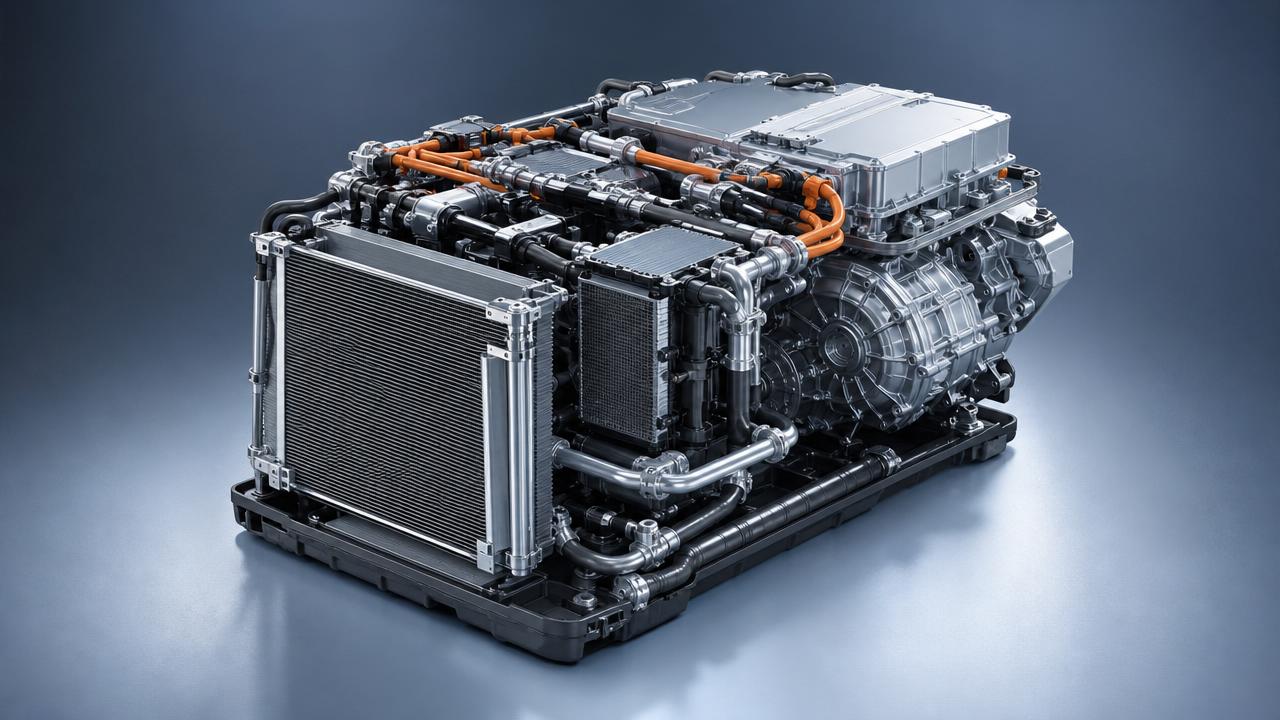
Unlike conventional cooling systems, a New Energy Vehicle Radiator must manage batteries, power electronics, and electric drive units with far more precise thermal control.
That difference directly affects safety, efficiency, durability, and integration across the whole vehicle thermal loop.
For component evaluation, the key question is not whether cooling exists, but whether the thermal strategy matches electric vehicle operating realities.
Why a New Energy Vehicle Radiator Needs a Different Evaluation Method
A fuel vehicle radiator mainly stabilizes engine heat under broad temperature swings and familiar duty cycles.
A New Energy Vehicle Radiator supports multiple sensitive systems, each with different target temperatures and response speeds.
Battery packs need narrow thermal windows. Inverters and controllers dislike thermal spikes. Electric drive units create localized heat under acceleration and climbing.
Because of this, radiator design must be reviewed as part of a full thermal management architecture, not as an isolated heat exchanger.
That is why a checklist-based review helps compare products consistently and identify hidden integration risks before validation or sourcing.
Core Factors That Define New Energy Vehicle Radiator Performance
Before selecting any New Energy Vehicle Radiator, review the following points in sequence.
- Confirm the radiator supports separate or shared loops for battery, motor, and power electronics without causing thermal interference during high load operation.
- Check heat rejection capacity across low-speed urban driving, highway operation, steep gradients, and fast charging conditions with realistic ambient temperatures.
- Verify pressure drop stays within system limits so pumps maintain target flow without excessive energy use or unstable coolant distribution.
- Review core structure, fin density, tube geometry, and material quality to ensure strong heat exchange without sacrificing durability or contamination resistance.
- Assess corrosion resistance and coolant compatibility because mixed-metal systems and long service intervals can accelerate internal degradation and thermal loss.
- Evaluate packaging efficiency since electric vehicles often require compact modules that fit around battery structures, crash zones, and airflow management components.
- Confirm thermal response speed during transient events because electric systems can shift from mild load to peak output much faster than combustion engines.
- Check sealing reliability under vibration, thermal cycling, and pressure pulses, especially in commercial vehicles or rough-road duty environments.
- Review manufacturability and dimensional consistency so repeat installations maintain airflow paths, hose alignment, and mounting stability across production batches.
- Verify test evidence, including leak testing, burst testing, salt spray evaluation, and thermal cycling validation, not only nominal design claims.
How Thermal Strategy Changes Across Vehicle Systems
Battery Thermal Control
Battery cells perform best within a narrow temperature range and with minimal temperature spread between modules.
A New Energy Vehicle Radiator serving battery loops must support stable, predictable cooling instead of only maximum peak heat rejection.
Overcooling can reduce efficiency in cold climates. Undercooling accelerates aging, limits charging speed, and increases safety risk.
Power Electronics Cooling
Inverters, converters, and controllers create concentrated heat and react badly to short thermal spikes.
Here, radiator performance must align with pump control, coolant routing, and sensor feedback to avoid transient overheating.
This is where tight manufacturing tolerances become important, especially when compact module layouts leave little margin.
Electric Drive Unit Cooling
Motors and reduction assemblies see fast thermal rise during towing, climbing, acceleration, or repeated stop-start conditions.
The radiator must work with airflow management and coolant flow balance to control heat under transient and sustained loads.
A design optimized only for steady-state lab testing may fail in real operating cycles.
Application Notes for Different Use Environments
Urban Passenger EVs
City driving means frequent low-speed operation, limited ram air, and repeated thermal cycling from stop-and-go traffic.
In this case, New Energy Vehicle Radiator design should favor efficient low-airflow heat exchange and stable fan-assisted cooling behavior.
Commercial and Heavy-Duty Platforms
Commercial applications face longer duty cycles, stronger vibration, higher contamination risk, and more demanding thermal loads.
Durability, brazing quality, and structural strength matter as much as nominal cooling capacity.
This is especially relevant for companies rooted in radiator manufacturing for heavy trucks and construction machinery.
Liaocheng Xinde Auto Parts Co., Ltd., established in 2018, combines research, production, and global sales across water tank radiators, intercoolers, heavy truck radiators, and new energy radiator modules.
Its rapid development and provincial honors reflect the importance of process discipline and application-focused engineering in this sector.
Fast-Charging New Energy Vehicles
Fast charging adds major heat input to the battery loop within a short time window.
Radiator sizing, flow distribution, and thermal control logic must be reviewed under charge events, not only driving events.
A useful reference is Radiator for BYD, model BYD476ZQB-1301010-025, designed for new energy vehicles.
Its fitment focus and heat exchange design highlight how product selection should follow vehicle-specific thermal requirements.
Commonly Overlooked Risks
Treating Cooling Capacity as the Only Metric
A larger core does not automatically mean a better New Energy Vehicle Radiator.
Poor flow balance, excessive pressure drop, or weak transient response can undermine real-world thermal control.
Ignoring System-Level Integration
Radiators interact with pumps, valves, fans, ducts, sensors, and control software.
A good component can still perform poorly if airflow, coolant routing, or mounting layout is compromised.
Underestimating Environmental Exposure
Dust, road salt, humidity, and vibration reduce thermal performance over time.
Long-life reliability should be validated through realistic endurance and corrosion testing, not short-term bench checks alone.
Choosing Generic Fit Instead of Exact Matching
Even small dimensional differences can alter hose stress, airflow sealing, or bracket alignment.
That is why exact application products, including the second mention of Radiator for BYD where appropriate, can reduce integration uncertainty.
Practical Execution Steps Before Final Selection
- Map all thermal loops and define target temperatures, peak heat loads, and allowable pressure losses.
- Request validated performance data under multiple ambient temperatures and vehicle operating states.
- Check dimensional drawings, material specifications, joining methods, and durability test records together.
- Review whether the New Energy Vehicle Radiator supports future power upgrades or charging performance changes.
- Confirm supplier production stability, traceability, and consistency for long-term replacement and service support.
Final Takeaway
A New Energy Vehicle Radiator is no longer a simple cooling part.
It is a system-critical component that influences battery health, electronic reliability, driving performance, and operating safety.
The best evaluation approach is structured and practical: compare loop strategy, heat rejection, pressure drop, durability, packaging, and validation evidence together.
When those factors are aligned, the selected New Energy Vehicle Radiator will support both present requirements and future platform demands with greater confidence.