



New Energy Vehicle Radiator Issues That Affect Battery Temperature Control
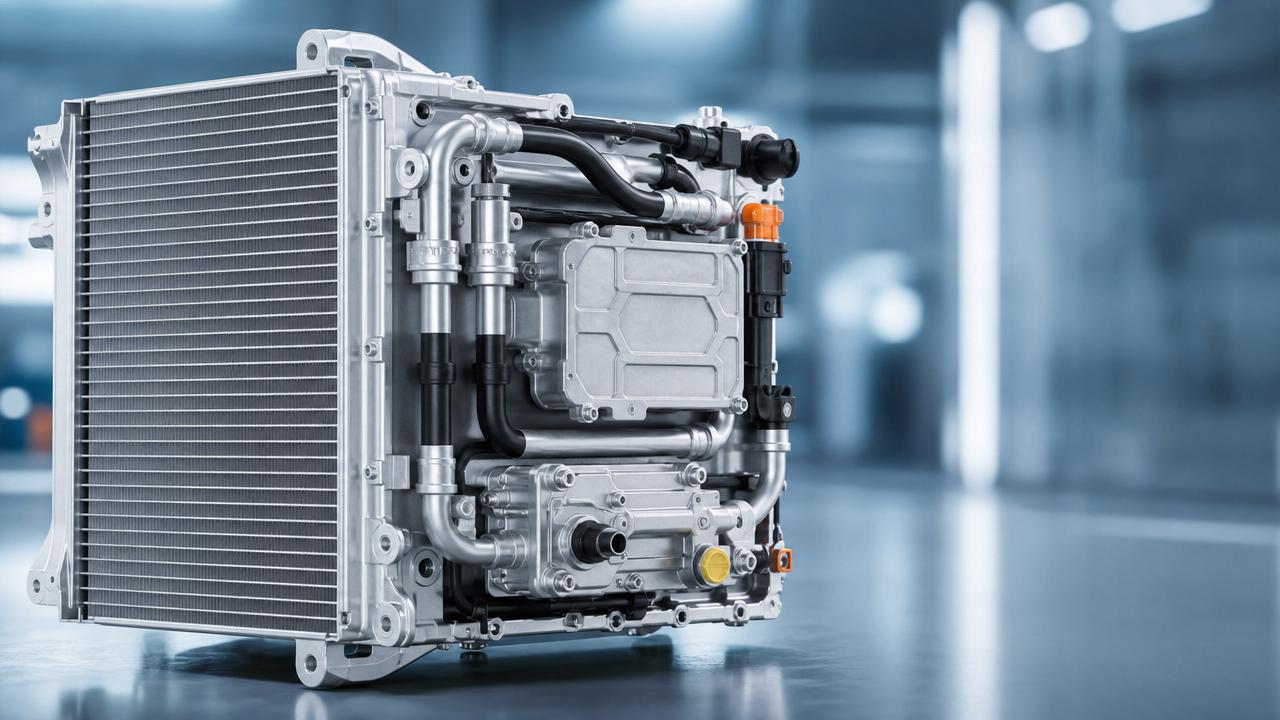
Battery Thermal Stability Is Becoming a Core Reliability Signal
In new energy vehicles, radiator performance directly impacts battery temperature stability, safety, and long-term reliability.
For quality control and safety management, the New Energy Vehicle Radiator is no longer a secondary cooling part.
It is a decisive link in thermal balance, charging consistency, and component durability.
As battery systems become denser and faster-charging, radiator-related defects can trigger overheating, uneven cooling, reduced range, and protection shutdowns.
That is why radiator issues deserve closer technical review, especially in parts quality, structural design, and system matching.
For the auto parts sector, this shift reflects a wider trend.
Cooling modules are moving from conventional heat rejection roles toward integrated thermal control functions.
Liaocheng Xinde Auto Parts Co., Ltd., founded in 2018, has grown rapidly in this field.
The company focuses on water tank radiators, intercoolers, heavy truck cooling parts, and new energy radiator modules for global markets.
Why New Energy Vehicle Radiator Risks Are Rising Faster Than Before
Battery platforms are changing quickly, and thermal management loads are increasing with them.
Higher energy density means more heat inside a smaller packaging space.
Fast charging adds sudden thermal peaks, while extreme climates test cooling systems for longer periods.
At the same time, lightweight vehicle design can reduce thermal margin if the radiator module is undersized or poorly matched.
This makes the New Energy Vehicle Radiator a direct contributor to battery temperature consistency.
It also means small defects now create bigger operational consequences than they did in older vehicle architectures.
Key trend signals seen across cooling system applications
- Cooling modules must support battery, motor, and power electronics together.
- Radiators face wider temperature swings during urban stop-start and rapid charging cycles.
- Material quality variation now has stronger impact on long-term thermal performance.
- System contamination and flow restriction are appearing earlier in service life.
- OEM validation is placing more attention on thermal stability, not only burst strength.
The Main Radiator Issues That Disturb Battery Temperature Control
Several radiator faults can interfere with battery cooling performance, even before complete failure occurs.
Most of these issues start as small efficiency losses.
Over time, they can drive abnormal battery temperature spread and repeated thermal stress.
1. Internal blockage reduces coolant flow stability
Deposits, manufacturing debris, or corrosion particles can narrow flow passages.
When coolant volume drops, heat transfer efficiency declines.
The battery loop may then cool unevenly, especially under heavy charging or climbing loads.
2. Fin deformation weakens heat exchange
External fins are critical to airflow-based cooling.
If fins bend during transport, assembly, or service, the radiator loses effective surface area.
This reduces the ability of the New Energy Vehicle Radiator to reject heat during peak thermal events.
3. Poor brazing or weld quality creates local thermal weakness
Weak joints may not fail immediately, but they can reduce structural and thermal reliability.
Micro-leaks, pressure instability, and localized hot spots often begin at these connection points.
4. Material mismatch accelerates corrosion
Mixed metals, low-grade aluminum, or poor coating control can promote corrosion inside the radiator core.
Corrosion products restrict flow and contaminate the wider thermal loop.
Battery cooling stability then declines gradually, making the issue harder to detect early.
5. Inadequate pressure resistance affects operating consistency
New energy cooling circuits may face changing pressure conditions.
If a radiator cannot maintain integrity, coolant circulation may fluctuate.
That instability directly affects battery temperature control precision.
What Is Driving These Failures Across the Parts Supply Chain
The rising failure rate is usually not caused by one factor alone.
It often comes from combined weaknesses in design, materials, production, and validation.
These drivers show why radiator assessment should include both component-level and system-level analysis.
A radiator that passes basic pressure tests may still fail thermal expectations in actual vehicle duty cycles.
The Operational Impact Reaches Beyond Cooling Performance Alone
When the radiator underperforms, the first visible symptom may be battery temperature drift.
However, the broader effects usually spread across the full thermal management system.
Battery cells may age unevenly because some zones remain hotter than others.
Charging speed may be limited by protection strategies.
Range performance can fall in hot weather because the system uses more energy for cooling support.
Repeated thermal cycling also increases stress on pumps, hoses, seals, and electronic controls.
Areas most affected by radiator-related thermal instability
- Battery pack safety margin
- Charging efficiency and speed consistency
- Cell life and pack balance
- Thermal system maintenance frequency
- Vehicle uptime and field reliability
This is why the New Energy Vehicle Radiator should be evaluated as a risk-control component, not only a cooling accessory.
Where Technical Attention Should Be Focused Now
Current industry movement points toward stricter thermal consistency requirements.
That makes several checkpoints more important than before.
- Verify core cleanliness after production and before assembly.
- Test corrosion resistance under realistic coolant chemistry conditions.
- Check airflow performance with full module integration, not isolated bench assumptions.
- Monitor brazing consistency and leak resistance at batch level.
- Review thermal performance during fast charging, hill climbing, and high ambient conditions.
- Assess pressure cycling durability, not only static pressure resistance.
In some applications, proven radiator engineering from other vehicle segments can also provide useful reference.
For example, RADIATOR FOR XD316 supports Benz-related use scenarios and reflects the importance of model-specific matching.
Part numbers such as 9425001003 and 62653a show how accurate identification helps avoid installation and performance mismatch.
A Practical Path for Better Thermal Risk Judgment
A stronger response begins with better failure prediction, not just post-failure replacement.
The following approach helps improve radiator-related battery temperature control.
This method supports earlier intervention and lowers the chance of battery safety incidents caused by cooling degradation.
The Next Step Is to Treat Radiator Quality as Battery Protection
The market direction is clear.
As electric platforms evolve, battery thermal control will depend more heavily on radiator precision, durability, and system compatibility.
That is why every New Energy Vehicle Radiator should be judged by real thermal outcomes, not appearance or basic specification alone.
Closer attention to blockage risk, corrosion behavior, joint quality, pressure durability, and airflow efficiency can prevent larger failures later.
For organizations improving thermal system reliability, the practical next move is simple.
Review radiator quality standards against current battery heat loads, strengthen validation under real operating conditions, and prioritize suppliers with stable engineering capability.
That approach turns the New Energy Vehicle Radiator from a hidden risk point into a measurable safety advantage.