



Why Agricultural Radiators Clog Faster in Dust-Heavy Conditions
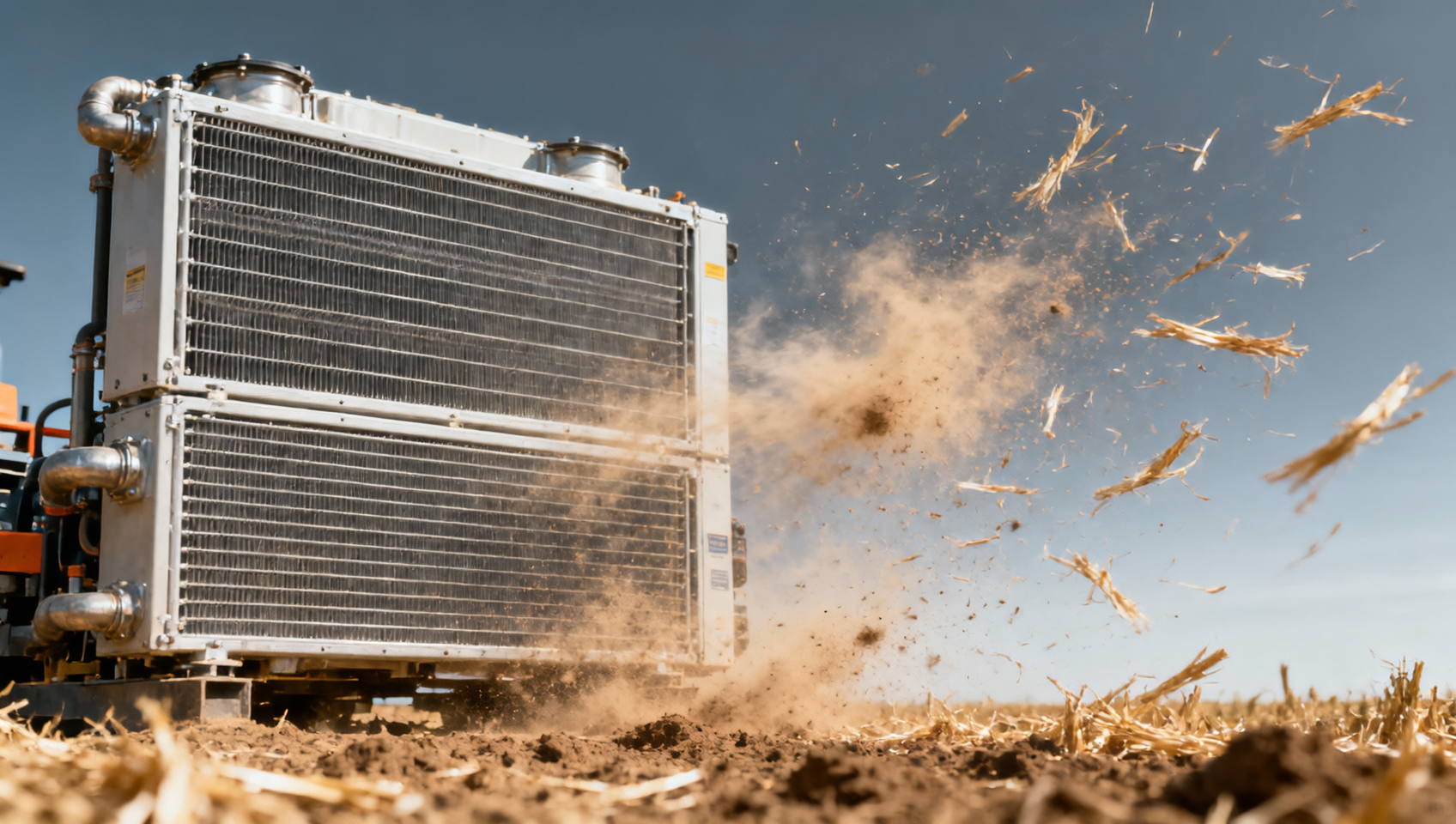
In dust-heavy farming environments, an Agricultural radiator can clog far faster than a standard Vehicle radiator, reducing cooling efficiency and increasing downtime. For buyers and technical evaluators comparing a Heavy duty truck radiator, Excavator radiator, Condenser, or New Energy Vehicle Radiator, understanding the causes of blockage is essential for reliable equipment performance, lower maintenance costs, and smarter component selection.
Why do agricultural radiators clog faster than standard vehicle radiators?
Agricultural machines operate in a very different contamination profile from on-road vehicles. Tractors, harvesters, sprayers, and field loaders often run for 8–16 hours per day in crop residue, pollen, chaff, soil dust, and oily airborne particles. When these materials pass through the cooling pack, they settle on the fin surface and gradually block airflow. A standard vehicle radiator may face road dust and urban debris, but an agricultural radiator must deal with much higher particle concentration over longer continuous operating cycles.
The blockage process is usually not caused by one factor alone. Fine dust forms the first layer, then fibrous crop material bridges across fins, and finally moisture or oil mist helps debris adhere more firmly. This three-stage buildup can happen quickly during harvesting, tilling, or dry-season fieldwork. Once airflow drops beyond a practical threshold, coolant temperature rises, fan load increases, and the machine may lose productivity before any visible radiator failure appears.
For technical assessment teams, the key issue is not only clogging speed but cooling system tolerance. In heavy-duty applications, even a small drop in airflow through the radiator core, intercooler, or condenser stack can affect engine thermal balance. This is why off-highway equipment often requires stronger fin design, optimized tube geometry, and easier cleaning access compared with a general vehicle radiator used in cleaner traffic conditions.
For procurement and commercial decision-makers, faster clogging translates into measurable operating risk: more cleaning intervals, more unscheduled stops, more fuel waste from high fan engagement, and potentially shorter service life for surrounding cooling components. In parts sourcing, the radiator should therefore be evaluated as part of the total thermal management package rather than as a simple price-based replacement item.
- Higher airborne dust load during field operations, especially in dry harvest and soil preparation seasons.
- Longer continuous operation windows, commonly 6–12 hours and often extending to 16 hours in peak periods.
- Mixed debris composition including powder, fibers, seeds, and moisture, which creates layered blockage.
- Tighter cooling-pack layouts where radiator, condenser, and charge air cooler interact and trap contaminants.
What makes the farming environment especially aggressive?
Field conditions create a dense contamination cloud close to the machine intake path. Unlike highway vehicles, agricultural equipment often disturbs its own dust source at close range. Ground speed may be moderate, but fan suction is strong, and debris is pulled directly from the machine’s working area. In some applications, the radiator core is exposed to repeated dust cycling every few minutes as the machine turns, reverses, or follows wind direction.
Seasonal variation also matters. During dry harvesting, larger organic fragments can rapidly coat the front face of the cooling module. During wet or humid operation, mud mist and oily grime create adhesive contamination that is harder to remove by routine air blowing. This means two machines with the same radiator size may show very different maintenance frequency depending on crop type, soil condition, and operator cleaning discipline.
How fast can performance deteriorate?
In practice, deterioration is often progressive rather than sudden. The first sign may appear as rising operating temperature during the hottest 1–3 hours of the day or under peak engine load. If ignored, the machine may require cleaning every few days instead of every 2–4 weeks. For fleet buyers, this is why maintenance interval planning should be part of radiator evaluation, especially for dust-heavy agricultural and construction crossover applications.
Which design factors increase or reduce clogging risk?
Not every radiator reacts the same way in dusty service. Core fin pitch, tube spacing, frontal area, pack arrangement, and shroud airflow design all influence how quickly particles accumulate. A denser fin pattern may improve nominal heat exchange in clean conditions, but in dust-heavy work it can trap debris sooner. By contrast, a more balanced fin structure may deliver more stable real-world cooling over a longer service interval, even if laboratory conditions suggest a different ranking.
Material quality also matters because repeated cleaning can stress the fin surface and joints. Agricultural and heavy-duty fleets often use compressed air, low-pressure water, or scheduled manual cleaning. If the core is too delicate, frequent maintenance may bend fins, reduce airflow, or weaken long-term durability. Technical evaluators should therefore review not only initial cooling performance but also how the radiator survives 12–24 months of real maintenance practice.
The layout of adjacent cooling components is another major factor. In many machines, the condenser, charge air cooler, and radiator are stacked. Dust may accumulate on the first layer and then migrate inward, making the rear core difficult to inspect. This is one reason why clogging complaints are sometimes misdiagnosed as engine or thermostat issues. For procurement teams, understanding the whole cooling stack avoids expensive trial-and-error replacement.
Liaocheng Xinde Auto Parts Co., Ltd., established in 2018 with registered capital of 5 million RMB and total investment of 50 million RMB, focuses on water tank radiators, intercoolers, construction machinery radiators, heavy truck cooling parts, and new energy radiator modules. For B2B buyers, that specialization is important because field reliability depends on coordinated thermal management experience rather than on a generic parts catalog approach.
The table below helps compare common design considerations that affect clogging speed and maintenance planning in agricultural and other heavy-duty radiator applications.
This comparison shows why the lowest unit price is rarely the lowest operating-cost option. A radiator that needs cleaning twice as often or loses airflow earlier can increase labor hours, interrupt harvest schedules, and create downstream wear on fans and related parts.
How should technical teams verify radiator suitability?
A practical evaluation usually includes 4 checkpoints: dimensional fit, core structure, airflow path, and service access. If one of these is ignored, the radiator may match the machine physically but still underperform in dusty operation. This is especially relevant when comparing replacement parts across multiple suppliers.
For some fleets that manage mixed assets, it is also useful to compare off-highway radiators with on-road and passenger vehicle thermal components. For example, a product such as Radiator for Benz may be engineered for engine cooling and thermal management in Mercedes-Benz passenger cars and commercial vehicles, with models such as W124 E-Class, W206 C-Class, and W242 Electric Drive series. That contrast helps buyers understand why application-specific core design is critical: duty cycle, contamination load, OE fitment, and cleaning requirements differ significantly across sectors.
How should buyers compare agricultural radiator options for heavy-duty use?
A strong procurement process should connect technical fit, operating cost, and supplier capability. For agricultural, construction, and heavy truck parts, buyers often focus first on dimensions and price. That is necessary, but not sufficient. The more effective method is to compare 5 key areas: application matching, thermal load, contamination tolerance, maintenance convenience, and delivery reliability. This reduces the chance of buying a part that fits the frame but fails the season.
Commercial evaluators should also look at business continuity factors. A supplier with established production, stable export support, and relevant manufacturing focus is better positioned to support repeat orders, specification confirmation, and adaptation across multiple machine platforms. Liaocheng Xinde Auto Parts Co., Ltd. has built its business around radiators, intercoolers, construction machinery cooling systems, heavy truck applications, and new energy radiator modules, which is directly relevant for buyers needing broader parts coordination.
Lead time matters as much as technical data. In many B2B procurement cycles, standard samples may be reviewed in 7–15 days, while formal production and shipment planning can extend to 2–4 weeks or more depending on quantity, season, and destination. During peak agricultural periods, delayed replacement can be more expensive than a moderate difference in unit price. That is why buyers should ask not only what is available, but when it can be supplied consistently.
Where product crossover exists, purchasers may review OE numbers, warranty terms, certification, and size data to understand the supplier’s process discipline. For instance, the linked Benz cooling product references OE NO. 2025005203 / 202 500 52 03, CE certification, a 1-year warranty, and a 20X15X10 cm size. Such details do not make it suitable for an agricultural machine by default, but they do show the kind of specification transparency buyers should expect when sourcing any radiator component.
A practical selection checklist for technical and purchasing teams
Before approving a supplier or replacement radiator, it is useful to align the engineering and purchasing teams around the same evaluation structure. That avoids the common problem where procurement approves based on cost while maintenance later discovers cleaning difficulty or thermal instability in field use.
- Confirm exact application conditions: crop type, dust intensity, daily running hours, and whether the machine works in dry, humid, or mixed environments.
- Check cooling-pack architecture: radiator only, or radiator plus condenser and intercooler stack with restricted access.
- Verify service method: compressed air, water rinse, manual cleaning interval, and acceptable fin durability after repeated maintenance.
- Review commercial points: sample timing, batch supply, export communication, warranty coverage, and documentation consistency.
- Ask for confirmation of dimensions, core structure, and replacement compatibility before final quotation comparison.
The table below provides a more structured purchasing comparison for agricultural radiator decisions.
Used correctly, this matrix helps buyers make decisions on total suitability rather than on unit cost alone. It is also helpful when comparing a Heavy duty truck radiator, Excavator radiator, Condenser, and New Energy Vehicle Radiator within one supplier conversation, because the thermal duty and contamination exposure differ by application.
What maintenance mistakes make blockage worse, and how can fleets reduce downtime?
Many blockage problems are accelerated by maintenance habits rather than by radiator defects alone. A common mistake is cleaning only the visible outer layer while debris remains trapped between the condenser, intercooler, and radiator. Another is using excessive pressure that bends fins and creates permanent airflow restriction. In field service, small cleaning errors repeated every week can shorten practical radiator efficiency much faster than most buyers expect.
Another issue is delayed inspection. Teams often wait until overheating alarms appear, but by then the machine may already have lost stable thermal reserve. A better approach is a 3-stage maintenance rhythm: daily visual check during peak dust season, scheduled cleaning every few operating days based on site conditions, and deeper inspection at regular service intervals such as monthly or per major work cycle. This method is simple but effective for reducing emergency downtime.
Fleet managers should also separate contamination-related overheating from internal coolant-side problems. External fin blockage, internal scaling, fan control issues, and coolant flow restrictions can produce similar symptoms. For business evaluators, this distinction matters because replacing a radiator without checking the full system may not solve the operating issue and can create unnecessary procurement cost.
Companies supplying radiators for heavy trucks, construction equipment, and new energy thermal modules usually understand this systems perspective better than general traders. Liaocheng Xinde Auto Parts Co., Ltd. has received provincial and municipal honors including High-tech Enterprise, Civilized and Honest Enterprise, and Trustworthy Unit for Consumers. For B2B buyers, these recognitions should be viewed as supporting background, while final decisions should still rely on technical fit, manufacturing communication, and delivery execution.
Common maintenance misconceptions
The following points often cause avoidable downtime and should be reviewed by maintenance, purchasing, and operations teams together.
- “If the front face looks clean, airflow is fine.” In stacked cooling packs, internal layers can remain heavily blocked.
- “Denser core always means better cooling.” In dusty service, excessively dense fins may lose airflow sooner.
- “Any radiator with matching size is acceptable.” Service access, fin structure, and real-duty tolerance are equally important.
- “Overheating means radiator replacement.” The cause may also involve fan control, coolant flow, or combined cooling-pack contamination.
Downtime reduction suggestions
A practical downtime reduction plan usually includes 4 actions: define cleaning intervals by season, train operators on correct airflow direction during cleaning, inspect the full cooling stack rather than one core, and keep replacement sourcing ready before peak workload periods. These steps are especially important when machines are expected to run continuously across narrow harvest windows.
FAQ: what do technical evaluators and buyers usually ask before ordering?
How do I know whether a radiator is suitable for dust-heavy farming conditions?
Start with 3 checks: actual machine application, cooling-pack layout, and cleaning method. If the equipment works in harvest, tillage, or dry soil transport for 8–16 hours per day, ask the supplier about fin structure, service access, and contamination tolerance rather than only nominal cooling claims. It is also wise to compare maintenance interval expectations under similar operating conditions.
What should procurement teams ask besides price?
Ask for dimensional confirmation, application scope, OE or reference number alignment if relevant, sample availability, warranty terms, and typical lead time such as 7–15 days for samples or 2–4 weeks for production planning. Also confirm whether the supplier can support multiple related components like radiators, intercoolers, and condenser-related thermal parts if your fleet requires consolidated sourcing.
Can a heavy truck or construction radiator design insight help agricultural equipment sourcing?
Yes. Heavy truck radiator and Excavator radiator experience can be highly relevant because these applications also face long duty cycles, vibration, and contamination. However, buyers should still verify agricultural-specific exposure such as crop fiber and self-generated dust clouds. Cross-sector experience is valuable when it improves thermal design understanding, not when it replaces application matching.
Are certification and warranty important in B2B radiator purchasing?
They are important, but they should be treated as part of a broader evaluation. Certification such as CE, where relevant to the product and market, and a 1-year warranty can support internal review. Still, long-term satisfaction usually depends more on fitment accuracy, production consistency, communication quality, and whether the radiator performs reliably in the actual operating environment.
Why choose a specialized radiator manufacturer for procurement planning?
For technical evaluators, a specialized manufacturer offers more than a part number. The real advantage is coordinated understanding of radiator structure, intercooler matching, construction machinery cooling demands, heavy truck operating loads, and the growing requirements of new energy thermal management. That broader capability helps buyers reduce selection risk when projects involve mixed platforms or multiple replacement cycles.
Liaocheng Xinde Auto Parts Co., Ltd. has focused its development on radiator and related cooling component manufacturing since 2018, supported by 5 million RMB registered capital and 50 million RMB total investment. Its business scope covers water tank radiators, intercoolers, construction machinery radiators, heavy truck parts, and new energy radiator modules for global sales. For sourcing teams, this means discussions can move beyond basic quoting into specification confirmation and application-based solution matching.
If you are comparing agricultural radiator options, a Heavy duty truck radiator replacement program, an Excavator radiator sourcing plan, or related condenser and thermal management components, the most useful next step is a technical-commercial review. This should include 6 points: machine model, operating environment, core dimensions, replacement reference, expected order quantity, and target delivery window. With that information, product selection becomes faster and more accurate.
Contact us to discuss parameter confirmation, product selection, delivery cycle, custom solution needs, certification-related questions, sample support, and quotation planning. For B2B buyers under tight timing or complex application demands, a clear pre-order review can reduce mismatch risk, improve maintenance planning, and support a more reliable purchasing decision.