



When Is a Condenser Cleaning No Longer Enough?
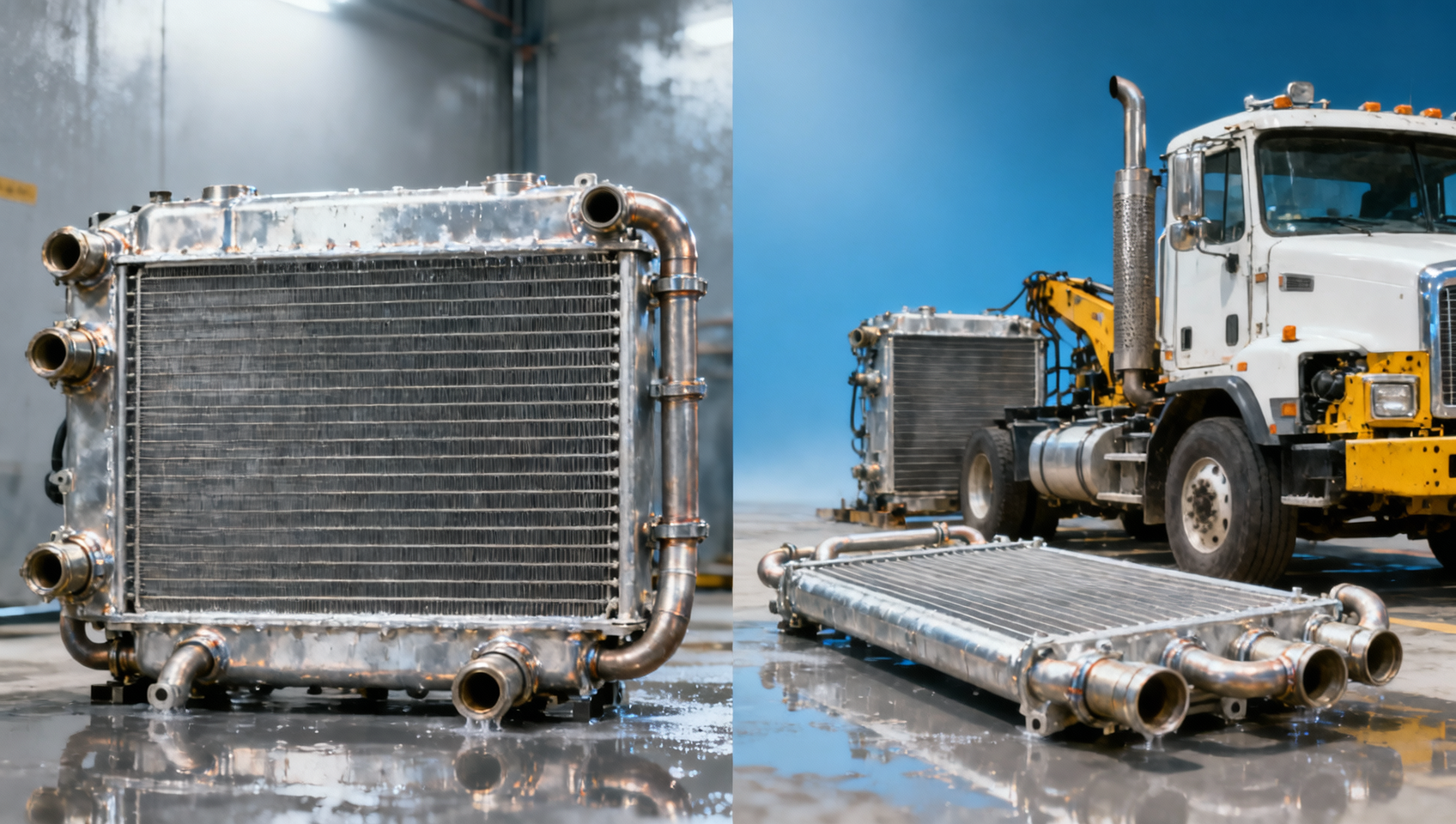
When a Condenser keeps underperforming after repeated cleaning, the issue may involve deeper damage affecting the entire thermal system. For buyers and technical evaluators sourcing a Vehicle radiator, Heavy duty truck radiator, Excavator radiator, Agriculturaal radiator, or New Energy Vehicle Radiator, recognizing when cleaning is no longer enough is critical to preventing downtime, rising costs, and system failure. This article explains the warning signs and replacement considerations.
Why does condenser performance keep dropping after cleaning?
In the parts industry, condenser cleaning is often treated as the first corrective step when heat exchange performance falls. That makes sense when the issue is external dust, oily residue, insects, mud, or surface blockage. However, when cooling efficiency remains unstable after 2–3 cleaning cycles within a short maintenance interval, technical teams should start evaluating whether the problem has moved beyond contamination and into structural or internal failure.
This matters even more in commercial vehicles, heavy trucks, construction machinery, and new energy thermal systems, where a condenser does not work in isolation. It affects compressor load, coolant temperature balance, airflow management, and in some configurations the efficiency of the radiator pack as a whole. A weak condenser can cause temperature drift of 5℃–15℃ under load, which may look like a minor fluctuation at first but can lead to repeated shutdowns or accelerated wear.
For procurement personnel and business evaluators, the real risk is not only maintenance cost. The larger issue is hidden total cost: unplanned service labor, equipment idling, delayed delivery, lower fleet availability, and the possibility of replacing related components later because the root cause was missed. In B2B sourcing, a cheaper cleaning action can become the more expensive decision if failure returns within weeks instead of restoring stable operation for a normal service period.
Liaocheng Xinde Auto Parts Co., Ltd., established in 2018 with a registered capital of 5 million RMB and a total investment of 50 million RMB, focuses on the research, production, and global sales of water tank radiators, intercoolers, construction machinery radiators, and heavy truck and new energy radiator modules. For buyers comparing repair versus replacement, working with a manufacturer that understands complete thermal system interaction is more practical than evaluating a single part in isolation.
- Cleaning is usually effective for external airflow restriction caused by dust, chaff, mud, or light oil film.
- Cleaning is usually not enough for tube deformation, internal blockage, brazing fatigue, leakage, or corrosion-related loss of heat transfer area.
- If system performance drops again within 7–30 days after cleaning, a replacement review should be triggered.
What changes from a maintenance issue to a component issue?
A maintenance issue is usually reversible. Remove the contamination, restore airflow, and performance returns close to baseline. A component issue is different. The condenser may look cleaner, but airflow paths are still compromised because the fins are flattened, the tubes are partially restricted, or the internal passages no longer circulate refrigerant or coolant evenly. In that condition, surface appearance can mislead a non-specialist inspection.
Another common transition point is repeated thermal cycling. In trucks, excavators, agricultural machinery, and stop-and-go urban vehicles, the condenser pack experiences vibration plus temperature swings over long operating hours. Once brazed joints weaken or tube walls degrade, no washing process can restore the original thermal conductivity or pressure resistance. This is where technical assessment should move from “How do we clean it better?” to “Is the current unit still fit for service?”
What warning signs show that cleaning is no longer enough?
Technical evaluators need observable criteria, not vague impressions. In practical field conditions, there are several signs that strongly suggest a condenser has crossed from serviceable contamination into performance-limiting damage. These signs should be checked together over 3 dimensions: thermal behavior, structural condition, and operating stability. Looking at only one symptom often leads to incomplete decisions.
One clear sign is recurring high operating temperature after cleaning and airflow recovery. If a system still runs hot during normal ambient conditions or reaches overheating under moderate duty instead of peak duty, the condenser’s effective heat exchange area may already be compromised. Another sign is compressor or fan cycling becoming abnormal, because the thermal load can no longer be dissipated consistently.
Physical damage is equally important. Bent fins across a broad section, corrosion at joints, oil staining around leaks, impact damage from debris, or evidence of repeated pressure loss all indicate that cleaning cannot restore the original design condition. In heavy-duty applications, even partial fin collapse across 15%–20% of the core area can materially reduce airflow and raise thermal stress on the rest of the module.
Procurement teams should also watch for repeat maintenance patterns. If the same unit requires repeated interventions every month, every quarter, or after each demanding operating cycle, then the purchasing question is no longer “Can we postpone replacement?” but “How much downtime are we buying by delaying replacement?”
The table below helps differentiate a dirty condenser from a damaged condenser in terms relevant to parts sourcing and maintenance planning.
For technical teams, the strongest replacement signal is the combination of recurring thermal instability plus visible structural degradation. For decision-makers, that combination usually justifies moving from maintenance budget to replacement budget before surrounding parts are affected.
Four field indicators that deserve immediate review
1. Persistent overheating under normal load
If overheating happens during ordinary transport, idle-to-load transitions, or moderate ambient conditions rather than only during extreme summer peaks, the condenser may have lost enough exchange efficiency that cleaning cannot restore.
2. Repeated pressure or leakage issues
Recurring leakage around joints or tube areas points to fatigue or corrosion. Washing the core may improve appearance, but it does not address metal degradation or weakened sealing integrity.
3. Broad fin deformation
When deformation is spread across multiple sections rather than limited to small edge damage, airflow reduction becomes cumulative. This often appears in off-road equipment, excavators, and agricultural machinery exposed to debris impact.
4. Short-lived recovery after service
If service results last days rather than months, the condenser is likely masking a deeper issue. Short recovery intervals are one of the most practical signs that replacement analysis should begin immediately.
How should buyers compare cleaning, repair, and replacement?
For B2B procurement, the right decision is rarely based on the part price alone. Technical and commercial teams should compare 3 layers at the same time: immediate cash outlay, expected service stability, and operational risk. Cleaning has the lowest direct cost, repair may appear to balance cost and lifespan, and replacement has the highest upfront spend. Yet the lowest invoice does not always mean the lowest total ownership cost.
This is especially true where vehicle uptime matters more than workshop savings. A heavy duty truck radiator pack, excavator radiator assembly, or new energy vehicle thermal module usually supports revenue-generating equipment. When a condenser fails repeatedly, indirect losses can exceed the part value quickly. That is why many professional buyers now use a 4-step review: inspect, compare duty cycle, estimate interruption cost, and then choose the most stable path.
A practical sourcing strategy is to classify the unit into one of 3 categories: recoverable contamination, repairable local damage, or replacement-level degradation. This avoids the common mistake of sending every weak condenser through the same maintenance routine even when the field symptoms clearly differ.
Manufacturers with broad experience in radiators, intercoolers, construction machinery radiators, and new energy radiator modules can assist this classification because they understand cross-platform differences in airflow path, core structure, brazing design, and application stress.
The following comparison table is useful for procurement teams reviewing maintenance budgets against replacement planning.
In many fleet and machinery scenarios, replacement becomes financially sensible earlier than expected once labor, machine idling, scheduling disruption, and risk to connected cooling components are included in the evaluation.
A practical 5-point procurement checklist
- Check whether the unit recovered fully after the last cleaning and how long the recovery lasted.
- Review fin condition, tube condition, joint condition, and any visible signs of corrosion or impact.
- Compare operating environment: road dust, mud, quarry work, farm debris, urban stop-start, or high-ambient transport.
- Estimate downtime cost over the next 3–6 months rather than only the current maintenance invoice.
- Confirm whether a replacement supplier can support specification matching, sample review, and normal lead-time planning.
What technical specifications matter when replacing a condenser or related radiator component?
Once cleaning is no longer enough, the replacement decision should focus on fitment accuracy, core design, material choice, and operating environment. In the auto parts sector, a visually similar unit may still perform poorly if airflow resistance, brazed core quality, mounting points, or connection layout do not match the application. Procurement mistakes often happen when buyers compare only part appearance or nominal dimensions without considering full thermal duty.
Material is one of the first checkpoints. Aluminum is widely selected because it supports lightweight construction and efficient heat transfer in many automotive cooling systems. But material alone is not enough. Buyers also need to confirm the manufacturing method, because a brazing radiator structure can influence durability, thermal consistency, and compatibility with demanding driving or working conditions.
For example, in passenger-vehicle-related cooling applications, an aluminum brazed design may be preferred where weight control and stable thermal performance are both priorities. A relevant reference item is Radiator for Lynk, model 2069525700, designed for the automotive cooling system and specified for Link 06 / binyue. Its published details include aluminum material, a brazing radiator structure, 83X14X58 cm single-item packaging dimensions, and a 12-month warranty.
For technical teams, the value of such a product reference is not limited to one vehicle model. It illustrates the type of specification discipline buyers should expect: application clarity, material transparency, warranty term, and fitment detail. When a replacement part claims to provide thermal stability for demanding driving conditions, evaluators should still verify installation space, connection compatibility, and realistic duty cycle rather than relying on description alone.
Core specification points that should be confirmed before ordering
Fitment and model matching
Part number, vehicle or equipment model, connection position, and mounting interface should match exactly. Even small mismatch in layout can increase installation time or reduce cooling path efficiency.
Material and manufacturing process
Aluminum and brazed constructions are common in modern cooling systems, but buyers should review whether the design suits vibration level, thermal cycling, and intended service interval.
Duty cycle and thermal expectation
Ask whether the replacement is intended for standard road use, high-load transport, off-road machinery, or mixed stop-start operation. Those duty categories are not interchangeable in real working conditions.
Supply assurance
For B2B orders, a practical review includes sample availability, packing method, warranty terms, and normal lead-time expectations such as 2–4 weeks for standard planning, depending on quantity and confirmation speed.
How do different applications change the replacement decision?
Not every underperforming condenser should be judged by the same threshold. Vehicle radiator systems, heavy duty truck radiator packs, excavator radiator assemblies, agricultural radiator configurations, and new energy vehicle radiator modules face very different contaminants, duty cycles, and downtime costs. A buyer serving multiple product lines should not use one replacement rule across all equipment categories.
In heavy trucks, long-distance reliability and thermal stability under sustained highway load are major concerns. In excavators and agricultural equipment, debris impact, mud, and vibration accelerate fin damage and blockage recurrence. In new energy platforms, thermal management precision can be more sensitive because cooling performance affects broader battery or electronic temperature control strategies. This means the decision to replace may need to be made earlier than in conventional light-duty applications.
This is where supplier capability matters. A manufacturer serving water tank radiators, intercoolers, construction machinery radiators, and heavy truck and new energy radiator modules is better positioned to discuss cross-application fitment logic, material selection, and operational trade-offs. Liaocheng Xinde Auto Parts Co., Ltd. has expanded rapidly since its establishment and has received provincial and municipal honors such as High-tech Enterprise, Civilized and Honest Enterprise, and Trustworthy Unit for Consumers, which supports confidence in structured manufacturing and business reliability.
For enterprise decision-makers, the lesson is clear: the replacement threshold should reflect application risk. If one hour of machine idling creates a meaningful operational loss, waiting for a fully failed condenser is usually a poor strategy. Planned replacement is often less disruptive than forced replacement.
The application table below can help teams align maintenance strategy with operating environment.
The key takeaway is that the harsher and more interruption-sensitive the environment, the less value there is in repeating short-term cleaning measures once damage indicators are visible.
FAQ for technical evaluators and purchasing teams
How many times should a condenser be cleaned before replacement is considered?
There is no universal number, because operating environment matters. Still, if 2–3 proper cleaning attempts do not restore stable performance, or if the same issue returns within 7–30 days, the unit should be inspected for deformation, leakage, internal restriction, or corrosion. The decision should be symptom-based rather than calendar-based.
Is visible cleanliness enough to confirm the condenser is healthy?
No. A clean-looking surface does not confirm effective internal flow or intact core structure. Buyers should also review pressure stability, heat rejection behavior, fin geometry, and service history. Appearance is only one checkpoint among at least 4 important ones.
What should procurement ask a supplier before replacing a radiator or condenser-related part?
Ask for model confirmation, application match, material, manufacturing method, warranty terms, packing details, and normal lead time. Also ask whether the supplier can support sample review, quantity planning, and technical confirmation for special-duty applications such as heavy trucks, construction equipment, or new energy platforms.
Are cheaper repaired units a good alternative to replacement?
They can be, but only when the damage is limited and the remaining structure is sound. In high-vibration or high-load applications, repair economics often weaken if the unit returns to service only briefly. Evaluate not just repair price but expected service interval, labor repetition, and downtime exposure over the next 3–6 months.
Why work with us when evaluating replacement options?
For technical assessment and purchasing decisions, the most useful supplier is one that understands both product manufacturing and application reality. Liaocheng Xinde Auto Parts Co., Ltd. specializes in water tank radiators, intercoolers, construction machinery radiators, and related components for heavy trucks and new energy radiator modules. That product focus allows discussions to move beyond generic sales language into fitment, operating condition, and replacement practicality.
If your team is deciding whether cleaning is still viable or whether replacement is the smarter route, we can support structured review in 4 areas: parameter confirmation, product selection, delivery cycle discussion, and customized solution matching. This is particularly helpful when you manage mixed fleets, machinery platforms, or multiple procurement priorities at the same time.
We can also help you review application-specific requirements such as automotive cooling system fitment, heavy-load thermal stability, aluminum versus alternative construction logic, packaging expectations for single-item or batch shipments, warranty communication, and sample support planning. For projects under time pressure, early specification confirmation can reduce avoidable back-and-forth by 1–2 procurement rounds.
If you are comparing replacement options now, contact us with your model information, usage scenario, quantity estimate, and required timeline. Our team can assist with part matching, replacement recommendation, sample discussion, quotation communication, and delivery planning so your business can reduce downtime risk and make a more confident sourcing decision.