



Choosing an Agricultural Radiator for Long Harvest Hours
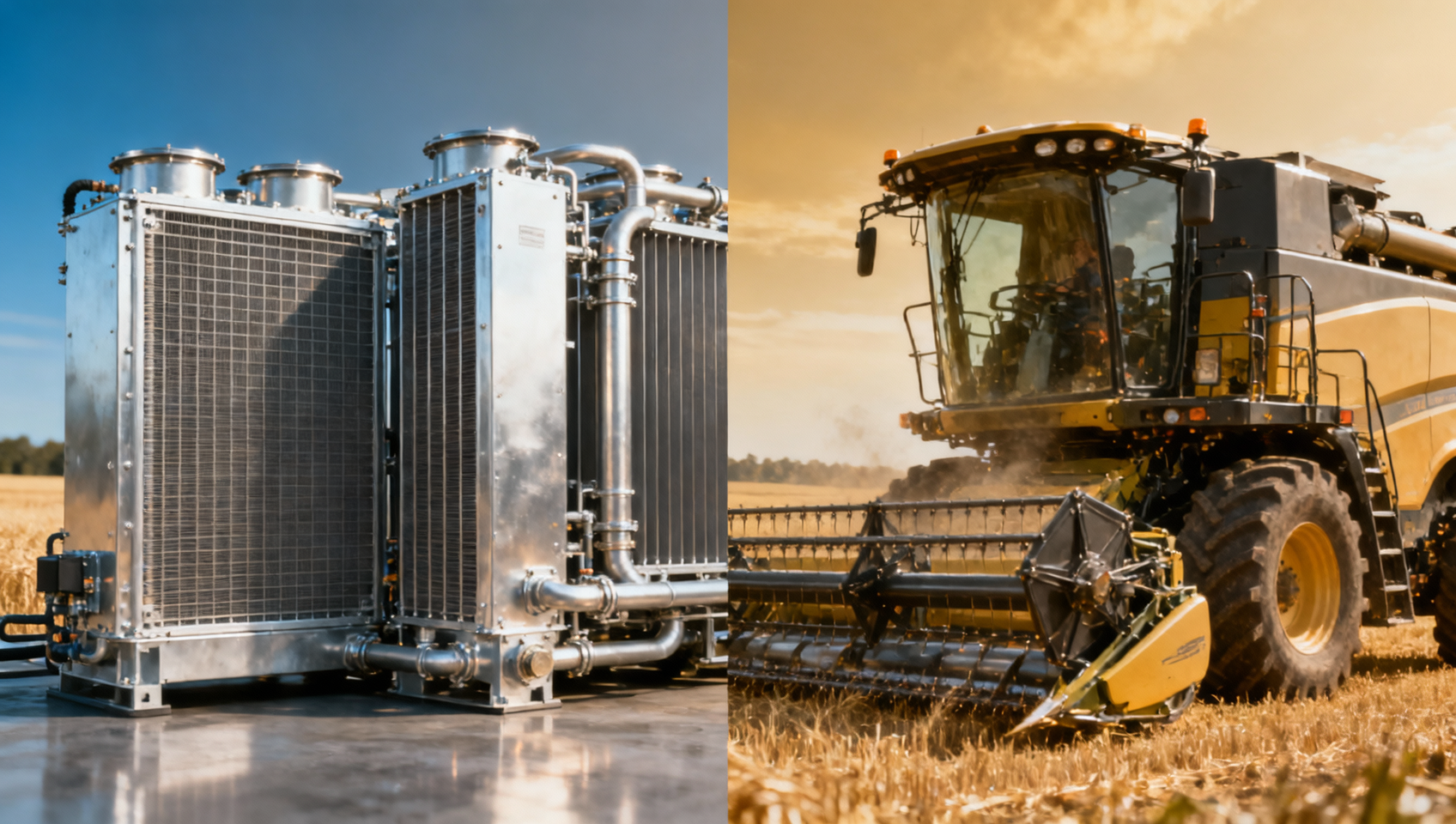
When harvest runs stretch from dawn to dark, choosing the right Agriculturaal radiator is critical to keeping machinery productive and downtime low. For technical evaluators, buyers, and decision-makers, factors such as cooling efficiency, durability, and compatibility matter just as much as cost. From Heavy duty truck radiator and Vehicle radiator solutions to Condenser, Excavator radiator, and New Energy Vehicle Radiator systems, the right choice supports reliable field performance under demanding seasonal workloads.
In peak harvest windows, a machine that stops for overheating can disrupt labor schedules, transport coordination, fuel planning, and delivery commitments in a matter of hours. That is why agricultural radiator selection should be treated as an engineering and procurement decision, not just a replacement purchase. The best-fit cooling solution must balance thermal load, vibration resistance, field contamination, material quality, and serviceability across long duty cycles that may exceed 10 to 14 hours per day.
For B2B buyers, the evaluation process is increasingly tied to supplier capability as well. Liaocheng Xinde Auto Parts Co., Ltd., established in 2018 with a registered capital of 5 million RMB and total investment of 50 million RMB, focuses on the research, production, and global sales of water tank radiators, intercoolers, construction machinery radiators, related heavy truck components, and new energy radiator modules. Its manufacturing direction is aligned with practical cooling requirements in demanding operating environments where uptime, durability, and stable supply matter.
Why Radiator Choice Matters More During Long Harvest Hours
Harvest is one of the most punishing periods for agricultural equipment because ambient temperature, engine load, dust concentration, and operating duration often rise at the same time. Combines, tractors, grain haulers, and supporting service vehicles may run in stop-and-go conditions, low-speed high-load patterns, or full-field operation for 8 to 16 hours per shift. Under these conditions, radiator performance directly affects coolant temperature control, engine efficiency, and overall machine availability.
An undersized or poorly matched agricultural radiator does not always fail immediately. More often, it causes recurring temperature spikes, reduced cooling margin in the hottest 2 to 4 hours of the day, and stress on nearby components such as hoses, fans, seals, condensers, and intercoolers. This is especially important where machines must handle both field work and road transport, making Heavy duty truck radiator and Vehicle radiator design principles relevant to mixed-use agricultural fleets.
Technical evaluators typically look beyond nominal dimensions and ask whether the core structure can maintain airflow when fins are partially blocked by chaff or dust. Buyers focus on replacement frequency, installation fit, and lead time. Decision-makers often compare the cost of a higher-grade unit with the financial impact of one unplanned stoppage during a short seasonal harvest window. In many operations, even 3 to 6 hours of downtime can affect transport cycles, labor utilization, and crop handling quality.
A reliable radiator for agricultural use must therefore be judged on heat rejection under real operating conditions, not just catalog description. It should also be compatible with the broader cooling pack, including condenser layout, shroud alignment, fan performance, mounting points, and coolant flow path. For fleets that also include construction support equipment or loaders, the same purchasing logic often extends to Excavator radiator and condenser assemblies because the working environment shares similar contamination and vibration demands.
Typical Harvest-Season Cooling Challenges
Before comparing suppliers or product drawings, procurement and technical teams should define the actual operating stress factors. The list below helps identify whether a standard radiator is enough or whether a reinforced design is more appropriate.
- Extended duty cycle of 10 to 14 hours, with limited cooling breaks between field sections.
- High airborne debris levels, especially during grain, corn, or cotton harvest, leading to partial fin blockage.
- Variable engine load caused by changing crop density, towing weight, or hydraulic system demand.
- Frequent vibration from uneven terrain, which can stress brazed joints, brackets, and hose connections.
- Mixed fleet use where one supplier may need to support agricultural, truck, and machinery cooling parts.
These conditions explain why low-price parts often become high-cost purchases over a single season. Proper selection reduces repeat replacement, lowers emergency maintenance pressure, and improves confidence in parts planning during the busiest 30 to 90 days of the year.
Core Selection Criteria for an Agricultural Radiator
A sound selection process starts with thermal demand and ends with lifecycle value. In practice, most professional buyers compare at least 4 dimensions: cooling efficiency, structural durability, dimensional compatibility, and supply reliability. Cost remains important, but it should be assessed over a service period of 12 months or longer, especially when seasonal uptime is more valuable than a small unit-price reduction.
Cooling efficiency depends on more than core size. Fin density, tube arrangement, material conductivity, coolant passage design, and airflow resistance all influence heat rejection. Aluminum radiators are often preferred for their balance of heat transfer and weight control, but the exact benefit depends on welding or brazing quality and whether the core is suited for dusty service conditions. A radiator that performs well in light road use may not perform equally well in low-speed field work.
Durability should be checked at the joint, bracket, and tank level. Field machinery experiences repeated vibration cycles, pressure fluctuation, and thermal expansion. A unit that fits correctly but lacks robust assembly quality can fail at mounting points or seams after repeated use. For this reason, buyers often request manufacturing consistency, leak testing practices, and packaging standards in addition to drawings and material descriptions.
Compatibility is another major factor. Even a high-quality radiator becomes a poor choice if hose outlets, thickness, mounting holes, fan clearance, or condenser pairing do not match the target machine. Procurement teams should confirm OE reference, engine platform, operating environment, and whether the unit integrates with intercooler or condenser assemblies. This is especially relevant where one supplier supports multiple part families, from heavy truck systems to new energy cooling modules.
Key Evaluation Factors at a Glance
The table below can be used by technical reviewers and sourcing teams as a practical comparison framework during supplier screening or replacement program planning.
The most important conclusion is that no single factor should dominate the decision. A radiator with good thermal performance but poor installation compatibility still creates field risk. Likewise, a low-cost option with uncertain batch consistency may increase total operating cost when emergency replacement, transport, and labor disruption are considered together.
A practical benchmark for procurement review
In many B2B sourcing processes, buyers use a 5-step filter: confirm OE cross-reference, review material and structure, verify dimensional fit, request warranty terms, and evaluate delivery capability. This basic sequence can eliminate a large share of mismatch risk before sample approval or volume order discussions begin.
Matching Radiator Design to Agricultural, Truck, and Equipment Applications
Agricultural fleets are rarely uniform. One business may operate harvesters, tractors, grain trucks, telehandlers, and light commercial vehicles in the same season. As a result, buyers often look for suppliers that understand not only agricultural radiator selection, but also related cooling categories such as Heavy duty truck radiator, Vehicle radiator, Condenser, and Excavator radiator requirements. This broader technical view can simplify sourcing and improve compatibility planning across equipment groups.
Heavy-duty truck cooling systems are useful reference points because they are designed for long operating hours, load variability, and transport efficiency. However, field equipment adds debris accumulation and lower airflow speed, so the cooling pack may need greater tolerance for contamination and easier cleaning access. Construction machinery radiators face similar realities, particularly where loaders or excavators support farm infrastructure, material handling, or off-season land work.
New Energy Vehicle Radiator systems are also influencing design expectations in the broader parts sector. While agricultural equipment is still dominated by internal combustion platforms in many markets, purchasing teams increasingly value modularity, efficient thermal management, and compact packaging. Suppliers that already work with new energy radiator modules often bring stronger thermal engineering discipline and broader system integration capability to conventional applications as well.
A practical example of cross-segment manufacturing capability can be seen in products such as Radiator for Lynk, model 2069525700. Although it is designed for an automotive cooling system rather than agricultural machinery, its aluminum construction, brazing radiator type, 12-month warranty, and application fit for Link 06 / binyue show the kind of structured product definition professional buyers expect. In B2B evaluation, clear specifications, dimensions such as 83X14X58 cm, and defined thermal purpose are all signs of a supplier that documents products in a way that supports faster technical review.
Application Comparison for Buyers Managing Mixed Fleets
The table below shows how cooling priorities shift across common parts categories, helping procurement teams build a more accurate sourcing checklist.
This comparison highlights an important purchasing insight: a good supplier should not only manufacture the part, but also understand the operating logic behind the application. That capability supports better communication, lower mismatch rates, and stronger long-term sourcing relationships.
What technical teams should verify
- Confirm whether the radiator is intended for steady transport duty, heavy dust exposure, or compact equipment packaging.
- Check whether the material and joining process, such as brazing, match expected vibration and heat cycling.
- Review whether the supplier can support related parts categories if future fleet consolidation is planned.
Procurement, Quality Control, and Supplier Assessment
A successful purchase is not just about picking the right radiator specification. It also depends on whether the supplier can support samples, drawings, packaging, communication, and delivery timing in a disciplined way. For agricultural customers, order planning usually begins 4 to 12 weeks before harvest. That means supplier response speed and batch consistency have a direct effect on stock readiness and replacement confidence.
Liaocheng Xinde Auto Parts Co., Ltd. operates in a manufacturing scope that includes water tank radiators, intercoolers, construction machinery radiators, heavy truck related components, and new energy radiator modules. For buyers, this matters because a supplier with broad cooling-system exposure is often better positioned to understand application differences, recommend matching solutions, and manage product development or adaptation for export-oriented requirements. The company’s development since 2018 and recognition at provincial and municipal level indicate an emphasis on organized operation and market credibility, which are important in B2B evaluation.
From a quality-control perspective, buyers should ask practical questions: Is there clear traceability between drawing and production? Are leak checks performed before shipment? How are cores protected during transport? What is the standard warranty period, and how are claims handled? Answers to these issues often reveal more about supplier reliability than a brochure alone. Even a 12-month warranty is most useful when backed by responsive communication and accurate application matching.
Commercial teams should also compare the total cost of procurement rather than unit price only. A radiator with stronger packaging, clearer fitment data, and lower replacement risk may reduce logistics cost, field labor, and emergency downtime expense. This is particularly true in international purchasing, where one incorrect batch can create delays of 2 to 6 weeks depending on route, customs process, and replacement planning.
Supplier Review Checklist
The following checklist can help procurement and business evaluation teams standardize supplier comparison before final approval.
- Product scope: Can the supplier support radiators, intercoolers, condensers, and machinery cooling parts across multiple applications?
- Technical clarity: Are models, dimensions, materials, and fitment references clearly documented?
- Production consistency: Is batch quality stable enough for repeat orders over one or more seasons?
- Commercial readiness: Are lead time, packaging, and after-sales communication defined before order confirmation?
- Risk response: Is there a clear method for handling shipping damage, fitment deviation, or warranty review?
These points are especially useful for companies building long-term sourcing programs rather than making one-time emergency purchases. Structured evaluation supports better forecasting, clearer vendor ranking, and a more reliable spare-parts strategy.
Installation, Maintenance, and Common Buying Mistakes
Even a well-selected agricultural radiator can underperform if installation or maintenance is overlooked. During harvest, maintenance teams often work under time pressure, which increases the risk of incomplete flushing, incorrect hose seating, fan shroud misalignment, or failure to inspect surrounding components. These issues can reduce airflow efficiency and create recurring overheating symptoms that are wrongly blamed on the radiator itself.
A practical installation routine should include at least 6 checks: part-number confirmation, mounting-point inspection, hose and clamp review, coolant system flush, fan and shroud clearance check, and pressure verification after assembly. If one of these steps is missed, the radiator may appear to fail early even though the root cause lies elsewhere in the cooling circuit. This matters for procurement because avoidable field problems can distort supplier performance assessment.
Maintenance frequency should match the working environment. In heavy dust or chaff conditions, external fin cleaning may be needed daily or every 2 to 3 shifts, depending on crop type and airflow design. Coolant condition, hose elasticity, and cap sealing should be reviewed at regular intervals, particularly before the hottest part of the season. Neglecting these low-cost checks can shorten radiator life and increase engine stress.
Buyers also make several common mistakes. One is selecting only by core size without checking actual fitment and airflow balance. Another is assuming all aluminum radiators offer the same durability, regardless of brazing quality or structural support. A third is prioritizing the shortest lead time without verifying packaging strength or technical documentation. In practice, these shortcuts often result in higher total cost over a 1-season or 12-month operating cycle.
Common Mistakes and Better Actions
This table can be used by maintenance leaders and procurement teams to reduce avoidable failures after purchase.
The key takeaway is simple: the radiator should be treated as part of a cooling system, not as an isolated part number. Good selection, careful installation, and planned maintenance work together to protect uptime during the most demanding harvest periods.
FAQ for Buyers and Technical Evaluators
How do I know if a radiator is suitable for long harvest shifts?
Check whether the unit is designed for sustained thermal load, dust exposure, and vibration. Ask for material information, joining method, dimensions, fitment details, and warranty terms. A suitable radiator should maintain cooling stability across 10 to 14 hour operating windows with manageable cleaning intervals.
What is the most important factor: price, material, or compatibility?
Compatibility usually comes first because even a high-grade radiator is ineffective if it does not fit the cooling pack correctly. After that, focus on thermal performance and structural durability. Price should be evaluated over the expected service period, not only at purchase.
How early should we purchase before harvest?
Many buyers begin planning 4 to 12 weeks before harvest, depending on inventory policy, customization needs, and shipping route. For imported or mixed-model fleets, earlier confirmation reduces the risk of part-number error and delivery compression.
Can one supplier support both agricultural and automotive cooling parts?
Yes, if the supplier has the right manufacturing scope and technical understanding. For example, a company that develops radiators, intercoolers, construction machinery radiators, and new energy radiator modules may be better equipped to support cross-segment sourcing. Products like the second application example of Radiator for Lynk illustrate how clearly defined automotive products can reflect broader documentation and production discipline.
Choosing an agricultural radiator for long harvest hours is ultimately a decision about uptime, reliability, and operational control. The best results come from matching thermal performance, durability, and fitment to the real field environment, while also selecting a supplier that can support clear specifications, stable production, and responsive communication. For technical evaluators, buyers, business reviewers, and company decision-makers, this approach reduces procurement risk and improves seasonal performance across agricultural, truck, and equipment applications.
If you are planning pre-season sourcing, reviewing replacement options, or comparing suppliers for radiators, intercoolers, condensers, construction machinery cooling parts, or new energy thermal solutions, now is the right time to act. Contact us to discuss your application, request product details, or get a customized cooling solution that fits your equipment and purchasing goals.