



When should you replace an excavator radiator
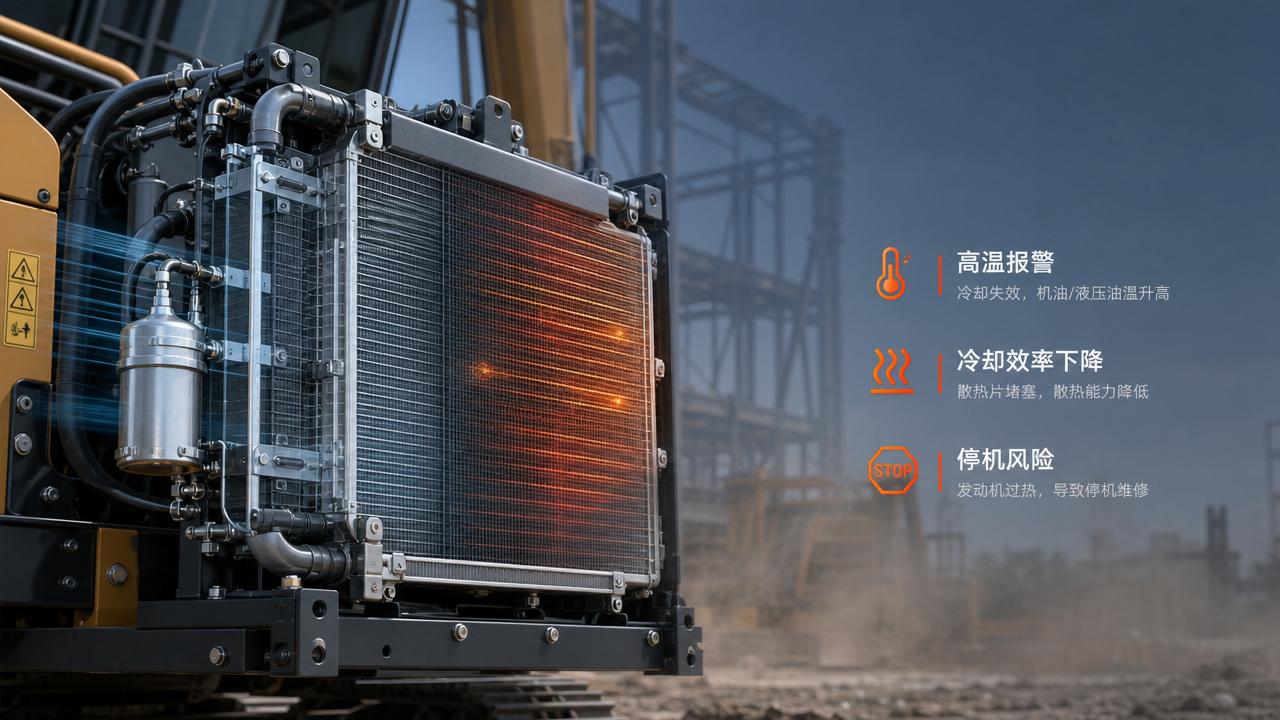
Understanding when an Excavator radiator reaches replacement point
Knowing when to replace an Excavator radiator is essential for after-sales maintenance teams.
Timely replacement prevents overheating, unplanned downtime, and expensive engine damage in demanding construction environments.
If leaks continue, cooling efficiency drops, corrosion spreads, or alarms repeat, replacement should be evaluated immediately.
A reliable Excavator radiator supports stable coolant temperature, protects hydraulic performance, and extends equipment service life.
In the parts industry, radiator decisions affect machine availability, repair cost, and overall maintenance planning.
Liaocheng Xinde Auto Parts Co., Ltd. focuses on radiator research, production, and global supply for heavy-duty applications.
Its experience in water tank radiators, intercoolers, and construction machinery cooling components reflects practical industry knowledge.
Basic role and failure pattern of an Excavator radiator
An Excavator radiator transfers engine heat from coolant to outside air through tubes, fins, and tanks.
When airflow is strong and internal passages stay clear, the cooling system remains balanced under load.
Replacement becomes necessary when structural damage or internal blockage prevents normal heat exchange.
Some faults look minor at first but worsen quickly during long idling, climbing, trenching, or summer operation.
A worn Excavator radiator often fails gradually rather than suddenly, which makes early inspection important.
- External fin damage reduces airflow and heat dissipation.
- Internal scale buildup restricts coolant circulation.
- Tank seam fatigue causes recurring coolant loss.
- Electrochemical corrosion weakens core materials.
- Repeated vibration can crack mounting points and joints.
These failure modes are common in construction machinery parts exposed to dust, shock, and long service cycles.
Key warning signs that indicate Excavator radiator replacement
Several field signals suggest that cleaning or repair is no longer enough for an Excavator radiator.
Persistent coolant leakage
Recurring leaks around tube joints, side tanks, or the core usually indicate aging material or stress cracks.
If leakage returns after sealing attempts, replacement is often safer than repeated patch repair.
Repeated high-temperature alarms
Frequent alarms during normal load suggest the radiator cannot remove heat at the required rate.
This issue becomes more visible during hot weather, heavy digging, or slow-speed operation with limited airflow.
Visible corrosion or fin decay
Corrosion weakens metal surfaces and reduces long-term sealing reliability.
Bent, brittle, or missing fins reduce the active cooling surface of the Excavator radiator.
Coolant contamination or internal blockage
Rust particles, oil traces, or sludge in drained coolant often signal internal deterioration.
If flushing cannot restore stable temperature, replacement should be scheduled.
Performance loss after repair
A repaired core may still underperform if too many passages are blocked or the structure has weakened.
When thermal efficiency remains low, a new Excavator radiator offers more dependable service.
Industry attention points in parts maintenance
Cooling system failures remain a major maintenance concern across construction machinery fleets and service networks.
Dust-heavy sites, variable fuel quality, and long idle periods all increase radiator stress.
These patterns show why the Excavator radiator should be treated as a critical wear-sensitive cooling component.
Practical value of timely Excavator radiator replacement
Replacing a failing radiator at the right moment protects more than engine temperature.
It also stabilizes machine uptime, fuel efficiency, and maintenance budgeting.
- Prevents cylinder head and gasket damage caused by overheating.
- Reduces emergency shutdowns on active sites.
- Improves service planning for parts inventory.
- Supports stable hydraulic and engine system operation.
- Lowers the hidden cost of repeated small repairs.
For parts-focused maintenance operations, correct replacement timing is a cost-control decision as well as a technical one.
An efficient Excavator radiator helps preserve overall cooling balance under severe field conditions.
Typical scenarios that justify replacement instead of repair
Repair remains useful for limited damage, but certain scenarios clearly favor replacement.
This decision process is relevant across excavators, heavy trucks, and related cooling assemblies.
For example, some service teams also compare structure, size, and model matching across other radiator applications.
A related reference is radiator for man xd046-1, with models xd046-1 and 81061016407.
Its size 945*688*48 shows how precise dimensional fit matters in replacement planning.
Inspection steps before replacing an Excavator radiator
A structured inspection helps confirm whether the Excavator radiator is truly the root cause.
- Check coolant level, color, and contamination signs.
- Inspect fins for mud, dust, bending, and corrosion.
- Pressure test the radiator and cap for leaks.
- Verify fan operation, belt condition, and airflow path.
- Confirm thermostat and water pump performance.
- Review service history for repeated overheating events.
If several results point to radiator decline, replacement becomes a logical and efficient solution.
This approach avoids replacing good parts while reducing unresolved cooling faults.
Selection and installation considerations for replacement parts
A new Excavator radiator should match the original mounting points, inlet positions, cooling capacity, and material quality.
Part number verification is essential, especially when machine variants differ by region or production year.
- Confirm exact model compatibility before ordering.
- Use correct coolant specification after installation.
- Bleed trapped air from the cooling system.
- Check hose condition and clamp tightness.
- Monitor initial operating temperature after replacement.
Even a high-quality Excavator radiator can underperform if installation details are ignored.
Maintenance actions that can extend radiator service life
Replacement timing improves when preventive care is consistent and documented.
Routine maintenance can delay failure and reduce sudden cooling system incidents.
- Clean external debris with appropriate pressure and direction.
- Replace coolant at recommended intervals.
- Inspect mounts to limit vibration stress.
- Address minor leaks before corrosion spreads.
- Record temperature trends during seasonal changes.
These steps support better decision-making on whether the Excavator radiator still has useful service life remaining.
Next-step guidance for dependable cooling system decisions
When leak recurrence, weak cooling, corrosion, or repeated alarms appear together, replacement should not be delayed.
A dependable Excavator radiator is essential for machine reliability, service efficiency, and lower lifecycle cost.
The best next step is a documented inspection, model verification, and comparison of repair cost versus replacement value.
With the right parts support and technical judgment, cooling failures can be reduced before they affect the entire machine.