



What makes a new energy vehicle radiator different
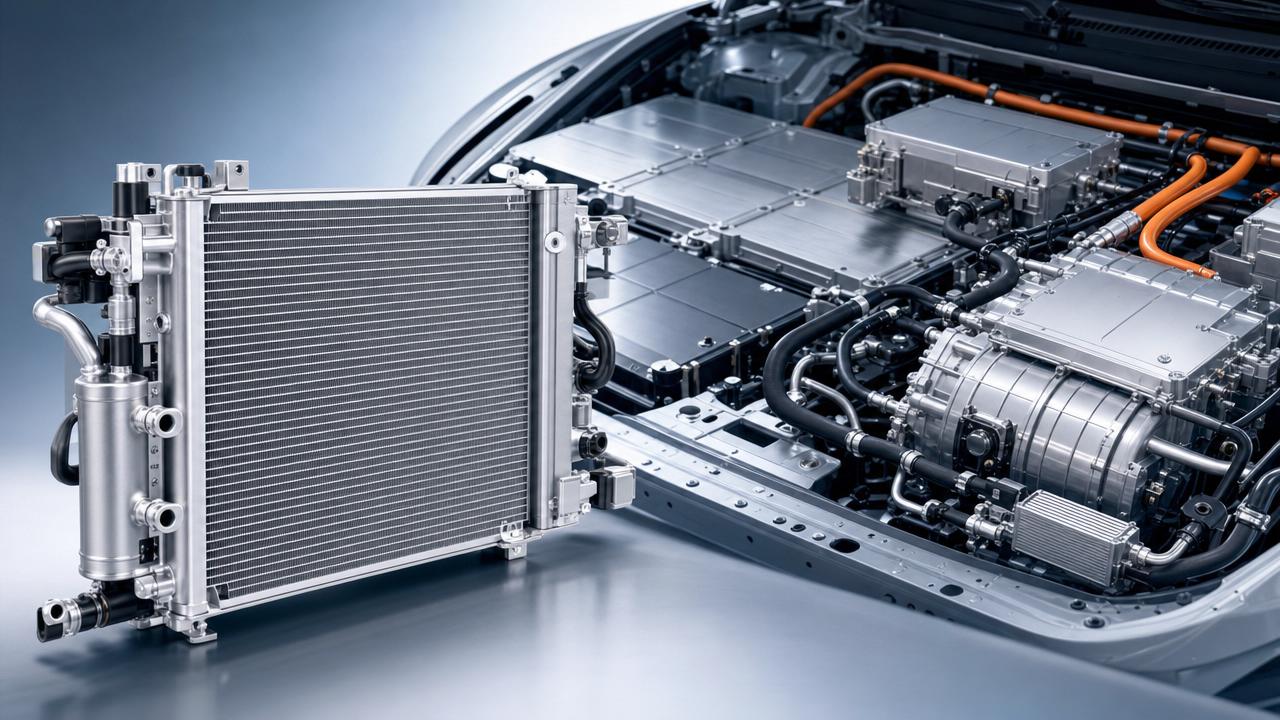
A New Energy Vehicle Radiator is designed for a very different thermal environment than traditional automotive cooling systems. As electric and hybrid platforms continue to grow, understanding these differences is essential for buyers, engineers, and researchers evaluating performance, safety, and durability. This article explores how modern radiator solutions support battery systems, power electronics, and heavy-duty applications with greater efficiency and reliability.
Core definition of a New Energy Vehicle Radiator
A New Energy Vehicle Radiator is a heat exchange component built for electric, hybrid, and fuel-efficient power systems. Its task extends beyond engine coolant temperature control.
In conventional vehicles, the radiator mainly cools the internal combustion engine. In new energy platforms, thermal control becomes multi-source, dynamic, and electronically managed.
The New Energy Vehicle Radiator may work with battery packs, inverters, motors, onboard chargers, and cabin thermal systems. Each subsystem has different temperature windows and response speeds.
This difference changes the radiator’s design logic. Material selection, flow path design, fin structure, sealing performance, and corrosion resistance become more specialized.
How the thermal target changes
An engine can tolerate wider temperature variation than a lithium battery. A battery system needs tighter control to maintain safety, charging speed, and cycle life.
Power electronics also produce concentrated heat. Their temperature rises quickly under acceleration, climbing, towing, or fast charging. The cooling system must react rapidly.
Industry background and current technical focus
The global shift toward electrification has pushed thermal management from a supporting function to a core design factor. This is why the New Energy Vehicle Radiator attracts more technical attention.
Heavy trucks, buses, construction equipment, and passenger vehicles now rely on integrated cooling modules. These modules combine several heat exchange tasks in compact spaces.
Liaocheng Xinde Auto Parts Co., Ltd. focuses on radiator systems, intercoolers, construction machinery radiators, and new energy radiator modules for global applications.
Founded in 2018, the company has expanded quickly in China’s parts industry. Its portfolio reflects growing demand for durable, application-specific cooling components.
What makes a New Energy Vehicle Radiator different in design
The biggest difference is system integration. A traditional radiator usually supports one major heat source. A New Energy Vehicle Radiator supports several critical components at once.
Another difference is temperature precision. Electric systems often require narrower control bands. This pushes the radiator to deliver stable cooling instead of only peak heat rejection.
Weight and energy efficiency matter more as well. Every component affects driving range. Lower coolant resistance and optimized airflow reduce parasitic energy consumption.
Key structural distinctions
- More compact core structures for limited front-end space
- Optimized fin density for balanced airflow and heat transfer
- Enhanced sealing for mixed thermal cycles and vibration loads
- Better corrosion resistance for long coolant service life
- Compatibility with smart valves, pumps, and thermal controllers
In some cases, a proven heavy-duty radiator reference still helps engineers compare durability principles. One example is radiator for ford xd220.
Functional value in real vehicle systems
A well-designed New Energy Vehicle Radiator improves more than cooling capacity. It directly affects battery health, charging consistency, component life, and full-system reliability.
Battery packs operate best within controlled temperature ranges. If heat cannot be removed evenly, cells age at different rates and performance drops faster.
Motor and inverter cooling is equally important. High thermal stress can reduce efficiency, trigger protective power limits, or shorten insulation life.
For commercial vehicles, stable cooling also protects uptime. Long operating hours, stop-start movement, and harsh ambient conditions create continuous demand on the thermal module.
- Supports stable battery temperature during charging and discharge
- Improves power electronics efficiency under high load
- Reduces the risk of thermal runaway escalation
- Extends component service life in demanding duty cycles
- Helps maintain vehicle range and performance consistency
Typical application scenarios and object categories
The New Energy Vehicle Radiator is not a single-format product. Its design varies by vehicle architecture, load profile, climate, and control strategy.
These differences show why thermal module selection cannot rely on size alone. A New Energy Vehicle Radiator must match the operating pattern of the platform.
Practical evaluation points for selection and development
When reviewing a New Energy Vehicle Radiator, thermal capacity is only one indicator. Long-term reliability depends on materials, manufacturing precision, and system compatibility.
Key points to examine
- Heat rejection performance across low and high ambient temperatures
- Pressure resistance and leak integrity under pulse conditions
- Resistance to corrosion, coolant contamination, and galvanic effects
- Vibration endurance for trucks, buses, and off-road machinery
- Packaging fit with fans, shrouds, pumps, and control units
- Maintenance access and cleaning convenience in dusty environments
Testing should reflect actual use conditions. Mountain driving, rapid charging, repeated acceleration, and construction site dust loads create different radiator stress patterns.
Benchmarking against durable legacy products can also support engineering judgment. In mixed fleet studies, radiator for ford xd220 may serve as a familiar comparison point.
Operational recommendations and next-step direction
The role of the New Energy Vehicle Radiator will continue expanding as battery capacity, charging speed, and duty complexity increase. Thermal management is now a strategic part of parts design.
A practical approach starts with defining the real heat sources, ambient extremes, coolant path, airflow limits, and expected service life. This avoids oversizing or underperforming solutions.
It is also useful to review manufacturing capability, validation standards, and product consistency. Stable production quality matters as much as laboratory cooling figures.
For projects involving heavy trucks, construction machinery, or new energy radiator modules, working with an experienced parts specialist helps reduce development risk and improve field durability.
In summary, the New Energy Vehicle Radiator differs because it serves a more precise, integrated, and safety-critical thermal mission than a traditional radiator. Better design here supports performance, durability, and long-term operating value.