



When is radiator core replacement more practical than radiator repair?
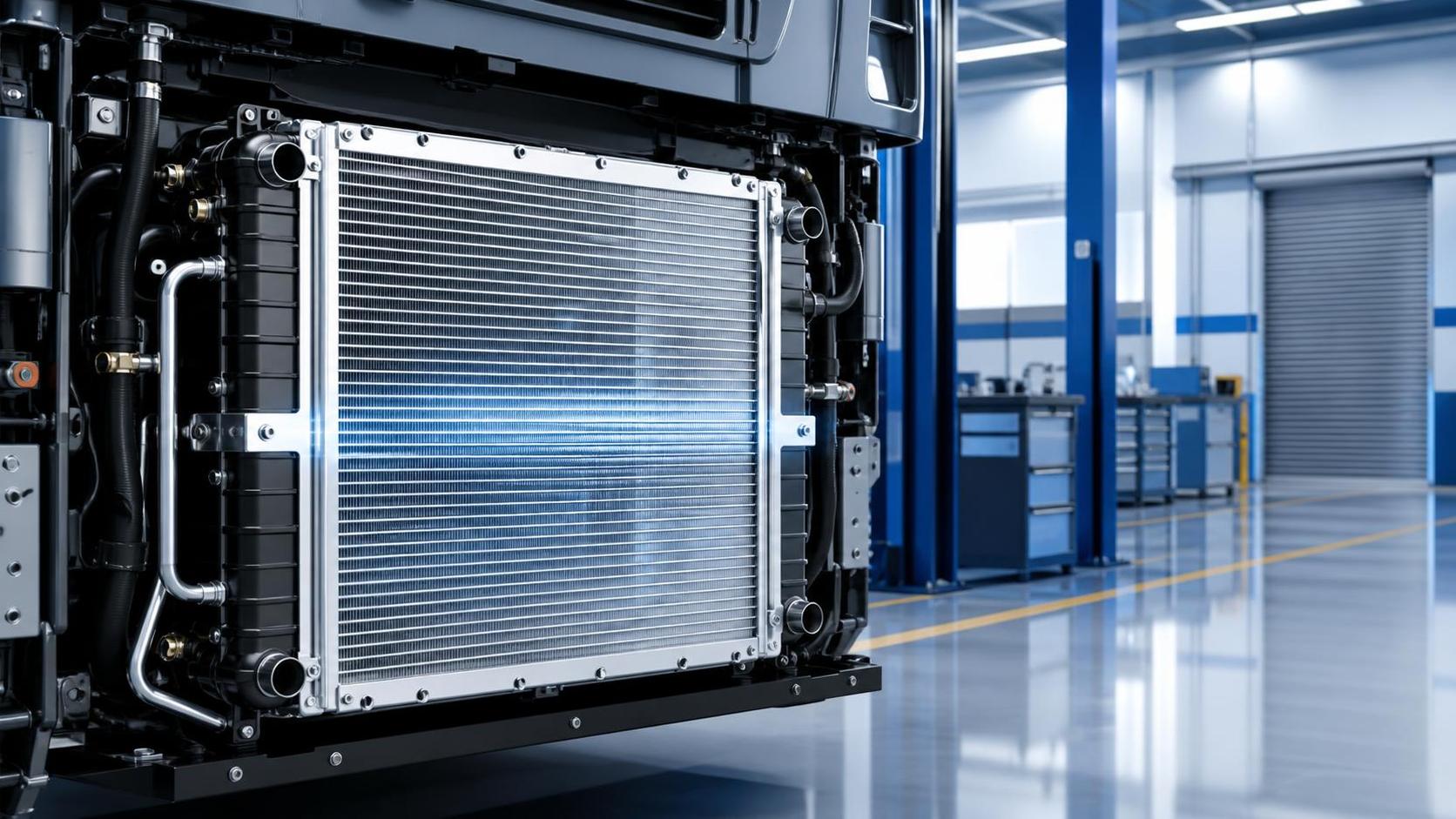
A radiator core replacement is usually more practical than radiator repair when the existing unit has repeated leaks, widespread corrosion, blocked cooling passages, damaged fins across a large area, or a history of overheating under load. The repair invoice may look lower at first, but the real comparison is between a short-term patch and the cost of future downtime, coolant loss, engine risk, and repeat labor.
That distinction matters most in heavy trucks, construction equipment, fleet vehicles, and high-duty cooling applications. A radiator can often be repaired successfully when damage is isolated and the rest of the assembly remains sound. Once the core itself has lost structural integrity or heat-transfer capacity, however, continued repair may simply delay a replacement that was already necessary.
In practical purchasing terms, replace the core when repair restores appearance but cannot reliably restore cooling capacity, pressure resistance, or expected service life.
When a radiator core is the real problem
The radiator core is the heat-exchange section made up of tubes, fins, headers, and related internal passages. Coolant releases heat through the tubes, while airflow carries that heat away through the fins. A leak may be visible at a seam or tube, but the visible point of failure is not always the whole story.
A single punctured tube caused by external impact can sometimes be repaired. The decision changes when inspections show brittle tube walls, thinning material, green or white corrosion deposits, multiple prior solder points, loose fins, or internal contamination. These conditions point to a core that is aging as a system, not one isolated defect.
Many purchasing teams make the mistake of comparing a repair quotation with the price of a replacement core without asking what the repair actually restores. Sealing one leak does not reopen restricted tubes. Straightening a fin section does not reverse corrosion. Flushing may remove some loose debris, but it cannot reliably correct internal erosion, collapsed passages, or long-term chemical damage.
That is why a repaired radiator can pass an initial pressure test and still struggle later in high ambient temperatures, hill climbs, loaded transport, extended idling, or continuous hydraulic work. Pressure integrity and thermal performance are related, but they are not the same measure.
Signs that replacement is more economical than repair
There is no universal threshold based only on radiator age or repair cost. The better question is whether the remaining core can deliver predictable service in its actual duty cycle. The following conditions usually make replacement the stronger commercial choice.
- Recurring leaks: If the radiator has been repaired more than once, especially at different tube locations, further leakage is often a material-condition issue rather than a workmanship issue.
- Leaks distributed across the core: Several wet spots, tube failures, or damaged joints indicate broad deterioration. Repairing each point separately can create an expensive cycle of removal and reinstallation.
- Reduced cooling margin: A vehicle that runs acceptably only in light service but approaches high coolant temperatures when loaded may have restricted passages or poor fin efficiency.
- Extensive fin damage: Bent, corroded, detached, or packed fins reduce airflow and heat dissipation. Surface cleaning helps only when the fins and tube-to-fin bond are still in good condition.
- Internal contamination: Oil in coolant, sediment, scale, stop-leak residue, or incorrect coolant mixtures can compromise the core beyond a straightforward leak repair.
- High removal cost: On machinery where radiator access requires significant labor, it is often uneconomical to pay for removal twice because the first repair did not last.
- Critical equipment availability: For a truck supporting scheduled deliveries or equipment assigned to a project site, unplanned downtime may cost more than the difference between repair and replacement.
One useful rule is this: if the repair decision depends on the assumption that no further weaknesses will appear, but inspection already shows multiple weaknesses, the replacement option deserves priority.
Repair can still be the right decision
Replacement is not automatically the answer. A well-built radiator with a sound core may justify repair when damage is local, the repair can be performed by a qualified radiator specialist, and post-repair testing confirms both pressure performance and adequate cooling behavior.
Typical repair-friendly situations include a cracked plastic tank, a damaged mounting point, a single impact-related tube leak, or a failed gasket or seal where the core remains clean and structurally sound. In these cases, replacing the entire radiator or core can add cost without delivering proportionate value.
Repair also makes sense when the equipment is near retirement, operates in non-critical service, or has a limited remaining operating period. The calculation changes again if a correct replacement core is difficult to source quickly. A controlled repair can keep the asset operating while a proper replacement is evaluated.
The important point is to distinguish a temporary operating decision from a lifecycle decision. A temporary repair can be reasonable. Presenting it as a long-term solution when the core is already compromised is where cost estimates become misleading.
Look beyond the repair invoice
For purchasing purposes, a repair-versus-replacement decision should include more than the shop price. The lowest immediate expense often becomes the highest total cost when equipment returns to service with limited cooling reserve.
The table does not replace inspection, but it prevents a narrow comparison. A replacement core may cost more at purchase, yet avoid a second workshop visit, emergency freight, lost operating time, and possible heat-related damage elsewhere in the cooling system.
Do not treat engine overheating as a radiator-only issue, either. A failed thermostat, weak fan clutch, restricted charge-air cooler, faulty water pump, pressure-cap issue, air trapped in the system, or incorrect coolant concentration can produce similar symptoms. Replacing a radiator core without checking these factors can create a false conclusion that the new part was ineffective.
How to evaluate a replacement core before ordering
A replacement is only practical if the supplied component matches the application and operating conditions. “Fits the vehicle” is not enough for an evaluator handling commercial equipment. Verify the core dimensions, mounting layout, inlet and outlet positions, tube arrangement, fin specification, tank connection design, sensor or transmission-cooler provisions where applicable, and required operating pressure.
For heavy-duty equipment, ask the supplier how the replacement was matched: by OEM number, vehicle identification details, dimensional drawing, or sample confirmation. Cross-reference errors can lead to a unit that installs physically but provides inadequate airflow clearance, hose alignment, or thermal capacity.
It is also worth clarifying what is included. A core-only purchase, a complete radiator assembly, and a module that includes additional cooling elements carry different installation requirements. Procurement teams should confirm packing, traceability, warranty terms, inspection method, lead time, and the procedure for handling fitment or transit claims before issuing the order.
For example, when evaluating a replacement for a specified Volvo application, a listing such as radiator for volvo xd 031 can be a useful starting point for fitment review. It should not replace confirmation against the exact vehicle, engine, original part number, and cooling-system configuration.
Supplier capability is relevant when the requirement involves repeat orders, custom dimensions, or demanding applications. Liaocheng Xinde Auto Parts Co., Ltd., established in 2018, focuses on the research, production, and global sale of water tank radiators, intercoolers, construction machinery radiators, and related cooling components for heavy trucks and new energy radiator modules. Its stated business background, including high-tech and local integrity-related recognitions, may be useful during supplier qualification, but buyers should still validate the specific part drawing, test requirements, and commercial terms for each order.
Questions that reveal whether repair is only postponing failure
Before approving a repair, ask the workshop to answer a few direct questions in writing. Where exactly is the leak? Is it the first failure or one of several? Are the tubes and fins still structurally sound? Has the core been pressure tested after repair? Is there evidence of internal blockage or corrosion? Can the repairer provide a realistic expectation of service life under the equipment’s normal load?
These questions are more useful than a generic statement that the radiator is “repairable.” Most damaged parts are repairable in a literal sense. The commercial question is whether repair is reliable enough to justify putting the machine or vehicle back into service.
A common warning sign is a repair recommendation based solely on the visible leak, with no inspection of coolant condition, core cleanliness, fin condition, or operating temperature history. Another is the use of stop-leak compounds as a default remedy. Such products may be used in limited emergency circumstances according to the relevant equipment guidance, but they can complicate diagnosis and may obstruct small passages. They should not be treated as a substitute for correcting a deteriorated radiator core.
Different duty cycles lead to different answers
A lightly used vehicle that remains close to base may tolerate a conservative repair decision. A long-haul truck, quarry machine, excavator, loader, generator set, or vehicle working in hot, dusty, stop-start conditions has much less tolerance for marginal cooling performance.
Construction machinery deserves particular caution because debris accumulation and vibration place continuous stress on cooling systems. A core with weakened tube joints or poor fin condition may fail sooner once it returns to a dusty, high-load environment. For fleet vehicles, consistency matters too: a standardized replacement approach can reduce unpredictable maintenance events and simplify spare-parts planning.
New energy cooling systems require another layer of care. Their thermal-management arrangements may involve several cooling circuits, sensors, pumps, and controlled flow paths. A replacement component must be evaluated against the system design, not selected by exterior dimensions alone. Where manufacturer specifications apply, they should take precedence over general aftermarket assumptions.
FAQ
Can a radiator core be repaired after several leaks appear?
It can often be repaired physically, but several leaks in different areas usually indicate broader deterioration. In that situation, core replacement is commonly the more dependable lifecycle choice.
Does a pressure test prove that the radiator will cool properly?
No. A pressure test checks for leakage under test conditions. It does not confirm unrestricted coolant flow, adequate fin efficiency, or real-world cooling performance under load.
Should I replace the complete radiator or only the core?
Choose based on the condition of tanks, frames, fittings, coolers, and mounting hardware. A core-only solution can be economical when those parts remain serviceable; a complete assembly may reduce labor and compatibility risk when several sections are worn.
Is radiator repair always cheaper?
It is usually cheaper at the first invoice. It is not always cheaper after repeat labor, downtime, coolant loss, emergency replacement, and the risk of heat-related equipment damage are considered.
The practical decision is not “repair versus new” in the abstract. It is whether the existing radiator core can return to its required duty cycle with credible reliability. If leakage is isolated, the core is healthy, and testing supports the repair, repair remains sensible. When the core has recurring failures, internal restriction, widespread corrosion, or insufficient cooling margin, replacement is usually the more controlled cost decision and the lower operational risk.