



When a Vehicle Radiator for Commercial Trucks Becomes Undersized
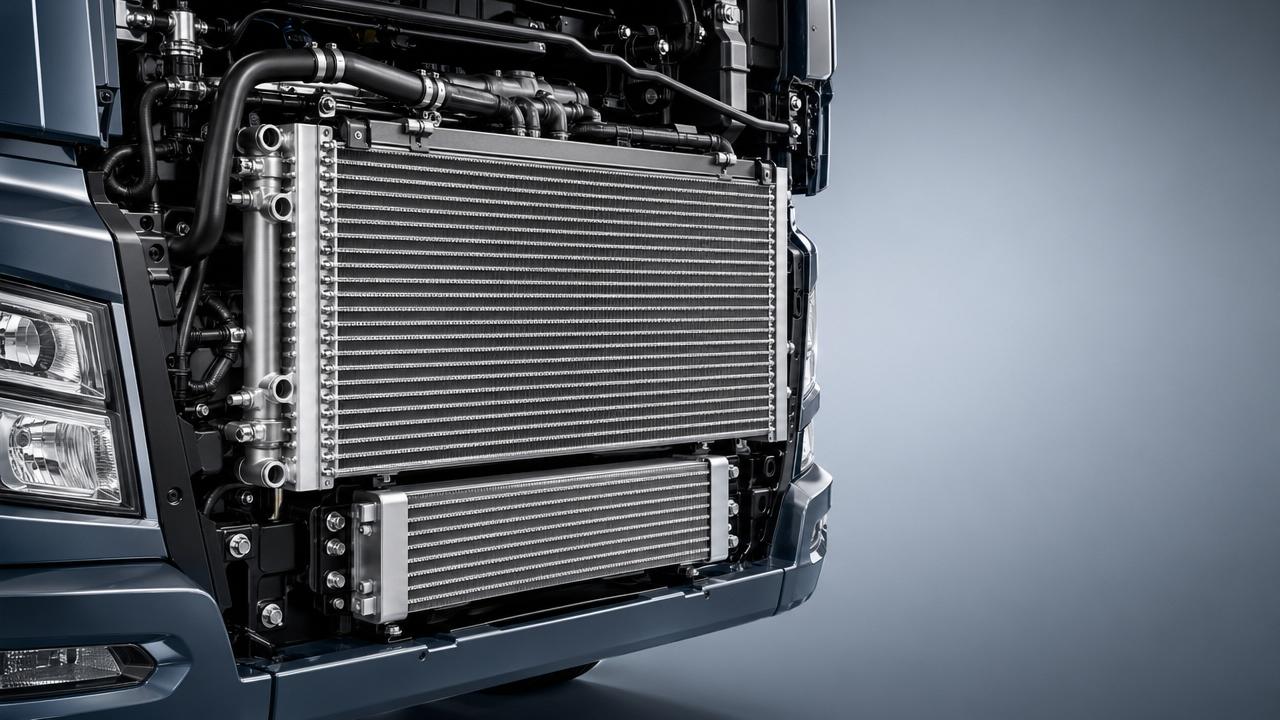
When a Vehicle radiator for commercial trucks becomes undersized, project managers face more than overheating—they risk downtime, higher maintenance costs, and reduced fleet reliability. Understanding the warning signs, technical causes, and upgrade options is essential for keeping commercial vehicles efficient under heavy-duty demands. This article explains how to identify radiator undersizing and choose solutions that support long-term project performance.
Why Undersized Cooling Is Becoming a More Visible Fleet Risk
A few years ago, many operators treated radiator sizing as a background engineering issue. Today, that assumption is changing. Commercial trucks are working in harsher duty cycles, carrying heavier payloads, spending more time in congested environments, and operating under tighter uptime expectations. As a result, the margin for cooling system error has narrowed. For project managers, an undersized Vehicle radiator for commercial trucks is no longer a minor specification mismatch; it is an operational risk that can spread across schedules, maintenance planning, and contract delivery performance.
Several industry signals explain this shift. Engine compartments have become denser, thermal loads are rising, and fleets are expected to do more with fewer service interruptions. At the same time, environmental conditions such as high ambient temperatures, stop-and-go logistics routes, dusty worksites, and altitude changes increase cooling demand. A radiator that was once “good enough” in a light application may become insufficient in a revised route profile or under new utilization targets.
This matters especially in parts and heavy-duty vehicle operations, where reliability is tied directly to project timing. A truck that overheats repeatedly may still run, but it often runs at reduced efficiency, with growing stress on the engine, charge air path, hoses, fan system, and coolant circuit. For managers responsible for total asset performance, early detection of undersizing trends becomes a strategic advantage rather than a maintenance detail.
Current signals that deserve attention
- Higher frequency of temperature alarms during peak load or summer operation
- More engine derating events under uphill, low-speed, or high-idle conditions
- Cooling system maintenance intervals becoming shorter than planned
- Increased accessory heat loads from emissions, turbocharging, or auxiliary systems
- Procurement pressure to reduce cost without matching thermal design to real duty cycle
Trend overview table
What Usually Causes a Vehicle Radiator for Commercial Trucks to Become Undersized
In many cases, the radiator is not defective in manufacturing terms. It becomes undersized because the vehicle’s thermal reality has changed. A fleet may add more demanding routes, retrofit equipment, increase payload utilization, or continue using a cooling module selected for a lower heat rejection requirement. From an engineering management perspective, undersizing is often the result of system evolution outpacing original design assumptions.
Another common cause is specification based on nominal engine output rather than real-world duty cycle. Commercial trucks rarely operate under laboratory conditions. The cooling system must deal with transient loads, low-speed operation, repeated climbs, variable ambient temperatures, and contamination buildup. If radiator size, tube design, fin density, airflow path, or coolant flow are optimized only for ideal conditions, the actual thermal reserve may be too small.
There is also a sourcing dimension. In competitive procurement, some buyers focus on initial cost and core dimensions without fully evaluating material quality, brazing integrity, thermal conductivity, vibration resistance, and compatibility with fan shroud and intercooler configuration. A radiator that fits physically may still fail thermally. That is why a Vehicle radiator for commercial trucks should be evaluated as part of the complete cooling architecture, not as an isolated commodity.
Primary drivers behind undersizing
- Thermal load growth from engine upgrades or auxiliary equipment
- Insufficient core area or inefficient fin-and-tube design
- Airflow restrictions caused by poor packaging or debris buildup
- Coolant circulation limits, including pump or hose mismatch
- Low-cost substitutions that reduce heat transfer performance
A practical sourcing reminder
Experienced suppliers increasingly position cooling products around workload stability rather than simple replacement. For example, advanced thermal engineering is becoming more visible across automotive and heavy-duty segments. A reference point from adjacent applications is Radiator for AION, model AIONV-1301010-0030, designed for car fitment with a focus on replace/repair use, cooling efficiency, advanced fluid dynamics, premium thermal materials, and stable performance under grueling workloads. While application requirements differ, the broader market direction is clear: buyers increasingly value thermal resilience, not just dimensional compatibility.
How the Impact Spreads Across Projects, Maintenance, and Cost Control
The impact of an undersized radiator is rarely confined to one overheating event. It tends to propagate through the operation. First comes a warning pattern: elevated coolant temperature, fan overuse, driver complaints, or temporary derating. Then, if the issue remains unresolved, maintenance teams begin replacing hoses, thermostats, clamps, coolant, or sensors in search of symptom relief. Eventually, the root cause surfaces: the cooling capacity is simply too small for the mission profile.
For project managers, this pattern creates hidden costs. Vehicles spend more time off-route, workshop planning becomes reactive, spare parts consumption rises, and contractor confidence can weaken. In sectors such as construction logistics, regional freight, and infrastructure support, thermal instability also complicates deployment planning because managers must keep reserve vehicles available. That reduces effective fleet utilization.
There is also a long-term equipment implication. Repeated overheating or high-temperature operation can shorten engine life, stress seals, affect turbocharger durability, and degrade overall fuel efficiency. Even when failures do not occur immediately, a Vehicle radiator for commercial trucks that is too small can slowly erode asset value. In this sense, radiator sizing decisions have direct relevance to lifecycle cost management.
Impact by stakeholder
Warning signs that should trigger review
- Temperature remains stable at light load but climbs quickly under sustained work
- Cooling performance declines in hot weather despite recent maintenance
- The fan runs excessively, yet coolant temperature still trends high
- Radiator replacements solve leakage but not thermal complaints
- Vehicles with similar engines perform differently due to route or packaging differences
What Smart Buyers and Engineering Teams Are Changing in Their Evaluation Approach
The market is gradually moving away from simplified replacement logic toward application-based cooling decisions. That means more buyers are asking not only whether a radiator fits, but whether it supports the truck’s actual thermal profile over time. This shift is especially relevant in heavy truck parts procurement, where reliability, warranty exposure, and operational continuity are tightly connected.
Leading teams now review radiator selection against route temperature, payload pattern, engine heat output, altitude exposure, airflow quality, maintenance frequency, and contamination risk. They also compare the radiator with related components such as intercoolers, shrouds, fan assemblies, and mounting structures. In practice, a Vehicle radiator for commercial trucks performs well only when the broader system supports proper heat exchange.
This evaluation trend aligns with the growth of specialized manufacturers that combine R&D, production, and global sales capability. Liaocheng Xinde Auto Parts Co., Ltd., established in 2018, reflects this direction through its focus on water tank radiators, intercoolers, construction machinery radiators, and new energy radiator modules for heavy trucks and related applications. For buyers, this kind of manufacturing profile matters because stronger design and production capability often leads to better adaptation for evolving thermal demands.
Key evaluation questions before replacement or upgrade
- Has the vehicle duty cycle changed since the original radiator was selected?
- Is overheating linked to low-speed airflow, continuous load, or ambient heat spikes?
- Does the current core design provide enough thermal reserve, not just basic compliance?
- Are materials and manufacturing quality suitable for vibration, pressure, and contamination exposure?
- Would a broader cooling module review deliver more value than a one-part replacement?
Selection direction that is gaining momentum
Procurement teams increasingly prefer high-performance radiators built around stable heat transfer, durable materials, and realistic service conditions. This trend is not limited to one segment. Whether the application is a passenger platform or a heavy-duty platform, the market is moving toward premium thermal materials, stronger fluid dynamics design, and uncompromising stability. That is the same logic behind solutions such as Radiator for AION, even though the specific fitment differs from commercial truck applications.
How to Judge the Right Response: Maintenance Fix, Capacity Upgrade, or Full Cooling Review
Not every thermal problem means the radiator is undersized, so project leaders need a disciplined response path. The first step is to separate maintenance deterioration from design limitation. A clogged core, degraded coolant, weak fan clutch, air trapped in the system, or external debris can all mimic undersizing. If these issues are present, corrective maintenance may restore normal operation. But if the system is clean and functional while temperatures still exceed acceptable ranges under expected loads, capacity review becomes necessary.
The second step is to assess whether the issue is temporary or structural. Seasonal heat spikes may expose a narrow cooling margin, but repeated trouble across routes and operating windows usually indicates a persistent mismatch. In that case, resizing the Vehicle radiator for commercial trucks, improving airflow management, or redesigning the module layout may be justified. The right answer depends on heat rejection requirements and packaging constraints.
The third step is business prioritization. If the fleet supports mission-critical projects, the cost of downtime may exceed the upgrade cost very quickly. A more robust radiator, better matched to actual workloads, can reduce emergency repairs and improve confidence in vehicle scheduling. For many project-based operations, this reliability premium is worth more than short-term component savings.
Decision guide table
The Direction Ahead: Cooling Strategy as a Reliability Decision
The broader trend is clear: cooling systems are becoming a more strategic part of vehicle reliability planning. As thermal demands rise and operational tolerance for downtime falls, the question is no longer whether a radiator can be replaced quickly. The more important question is whether the selected solution is future-ready for the truck’s real workload. That is why more teams are treating radiator decisions as part of risk management, not just maintenance procurement.
For project managers and engineering leads, the most useful approach is to build a simple review framework. Confirm actual duty cycle, compare it with current cooling capacity, document recurring temperature patterns, and estimate the cost of interruption versus upgrade. If a Vehicle radiator for commercial trucks appears undersized, respond early—before overheating becomes a pattern that affects asset life and project delivery.
If your team wants to judge how this trend affects your own fleet, focus on four questions: Have route or payload conditions changed? Are thermal events increasing under predictable conditions? Is your current radiator selected for true workload demand or only nominal fitment? And would a higher-performance cooling solution lower total operational risk over the next service cycle? Those answers will usually point to the right action.