



Inside a Heavy Duty Truck Radiator Factory Quality Check
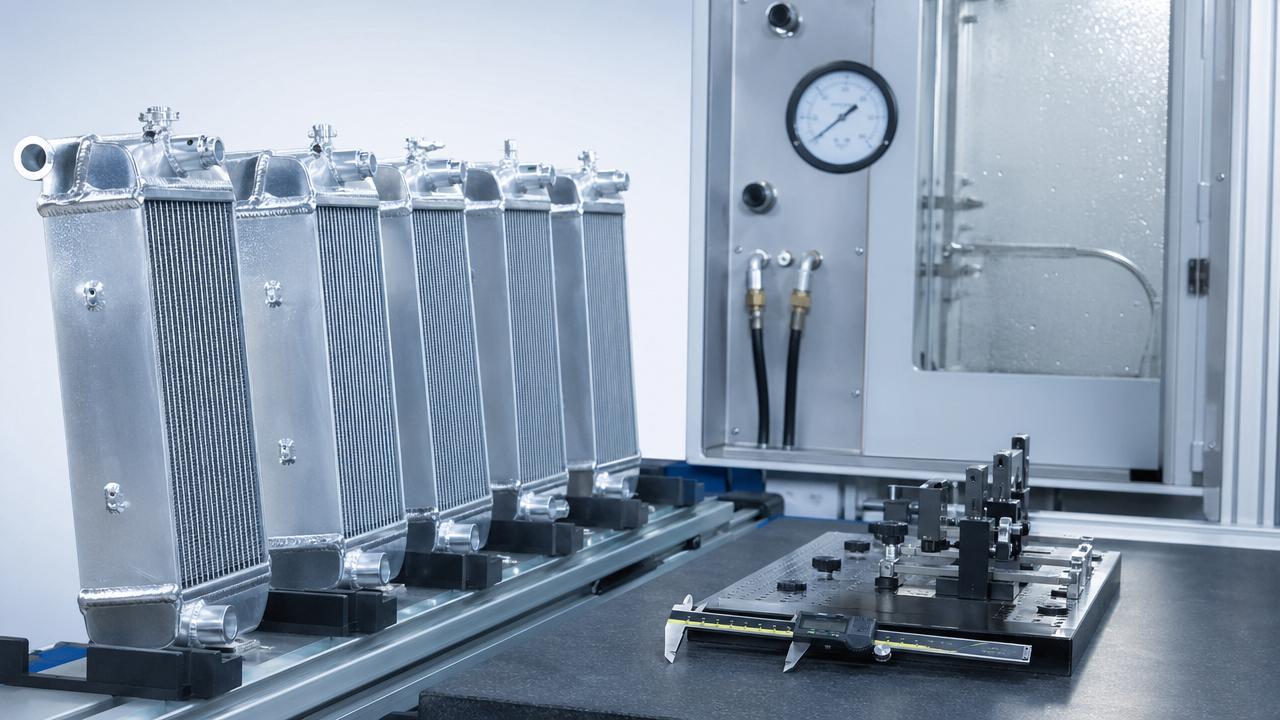
Step inside a Heavy duty truck radiator factory and discover how rigorous quality checks protect performance, safety, and durability. For quality control and safety management professionals, this overview highlights how Liaocheng Xinde Auto Parts Co., Ltd. applies advanced manufacturing, strict inspection standards, and reliable process management to ensure every radiator, intercooler, and module meets demanding heavy truck and new energy applications.
What Quality Check Means in a Heavy Duty Truck Radiator Factory
A Heavy duty truck radiator factory is not simply a place where metal parts are assembled and shipped. It is a controlled manufacturing environment where thermal performance, pressure stability, material integrity, and operational safety must align from raw material intake to final packaging. For heavy truck applications, even a small weakness in a radiator core, tank joint, or braze seam can lead to overheating, engine stress, downtime, and safety risk in the field.
Quality check in this context is broader than end-of-line inspection. It includes supplier verification, incoming material analysis, process monitoring, dimensional measurement, leak testing, traceability control, and corrective action management. Safety managers and QC teams care about these systems because radiators and intercoolers operate under thermal cycling, vibration, pressure fluctuation, and contamination exposure. Reliable products require reliable process discipline.
Liaocheng Xinde Auto Parts Co., Ltd., established in 2018, has developed into a fast-growing manufacturer focused on water tank radiators, intercoolers, construction machinery radiators, and new energy radiator modules. With registered capital of 5 million RMB and total investment of 50 million RMB, the company has built its reputation through technical specialization and operational consistency, earning honors such as High-tech Enterprise, Civilized and Honest Enterprise, and Trustworthy Unit for Consumers.
Core quality objectives
- Maintain heat exchange efficiency under demanding load conditions
- Prevent leakage, corrosion, and premature fatigue failure
- Support installation accuracy and dimensional consistency
- Reduce quality variation across batches and export destinations
Why this matters to QC and safety teams
For quality personnel, the radiator is a measurable product with defined tolerances and test points. For safety personnel, it is also a risk-bearing component tied to thermal management, vehicle reliability, and operator safety. In a mature Heavy duty truck radiator factory, these two views are integrated rather than separated.
Why the Industry Pays Close Attention to Radiator Inspection
The heavy truck and parts sector has changed significantly. Vehicles now operate with higher efficiency targets, tighter emissions expectations, and longer service cycles. At the same time, fleets expect fewer failures, lower maintenance costs, and stronger consistency across replacement parts. This raises the bar for every Heavy duty truck radiator factory serving OEM, aftermarket, construction machinery, and new energy platforms.
Radiators and intercoolers are especially sensitive because they connect material science, manufacturing accuracy, and real-world operating stress. A high-performing unit must transfer heat effectively, resist vibration, manage fluid flow, and survive environmental exposure. That is why quality checks are becoming more data-driven, not less. Visual judgment alone is no longer enough for modern production.
For companies with global sales, quality inspection also supports market credibility. Export customers, distributors, and fleet buyers want confidence that the factory can maintain stable standards over time. This is one reason factories like Liaocheng Xinde invest in process control, inspection capability, and cross-functional management rather than focusing only on output volume.
Industry overview table
How a Heavy Duty Truck Radiator Factory Builds Quality into the Process
A dependable Heavy duty truck radiator factory does not rely on final inspection to “catch” defects. It builds quality progressively through every stage of production. This approach reduces waste, lowers rework, and improves safety by preventing unstable products from moving forward in the line.
The first control point is incoming material inspection. Aluminum tubes, fins, headers, tanks, side plates, and joining materials must be checked for thickness, surface condition, alloy consistency, and dimensional fit. If material variation enters production unchecked, later process stability becomes difficult to maintain. Strong suppliers matter, but strong incoming verification matters just as much.
The second control point is manufacturing process discipline. Fin forming, tube preparation, core assembly, brazing, welding, and tank installation each introduce variables. Temperature curves, fixture alignment, cleanliness standards, and operator method all influence final performance. In advanced operations, these points are documented and reviewed systematically rather than managed informally.
Typical quality checkpoints
- Raw material verification and supplier lot confirmation
- Dimensional checks before and after core assembly
- Brazing or joining parameter control
- Pressure and leak testing for sealing integrity
- Appearance inspection for fin damage, deformation, and contamination
- Final packaging review to prevent transport-related damage
Process control and traceability
Traceability is increasingly important for both quality and safety management. When a defect trend appears, the factory should be able to trace affected products back to material lots, production dates, process settings, and inspection records. This shortens response time and supports root cause analysis. It also helps a Heavy duty truck radiator factory improve preventive action instead of repeatedly reacting to similar failures.
Inspection Focus Areas That Directly Affect Performance and Safety
Not all inspection points carry the same operational weight. For QC and safety professionals, the most important checks are those tied directly to system failure risk, heat exchange capability, and service life. A visually clean radiator that fails under pressure or vibration is not a quality product. Inspection priorities should therefore reflect functional reality, not only cosmetic standards.
Leak prevention is the most visible concern. Poor sealing at joints, weak brazed areas, or hidden micro-cracks can lead to coolant loss and rapid thermal instability. Pressure test discipline is essential, but it should be supported by process review and not treated as a standalone filter. Factories that only depend on final pressure tests may miss systemic causes.
Dimensional consistency is another major area. Mounting mismatch, connector deviation, or core thickness variation can create installation stress, restricted airflow, or uneven cooling behavior. In heavy truck applications, repeated vibration amplifies these issues over time. That is why in-process measurement and fixture verification are so valuable.
Critical inspection categories
Cross-application quality awareness
Although heavy truck systems are the main focus, the same inspection mindset also supports broader product ranges. For example, a factory experienced in different cooling applications often applies lessons across platforms, from construction machinery to passenger vehicle thermal modules. In some cases, application-specific products such as Radiator for Hongqi with model EQM5, OE NO. 1301010HA01, and a 6-month warranty illustrate how compatibility, quiet efficiency, and long-term reliability depend on the same disciplined quality foundation.
Application Value for Quality Control and Safety Management Professionals
For quality control teams, understanding how a Heavy duty truck radiator factory operates helps define meaningful audit points. Rather than checking only final product data, auditors can evaluate whether the factory has stable control over materials, operator methods, equipment condition, and nonconformance handling. This gives a more realistic view of future quality performance.
For safety managers, radiator quality checks affect more than compliance. Thermal system failures can contribute to roadside breakdowns, equipment overheating, unplanned maintenance exposure, and emergency handling risks. Strong inspection systems reduce the probability of these scenarios. They also improve confidence in replacement part suitability, especially in fleets with high utilization rates.
For cross-functional managers, the value extends to brand stability. Liaocheng Xinde’s focus on research, production, and global sales shows that quality is not only a factory-floor issue but a business continuity issue. Consistent inspection supports customer trust, repeat orders, lower complaint rates, and stronger market reputation.
Who benefits most from a controlled inspection system
- Factory QC managers responsible for process capability and defect reduction
- Safety leaders monitoring component-related operational risks
- Procurement and supplier quality engineers evaluating manufacturing maturity
- Aftermarket distributors seeking stable quality across batches
Practical Suggestions for Evaluating a Heavy Duty Truck Radiator Factory
If your role involves factory assessment, supplier development, or internal quality benchmarking, it helps to approach a Heavy duty truck radiator factory with a structured checklist. The goal is not only to see equipment or product samples, but to confirm that quality control is embedded in daily management.
Start by reviewing process flow clarity. A factory should explain how materials move, where key inspection gates are located, and how defects are isolated. Then review test records, calibration practices, operator training, and corrective action history. A strong factory can show evidence, not just promises.
It is also useful to examine product range and application understanding. Manufacturers serving heavy trucks, construction machinery, and new energy cooling modules often face broader technical demands. This can strengthen their problem-solving ability when supported by disciplined management and engineering depth.
Evaluation checklist
- Verify incoming material inspection standards and supplier control methods
- Confirm process parameters are documented and consistently monitored
- Check whether leak, pressure, and dimensional testing are recorded by batch
- Review nonconformance handling and root cause correction practices
- Assess packaging protection for export and long-distance transport
- Look for evidence of continuous improvement, not only pass/fail inspection
Final perspective
A reliable Heavy duty truck radiator factory is defined by control, consistency, and technical accountability. For QC and safety management professionals, the most useful signal is not a single good test report, but a complete system that prevents defects, documents performance, and supports durable thermal products across heavy truck and new energy applications. When these elements are visible, factory quality checks become more than routine inspection—they become a strategic safeguard for performance, safety, and long-term trust.