



When a Radiator for Commercial Vehicles Becomes a Fleet Risk
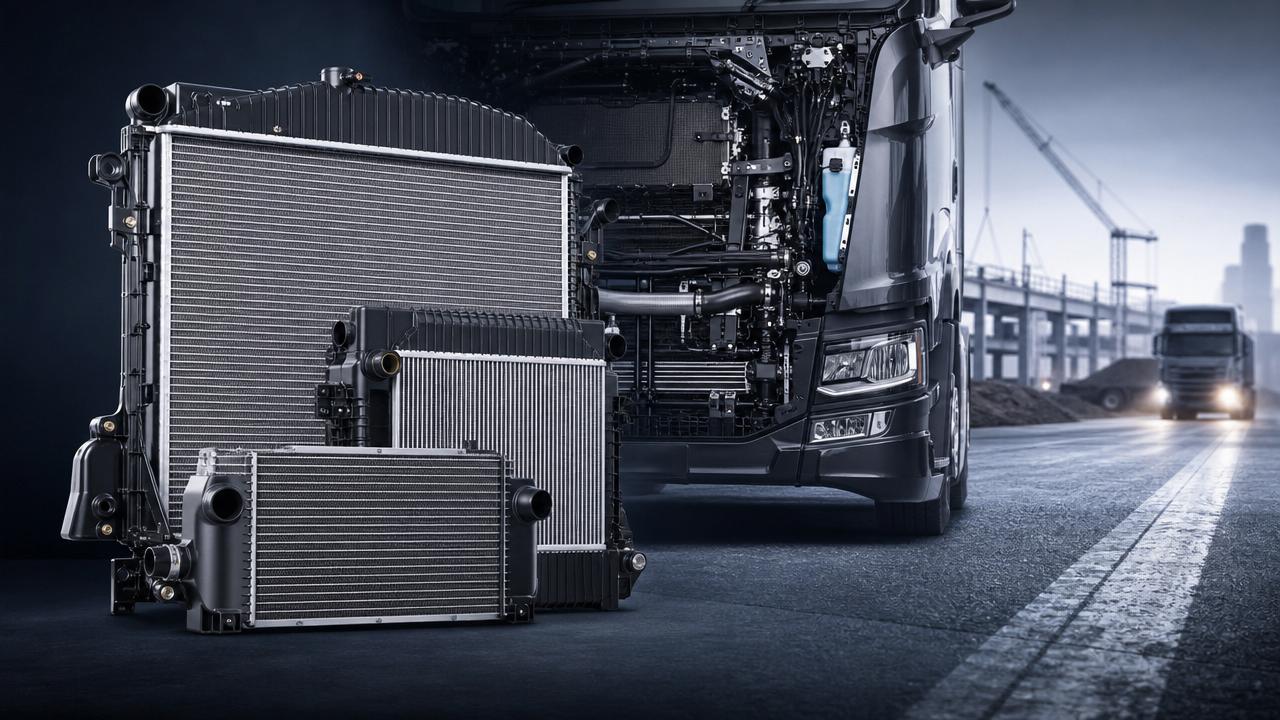
When a radiator for commercial vehicles stops being a part and starts becoming a risk
A radiator for commercial vehicles is more than a replacement part—it can become a hidden fleet risk when performance, durability, and thermal efficiency fall short.
For operations focused on uptime, cost control, and reliability, cooling performance shapes daily business results.
A weak cooling system can trigger overheating, fuel waste, delayed deliveries, and early engine wear.
That is why choosing the right radiator for commercial vehicles matters far beyond simple fitment.
In heavy-duty transport, construction support, and mixed-use fleets, the wrong radiator often fails quietly before it fails visibly.
Liaocheng Xinde Auto Parts Co., Ltd., founded in 2018, has grown quickly through focused research, production, and global sales of radiators and intercoolers.
Its portfolio covers water tank radiators, construction machinery radiators, heavy truck cooling parts, and new energy radiator modules.
This article explains where a radiator for commercial vehicles creates risk, how usage scenarios change requirements, and what actions reduce failures.
Why usage context changes the real value of a radiator for commercial vehicles
Not every fleet faces the same thermal load.
A long-haul truck running highways behaves differently from a city delivery vehicle or off-road support unit.
Ambient temperature, stop-start frequency, payload level, road dust, and idle time all change cooling demand.
Because of that, a radiator for commercial vehicles should be judged by operating conditions, not only by dimensions or price.
The hidden cost of underestimating thermal stress
Thermal stress builds gradually.
Minor coolant inefficiency can raise engine temperature under load, especially during climbs, congestion, or hot weather.
That small rise may reduce lubricant effectiveness, shorten seal life, and push the engine fan system harder.
The result is not just one repair event.
It can become a chain of downtime, fuel penalties, and repeated parts replacement.
Scenario one: highway freight where continuous load exposes radiator weaknesses
Highway trucks often run for long hours at steady but heavy thermal demand.
In this setting, a radiator for commercial vehicles must maintain stable heat exchange over extended distances.
Core design, fin density, coolant flow path, and material quality directly affect performance consistency.
If the radiator cannot release heat efficiently, engine temperature creeps upward during uphill segments or summer routes.
Key judgment points for highway operations
- Stable cooling under full payload
- Resistance to vibration fatigue over long mileage
- Reliable brazing and leak prevention
- Low airflow restriction and strong thermal transfer
This scenario rewards durable design more than low initial cost.
Scenario two: urban distribution where stop-start cycles raise cooling pressure differently
City fleets work in traffic, low-speed airflow, and frequent idling.
Here, a radiator for commercial vehicles must perform with limited natural air movement.
Heat soak after repeated stops can become more severe than operators expect.
Poor radiator efficiency in these conditions increases fan dependency and energy consumption.
What matters most in urban use
Cooling response at lower speed matters more than top-speed airflow performance.
Compact fitment, corrosion resistance, and easy maintenance access also become important.
A radiator blocked by dirt, road debris, or poor coolant quality can lose efficiency fast in city routes.
Scenario three: construction and mixed-terrain service where contamination becomes the main threat
Vehicles supporting construction or industrial movement face dust, mud, vibration, and irregular load cycles.
In such environments, a radiator for commercial vehicles needs strong structural integrity and effective anti-clogging performance.
Thermal efficiency alone is not enough.
The cooling system must keep working when the surface is exposed to contamination and harsh mechanical stress.
Common failure patterns in harsh terrain
- Fin blockage from dust and debris
- Tank cracking from vibration
- Coolant loss from weakened joints
- Thermal drop caused by external fouling
This is where material quality and production consistency become risk controls, not marketing claims.
How scenario differences change radiator selection priorities
The same radiator for commercial vehicles may fit physically across platforms but fail operationally in the wrong scenario.
That is why cooling system matching should be usage-based, not only catalog-based.
Practical fitment signals that reduce fleet cooling risk
Good selection starts with technical verification.
- Check thermal capacity against actual load profile
- Confirm material compatibility with coolant and climate
- Review pressure resistance and leak-test standards
- Assess vibration performance for road conditions
- Verify maintenance accessibility and cleaning frequency
For fleets expanding into electric or hybrid platforms, module integration becomes even more important.
A useful reference is Radiator for AION, designed for car fitment and replace or repair needs.
Its high-performance structure, advanced fluid dynamics, premium thermal materials, and stable operation reflect what modern cooling upgrades should target.
Even when the vehicle category differs, the same logic applies to any radiator for commercial vehicles: cooling efficiency must match workload reality.
Common misjudgments that turn a radiator for commercial vehicles into a fleet liability
Mistaking fitment for performance
A part that bolts into place is not automatically suitable for operating demand.
Focusing only on purchase price
A cheaper radiator for commercial vehicles can create higher lifetime cost through fuel loss, downtime, and engine stress.
Ignoring maintenance environment
Cleaning intervals, coolant quality, and contamination level can change radiator life more than expected.
Overlooking supplier capability
Production consistency matters.
Liaocheng Xinde Auto Parts combines research, manufacturing, and global sales experience in heavy truck, machinery, and new energy cooling components.
Its rapid development and provincial recognitions signal the importance of dependable technical and manufacturing support.
Action steps for choosing a radiator for commercial vehicles with lower long-term risk
- Map vehicle usage by route, load, climate, and idle time.
- Identify recurring overheating, coolant loss, or fan overuse patterns.
- Match radiator specifications to thermal demand, not only original dimensions.
- Request validation data on durability, materials, and cooling performance.
- Build maintenance routines for cleaning, coolant checks, and leak inspection.
A radiator for commercial vehicles should protect uptime, not quietly threaten it.
When cooling parts are selected by scenario, supported by quality manufacturing, and maintained with discipline, fleets gain reliability that shows up in daily operations.
The next practical step is simple: review current operating conditions, compare them with actual cooling performance, and upgrade before heat becomes downtime.