



Radiator for Commercial Vehicles Problems That Raise Fuel Use
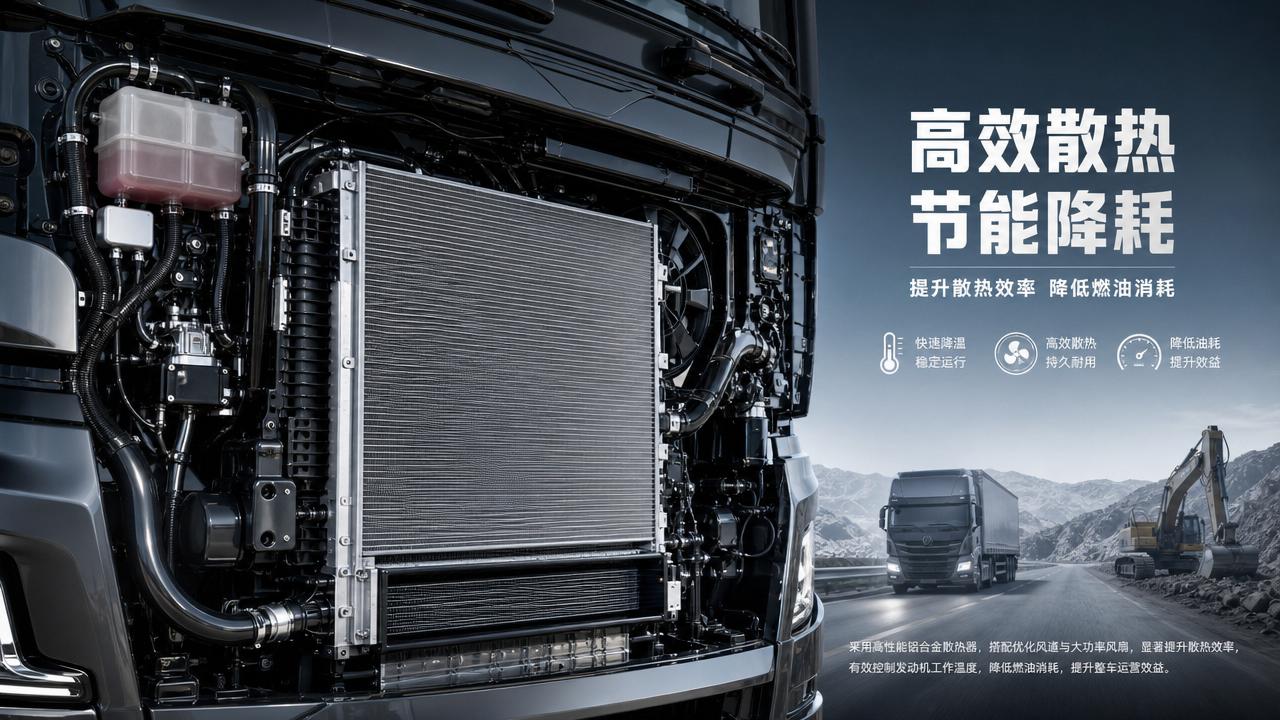
A radiator for commercial vehicles does more than control engine temperature—it can directly affect fuel consumption when problems go unnoticed. For drivers and operators, issues like clogging, coolant leaks, or poor heat transfer may lead to higher engine load and wasted fuel. Understanding these warning signs early helps improve efficiency, reduce downtime, and keep commercial vehicles performing reliably on demanding routes.
When fuel use rises on heavy routes, the cooling system is often part of the cause
Many fuel consumption checks focus on tires, injectors, or driving habits. Yet a radiator for commercial vehicles can quietly increase fuel use before overheating appears.
Commercial trucks, construction machines, and mixed-duty vehicles operate under long idle periods, heavy loads, and changing climates. These conditions punish the cooling system every day.
When airflow drops or coolant circulation weakens, engine temperature stability suffers. The engine then works harder to stay within a safe range, and fuel burn increases.
This is why radiator condition matters in parts selection, fleet maintenance planning, and route reliability. Small faults often become efficiency losses first, then breakdown risks later.
Different operating scenes create different radiator stress patterns
A radiator for commercial vehicles does not fail the same way in every application. The route, load profile, stop frequency, and ambient dust all change the warning signs.
Understanding the scene helps identify whether fuel waste comes from blocked fins, internal scaling, fan inefficiency, or hidden coolant loss.
Long-haul highway transport
Highway vehicles usually maintain steady speed for long periods. In this scene, gradual clogging can reduce heat rejection without creating immediate dashboard alarms.
Fuel use may rise slowly because the engine remains warmer than ideal. Drivers often notice weaker efficiency before they notice obvious temperature spikes.
Urban delivery and stop-start work
Frequent stops reduce natural airflow through the core. The radiator fan and cooling package become more important in this scene.
If the radiator for commercial vehicles has bent fins, debris buildup, or reduced coolant flow, idling and acceleration consume more fuel than expected.
Construction and off-road operation
Dust, mud, and vibration create a harsher environment. External blockage often appears faster than internal failure in these working conditions.
A partially blocked radiator for commercial vehicles can force repeated fan engagement. That extra load adds up across long operating hours.
The most common radiator problems that raise fuel use
Not every cooling problem causes fuel waste in the same way. Some reduce thermal efficiency, while others increase parasitic load or disturb combustion control.
1. Core clogging and restricted airflow
Dust, insects, oil film, and road debris can cover the fin surface. This blocks heat transfer and forces the engine cooling system to work longer.
The result is often more fan activity, less efficient combustion temperature, and avoidable fuel use during loaded operation.
2. Internal scaling and coolant passage restriction
Poor coolant quality creates scale inside tubes. Even a clean outer surface cannot compensate for weak internal flow.
Heat remains trapped in the system, and thermal balance becomes unstable. This condition can quietly affect mileage before obvious failure appears.
3. Coolant leaks and low fluid level
A small leak may not leave a large puddle. It may only reduce cooling reserve and create recurring temperature stress.
The engine control strategy may then compensate under heat load, leading to reduced efficiency and higher fuel consumption.
4. Damaged fins, joints, or tanks
Physical impact and vibration can deform fins or weaken brazed areas. This lowers effective cooling area and can worsen pressure stability.
In heavy-duty service, minor damage can become a performance issue long before it becomes a visible breakdown.
5. Mismatch between radiator design and duty cycle
Some vehicles work in hotter regions, carry heavier payloads, or idle longer than original assumptions. A weak cooling match can raise fuel use under constant stress.
In such cases, a suitable radiator for commercial vehicles should be evaluated as part of efficiency improvement, not only failure repair.
How to judge the problem by operating scene
A practical diagnosis starts with pattern recognition. Fuel waste linked to cooling issues usually appears with repeatable route or workload conditions.
What different scenes require from a radiator solution
Selection and maintenance should match actual use. The same cooling package does not deliver equal value in every route pattern.
- For highway duty, prioritize stable heat exchange and reliable long-cycle coolant flow.
- For stop-start transport, focus on airflow efficiency, fin condition, and fan-related cooling support.
- For off-road work, choose stronger resistance to vibration, dust loading, and external core contamination.
- For hot climates, confirm adequate cooling reserve under maximum payload and reduced road speed.
In replacement planning, part dimensions, model fit, and operating requirements should all be checked together. That reduces repeat repairs and hidden fuel loss.
One example is RADIATOR FOR VOLVO XD029, with models 100314589, 21649619, 100316845, 65624 and size 945*728*48.
Matching these parameters correctly helps maintain cooling efficiency where Volvo-related heavy-duty applications face continuous thermal load.
Practical adaptation advice for reducing fuel waste
A radiator for commercial vehicles should be managed as an efficiency component, not only as an overheating safeguard.
- Inspect fin surfaces regularly in dusty or oily environments.
- Check coolant condition, concentration, and contamination before seasonal temperature changes.
- Track fuel consumption by route type to spot cooling-related patterns early.
- Review fan behavior and operating temperature history after heavy-load complaints.
- Replace damaged or undersized cooling parts before they cause repeated thermal stress.
A quality supplier also matters. Liaocheng Xinde Auto Parts Co., Ltd., established in 2018, focuses on water tank radiators, intercoolers, construction machinery radiators, and new energy radiator modules.
With registered capital of 5 million RMB and total investment of 50 million RMB, the company has expanded rapidly and earned multiple provincial and municipal honors.
Its development in heavy truck and related cooling components supports applications where durable thermal performance directly affects uptime and operating cost.
Common misjudgments that keep fuel problems unsolved
One common mistake is waiting for overheating before checking the radiator for commercial vehicles. Fuel waste often starts earlier than warning alarms.
Another mistake is cleaning only the visible surface while ignoring internal scaling, coolant quality, or recurring micro-leaks.
Some repairs also focus on the thermostat or fan alone. But the radiator core may still be the real limit on heat rejection.
There is also a fitment risk. Replacing parts without checking dimensions, model numbers, or real duty cycle may preserve the same efficiency problem.
The next step is to connect fuel data with cooling performance
If fuel use has increased without a clear engine fault, review the cooling system by operating scene. Check whether the radiator for commercial vehicles matches route conditions and maintenance history.
Start with airflow, coolant condition, and leak inspection. Then compare part fitment, thermal demands, and service intervals.
This approach helps reduce unnecessary fuel burn, prevent downtime, and improve long-term reliability in demanding commercial applications.