



Radiator for Commercial Vehicles Trends Seen at Recent Exhibitions
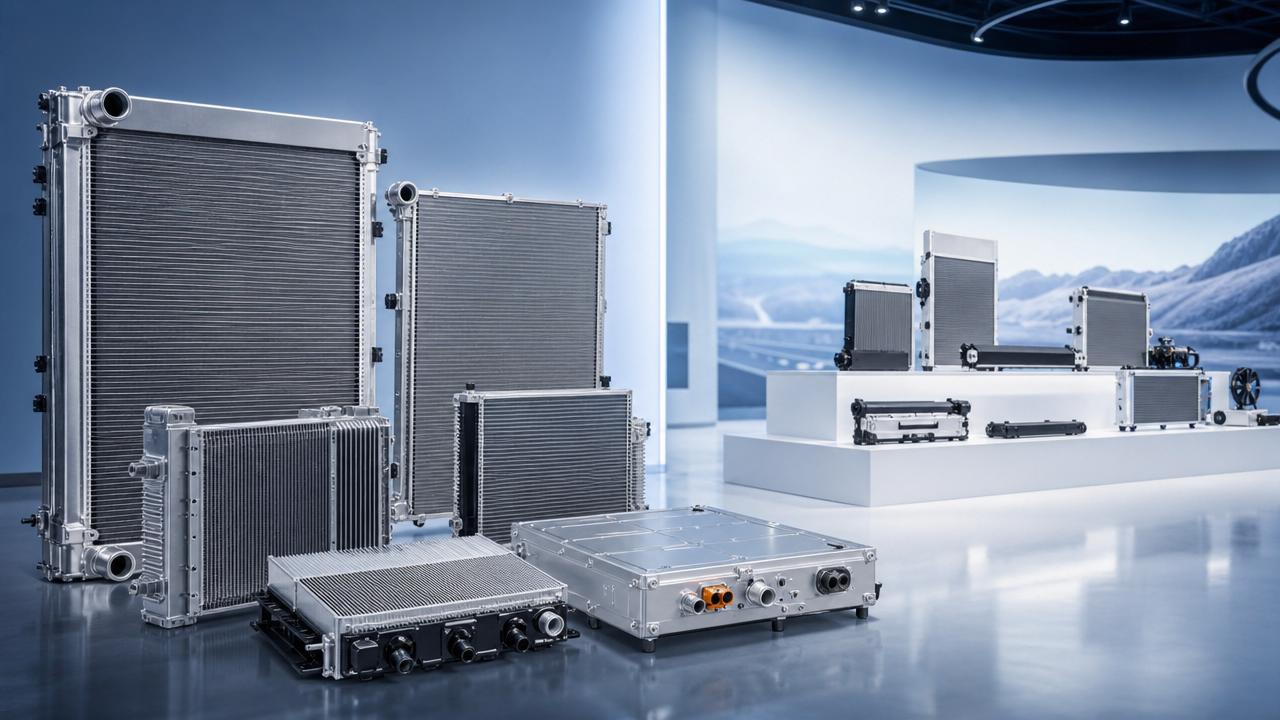
At recent global trade shows, the radiator for commercial vehicles market has revealed clear shifts in technology, durability, and buyer expectations. For distributors, dealers, and agents, these exhibition trends offer valuable clues about future demand, especially in heavy trucks, construction machinery, and new energy cooling systems. Understanding these changes can help channel partners identify reliable manufacturers, expand product lines, and stay competitive in a fast-evolving parts industry.
For channel partners, the main takeaway is clear: buyers are no longer choosing a radiator for commercial vehicles based on price alone. They are comparing cooling efficiency, fitment accuracy, product lifespan, supply stability, and the manufacturer’s ability to support multiple vehicle platforms.
Exhibition trends also show that demand is becoming more segmented. Heavy truck fleets, construction equipment users, and new energy vehicle operators now expect different cooling solutions. Distributors who understand these differences will be better positioned to stock the right products and win repeat business.
What Is the Real Buying Signal Behind Recent Exhibition Trends?
The core search intent behind this topic is practical, not academic. Distributors and agents want to know what recent exhibitions reveal about market direction, product demand, and supplier selection for radiator for commercial vehicles categories.
They are not simply looking for a recap of trade show displays. They want to understand which technologies are gaining traction, what end customers are asking for, and how these signals should influence sourcing, inventory, and partnership decisions.
This is especially important in the commercial vehicle parts market, where product failure creates direct operating losses. A radiator problem can stop a truck, delay a project, or damage customer trust. That makes product reliability a commercial issue, not just a technical one.
Why Distributors Are Paying More Attention to Cooling System Upgrades
One of the strongest themes at recent exhibitions was the growing focus on system-level cooling performance. Instead of viewing the radiator as a basic replacement part, many buyers now see it as a critical component in engine efficiency, uptime, and long-term operating cost.
For heavy trucks and construction machinery, harsher working conditions are driving this change. Vehicles often run under high loads, in dusty environments, or across long distances. In such cases, a radiator for commercial vehicles must do more than meet minimum specifications.
It must also maintain stable heat exchange performance under stress. This is why exhibition visitors showed increased interest in stronger core structures, better material selection, anti-corrosion capability, and designs that improve airflow and thermal management.
For distributors, this means stocking only low-cost standard models may no longer be enough. More customers are comparing durability and application performance, especially in markets where vehicle downtime is expensive and repair intervals are closely monitored.
Durability Has Become a Stronger Sales Factor Than Ever
Another clear exhibition trend was the shift from “Can you supply it?” to “How long will it last?” This change matters because replacement frequency directly affects the reputation of both the seller and the manufacturer.
Fleet operators and service buyers increasingly ask about brazing quality, tube and fin strength, tank performance, vibration resistance, and leak prevention. These are no longer hidden factory concerns. They are now frontline sales questions that distributors must be ready to answer.
At exhibitions, suppliers that could explain testing standards, production control, and quality consistency tended to attract more serious commercial interest. Buyers want evidence that the radiator for commercial vehicles they purchase will perform consistently across batches.
This trend favors manufacturers with stronger production systems rather than those competing only on short-term price. For channel partners, durability is becoming one of the most effective ways to reduce claims, improve customer satisfaction, and protect margin.
Application Coverage Is Expanding, and That Creates New Business Opportunities
Trade shows also highlighted a wider range of vehicle applications than in previous years. Demand is no longer concentrated only in standard road trucks. It increasingly includes construction machinery, specialized commercial platforms, and new energy vehicle thermal systems.
This is important for distributors because broader application coverage can support more stable business growth. When one segment slows, another may continue to generate demand. Suppliers with diversified product lines therefore become more attractive partners.
For example, manufacturers that produce water tank radiators, intercoolers, construction machinery radiators, and new energy radiator modules can help distributors serve different buyer groups through one sourcing relationship. That reduces coordination cost and simplifies supply chain management.
Liaocheng Xinde Auto Parts Co., Ltd., established in 2018, reflects this direction. The company focuses on research, production, and global sales across several cooling product categories, which is the kind of portfolio breadth many exhibition visitors now look for in long-term supply partners.
Why Fitment Accuracy and Model Matching Matter More in Export and Aftermarket Sales
Another exhibition takeaway is that fitment accuracy has become a major trust factor. Distributors and agents working across export markets know that even a small mismatch in dimensions, mounting points, or application data can create returns, delays, and customer complaints.
That is why buyers increasingly favor suppliers who can provide clear model references, dimensional precision, and application-based product development. In practice, a radiator for commercial vehicles must not only cool effectively, but also fit correctly without unnecessary installation issues.
This trend is particularly relevant for truck brands with strong aftermarket demand. For instance, a properly specified RADIATOR FOR SCANIA with model reference 1769999 and size 860*689*48 reflects the level of detail many professional buyers now expect before making sourcing decisions.
For distributors, detailed fitment information improves quotation speed, lowers communication friction, and reduces mistakes. It also helps sales teams appear more credible when serving workshops, fleet maintenance buyers, and regional parts wholesalers.
New Energy Commercial Vehicle Cooling Is Moving from Niche to Growth Segment
One of the most discussed topics at exhibitions was thermal management for new energy commercial vehicles. While traditional diesel truck demand remains strong, many market participants now recognize that new energy cooling systems will become an increasingly important business category.
Unlike conventional products, these systems often require more integrated thermal solutions. Battery systems, power electronics, and electric drive components create new cooling demands, which means future buyers may look for suppliers with stronger engineering and development capability.
For distributors and agents, this does not mean replacing traditional inventory overnight. It means preparing for a market where both conventional and new energy radiator modules will coexist. Early awareness can help channel partners plan product expansion more strategically.
Recent exhibitions suggest that suppliers able to support both heavy-duty conventional applications and evolving new energy requirements may hold a stronger long-term position. This is especially relevant for buyers building distribution networks in markets with mixed vehicle fleets.
What Distributors Should Evaluate Before Choosing a Supplier After an Exhibition
Exhibitions are useful for discovering suppliers, but trade show presentation alone should never drive final decisions. Channel partners need a practical evaluation framework that connects display quality with real delivery capability.
First, assess manufacturing specialization. A supplier focused on commercial vehicle cooling products is often better equipped to understand technical demands, batch consistency, and market-specific application needs than a factory with a very broad but shallow product mix.
Second, review quality assurance and production stability. Ask about testing methods, raw material control, welding or brazing standards, and inspection processes. Reliable radiator for commercial vehicles supply depends on process discipline as much as on equipment.
Third, examine product range and platform coverage. A supplier that supports heavy trucks, construction machinery, and emerging thermal management segments gives distributors more room to grow without rebuilding sourcing relationships from scratch.
Fourth, consider communication efficiency and documentation support. Fast response, accurate catalogs, export familiarity, and clear technical data often make the difference between smooth business and costly confusion, especially for cross-border distribution operations.
How Exhibition Trends Should Influence Inventory and Product Line Decisions
For distributors, the most useful value of exhibition trends lies in inventory planning. The market signals seen at recent events suggest that product selection should move toward a better balance of fast-moving items, durable premium replacements, and application-specific models.
In practical terms, this means reviewing whether current inventory is too narrow, too price-focused, or too dependent on older vehicle platforms. If so, there may be missed opportunities in higher-spec truck radiators, construction applications, or brand-specific replacement products.
It may also be wise to build a smaller but more precise range rather than a large but unfocused catalog. Buyers increasingly reward suppliers that can recommend the right radiator for commercial vehicles quickly, with confidence in performance and fitment.
This is where working with a growth-oriented manufacturer can help. Companies that have expanded rapidly while earning recognition such as High-tech Enterprise and Trustworthy Unit for Consumers often signal a stronger commitment to quality, credibility, and long-term business development.
What End Customers Are Really Asking for Now
Behind every distributor inquiry is an end-customer concern. Recent exhibitions made those concerns easier to identify. Most buyers are asking four practical questions: Will it fit? Will it last? Can it handle tough operating conditions? Can I get stable supply?
These questions matter more than broad marketing claims. A workshop wants fewer comeback repairs. A fleet operator wants less downtime. A regional dealer wants fewer complaints. A distributor wants products that support repeat orders instead of repeated disputes.
That is why the most successful exhibitors were not always the loudest. They were often the suppliers able to connect product features with business outcomes such as longer service life, lower return rates, and more reliable order fulfillment.
When evaluating future opportunities, distributors should stay focused on these same customer-centered priorities. That approach makes trend analysis actionable and turns exhibition observations into smarter commercial strategy.
From Trade Show Interest to Long-Term Market Advantage
The radiator for commercial vehicles market is clearly moving toward higher standards. Recent exhibitions showed a stronger emphasis on durability, application precision, product diversification, and readiness for both conventional and new energy vehicle cooling needs.
For distributors, dealers, and agents, the opportunity is not simply to follow trends, but to translate them into better sourcing decisions. That means choosing suppliers with reliable manufacturing, wider application coverage, and the ability to support technical and commercial requirements consistently.
It also means recognizing that value in this market is increasingly tied to performance and dependability, not only to entry price. Products such as RADIATOR FOR SCANIA illustrate how detailed application support can strengthen buyer confidence and reduce transaction risk.
In short, recent exhibitions sent a clear message: the next stage of growth in commercial vehicle cooling will favor partners who combine product quality, fitment accuracy, and long-term supply capability. Distributors who respond early will be in a stronger position to capture demand and build durable market trust.