



When a Radiator Core Repair Makes More Sense Than Replacement
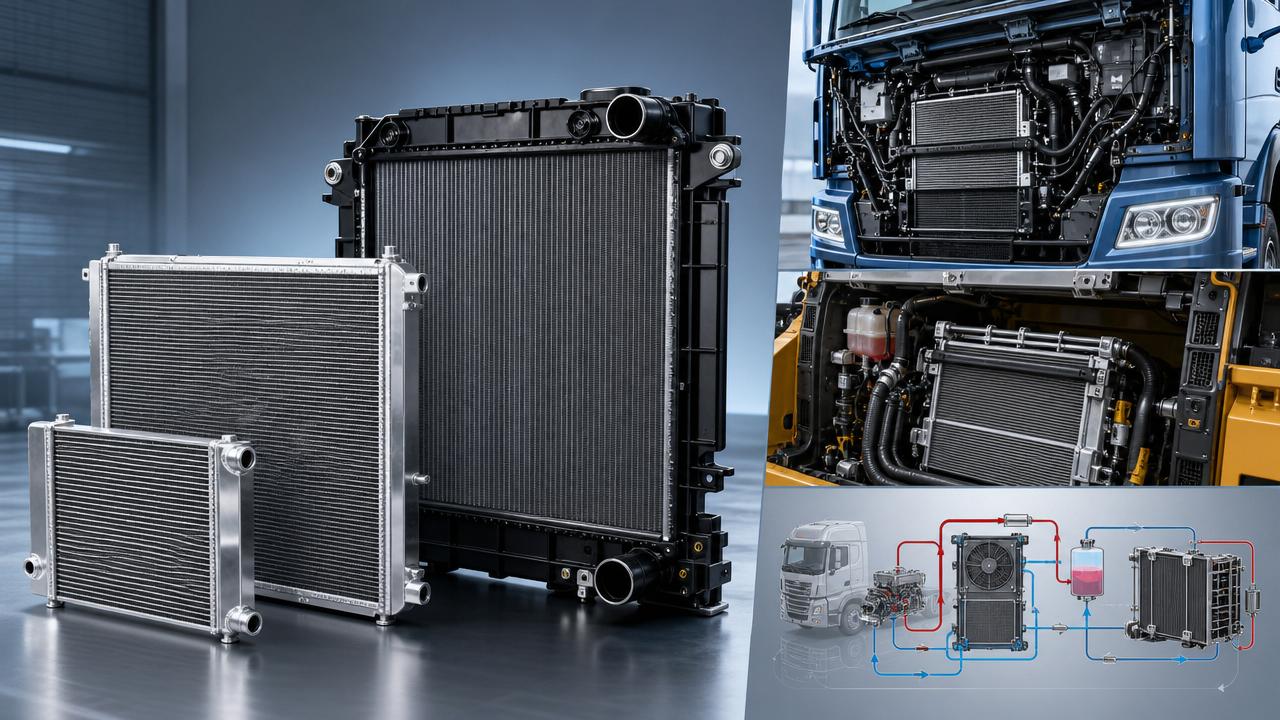
When downtime, budget control, and asset lifespan all matter, a radiator core repair can often be the smarter choice over full replacement. For financial decision-makers, understanding when a radiator core can be restored instead of discarded helps reduce maintenance costs, improve equipment availability, and protect long-term operating efficiency without sacrificing performance.
In the parts industry, that decision is rarely just technical. It affects maintenance budgets, spare-parts planning, fleet utilization, and the total cost of ownership over 12 to 36 months. For heavy trucks, construction machinery, and commercial vehicles, a well-timed radiator core repair can preserve cooling performance while avoiding unnecessary capital outlay.
Liaocheng Xinde Auto Parts Co., Ltd., established in 2018 with a registered capital of 5 million RMB and a total investment of 50 million RMB, focuses on the research, production, and global sales of water tank radiators, intercoolers, construction machinery radiators, and related components for heavy trucks and new energy radiator modules. For buyers and financial approvers, this industry background matters because repair-versus-replace decisions should be informed by manufacturing knowledge, parts structure, and real operating conditions.
Why radiator core repair can be the better financial decision
A radiator core is the heat-exchange center of the radiator assembly. In many cases, damage is limited to leaking tubes, localized fin corrosion, blocked passages, or seam fatigue, while the tanks, frame, and mounting points remain serviceable. If the damage is contained within roughly 10% to 30% of the core area, repair may deliver a lower-cost solution with acceptable service life.
For finance teams, the key issue is not whether a new unit looks cleaner on paper. It is whether replacement generates enough additional value to justify a higher immediate spend. If a repaired radiator core restores stable coolant flow, pressure holding, and heat dissipation within operating range, the economic case often favors repair.
Direct and indirect cost advantages
A full replacement usually includes the cost of a complete assembly, freight, lead time risk, installation labor, coolant refill, and possible machine idling. A radiator core repair may reduce the direct parts cost by 30% to 60% compared with replacement, depending on material type, core size, and damage severity. The exact savings vary, but the spending difference is often large enough to influence approval decisions.
Indirect savings can be even more important. If repair shortens downtime from 7 to 10 days down to 1 to 3 days, the business may avoid lost rental income, delayed site work, or transport interruptions. For equipment that generates revenue daily, each saved day improves utilization and protects cash flow.
Typical situations where repair makes sense
- Localized leaks around a limited number of tubes or joints
- Minor fin damage that does not affect the full heat-exchange surface
- Frame and tank structure still intact and dimensionally stable
- Equipment requires fast return to service within 24 to 72 hours
- Replacement units have a long procurement cycle of 2 to 6 weeks
The table below helps financial approvers compare the practical differences between radiator core repair and full replacement in typical commercial and industrial parts scenarios.
The main conclusion is simple: radiator core repair is strongest when the damage is limited, the machine is commercially important, and supply chain timing creates replacement risk. Full replacement becomes more rational when the cooling system has crossed a structural failure threshold rather than a repairable wear threshold.
How to decide whether a radiator core is repairable
Not every damaged unit should be repaired. A disciplined approval process should review condition, operating duty, expected remaining life, and the cost of repeat intervention. For finance teams, a 5-point repairability checklist helps keep decisions objective instead of reactive.
1. Assess the location and scale of damage
If leaks are concentrated in one area, or if a limited number of tubes are compromised, radiator core repair is often practical. If more than 25% to 35% of the core shows corrosion, clogging, or impact damage, replacement deserves stronger consideration. A visual inspection should be paired with pressure testing, typically within the operating range specified for the equipment.
2. Review the age and duty cycle of the equipment
A radiator serving a machine with 1 to 2 years of expected remaining service may justify repair even if performance is not fully restored to new-unit condition. On the other hand, if the equipment is planned to stay in service for another 5 years under heavy load, a replacement may create better lifecycle value. The right answer depends on the depreciation horizon and maintenance strategy.
3. Confirm whether core contamination can be removed
Dust, oil residue, scale, and internal sediment can reduce heat transfer long before visible leaks appear. If the core can be effectively cleaned and flow is restored, repair remains viable. If blockage is severe across multiple passages, the recovered efficiency may be too low for dependable field performance, especially in high-temperature or stop-and-go applications.
4. Check surrounding components
A radiator core does not fail in isolation. Tanks, seals, side plates, mounts, fan shrouds, hoses, and coolant quality all affect the success of repair. If related components are degraded, the total cost of restoring the system may approach the price of full replacement. In that case, the lower headline repair quote can be misleading.
5. Estimate the cost of repeat downtime
For some fleets, one unexpected stoppage costs more than the price gap between repair and replacement. This is common in logistics routes, construction sites, and seasonal operations where every 8 to 12 hours of downtime affects revenue. Finance approval should therefore include both repair cost and downtime exposure cost.
The next table summarizes a practical approval model for deciding whether radiator core repair aligns with commercial risk and operating priorities.
This framework helps purchasing and finance teams avoid over-spending on recoverable parts while also avoiding false economy. The smartest radiator core decision is usually the one that fits the asset plan, not just the workshop preference.
Operational risks of choosing the wrong option
Approving repair when replacement is necessary can create repeat failures, coolant loss, and secondary engine stress. Approving replacement when repair would have been sufficient can tie up budget and slow the return of productive equipment. Both mistakes reduce maintenance efficiency, but they do so in different ways.
Under-repair risk
If a radiator core is repaired despite severe metal fatigue or deep internal blockage, overheating may reappear within weeks or months. That can trigger further costs such as hose failure, coolant contamination, or unscheduled roadside or site service. For high-load vehicles, even a small drop in cooling reserve can matter during peak ambient temperatures.
Over-replacement risk
Replacing complete radiator assemblies too early increases unit maintenance cost and can distort spare-parts budgeting across the fleet. When this pattern repeats over 10, 20, or 50 vehicles, the accumulated overspend becomes significant. For finance teams managing annual maintenance plans, this reduces room for investment in other reliability items.
Common signs that repair is still commercially safe
- Pressure loss is traceable to a specific area rather than the full core.
- The tanks and mounting frame are not warped or cracked.
- The cooling system has no repeated overheating history after recent service.
- Core cleaning and testing indicate flow can return to acceptable levels.
- The machine has moderate remaining service life or non-critical duty.
A structured service partner can reduce these risks by inspecting the complete cooling assembly rather than quoting on the visible leak alone. That broader view is especially important for heavy-duty and construction applications, where vibration, debris, and load cycles accelerate wear patterns.
What financial approvers should ask suppliers before approving repair
A strong supplier discussion should move beyond price and cover technical scope, timeline, and verification. Whether the radiator core is for a truck, machinery platform, or commercial vehicle, the following questions improve decision quality and reduce hidden cost.
Key approval questions
- What exact area of the radiator core is damaged, and how extensive is it?
- Will the repair include pressure testing and flow verification after completion?
- What is the estimated turnaround time: 24 hours, 72 hours, or longer?
- Which surrounding parts should be inspected at the same time?
- What operating conditions would make replacement the safer option?
- How does the repair cost compare with a new unit after freight and installation?
For procurement teams sourcing new units when replacement is necessary, compatibility, application fit, and manufacturer capability should also be checked carefully. In some vehicle programs, buyers may review application-specific options such as radiator for benz when evaluating replacement pathways for commercial fleets or branded vehicle maintenance requirements.
Why manufacturer background matters
A manufacturer with experience in water tank radiators, intercoolers, construction machinery radiators, and new energy radiator modules typically understands the trade-offs between repairability, heat-load demands, and parts durability. Liaocheng Xinde Auto Parts Co., Ltd. has developed rapidly since 2018 and has received provincial and municipal honors including High-tech Enterprise, Civilized and Honest Enterprise, and Trustworthy Unit for Consumers. For B2B buyers, such background supports more informed communication on technical feasibility and supply expectations.
This matters because the right advice is not always to sell a complete new radiator. In many operating environments, preserving a serviceable radiator core or restoring a damaged one is the more disciplined financial move. In others, shifting to a new assembly avoids recurring service cost. Approval quality improves when the supplier can discuss both paths with clarity.
Building a practical repair-versus-replace policy
Companies with fleets or multiple equipment types benefit from a written cooling-system decision rule. A simple internal policy can reduce inconsistent approvals and speed up workshop action. In practice, many firms use a 3-step threshold model based on damage extent, downtime cost, and planned equipment life.
A workable 3-step policy model
Step 1: Repair by default when damage is localized, the radiator core passes structural inspection, and return-to-service urgency is high. Step 2: Escalate for review when repair cost exceeds 50% of replacement cost or when repeat repairs occurred within the last 6 to 12 months. Step 3: Replace when structural deterioration is broad, thermal performance cannot be recovered, or downtime risk is commercially unacceptable.
Where this policy creates value
The main benefit is predictability. Maintenance, purchasing, and finance can align around the same thresholds instead of debating each failure from zero. That shortens approval cycles, improves parts planning, and reduces rushed buying decisions. For mixed fleets, it also supports better comparison across brands, including application-specific sourcing needs such as a second evaluation path for radiator for benz when a direct replacement becomes necessary.
When managed properly, radiator core decisions become less about emergency reaction and more about lifecycle control. That is the perspective financial approvers need: not simply the cheapest invoice today, but the most sensible maintenance outcome over the next operating cycle.
A radiator core repair makes more sense than replacement when the damage is contained, the supporting structure remains sound, and fast return to service protects revenue or operating continuity. Replacement becomes the better option when corrosion, blockage, or structural fatigue raises the risk of repeat failure and avoidable downtime.
For financial decision-makers, the most effective approach is to compare 4 factors together: repair scope, downtime cost, remaining equipment life, and total restoration cost. With support from an experienced parts manufacturer, that analysis can reduce unnecessary spending while maintaining reliable cooling performance across trucks, construction machinery, and commercial vehicle applications.
If you need support evaluating radiator core repair options, replacement planning, or application-specific radiator sourcing, contact us now to discuss your operating conditions, request a tailored solution, or learn more about practical cooling-system options for your equipment.