



Radiator Core Leak Risks Linked to Poor Brazing Control
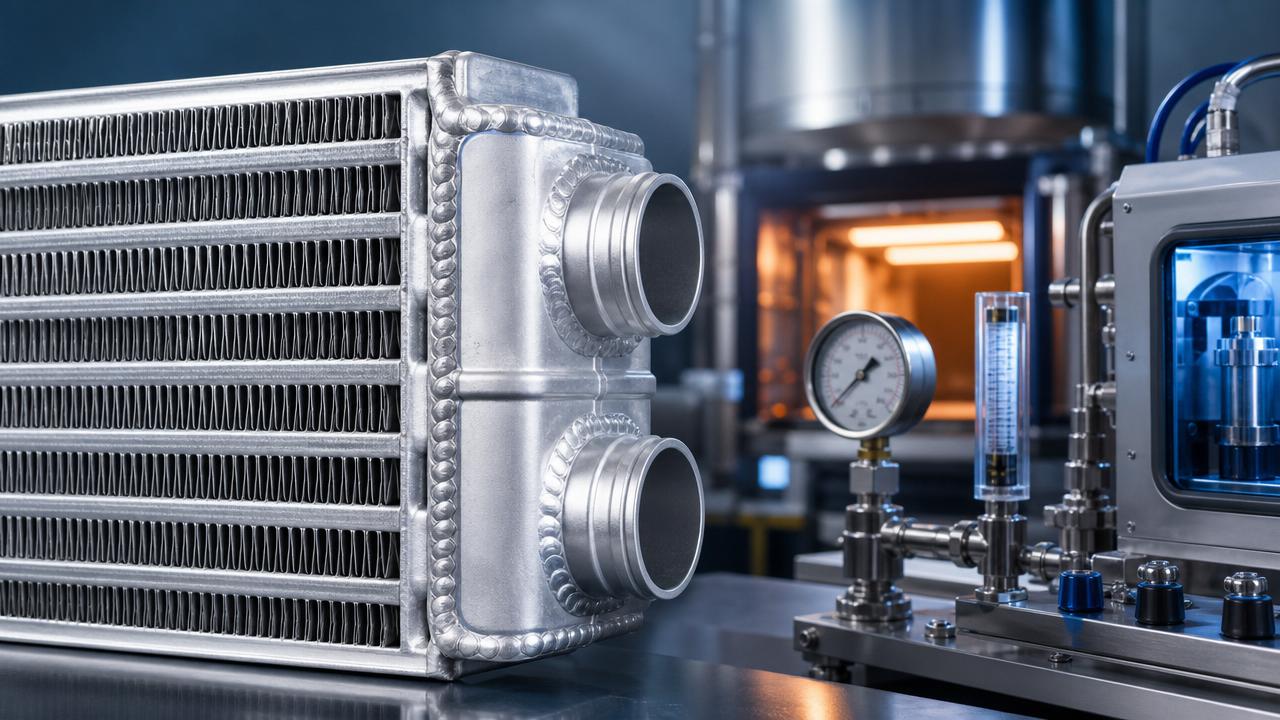
A radiator core leak is rarely an isolated defect—it often signals weak brazing control, unstable process parameters, or inconsistent material quality. For quality control and safety management teams, understanding how brazing errors affect radiator core reliability is essential to reducing field failures, protecting equipment performance, and preventing costly claims. This article examines the key leak risks linked to poor brazing control and the practical measures manufacturers can take to improve product integrity.
Why does poor brazing control create radiator core leak risks so quickly?
In the parts industry, the radiator core is a heat-transfer structure that depends on stable metallurgical bonding between tubes, fins, headers, and side components. When brazing control slips, leak risk rises immediately because the joint quality determines both sealing and thermal durability.
For QC and safety managers, this matters beyond a simple reject rate. A leaking radiator core can trigger engine overheating, coolant loss, unplanned downtime, warranty disputes, and in heavy-duty applications, broader equipment safety concerns in transport or construction environments.
Poor brazing control usually shows up in three linked areas rather than one isolated mistake:
- Unstable furnace temperature or atmosphere, causing incomplete filler flow or oxidation at the joint interface.
- Improper component fit-up, leaving inconsistent gaps that prevent uniform capillary action inside the radiator core.
- Variation in base material, clad layer, or surface cleanliness, reducing bond integrity and long-term pressure resistance.
A radiator core that passes an early air test can still fail later if weak brazed joints crack under thermal cycling, vibration, or pressure pulsation. That is why safety-focused teams should evaluate process capability, not just final inspection data.
What makes leak defects hard to catch at the source?
Many brazing-related defects are partially hidden. Voids, local non-wetting, flux residue, or oxide films may not be obvious on surface inspection. The radiator core may look acceptable visually while still containing weak paths that become leaks after shipping, installation, or field operation.
Which brazing failures most often damage radiator core reliability?
QC teams need a failure map that links observable symptoms with process causes. The table below summarizes common radiator core leak mechanisms related to brazing control and the practical effect each one has on product performance.
The key point is that a radiator core leak often begins as a process-control issue, not simply a workmanship issue. That distinction changes how manufacturers should investigate, document, and correct defects.
How do these failures affect safety management priorities?
Safety managers typically focus on consequences rather than just defect type. In heavy truck and construction machinery cooling systems, a leaking radiator core can cause hot spots, coolant discharge, temperature alarms, and emergency maintenance. The risk becomes more serious when machines work under high load, poor airflow, or long duty cycles.
What process parameters should QC teams monitor first?
When leak rates rise, many factories overemphasize final pressure testing. That is necessary, but not enough. The most effective radiator core control plan starts upstream with measurable brazing parameters and material consistency.
The table below highlights core checkpoints that quality and safety teams should review during supplier audits or internal process reviews.
If one of these controls drifts, the radiator core may still pass a short inspection window but lose reliability under service stress. This is why process traceability is as important as end-of-line testing.
A practical review checklist for quality and safety teams
- Confirm whether leak defects cluster by shift, batch, furnace zone, or material lot.
- Compare pressure-test failures with metallographic or sectioned joint observations.
- Check whether rejected radiator core units show common fit-up deviations before brazing.
- Review maintenance records for furnace atmosphere, conveyor stability, and fixture wear.
- Verify whether supplier material variation aligns with leak spikes over time.
How should buyers and auditors compare radiator core manufacturing capability?
For procurement, QC, and safety personnel, selecting a radiator supplier should go beyond price and appearance. The real question is whether the manufacturer can keep brazing quality stable across batches, models, and delivery schedules.
The comparison below helps teams judge radiator core production capability in a more disciplined way.
This kind of comparison is useful when evaluating products for heavy trucks, intercoolers, construction machinery radiators, or new energy radiator modules. It helps reduce the chance that a low initial purchase cost becomes a high field-failure cost later.
Where does supplier stability matter most?
It matters most in programs with repetitive delivery, multi-model demand, and strict downtime tolerance. If your equipment fleet depends on predictable cooling performance, a stable radiator core manufacturing process is more valuable than a one-time low quote.
What should teams check when reviewing a specific radiator program?
In real sourcing or replacement projects, QC and safety staff often need to move from general process evaluation to model-specific review. That includes dimensions, fitment references, and whether the radiator core structure suits the operating load of the target platform.
For example, a model such as RADIATOR FOR VOLVO XD029 may be reviewed not only by part number match, but also by core dimensions, service environment, and the consistency of the brazed assembly behind the visible frame.
- Confirm reference model numbers such as 100314589, 21649619, 100316845, and 65624 against the required application.
- Check the stated size 945*728*48 against available installation space and cooling-system design constraints.
- Ask how the manufacturer controls brazing repeatability for this core size, because larger assemblies can amplify distortion and joint-uniformity challenges.
This approach helps prevent a common error: treating dimensional compatibility as sufficient proof of durability. For a radiator core, process consistency is part of the product specification, even if it does not appear directly on the label.
How can manufacturers reduce radiator core leak claims in practice?
Reducing leak claims requires a closed-loop quality system. Final inspection alone cannot compensate for weak brazing discipline. Manufacturers need controls that begin before furnace loading and continue through testing, traceability, and corrective action.
Recommended actions on the production side
- Standardize incoming checks for tube, fin, and header materials so that clad condition and surface cleanliness stay within defined limits.
- Use fixture verification and dimensional checkpoints to prevent gap variation before the radiator core enters the brazing line.
- Maintain furnace temperature mapping and atmosphere monitoring records that can be linked to each batch.
- Apply leak testing with defect categorization, so recurring locations can be tied back to process parameters and assembly steps.
- Train operators and inspectors to recognize early signs of wetting failure, distortion, residue, and handling damage after brazing.
Why process speed should not override control
Fast growth in output can strain quality systems if line expansion is not matched by process discipline. In radiator core production, more volume means more need for stable documentation, lot traceability, and standardized response to abnormal data. Otherwise, leak risk spreads quietly across batches.
That is why experienced manufacturers in the parts sector invest not only in production capacity, but also in research, process refinement, and global-quality coordination. Liaocheng Xinde Auto Parts Co., Ltd., established in 2018 with registered capital of 5 million RMB and total investment of 50 million RMB, focuses on the research, production, and global sales of water tank radiators, intercoolers, construction machinery radiators, and related components for heavy trucks and new energy radiator modules. This specialization is especially relevant for buyers who need practical support on cooling-component reliability, not just basic supply.
What procurement mistakes increase radiator core failure risk later?
Several purchasing decisions look efficient in the short term but create hidden leak exposure later. QC and safety managers should challenge these habits during sourcing reviews.
Common mistakes
- Approving a radiator core supplier based only on appearance, price, and sample fit without reviewing brazing controls.
- Assuming one passed pressure test proves long-term field reliability under vibration and thermal cycling.
- Ignoring lot traceability for materials and finished assemblies, which weakens root-cause analysis after a leak claim.
- Failing to communicate the real duty cycle, ambient conditions, and safety expectations of the end equipment.
When these gaps exist, buyers may receive a radiator core that is technically compatible but operationally under-protected. The result is often a slow increase in service failures rather than an obvious immediate rejection problem.
FAQ for quality control and safety teams
How can I tell if a radiator core leak is caused by brazing rather than transport damage?
Start with leak location and defect pattern. Repeated leaks at tube-to-header joints, finned sections, or specific furnace-batch positions often point to brazing control. Random external damage, bent frames, or impact marks suggest handling or transport issues. A joint cross-section review usually clarifies the difference.
What tests are most useful besides a basic leak test?
A basic leak test is only one layer. For higher-risk programs, teams should consider pressure-hold evaluation, thermal-cycle validation, vibration-related durability review, and section analysis of suspect joints. The right mix depends on equipment load, safety criticality, and claim history.
Is a larger radiator core automatically more reliable?
No. A larger radiator core may improve cooling capacity, but it can also introduce more brazed area, more distortion sensitivity, and more assembly variation if manufacturing control is weak. Reliability depends on both design suitability and process stability.
What should we ask a supplier before placing an order?
Ask about process traceability, material consistency checks, leak-test methods, dimensional control points, and how nonconforming radiator core units are analyzed. Also confirm sample support, lead time, and whether the supplier can review application drawings or reference numbers in detail.
Why choose a specialized cooling-parts manufacturer for risk-sensitive programs?
For QC personnel and safety managers, the best supplier is not simply one that can ship parts. It is one that understands how radiator core design, brazing discipline, and application demands interact in real service conditions. That is especially important for heavy trucks, construction machinery, and new energy cooling modules where failure consequences extend beyond replacement cost.
Liaocheng Xinde Auto Parts Co., Ltd. focuses on water tank radiators, intercoolers, construction machinery radiators, and related cooling components, with ongoing development in heavy-truck and new energy radiator modules. The company’s rapid development and recognition such as High-tech Enterprise, Civilized and Honest Enterprise, and Trustworthy Unit for Consumers reflect a serious operating foundation, while its product specialization makes discussions on radiator core selection more targeted and practical.
If your team is reviewing radiator core leak risk, planning supplier replacement, or checking a program like RADIATOR FOR VOLVO XD029, you can contact us for parameter confirmation, model selection support, delivery-cycle discussion, custom solution review, sample coordination, and quotation communication. Sharing your application environment, reference models, size requirements, and failure concerns early will help shorten validation time and reduce sourcing risk.