



When a New Energy Vehicle Radiator Upgrade Actually Cuts Lifecycle Cost
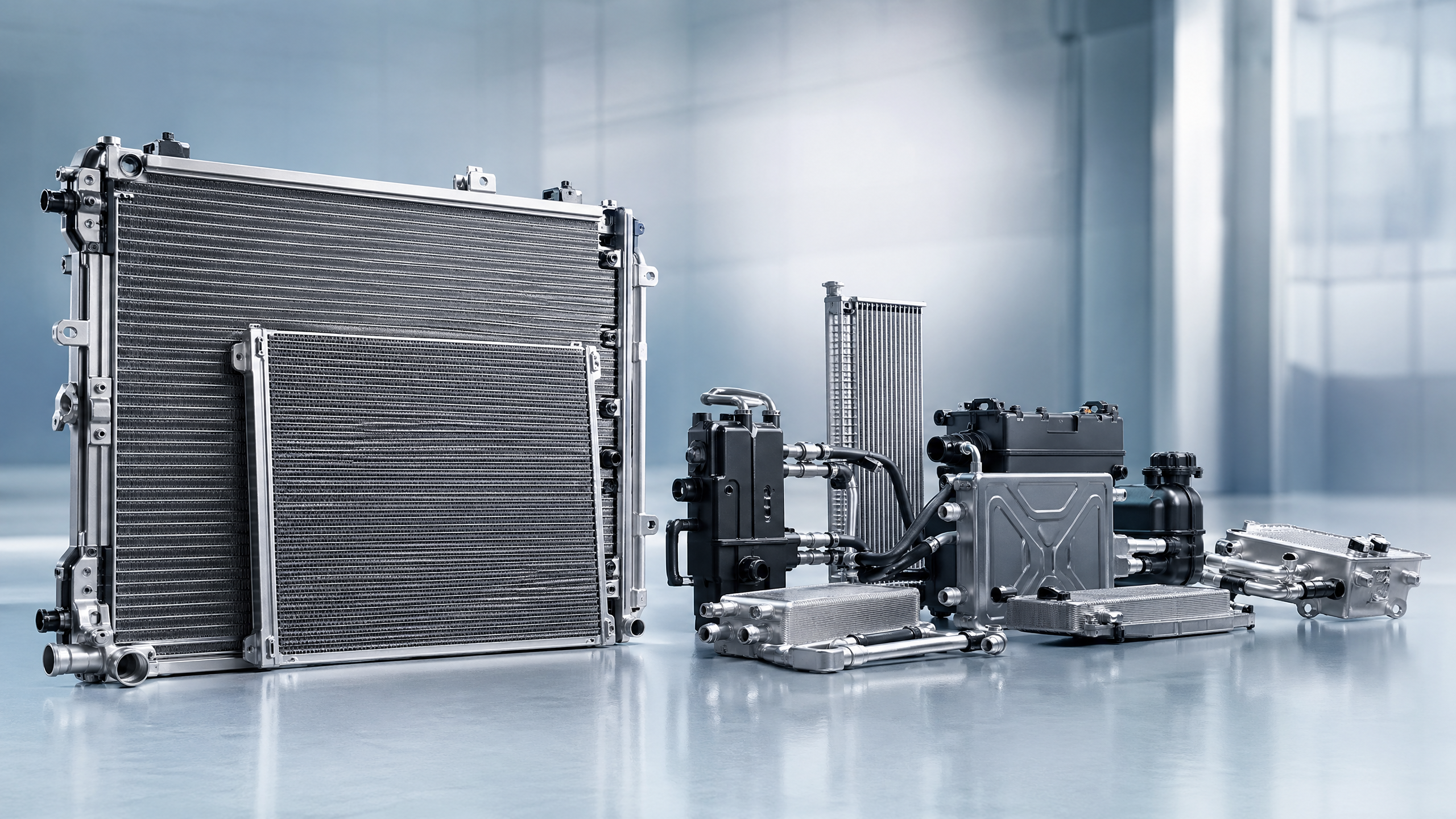
For finance approvers, a New Energy Vehicle Radiator upgrade should be judged by total lifecycle value, not just purchase price. When thermal efficiency, durability, and maintenance intervals improve together, the result can be lower downtime, fewer replacement costs, and more predictable operating budgets. This article explains how the right radiator solution can turn a technical upgrade into a measurable cost-control decision.
What Finance Approvers Are Really Asking Before Approving a Radiator Upgrade
When someone searches for a New Energy Vehicle Radiator upgrade, the real question is rarely, “What does the part cost?” For a finance approver, the more relevant question is, “Will this upgrade reduce total operating cost over the asset’s working life?” That means looking beyond invoice price and evaluating whether the new radiator improves uptime, lowers service frequency, reduces thermal-related failures, and extends the useful life of connected components.
In new energy vehicles, thermal management is not a minor engineering detail. It directly affects battery stability, power electronics performance, motor efficiency, and overall fleet reliability. If a radiator underperforms, the visible cost may start with maintenance, but the hidden cost often comes from unplanned downtime, route disruption, reduced asset utilization, and early wear on adjacent systems. Those are the areas finance teams should quantify before making an approval decision.
The overall judgment is straightforward: a radiator upgrade actually cuts lifecycle cost when it improves heat dissipation in real operating conditions, lasts longer under repeated thermal stress, and lowers the probability of expensive service events. If those three conditions are not present, the upgrade may simply shift cost forward rather than reduce it.
Why Purchase Price Alone Can Lead to the Wrong Decision
Capital discipline often pushes procurement teams toward the lowest initial bid. That can work for standardized low-risk items, but a New Energy Vehicle Radiator is tied to system reliability. A cheaper unit may save money at the time of purchase while creating a higher cost profile later through leak risk, weaker corrosion resistance, unstable brazing quality, or reduced thermal efficiency under demanding duty cycles.
For finance approvers, this is a classic total cost of ownership issue. The radiator is not just a replaceable part; it is a component that influences maintenance planning, vehicle availability, and the service life of expensive systems around it. If a lower-cost radiator causes one additional failure event per vehicle each year, the cost impact can quickly exceed the original savings. Labor, towing, rescheduling, missed service commitments, and spare inventory buffering all add up.
This is especially important in fleet environments such as public transportation, logistics, and heavy-duty applications, where utilization rates are high and downtime has direct financial consequences. In such settings, a reliable upgrade often performs more like a risk-control investment than a simple parts purchase. That is the lens finance teams should apply when comparing options.
The Cost Categories That Matter Most Over the Lifecycle
To judge whether a radiator upgrade delivers value, finance approvers should break lifecycle cost into clear categories. The first is direct acquisition cost: unit price, freight, import or logistics costs where relevant, and installation expense. This is the easiest number to compare, but it should be treated as only the starting point.
The second category is maintenance cost. This includes inspection frequency, cleaning intervals, leak repairs, coolant-related service, replacement labor, and the cost of carrying spare units. Better thermal design and stronger manufacturing consistency can lower both routine and corrective maintenance demands. When fleets run at scale, even small reductions in service frequency can produce meaningful annual savings.
The third and most important category is operational loss. This includes downtime, route interruption, delayed deliveries, reduced fleet availability, and the knock-on effect of thermal instability on batteries, inverters, electric motors, or engines in hybrid applications. A finance approver should ask not only, “How often does this part fail?” but also, “What happens to the business when it does?” The answer often changes the economics of the decision.
How a Better New Energy Vehicle Radiator Creates Measurable Savings
A high-quality New Energy Vehicle Radiator reduces lifecycle cost in four main ways. First, it improves thermal efficiency. Better heat exchange helps the vehicle maintain stable operating temperatures, which reduces stress on the battery pack, motor system, and power electronics. More stable temperatures generally support more consistent performance and can reduce the risk of heat-related shutdowns or derating.
Second, it increases durability. A radiator built with better materials and stronger joining methods is less likely to crack, leak, or degrade early under vibration, pressure cycling, and road contamination. This is particularly relevant for commercial vehicles, where operating conditions are harsher than in light private use. Longer service life means fewer replacements and a better return on the original installation cost.
Third, it reduces downtime. A component that lasts longer and performs more reliably lowers the chance of unscheduled maintenance events. For finance teams, downtime should always be converted into a monetary figure. A vehicle that cannot operate still incurs ownership cost while generating no revenue or public service value. Avoided downtime is one of the strongest arguments for approving a technically superior radiator.
Fourth, it improves budget predictability. Stable maintenance intervals and lower failure rates make annual operating expenses easier to forecast. For finance approvers managing fleets or multi-year procurement plans, this predictability is valuable in itself because it reduces emergency purchasing, unexpected service spikes, and inventory uncertainty.
What Evidence Finance Teams Should Request From Suppliers
Finance approvers do not need to become thermal engineers, but they do need credible evidence. The first thing to request is application-specific performance data. A radiator that performs well in one vehicle type may not deliver the same result in another. Suppliers should be able to explain the intended use case, thermal load, and operating environment rather than relying only on general claims.
Second, ask for manufacturing and material information that affects durability. This includes aluminum grade, brazing quality, corrosion resistance, pressure testing standards, and consistency controls. In practice, lifecycle cost is heavily influenced by build quality. Premium materials and stable production processes often reduce variability, which is essential when fleets require predictable performance across many units.
Third, request field-life expectations and warranty terms, but do not stop there. A warranty can be helpful, yet warranty replacement does not erase the cost of lost uptime, labor, and operational disruption. The stronger question is whether the supplier can demonstrate lower failure probability over time. Evidence from fleet applications, service records, or repeat customer use is more useful than a broad warranty statement by itself.
Where the Upgrade Is Most Likely to Pay Back Quickly
Not every application justifies the same upgrade level. The strongest payback usually appears in high-utilization vehicles, vehicles exposed to harsh climates, and fleets where downtime is expensive. Public buses, distribution vehicles, municipal service fleets, and heavy-duty operating platforms often fit this profile because thermal loads are high and service continuity matters.
In public transportation, for example, reliability has financial and reputational value. Missed schedules can trigger operational disruption beyond the affected vehicle. In such cases, a more robust radiator can produce savings through better route continuity and reduced workshop scheduling pressure. A finance approver should always consider the cost of disruption at the system level, not just the component level.
This is also where application-oriented products deserve attention. For instance, in bus thermal management scenarios, a solution such as Radiator for Ankai may be relevant because it is built for public transportation use, uses premium-grade aluminum, and is designed for thermal management in both traditional diesel and new energy electric buses. Features such as advanced brazing technology are not just technical details; they can influence service life and uptime performance in real operating fleets.
How to Build a Simple Business Case for Approval
Finance teams do not need a complex model to evaluate a New Energy Vehicle Radiator upgrade. A practical approach is to compare the incremental purchase cost against expected savings in three areas: maintenance labor and parts, downtime reduction, and deferred replacement of related components affected by thermal stress. If the supplier can support expected performance improvements with data, the business case becomes much easier to defend internally.
Start with the current baseline. What is the average service life of the existing radiator? How many thermal-related failures occur per year? What is the average cost of each event, including labor and lost vehicle availability? Once these numbers are clear, estimate how much the upgraded solution can improve them. Even moderate reductions in failure frequency can justify a higher upfront price if the fleet is large enough or utilization is high enough.
It also helps to use scenario analysis. Build a conservative case, a most-likely case, and an upside case. In the conservative case, assume only small reductions in downtime and maintenance. If the upgrade still pays back under those assumptions, approval risk is low. If the economics only work under optimistic assumptions, finance approvers should push for stronger evidence before committing budget.
Red Flags That Suggest an Upgrade Will Not Deliver Real Savings
Not every premium-priced radiator is a good investment. One warning sign is vague performance language with no application-specific proof. If a supplier talks generally about “better cooling” but cannot explain what changes in measurable terms, finance teams should be cautious. Real value must connect to service life, temperature stability, or maintenance outcomes that matter in operation.
Another red flag is a mismatch between product design and usage conditions. A radiator suited for low-intensity duty may underperform in stop-and-go urban transit, high-temperature routes, or vehicles carrying heavy thermal loads. Even a technically sound product can fail to generate savings if it is not matched to the operating profile. Approval should depend on fit, not branding alone.
A third warning sign is weak supply reliability or poor after-sales support. Lifecycle cost is affected not only by product quality but by the supplier’s ability to support continuity, provide consistent batches, and respond quickly when issues arise. For fleet operators and finance managers, supplier stability is part of the value equation because service delays and procurement uncertainty also carry cost.
Why Supplier Capability Matters to Long-Term Cost Control
A radiator upgrade is easier to justify when the supplier has a credible manufacturing base and focused product experience. Companies that specialize in water tank radiators, intercoolers, construction machinery radiators, heavy truck cooling components, and new energy radiator modules are often better positioned to support product consistency and application matching. That depth matters because thermal management performance depends on engineering detail and manufacturing precision.
Liaocheng Xinde Auto Parts Co., Ltd., established in 2018, has invested in research, production, and global sales across these categories and has grown rapidly in China’s market. For finance-minded buyers, this kind of background is relevant not as a marketing point alone, but as an indicator of production capability, product focus, and long-term cooperation potential. Honors such as High-tech Enterprise and Trustworthy Unit for Consumers can also support confidence when comparing supply partners.
In practical terms, supplier capability affects lifecycle cost through consistency. A technically good radiator that cannot be supplied reliably, or that varies too much between production lots, creates hidden cost in procurement, inventory, and maintenance planning. Finance approvers should therefore evaluate the supplier ecosystem together with the product specification.
A Decision Framework Finance Approvers Can Use Immediately
If you need a fast approval framework, focus on five questions. First, does the upgrade improve thermal performance in the actual vehicle and route conditions? Second, does it materially reduce expected failure frequency or extend service life? Third, what is the quantified value of downtime avoided? Fourth, is the supplier credible in manufacturing quality and support? Fifth, does the payback still work under conservative assumptions?
If the answer to most of these questions is yes, a higher upfront price may be financially justified. If the answers are uncertain, the right next step is not automatic rejection but targeted verification. Ask for trial data, fleet references, test documentation, and maintenance comparisons. A disciplined approval process does not oppose technical upgrades; it filters for upgrades that truly reduce total cost.
The key is to avoid making a strategic lifecycle decision with a transactional purchasing mindset. A New Energy Vehicle Radiator should be evaluated according to the cost it prevents, not only the amount it costs to buy. That distinction is where many strong financial decisions begin.
Conclusion: When the Upgrade Truly Lowers Lifecycle Cost
A New Energy Vehicle Radiator upgrade actually cuts lifecycle cost when it improves thermal stability, lasts longer under real operating stress, and reduces downtime enough to outweigh the higher initial spend. For finance approvers, the decision should rest on total cost of ownership, not unit price in isolation. The most valuable upgrade is not the cheapest radiator, but the one that delivers the lowest combined cost of purchase, maintenance, disruption, and replacement over time.
In other words, this is a business decision disguised as a parts decision. When thermal management performance, durability, and supplier reliability align, the upgrade becomes a practical cost-control measure with measurable financial value. That is the standard worth using before approving any radiator investment for new energy vehicle fleets.