



Key Performance Signals to Watch in a New Energy Vehicle Radiator
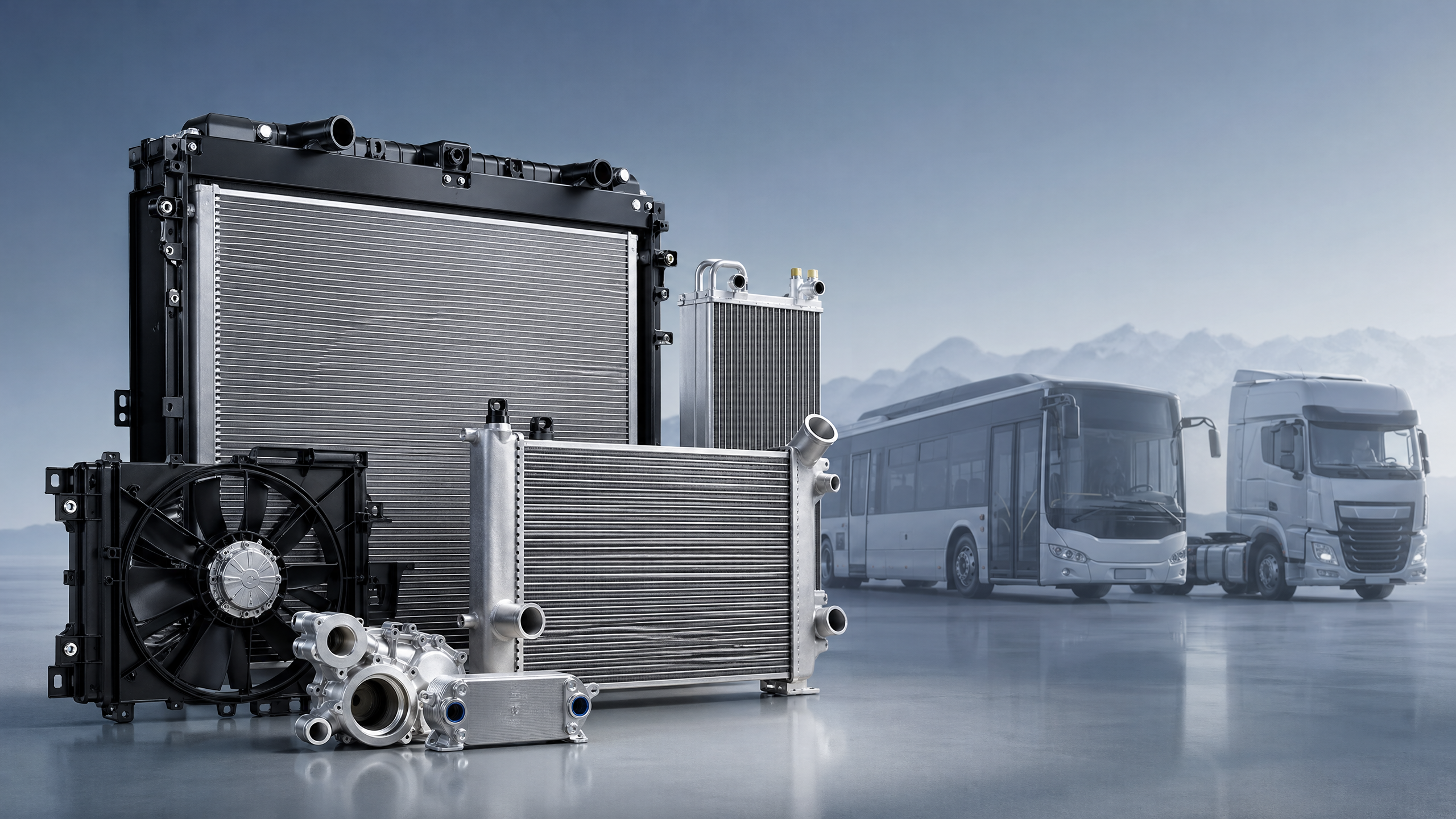
For business decision-makers evaluating thermal management performance, understanding the key signals in a New Energy Vehicle Radiator is essential. From heat dissipation efficiency and pressure stability to corrosion resistance and lifecycle reliability, these indicators directly affect vehicle safety, operating cost, and long-term value. This article outlines the most important performance signals to help you make smarter sourcing and product evaluation decisions.
In the parts industry, radiator selection is no longer a routine purchasing task. For electric buses, logistics vehicles, heavy-duty platforms, and mixed-energy fleets, thermal management performance influences battery consistency, inverter protection, motor stability, and maintenance intervals. A weak component can create a chain reaction that raises field failure rates, extends downtime, and weakens total asset utilization.
Liaocheng Xinde Auto Parts Co., Ltd., established in 2018 with a registered capital of 5 million RMB and a total investment of 50 million RMB, focuses on the research, production, and global sales of water tank radiators, intercoolers, construction machinery radiators, heavy truck cooling components, and new energy radiator modules. For buyers comparing suppliers, this type of manufacturing specialization matters because thermal parts must be judged not only by price, but by production stability, materials, process control, and long-cycle service value.
Why Thermal Signals Matter More in a New Energy Vehicle Radiator
A New Energy Vehicle Radiator works in a more sensitive operating environment than many traditional cooling parts. Instead of managing only engine heat, it may support battery packs, power electronics, e-axles, motors, or hybrid systems. In practical applications, the acceptable temperature window may be as narrow as 10°C to 25°C for certain electronic subsystems, while coolant loop pressure and flow conditions fluctuate under stop-and-go urban operation.
For business decision-makers, the key issue is not whether a radiator can cool under ideal laboratory conditions. The issue is whether it can maintain stable performance after 2,000 to 5,000 operating hours, through vibration, temperature cycling, road contamination, and variable duty loads. This is especially critical in public transportation and commercial fleet scenarios, where even 1 vehicle off the road can affect scheduling efficiency and service obligations.
A high-performing New Energy Vehicle Radiator helps reduce thermal drift, protects adjacent components, and lowers the probability of unplanned maintenance. Procurement teams should therefore assess a radiator as part of a system-level thermal solution rather than as a standalone metal assembly.
Three Business Impacts of Poor Thermal Signal Control
- Higher operating cost caused by increased service intervals, coolant issues, and replacement labor.
- Lower fleet availability when overheating or pressure instability forces unscheduled downtime.
- Reduced component life in motors, inverters, hoses, seals, and pump-related subsystems exposed to repeated thermal stress.
What purchasing teams should verify first
At the first evaluation stage, buyers should verify 4 basic factors: thermal exchange efficiency, pressure endurance, material corrosion resistance, and manufacturing consistency. If one of these four is weak, the service life of the full cooling module can shorten significantly even if the quoted unit cost looks attractive.
Core Performance Signals to Watch During Evaluation
The most useful way to assess a New Energy Vehicle Radiator is to focus on measurable performance signals rather than general marketing claims. Decision-makers should ask suppliers to explain how the radiator performs under continuous thermal load, variable coolant flow, and repeated pressure cycling. Stable output over time is more important than short-term peak values.
Heat dissipation efficiency is usually the first signal. In practical sourcing discussions, this is reviewed through temperature drop across the core, air-side and liquid-side flow matching, and performance consistency across different ambient conditions. A radiator that performs well at 25°C but drops sharply at 40°C ambient may not be suitable for export or summer-duty applications.
The second signal is pressure stability. Commercial vehicle cooling systems often face pulsation and vibration. If the radiator core, tube joints, or headers cannot handle repeated pressure cycles, minor leakage can appear earlier than expected. Buyers often request proof of leak integrity and pressure test consistency before approving batch supply.
Operational signals that deserve close review
The table below summarizes the most decision-relevant signals when selecting a New Energy Vehicle Radiator for commercial or industrial use. These are not fixed universal values, but they represent common evaluation dimensions in the parts industry.
The key takeaway is that one signal rarely tells the whole story. A New Energy Vehicle Radiator with strong heat transfer but weak pressure endurance can still become a poor long-term choice. The best sourcing decisions balance thermal performance, mechanical stability, and operating environment suitability.
Do not ignore lifecycle consistency
Another critical signal is consistency between samples and mass production. A supplier may provide a strong prototype, but batch variation in brazing quality, fin alignment, or core thickness can create performance drift. For fleet programs or OEM-oriented projects, even a deviation of a few percentage points in thermal efficiency can affect acceptance rates and service outcomes over 12 to 36 months.
Materials, Manufacturing Process, and Design Details That Influence Results
Material selection directly affects the reliability of a New Energy Vehicle Radiator. In many commercial applications, aluminum remains a preferred option because it combines lower weight, good thermal conductivity, and corrosion resistance when paired with the right coolant chemistry. However, not all aluminum radiators perform the same way; alloy grade, wall thickness, and forming precision all influence durability.
Manufacturing process is equally important. Advanced brazing technology can improve joint strength and heat transfer consistency across the core. Poor process control, by contrast, may create micro-leak points or uneven bonding that only appear after thermal cycling. For buyers, the question is whether the supplier can maintain repeatable process quality over medium or large order volumes, not just produce acceptable first samples.
Design details also shape cooling performance. Fin density, tube geometry, header layout, and inlet-outlet positioning affect airflow resistance and coolant distribution. An over-dense core may increase pressure drop, while an under-optimized design may fail to remove heat fast enough during peak urban routes or uphill loads.
Example of application-oriented product integration
For operators in public transportation, a radiator must support both thermal stability and service continuity. A practical reference is Radiator for Ankai, which is designed for public transportation use, uses premium-grade aluminum, and applies advanced brazing technology. In fleet terms, these features support optimal thermal management for both traditional diesel and new energy electric buses while helping minimize downtime and maximize engine life.
Design checkpoints buyers should request
- Material confirmation for core and tank sections, including corrosion-related compatibility with the intended coolant.
- Process explanation covering brazing consistency, leakage inspection, and dimensional tolerance control.
- Application matching for route profile, daily operating hours, airflow space, and mounting constraints.
- Evidence of durability review under vibration, thermal cycling, and repeated startup-stop conditions.
When these checkpoints are handled early, the radiator evaluation process becomes more objective. It also helps engineering, procurement, and after-sales teams align on the same technical expectations before commercial approval.
How to Compare Suppliers and Build a Smarter Sourcing Framework
Choosing a New Energy Vehicle Radiator supplier should involve more than a quotation sheet. B2B buyers need a sourcing framework that combines technical review, manufacturing reliability, delivery capability, and post-sale responsiveness. In many projects, a radiator with a 5% higher upfront price may still create lower total cost if it reduces maintenance events over a 24-month service window.
Supplier evaluation should also consider business maturity. Liaocheng Xinde Auto Parts Co., Ltd. has developed around radiator and intercooler manufacturing since 2018 and has expanded rapidly in China’s parts sector. For decision-makers, this kind of specialization matters because thermal management parts require targeted engineering know-how, coordinated production, and stable international supply support.
A useful sourcing model divides review into 3 stages: technical qualification, sample validation, and batch delivery assessment. This prevents procurement from making decisions too early based only on catalog information or price competition.
Supplier comparison factors
The following comparison table can help purchasing managers and technical leaders evaluate suppliers using a broader business lens.
This type of comparison prevents a narrow focus on unit price. In thermal management projects, cost should be evaluated against warranty exposure, service labor, route reliability, and procurement repetition frequency. A stronger supplier usually makes the full operating model more stable.
A practical 5-step sourcing workflow
- Define the vehicle platform, cooling load, and duty cycle before requesting a quote.
- Review drawings, materials, and process details with engineering and procurement together.
- Validate samples with leak checks, pressure checks, and fitment confirmation.
- Confirm packaging, lead time, and supply continuity for the first 3 to 6 months.
- Track field performance after launch and use data to guide repeat orders.
Common Procurement Mistakes, Maintenance Signals, and FAQ
Even experienced buyers can make avoidable mistakes when selecting a New Energy Vehicle Radiator. One common error is judging performance only by size or surface appearance. A larger core does not automatically mean better thermal control. Flow path design, fin efficiency, and mounting integration often determine whether a radiator performs well under actual vehicle conditions.
Another mistake is ignoring maintenance signals after installation. Early signs such as rising coolant temperature under similar load, visible joint discoloration, minor pressure loss, or repeated fan over-activation may indicate that the radiator is losing efficiency or facing sealing stress. Monitoring these signals within the first 3, 6, and 12 months can help prevent larger failures.
Buyers should also avoid underestimating application differences. A bus operating 12 to 16 hours per day in dense city traffic has a very different cooling profile from a regional vehicle with longer steady-speed sections. The right New Energy Vehicle Radiator is always application-matched, not merely catalog-matched.
FAQ: What enterprise buyers ask most often
How should we evaluate service life expectations?
Start by reviewing material grade, brazing quality, corrosion protection logic, and the operating environment. In commercial use, lifecycle evaluation should cover thermal cycling, pressure fluctuation, and vibration rather than only initial cooling results. A 12- to 24-month operating review is often more meaningful than short sample testing alone.
What lead time is reasonable for samples and batch supply?
Lead time depends on drawing complexity, tooling status, and order volume. In many parts projects, sample review may take 7 to 15 days, while repeat batch delivery can extend to 2 to 4 weeks depending on production scheduling and export preparation. Buyers should confirm these stages before purchase approval.
Which maintenance signals should fleet operators track?
Track coolant temperature trend, pressure retention, visible leakage, fin blockage, and abnormal fan runtime. If temperatures rise by a noticeable margin under the same route load, or if repeated coolant top-ups become necessary, the radiator and related loop components should be inspected quickly.
Is public transportation a special case?
Yes. Public transportation creates long operating hours, frequent stop-start cycles, and high uptime requirements. In this context, products such as Radiator for Ankai illustrate why premium-grade aluminum and strong brazing consistency matter: they support thermal management stability while helping reduce downtime pressure in route-based operations.
The most reliable way to select a New Energy Vehicle Radiator is to combine measurable thermal signals, process quality review, and supplier capability assessment. Decision-makers should compare heat dissipation, pressure stability, corrosion resistance, vibration durability, and batch consistency together rather than treating them as separate issues.
For OEMs, distributors, fleet service providers, and industrial buyers, the right radiator choice supports safer operation, lower maintenance disruption, and stronger long-term asset value. If you are evaluating cooling components for heavy trucks, buses, construction machinery, or new energy radiator modules, a specialized manufacturing partner can help reduce sourcing uncertainty.
To discuss application requirements, request technical details, or get a customized thermal management solution, contact us today and explore more parts options built for demanding vehicle cooling environments.