



New Energy Vehicle Radiator Trends Shaping Thermal Design in 2026
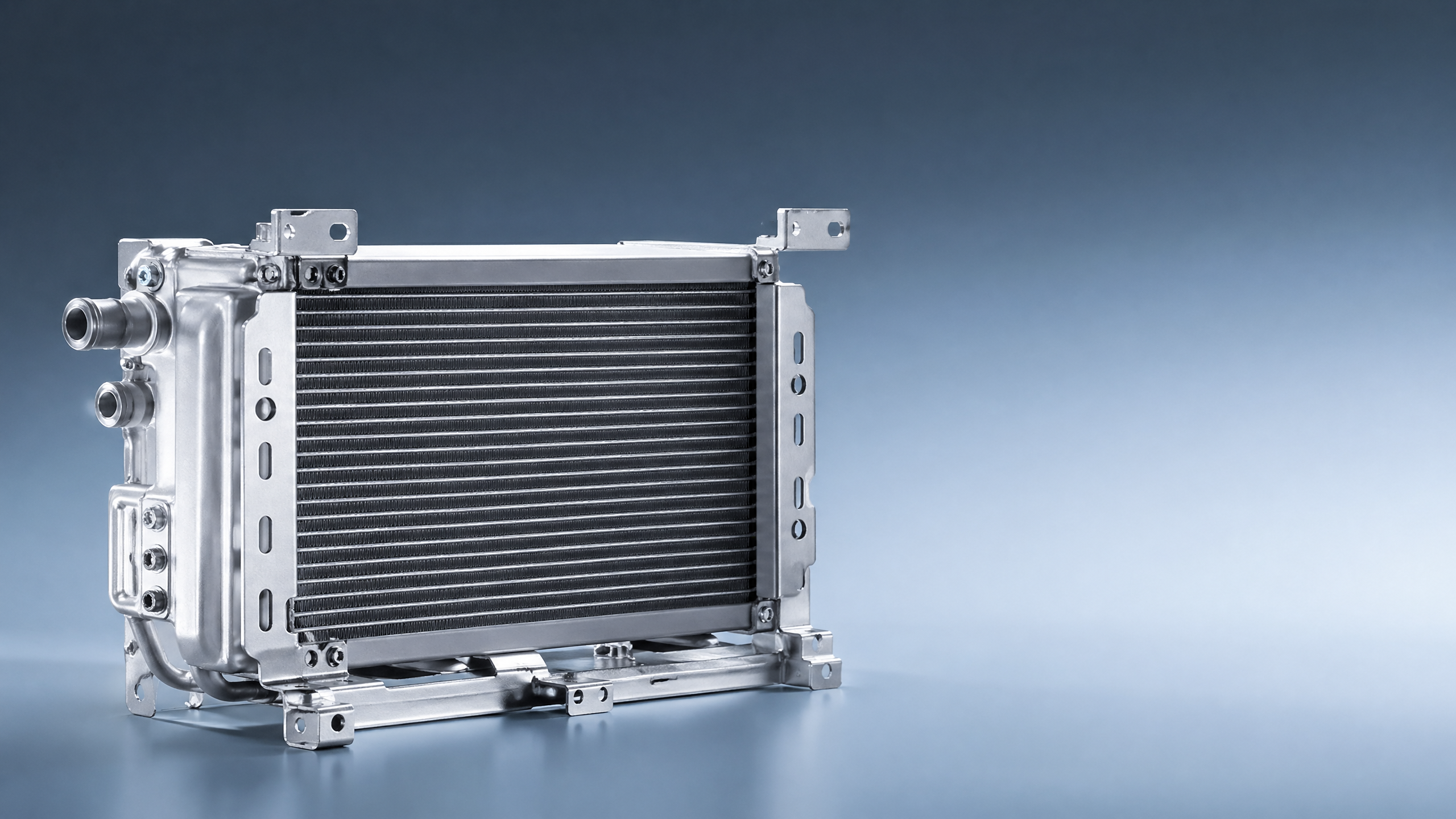
As electrification accelerates, New Energy Vehicle Radiator design is becoming a critical factor in thermal efficiency, battery safety, and system durability. For technical evaluators, understanding 2026 trends means looking beyond basic cooling performance to integrated module design, lightweight materials, and reliability under demanding operating conditions. This article explores the key radiator developments shaping next-generation thermal solutions in the new energy vehicle sector.
Why is New Energy Vehicle Radiator design becoming a strategic evaluation point?
In conventional vehicles, radiator selection mainly focused on engine heat rejection and package space. In electric and hybrid platforms, the New Energy Vehicle Radiator must support more complex thermal loops, including battery packs, motor controllers, onboard chargers, and in some cases cabin heat pump circuits. For technical evaluators, this means a radiator is no longer a standalone part. It is part of a tightly connected thermal architecture that influences range stability, charging consistency, and long-cycle component durability.
The 2026 design direction is shaped by three practical pressures. First, higher energy density batteries create narrower thermal control windows, often requiring more stable coolant temperature management across long driving cycles of 2–6 hours. Second, vehicle front-end packaging is becoming more compact as OEMs push aerodynamic efficiency. Third, global sourcing teams increasingly ask suppliers to balance thermal performance, weight, manufacturability, and repeatability in one module rather than in separate procurement steps.
For the auto parts sector, these changes increase the value of manufacturers that can combine research, production, and global sales support. Liaocheng Xinde Auto Parts Co., Ltd., established in 2018 with a registered capital of 5 million RMB and a total investment of 50 million RMB, has built its position around radiator, intercooler, construction machinery radiator, heavy truck cooling, and new energy radiator module development. That cross-segment production experience matters because thermal design lessons from heavy-duty and construction applications often improve durability thinking in new energy platforms.
Technical evaluators also face a familiar challenge: many suppliers can quote dimensions, but fewer can explain how a radiator will behave under vibration, repeated thermal cycling, pressure fluctuation, and contamination exposure over 12–36 months of field use. In 2026, evaluation quality will depend on asking deeper questions about brazing consistency, fin design, coolant path optimization, and assembly integration.
What has changed compared with earlier EV cooling layouts?
Earlier new energy cooling systems often used relatively simple loop separation with conservative sizing. Current platforms are moving toward integrated thermal management modules that reduce part count, shorten hose routing, and simplify assembly. This reduces system weight, but it also raises the requirement for each New Energy Vehicle Radiator to maintain performance consistency under tighter packaging conditions.
- More multi-loop integration between battery, power electronics, and motor cooling circuits.
- Greater sensitivity to pressure drop because pump energy directly affects vehicle efficiency.
- Stronger demand for lightweight aluminum structures and compact module geometry.
- Higher scrutiny on lifecycle stability under stop-start urban cycles and fast-charge heat loads.
Which 2026 thermal design trends should technical evaluators track first?
The first trend is integration. A modern New Energy Vehicle Radiator increasingly works as part of a module with fan shroud, condenser interface, brackets, sensors, and coolant routing features. This reduces installation complexity by 3–5 assembly points in some vehicle programs, but it also means any weakness in dimensional control can create cascading fitment problems during line build.
The second trend is lightweight material optimization. Aluminum remains the mainstream choice because it offers a strong balance between heat transfer, corrosion resistance, and mass efficiency. However, the evaluation focus has shifted from material selection alone to alloy compatibility, tube-wall design, fin density, and brazing reliability. A lighter unit is valuable only if it preserves fatigue resistance across repeated road shock and thermal expansion cycles.
The third trend is thermal performance under variable load rather than only at peak load. In real operation, EV thermal demand changes quickly during climbing, regenerative braking, low-speed traffic, and DC fast charging. Technical evaluators should therefore compare heat rejection behavior across at least 3 operating states: steady cruise, urban stop-go, and charging-related thermal load. A radiator that performs well in one test window but drops efficiency outside that range may not support stable vehicle calibration.
The fourth trend is reliability-first design validation. As warranty exposure remains a key commercial concern, OEM and Tier suppliers increasingly prioritize leak risk, burst resistance, vibration durability, and braze joint integrity. For B2B buyers, this changes the procurement conversation from “Can you make this drawing?” to “Can you maintain consistency from sample, pilot lot, and volume production?”
2026 trend checklist for New Energy Vehicle Radiator assessment
The table below summarizes the most relevant trend signals and how they affect technical evaluation priorities in the parts industry.
For evaluators, the key takeaway is clear: 2026 radiator trends are less about one headline specification and more about total module behavior over time. Suppliers with manufacturing depth and process stability are better positioned to support this shift.
A practical example of compact platform fitment
In compact vehicle programs, evaluators often need a benchmark for package efficiency. A relevant example is Radiator for Lynk, model 2069525700, developed for automotive cooling system applications using aluminum construction and a brazing radiator structure. Its listed size of 83X14X58 cm and application to Link 06 / binyue reflect how compact layouts increasingly require thermal parts that combine fitment discipline with stable heat dissipation under demanding driving conditions.
For technical teams, such a product example is useful not because one part fits every project, but because it highlights common 2026 evaluation themes: aluminum lightweighting, brazed construction, packaging efficiency, and the need to verify thermal stability before scale procurement. The stated 12-month warranty and origin in China also reflect the type of baseline commercial information buyers usually screen during early sourcing rounds.
What technical criteria matter most when comparing a New Energy Vehicle Radiator?
When comparing suppliers, technical evaluators should avoid over-relying on external dimensions and headline cooling claims. A more reliable approach is to assess 5 core indicators: heat rejection capability, pressure drop, structural durability, corrosion resistance, and production consistency. These indicators connect directly to vehicle efficiency, system stability, and warranty exposure.
Heat rejection must be evaluated alongside airflow condition, coolant flow rate, and expected temperature delta. Pressure drop matters because higher loop resistance can increase pump load and reduce system efficiency. Structural durability should include vibration and thermal cycling perspective, especially where modules are mounted near the front end and exposed to road input. Corrosion resistance becomes critical in regions using de-icing chemicals or mixed operating climates over 4 seasons.
Production consistency is often underestimated. Sample parts may pass bench review, but batch-to-batch variation in brazing, fin alignment, or header assembly can affect field performance. This is why manufacturers with established production systems and sector experience are attractive in B2B sourcing. Liaocheng Xinde Auto Parts Co., Ltd. has built around radiator-related categories and global sales operations, which supports more structured communication on drawings, application requirements, and production feasibility.
The table below provides a practical comparison framework that technical evaluators can use during RFQ review, prototype confirmation, or supplier audit discussions.
This comparison method helps buyers move from general claims to verifiable evaluation points. It also creates a clearer basis for discussing alternatives, target cost, and engineering changes during sourcing.
A 5-point technical screening checklist
- Confirm the cooling loop role: battery, motor, electronics, or shared circuit.
- Review package limits, including mounting points and front-end airflow path.
- Request data on pressure drop and thermal performance under at least 3 duty conditions.
- Check material and brazing approach for corrosion and fatigue implications.
- Ask about sample lead time, pilot production support, and change-control process.
How should buyers handle sourcing, lead time, and compliance risks?
In the parts industry, thermal component sourcing is often delayed not by quoting speed, but by incomplete technical clarification. For a New Energy Vehicle Radiator program, buyers should build a sourcing process around 4 stages: requirement definition, drawing and sample review, pilot validation, and volume supply planning. Each stage reduces risk only if both engineering and purchasing teams stay aligned on function, packaging, and expected duty cycle.
Typical project timing varies by complexity. Standardized replacement applications may move faster, while custom module work can take several weeks for technical confirmation and tooling review. In many B2B situations, sample preparation, test fit verification, and specification revision unfold over 2–4 weeks before commercial approval is ready. That is why responsive technical communication is almost as important as factory capacity.
Compliance should also be approached pragmatically. Even when a project does not require a highly specialized certification route, buyers still need traceable material information, dimensional discipline, warranty clarity, and quality documentation suitable for internal review. A supplier recognized at provincial and municipal level for high-tech development and trustworthy business conduct can provide added confidence during early-stage qualification, especially when the program requires long-term cooperation rather than one-time delivery.
Cost pressure remains real, but technical evaluators should resist choosing on unit price alone. A lower-cost radiator that causes rework, fitment deviation, or unstable field performance can create much higher total cost after logistics, warranty, and program delay are considered.
Common sourcing risks and how to reduce them
- Unclear thermal target: define operating conditions before comparing quotations.
- Package mismatch: verify dimensions, mounting, and interface orientation early.
- Inconsistent samples: ask how prototype and mass-production process settings are aligned.
- Lead time surprises: confirm sample cycle, production cycle, and revision response timing.
- Weak after-sales support: define warranty scope, replacement logic, and technical feedback path.
What technical evaluators should request before approval
Before final nomination, request at least 6 practical items: drawing confirmation, material description, application reference, dimensional tolerance plan, sample schedule, and warranty statement. Where the project is custom, also confirm whether design adjustments can be handled within 1–2 engineering review cycles without major schedule impact.
This request set improves internal decision quality because it turns supplier claims into reviewable engineering inputs. It also helps purchasing teams compare not only price, but also responsiveness and execution reliability.
FAQ: what do technical teams ask most about New Energy Vehicle Radiator projects?
How do I know whether a New Energy Vehicle Radiator is suitable for battery-related cooling?
Start with the thermal loop definition rather than the part name. Battery-related cooling usually requires stable performance across narrow temperature control bands and repeated charge-discharge heat cycles. Review heat rejection needs, coolant compatibility, flow resistance, and package constraints together. If the supplier only offers size data without discussing operating conditions, the evaluation is incomplete.
Is aluminum still the preferred material in 2026?
In most mainstream applications, yes. Aluminum remains the preferred choice because it supports lightweight design and efficient heat transfer while fitting established brazing processes. However, the right question is not just “aluminum or not,” but whether the specific tube, fin, and header structure is optimized for the vehicle’s duty cycle, durability target, and corrosion exposure.
What lead time should buyers prepare for?
There is no single answer because lead time depends on whether the radiator is a standard replacement item or a customized module. As a practical planning range, technical confirmation and sample review often take 2–4 weeks in cross-functional projects. More complex revisions may require additional engineering rounds. Early clarification of drawings and interfaces is the best way to shorten the process.
What is a common mistake during supplier comparison?
A common mistake is comparing only quoted price and external dimensions. This ignores pressure drop behavior, brazing quality, durability under vibration, and production repeatability. In practice, these hidden factors often determine whether the New Energy Vehicle Radiator performs reliably after installation, especially in demanding operating environments.
Why work with a manufacturer that understands both performance and delivery?
For technical evaluators, the ideal supplier is not simply a parts seller. It is a manufacturing partner that can discuss structure, application, and delivery in one workflow. Liaocheng Xinde Auto Parts Co., Ltd. focuses on the research, production, and global sales of water tank radiators, intercoolers, construction machinery radiators, heavy truck components, and new energy radiator modules. That product range gives buyers access to broader thermal system experience across multiple demanding use cases.
Since its establishment in 2018, the company has expanded rapidly and received honors such as High-tech Enterprise, Civilized and Honest Enterprise, and Trustworthy Unit for Consumers. For B2B customers, these recognitions do not replace technical validation, but they do indicate organizational seriousness, development capacity, and market credibility. Those qualities matter when a project requires repeat orders, stable communication, and timely issue resolution.
If you are evaluating a New Energy Vehicle Radiator for a new platform, replacement program, or customized cooling module, the most useful next step is a focused technical discussion. You can consult on parameter confirmation, application matching, structural optimization, sample support, warranty expectations, delivery cycle, and quotation planning. Early technical alignment usually saves more time and cost than late-stage correction.
Contact the team with your drawing, vehicle model, target application, or performance priorities. Whether you need a compact aluminum brazed solution, a heavy-duty cooling reference, or a custom new energy radiator module path, a structured review can help you compare options faster and move from evaluation to sourcing with fewer project risks.