



Condenser Size Mismatch Can Quietly Reduce Cooling Performance
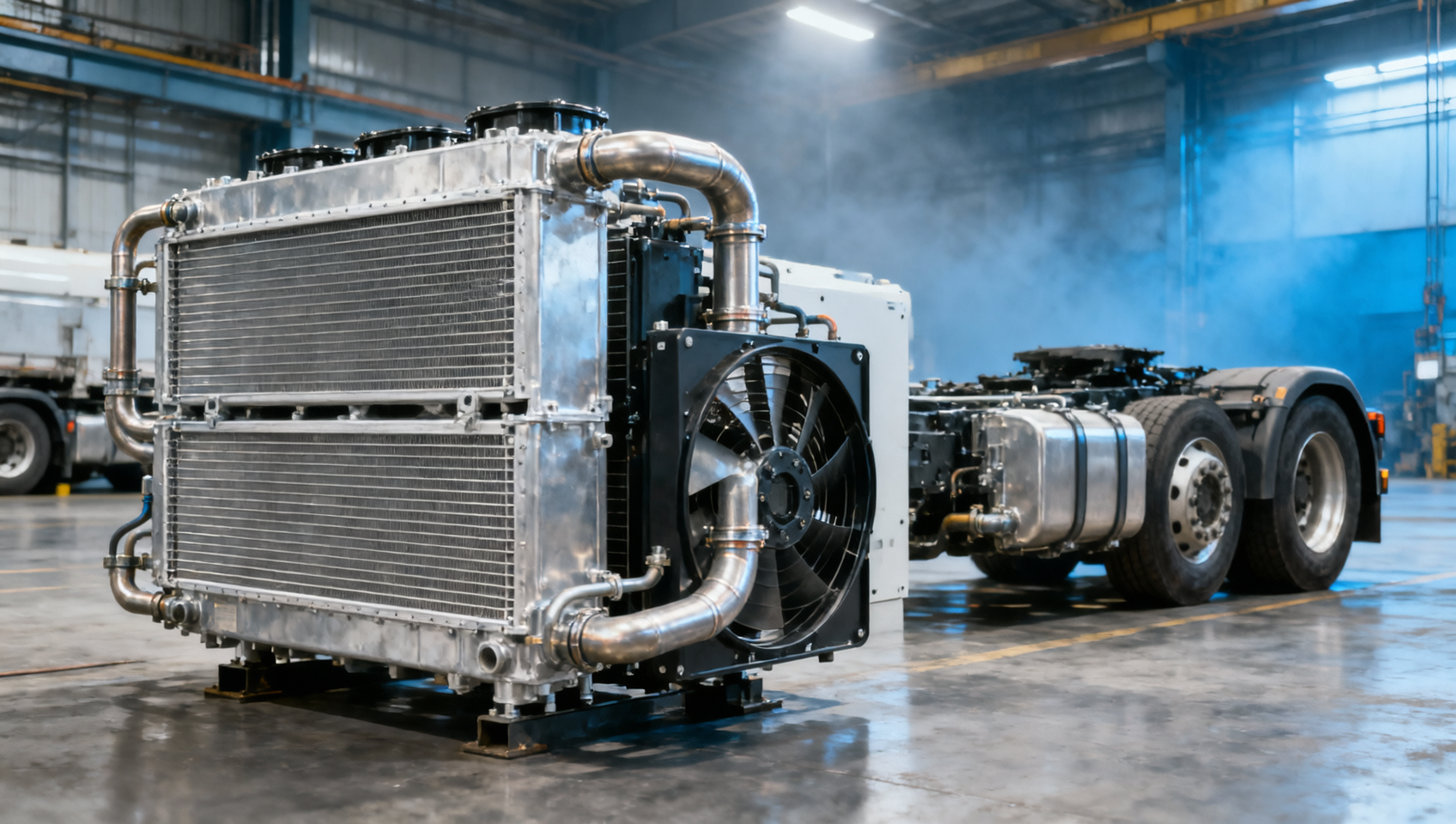
A condenser size mismatch can silently weaken system efficiency, strain the vehicle radiator loop, and compromise overall cooling stability in demanding applications. For buyers and technical evaluators sourcing a heavy duty truck radiator, condenser, excavator radiator, agricultural radiator, or new energy vehicle radiator, the issue is not just “fitment” in a basic sense. The real risk is hidden performance loss: reduced heat rejection, unstable operating temperatures, higher fan load, rising fuel or power consumption, and shorter component life. In most cases, the right judgment starts with one principle: if condenser size, airflow demand, and thermal load are not matched as a system, cooling performance will decline even when individual parts look acceptable on paper.
What buyers and evaluators should know first: size mismatch is usually a system problem, not a single-part problem
When people hear “condenser size mismatch,” they often assume the only issue is whether the condenser is physically too large or too small for the available space. In practice, technical assessment teams and procurement managers need to look deeper. A mismatch often affects the entire cooling package, including radiator airflow, fan performance, pressure balance, refrigerant-side heat rejection, and the durability of surrounding components.
For commercial vehicles, construction machinery, and new energy platforms, the condenser and radiator do not work in isolation. They share airflow paths and thermal influence. If the condenser restricts airflow too much, the radiator behind it may receive hotter or less effective air. If the condenser is undersized, it may not reject enough heat under peak conditions, forcing the rest of the cooling system to compensate. In both scenarios, the result can be quiet but persistent cooling inefficiency.
This matters especially in applications with long operating hours, variable loads, harsh ambient conditions, and high uptime requirements. A system may pass initial inspection yet still deliver weaker real-world cooling performance, which is exactly why this issue often escapes early-stage sourcing decisions.
How condenser size mismatch reduces cooling performance without obvious early warning
The danger of mismatch is that failure is rarely immediate. Instead, performance drops gradually and is often misdiagnosed as a fan issue, coolant issue, refrigerant issue, or general aging problem. Several mechanisms are common:
- Reduced heat exchange efficiency: If condenser surface area is insufficient for the thermal load, heat rejection becomes less effective, especially in high ambient temperatures.
- Airflow disruption: An oversized or poorly configured condenser can create excessive resistance, reducing airflow through the radiator core.
- Higher operating pressure: Poor condenser performance can increase system pressure, adding stress to connected components and reducing stability.
- Fan overwork: To compensate for thermal inefficiency, fan systems may run longer or at higher speeds, increasing energy use and wear.
- Thermal imbalance across the cooling module: In integrated modules, one mismatched component can weaken the performance of the full assembly.
For enterprise buyers, this translates into operating cost, maintenance frequency, and equipment reliability risk. For technical reviewers, it means dimensional compatibility alone is not enough to approve a component.
Which problems matter most to procurement teams, engineers, and decision-makers
Although different stakeholders evaluate cooling components from different angles, their concerns often converge around a few practical questions:
- Will this component maintain stable cooling under peak load and high ambient temperature?
- Will it affect the performance of the radiator, fan, or full thermal management package?
- Does the proposed size reflect actual thermal demand, or only installation constraints?
- What is the long-term cost of choosing a lower-priced but mismatched option?
- Can the supplier demonstrate application understanding rather than only catalog matching?
Technical evaluation personnel usually focus on heat rejection, airflow resistance, pressure behavior, and packaging compatibility. Procurement personnel care about consistency, replacement risk, delivery reliability, and lifecycle cost. Business evaluators and enterprise decision-makers are more likely to focus on downtime risk, warranty exposure, customer satisfaction, and return on sourcing decisions.
That is why the most valuable content is not a broad explanation of what a condenser does, but a clear framework for identifying mismatch risk before purchase or installation.
How to judge whether condenser size is truly compatible
A reliable evaluation should combine dimensional review with thermal and operational analysis. The following checkpoints are far more useful than simple visual comparison:
- Thermal load matching: Verify whether the condenser capacity aligns with actual vehicle or equipment heat rejection demand under worst-case operating conditions.
- Airflow path compatibility: Check how the condenser affects upstream and downstream airflow, especially when installed in front of the radiator.
- Core thickness and fin density: More material is not automatically better. A thicker or denser core may increase resistance and reduce system airflow efficiency.
- Operating environment: Evaluate ambient temperature, dust load, altitude, stop-and-go operation, heavy-load duty cycle, and enclosed engine compartment conditions.
- Integration with the cooling module: Confirm compatibility with radiator, intercooler, fan shroud, mounting structure, and pressure strategy.
- Application-specific validation: Prefer suppliers that understand the exact fitment and use case rather than offering generic replacement logic.
For example, in new energy or passenger vehicle applications, thermal module stability often depends on precise matching rather than simple oversizing. A product such as Radiator for AION may be evaluated not only for replacement and repair needs, but also for cooling efficiency, advanced fluid dynamics, premium thermal materials, and stable operation under demanding workloads. That type of evaluation reflects the right mindset: the part should support peak system performance, not merely occupy the correct space.
Why “bigger” or “cheaper” is not always safer in radiator and condenser sourcing
One common sourcing mistake is assuming that a larger condenser automatically offers better cooling. Another is choosing a lower-cost alternative that appears dimensionally close enough. Both decisions can create hidden losses.
An oversized unit may increase frontal blockage, alter air distribution, and hurt downstream radiator efficiency. A lower-cost alternative may use less effective materials, weaker core design, or geometry that fails under real operating load. In heavy trucks, agricultural machines, excavators, and fleet applications, these compromises often show up later as overheating complaints, unstable air-conditioning performance, fan overuse, or shortened service intervals.
For commercial decision-makers, the relevant metric is not initial purchase price alone. It is total operating impact: energy use, maintenance frequency, replacement cycle, downtime cost, and field reliability. A seemingly small mismatch can become expensive when multiplied across a fleet or long service period.
What strong suppliers should be able to provide before you approve a cooling component
Qualified suppliers should do more than send dimensions and a quotation. For serious technical and business evaluation, they should be able to support the decision with practical evidence such as:
- Application-specific model matching
- Core structure and material explanation
- Performance rationale based on load and environment
- Quality consistency and production capability
- Testing or validation information where applicable
- Clear communication on replacement scope and limitations
This is especially important in industries where cooling modules operate under heavy vibration, dust, pressure fluctuation, and long working hours. Manufacturers with focused experience in radiators, intercoolers, construction machinery radiators, and heavy-duty thermal components are generally better positioned to identify mismatch risks early and recommend suitable configurations.
For teams comparing suppliers, it is useful to ask not only “Can you produce this size?” but also “How will this size affect system performance in this exact use scenario?” The quality of that answer often reveals whether a supplier is acting as a real technical partner or only as a part vendor.
Practical decision framework for reducing mismatch risk before purchase
If your team is evaluating a heavy duty truck radiator, condenser, excavator radiator, agricultural radiator, or new energy vehicle radiator, a simple decision framework can improve sourcing accuracy:
- Define actual duty conditions, not just nominal vehicle fitment.
- Review the condenser and radiator as one airflow and thermal package.
- Compare heat rejection requirements against the proposed core design.
- Assess pressure drop and airflow resistance, especially in compact layouts.
- Check material quality and durability for long-cycle operation.
- Estimate lifecycle cost, not only piece price.
- Request supplier support on technical matching and risk explanation.
This process helps procurement and management teams avoid the common trap of approving a part that appears interchangeable but performs differently in the field. In many applications, preventing a mismatch is far less expensive than troubleshooting chronic cooling instability later.
Conclusion: the real cost of mismatch is usually discovered too late
Condenser size mismatch can quietly reduce cooling performance because it weakens the full thermal system rather than causing an obvious single-point failure. For technical evaluators, the key is to assess thermal load, airflow effect, and module integration instead of relying only on dimensions. For procurement and business decision-makers, the priority is to reduce lifecycle cost, downtime risk, and hidden inefficiency.
The most reliable purchasing decisions come from treating the condenser and radiator as linked performance components. When sizing is properly matched, the system runs more efficiently, remains more stable under demanding conditions, and delivers better long-term value. When it is not, the consequences may stay invisible at first, but they rarely stay inexpensive.