



What to Compare Before Sourcing an Agricultural Radiator
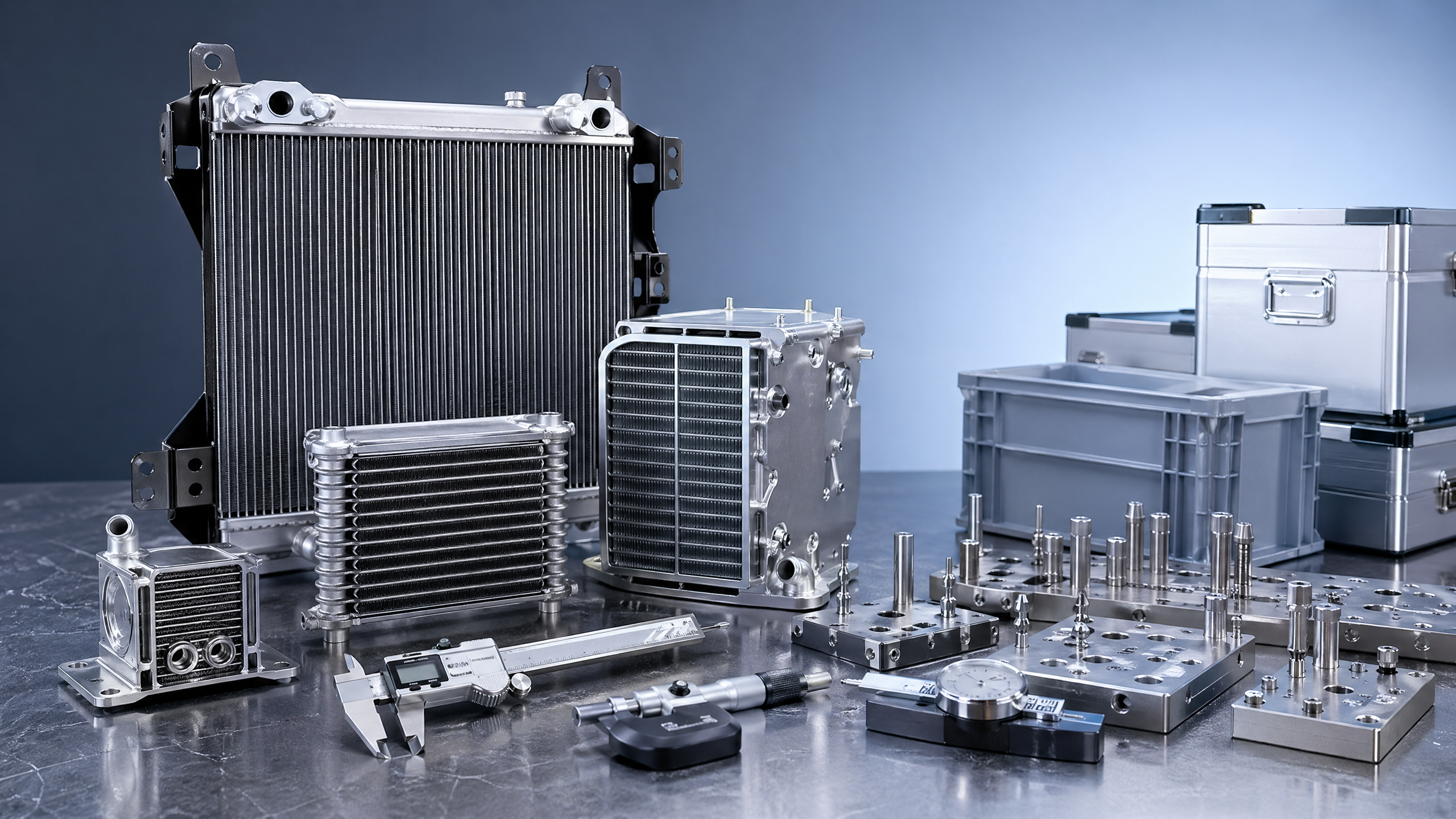
Before choosing an Agriculturaal radiator supplier, procurement teams should compare more than price alone. Cooling efficiency, material quality, compatibility, durability, and production reliability all affect long-term equipment performance and cost control. For buyers sourcing parts for agricultural machinery, understanding these key factors helps reduce risk, improve purchasing decisions, and ensure a stable supply from a qualified manufacturer.
Why a Checklist Approach Matters Before You Source an Agriculturaal Radiator
For procurement teams in the parts industry, an Agriculturaal radiator is rarely a simple commodity purchase. A unit that looks acceptable on paper may fail under long operating hours, dusty fields, vibration, or seasonal temperature swings. That is why a checklist-based comparison is more practical than relying on one factor such as unit price or a single sample. In most sourcing cycles, 5 to 8 evaluation points will reveal more risk than dozens of general sales claims.
Agricultural machinery often runs at variable loads for 6 to 12 hours per day during peak seasons. When cooling performance drops, engine efficiency, hydraulic system stability, and maintenance frequency can all be affected. For buyers, the real cost is not only the purchase price but also downtime, emergency freight, warranty handling, and replacement labor. Comparing these factors early helps prevent avoidable cost escalation later.
A structured review also improves internal communication. Purchasing, technical teams, quality control, and after-sales departments often focus on different priorities. A checklist turns sourcing into a shared decision process, making it easier to compare suppliers on the same basis: thermal capacity, core construction, dimensional tolerance, lead time, packaging, and traceability. This is especially useful when annual procurement volume includes multiple models or mixed OEM and aftermarket requirements.
Priority questions to ask first
- Is the Agriculturaal radiator designed for the actual machine load, ambient temperature range, and field conditions rather than only for nominal engine size?
- Can the supplier provide stable material specifications, dimensional drawings, and batch consistency records across repeated orders?
- What is the realistic production lead time: 15 days, 30 days, or 45 days, and how does that change in peak season?
- Does the supplier support fitment confirmation, sample review, and packaging requirements for domestic transport or export shipment?
Procurement decisions become stronger when these initial questions are answered before commercial negotiation. In practice, this step can reduce approval delays by 20% to 30% because technical objections are identified earlier rather than after order placement.
Core Comparison Checklist: What to Review in Every Agriculturaal Radiator Inquiry
The most effective way to compare an Agriculturaal radiator is to convert technical and commercial concerns into a repeatable checklist. Buyers should not assume that two products with similar external size will deliver the same cooling result. Tube structure, fin density, tank material, brazing quality, and airflow resistance can create large performance differences even within a similar footprint.
The table below gives a practical comparison framework for RFQ review, sample evaluation, and supplier qualification. It helps procurement teams score options more efficiently, especially when reviewing 3 to 5 competing suppliers at the same time.
This checklist is useful because it connects product performance to sourcing outcomes. For example, a supplier with a 7-day faster lead time but inconsistent brazing may still create more total cost than a supplier with a 20-day standard schedule and stronger process control. Procurement should score both technical suitability and execution stability together.
Essential technical checks
- Confirm exact dimensions with tolerance, especially core thickness, inlet and outlet position, and mounting bracket spacing.
- Request pressure testing information and ask whether each batch or each unit is checked before shipment.
- Review cooling structure, including tube count and fin arrangement, instead of judging by appearance only.
- Ask for application range, such as tractor, harvester, loader, or mixed machinery use, since duty cycles differ.
- Verify packaging method if products will face multi-stop transport or long export transit of 20 to 35 days.
A disciplined checklist helps buyers avoid common RFQ mistakes. The most frequent issue is approving a sample by fitment only, without confirming heat rejection margin, vibration resistance, or material consistency from batch 1 to batch 10.
How to Compare Performance, Materials, and Durability Without Overpaying
When buyers compare an Agriculturaal radiator, the best purchasing decisions usually balance three areas: thermal efficiency, structural durability, and whole-life cost. A lower-priced unit may look attractive in a tender, but if it leads to early leakage, corrosion, or overheating in 6 to 18 months, the cost advantage disappears quickly. For agricultural equipment, reliability during harvest windows is often worth more than a small difference in piece price.
Performance checks that deserve priority
Cooling performance should be reviewed in relation to actual use conditions. Machines operating in dusty fields, high ambient temperatures of 35°C to 45°C, or low-speed heavy-load work need stronger heat transfer stability than machines in lighter duty cycles. Buyers should ask whether the radiator design supports continuous field operation and whether fin spacing is suitable for environments where debris build-up is common.
Material and construction signals
Material quality should be evaluated beyond general descriptions like “aluminum radiator.” Procurement teams should compare the consistency of tanks, core joints, and protective finishing where applicable. Poor material matching can increase galvanic corrosion risk or reduce resistance to thermal cycling. A radiator facing repeated cold-start and high-load transitions can experience more stress than stationary equipment components.
It is also useful to compare whether the supplier has experience across adjacent radiator categories. For instance, a manufacturer capable of producing systems for heavy trucks, construction machinery, and new energy radiator modules often has broader process understanding in cooling assemblies. Liaocheng Xinde Auto Parts Co., Ltd., established in 2018 with a registered capital of 5 million RMB and a total investment of 50 million RMB, focuses on the research, production, and global sales of water tank radiators, intercoolers, construction machinery radiators, and related components. For procurement teams, this kind of manufacturing background can be relevant when evaluating supply capability and process maturity.
Some buyers also compare cross-category radiator design to understand quality positioning. For example, in automotive applications such as Radiator for Hongqi, fitment control, noise expectations, and long-term reliability may be emphasized differently, especially for luxury engines or new energy systems. While agricultural requirements are not identical, this comparison reminds buyers that application-specific engineering matters and that not all radiator designs should be treated as interchangeable.
The main cost lesson is simple: compare value per operating season, not price per unit only. If one Agriculturaal radiator lasts through two full working cycles while another needs replacement after one peak season, the procurement result is very different even if the initial quoted gap is 8% to 12%.
Supplier Evaluation Checklist: Capacity, Lead Time, and Process Control
A strong Agriculturaal radiator product still depends on a reliable supplier. Procurement teams should compare not only the sample itself but also the supplier’s ability to deliver repeat orders with stable quality. In the parts industry, many problems appear after the first shipment: inconsistent dimensions, damaged packaging, changed raw materials, or slow response to technical clarification. These are supplier management issues, not only product issues.
The checklist below helps buyers evaluate whether a manufacturer can support routine replenishment, peak-season orders, and possible custom development. It is especially useful when annual demand includes multiple SKUs or when stockout risk carries high service penalties.
This evaluation method helps buyers compare total supply reliability instead of only sample appearance. A supplier that answers technical questions within 24 to 48 hours and can explain batch controls clearly will usually be easier to work with than one that gives only broad promises. That difference often becomes critical when urgent replacement orders are needed during harvest periods.
Red flags that should trigger deeper review
- Quoted dimensions are incomplete, and no drawing or fitment sketch is available for confirmation.
- Lead time changes significantly from inquiry to order without a clear production explanation.
- Sample quality looks acceptable, but the supplier cannot describe pressure testing or inspection frequency.
- Warranty language is vague, or claim handling depends on informal case-by-case discussion only.
- Packaging details are overlooked even though shipment route includes long inland transport and sea freight.
Even a product in another segment, such as the EQM5 model under Radiator for Hongqi with OE NO. 1301010HA01 and a 6-month warranty, shows how buyers in any radiator category tend to review application fit, warranty terms, and reliability claims together. The same sourcing discipline should apply when evaluating an Agriculturaal radiator for demanding field equipment.
Common Oversights That Increase Risk in Agriculturaal Radiator Purchasing
Many procurement problems do not come from major technical failure at the start. They come from small omissions during specification review. In Agriculturaal radiator sourcing, the most expensive mistakes are often preventable if buyers confirm a few details before PO release. This is why risk review should be part of the purchasing checklist, not an afterthought.
Frequently missed items
One common oversight is judging a radiator by external dimensions only. Two units may share similar length, height, and thickness, but internal tube count and fin structure can vary enough to change cooling behavior under field load. Another missed item is contamination risk. In agricultural environments, mud, straw, seeds, and dust can reduce airflow quickly, so ease of cleaning and fin robustness matter in real use.
Buyers also sometimes underestimate logistics damage. A radiator may pass factory inspection but arrive with bent fins, bracket deformation, or tank stress if packaging is too light for repeated handling. For export or regional distribution, packaging must suit transport duration, stacking conditions, and transfer frequency. A small packaging upgrade can prevent a larger percentage of avoidable claims.
Another issue is not defining acceptance criteria before shipment. If there is no agreed standard for appearance, pressure holding, labeling, or carton marking, discussions become slower when a problem occurs. A short pre-shipment checklist of 6 to 10 items can save days of back-and-forth after goods are dispatched.
Simple pre-order risk control list
- Lock the application model, installation layout, and connection orientation in writing.
- Confirm sample approval standard, including fitment, leak test, and visible workmanship.
- Agree on packaging details, label format, and shipping mark requirements.
- Request estimated mass production timing and acceptable schedule variance.
- Clarify warranty scope, claim evidence, and replacement or credit handling path.
For most procurement teams, these controls add very little time but reduce sourcing friction across the next 3 to 6 months. They are especially useful when managing mixed orders, new supplier onboarding, or seasonal demand pressure.
Practical Execution Steps for Procurement Teams
If your team is actively sourcing an Agriculturaal radiator, the most efficient process is to prepare a short but complete technical-commercial package before requesting quotes. This should include application information, dimensional drawings if available, expected order quantity, target delivery window, and any special packaging or private label needs. Better input usually produces better quotation quality and faster supplier response.
Recommended sourcing workflow
- Step 1: Gather machine model, engine data, space limits, and installation reference photos.
- Step 2: Shortlist 3 to 4 suppliers with relevant radiator manufacturing experience.
- Step 3: Compare quotations using the same checklist for cooling design, material, lead time, and packaging.
- Step 4: Review samples or drawings before confirming the first batch order.
- Step 5: Define inspection points and delivery milestones for the initial production run.
This workflow improves decision speed because it separates mandatory checks from negotiable items. For example, compatibility and leak resistance are mandatory. Carton print format or pallet pattern may be negotiable. When buyers classify issues this way, supplier comparison becomes more objective and internal approval becomes easier.
For long-term cooperation, it also helps to evaluate whether the supplier can support not only current purchasing but future product expansion. If your catalog may later include radiators for heavy trucks, intercoolers, construction machinery radiators, or new energy cooling assemblies, choosing a manufacturer with broader technical coverage can simplify supplier management and reduce onboarding time for additional product lines.
Why Choose Us for Your Radiator Sourcing Needs
For procurement teams looking for a dependable manufacturing partner, we focus on practical support where it matters most: application review, product selection, production coordination, and stable delivery. Liaocheng Xinde Auto Parts Co., Ltd. is a professional manufacturer specializing in water tank radiators, intercoolers, construction machinery radiators, related heavy truck components, and new energy radiator modules. Our development has been driven by manufacturing focus, rapid growth, and continuous expansion in the cooling parts field.
We understand that buyers need more than a quotation. They need clear parameter confirmation, compatibility discussion, realistic lead time planning, and support for sample evaluation. If you are comparing an Agriculturaal radiator supplier, we can help review drawings, application conditions, order quantity expectations, and packaging needs before mass production is arranged. This approach helps reduce mismatch risk and supports better cost control over repeated orders.
If you would like to move to the next step, contact us to discuss product selection, technical parameters, delivery schedule, custom solutions, sample support, warranty expectations, and quotation details. A clear discussion at the start usually saves time throughout the full procurement cycle and helps you source the right Agriculturaal radiator with greater confidence.