



Agricultural Radiator Problems That Often Lead to Harvest Downtime
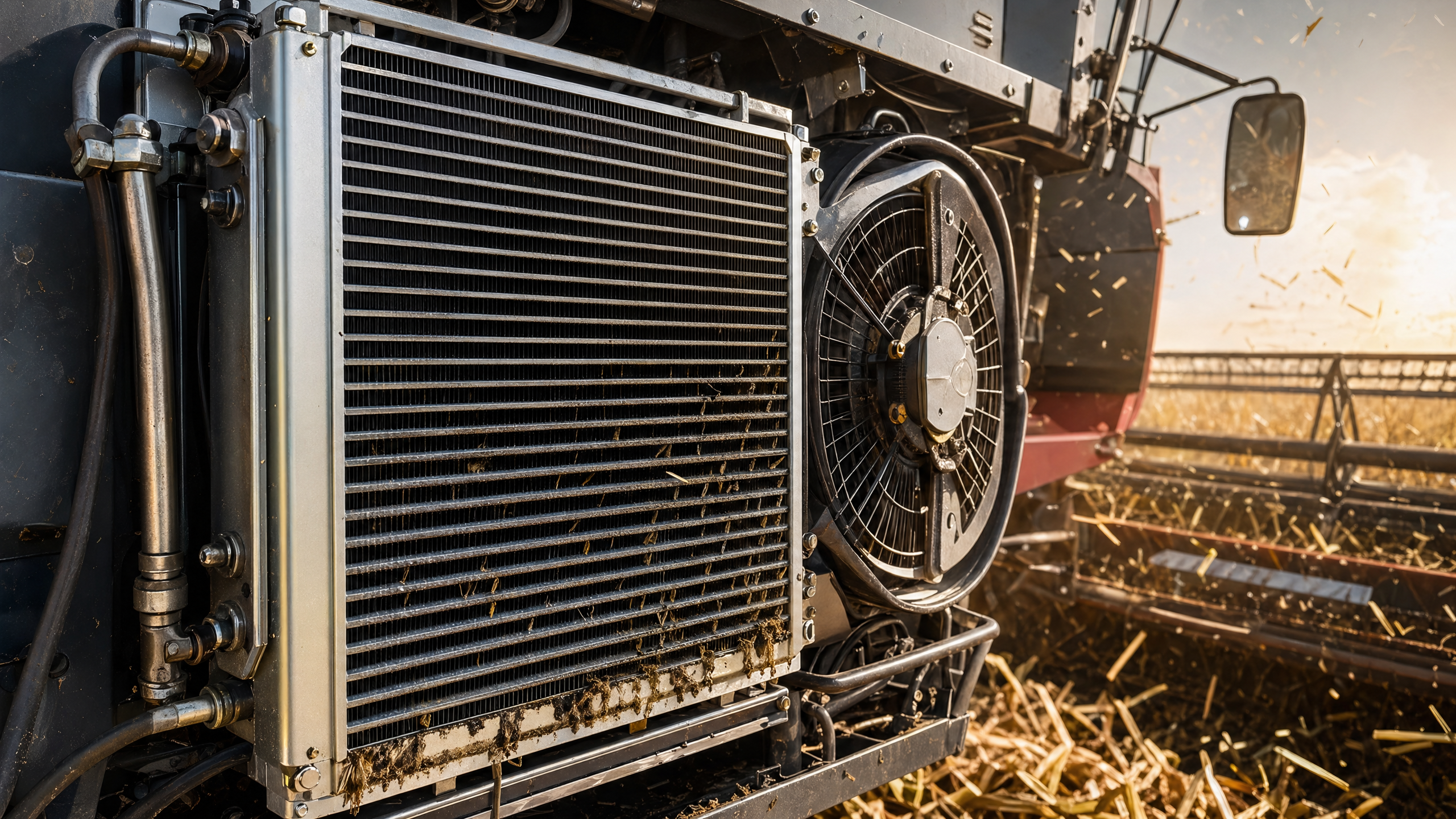
Harvest downtime often starts with cooling issues that seem minor until they stop the machine in the field. For aftermarket maintenance teams, understanding common Agriculturaal radiator failures is essential to preventing overheating, reducing repair delays, and keeping agricultural equipment working through peak season. This article highlights the radiator problems most likely to interrupt harvest operations and what to watch for early.
For aftersales maintenance personnel, the core issue is not simply whether a radiator leaks or runs hot. The real concern is which cooling system faults are most likely to turn into immediate harvest interruptions, how early those faults can be identified, and what practical checks can prevent a machine from sitting idle during the busiest days of the season.
In harvest conditions, agricultural machines often work for long hours under heavy load, in dusty air, with crop residue constantly moving through the cooling pack. Under these conditions, even a small drop in cooling efficiency can quickly become an overheating event. That is why an effective Agriculturaal radiator inspection routine has to focus on failure patterns that create field stoppages, not just workshop theory.
Why radiator problems cause so much harvest downtime
The radiator sits at the center of engine temperature control, but in agricultural service it is exposed to a harsher environment than many road vehicles. Combines, tractors, forage harvesters, and sprayers operate in high ambient temperatures, low forward speeds, and debris-heavy conditions. This means the margin for cooling system error is small. If the radiator cannot reject heat fast enough, engine power drops, hydraulic temperatures rise, and operators may be forced to stop before a major failure occurs.
What makes these failures especially costly is timing. A machine down in the workshop during an off-season inspection is inconvenient. A machine down at the edge of a field during harvest can delay labor, transport, and follow-up operations across the whole schedule. In many cases, maintenance teams are then pushed into reactive repairs, where the real challenge is not just fixing the fault, but doing it with limited time, dust contamination, and pressure from production needs.
That is why the most valuable approach is preventive fault recognition. Maintenance teams need to know which symptoms point to blocked cores, internal restrictions, weakened joints, fan airflow issues, or coolant circulation problems. The earlier these are separated from one another, the less likely the machine will lose a full shift during peak operation.
Clogged radiator cores are still the most common field failure
Among all Agriculturaal radiator problems, external blockage of the core is one of the most frequent causes of overheating during harvest. Chaff, dust, seed fluff, mud, insects, and oily residue gradually build up on the fins. Once the fin surface is covered, airflow falls sharply, and the radiator loses its ability to transfer heat even if the coolant side remains in good condition.
This problem is deceptive because the machine may run normally in the morning and begin overheating only later in the day under heavier load. Operators sometimes assume the fault is a thermostat or water pump issue, when the real cause is a heat exchanger pack that cannot breathe. On machines with stacked cooling modules, blockage in front of the radiator can also come from the oil cooler, condenser, or intercooler, making visual checks from only one side misleading.
Maintenance personnel should look for uneven dirt patterns, packed residue deep between cooling layers, bent fins, and signs of contamination mixed with oil. Dry dust can often be removed with controlled air cleaning, but oily buildup usually requires more careful washing methods. High-pressure cleaning at the wrong angle may fold fins and reduce cooling area further, so cleaning technique matters almost as much as cleaning frequency.
One effective field practice is to inspect cooling packs at the same time each day during harvest, especially in dusty crops and windy conditions. If one machine consistently accumulates more debris than similar units, this may indicate damaged seals, incorrect shrouding, fan inefficiency, or airflow recirculation around the engine compartment. In other words, repeated clogging can be a symptom, not just a maintenance issue.
Leaks that seem minor often become shutdown events
Coolant leaks are another leading cause of downtime because they are often ignored until temperature alarms appear. Small losses from tube joints, header seams, hose connections, drain plugs, or plastic-to-metal interfaces may not look urgent in the workshop. But under full load, high pressure and vibration can turn a seep into a significant leak quickly.
Harvest equipment also tends to operate far from immediate support, which changes the risk level of any leak. A minor coolant loss near the service bay may only require topping off and observation. The same leak in the field can reduce coolant volume enough to introduce air into the system, destabilize circulation, and trigger overheating before the machine returns for service. Once boiling begins, the repair can expand from a leak fix to hose replacement, cap replacement, or even cylinder head inspection.
Aftermarket teams should watch for white or colored residue around seams, staining on nearby components, damp areas under clamps, and coolant odors after shutdown. Pressure testing remains one of the best ways to confirm slow leaks before harvest starts. It is also important to test the cap, because a weak cap lowers system pressure and can mimic larger cooling faults by allowing premature coolant loss.
Repeated radiator leakage may also point to mounting stress. If the unit is rigidly loaded due to bracket misalignment, frame twist, or failed isolators, vibration damage will return even after repair. In those cases, replacing the radiator alone solves the symptom but not the cause.
Internal scaling and coolant contamination reduce heat transfer quietly
Not every overheating case is visible from the outside. Internal restrictions inside an Agriculturaal radiator can develop gradually from poor coolant quality, mixed coolant chemistries, corrosion products, and mineral deposits from untreated water. These restrictions reduce coolant flow through the tubes and lower the radiator’s ability to transfer heat, even when the fins look clean and airflow appears normal.
This type of fault is often missed because the machine may only overheat under the most demanding conditions: uphill load, heavy PTO work, or long afternoon operation. In lighter use, the reduced cooling reserve stays hidden. Maintenance teams sometimes replace thermostats or fans first, only to find the underlying issue is partial internal blockage across the core.
Useful warning signs include discolored coolant, sludge in the expansion tank, rust particles, temperature differences across the radiator that suggest poor flow distribution, and a history of irregular coolant servicing. If operators repeatedly add plain water during the season, the long-term risk rises significantly. Water quality matters, because dissolved minerals can plate onto internal surfaces and reduce thermal efficiency over time.
When contamination is severe, flushing may help, but not every blocked core can be restored reliably. In some cases, replacement is the more predictable option, especially when downtime risk during harvest is high. Selecting a properly manufactured aluminum brazed unit with stable build quality is critical where machines face continuous load and vibration.
Fan and airflow problems are often mistaken for radiator failure
Many overheating complaints are assigned to the radiator too early. In reality, the radiator may be functioning normally while airflow through it is insufficient. Fan clutch issues, worn fan blades, damaged shrouds, slipping belts, hydraulic fan control faults, or reverse-flow cleaning systems that are not operating correctly can all create temperature problems that resemble radiator inefficiency.
This matters for aftersales teams because replacing the radiator without checking airflow wastes repair time and can damage confidence in the maintenance process. A clean, structurally sound core still cannot cool effectively if air volume is too low or if airflow bypasses the core because the shroud is cracked or seals are missing.
Good diagnosis compares coolant temperature behavior with fan operation and machine load. If temperature rises rapidly at low travel speeds or during stationary heavy work, airflow deserves close attention. If debris buildup is concentrated in unusual areas, airflow distribution may also be uneven. On some machines, poor compartment sealing causes hot air recirculation, which means the radiator is cooling already-heated air rather than outside air.
Practical inspections should include fan engagement, blade condition, shroud alignment, belt tension where applicable, and the cleanliness of all cooling pack layers. Maintenance staff who separate radiator condition from airflow condition make faster and more accurate repair decisions during peak season.
Physical damage and vibration fatigue can create sudden failures
Agricultural machines operate on rough ground, with constant vibration and frequent exposure to impact risks from tools, stones, and debris. Over time, this environment can crack brackets, loosen mounts, fatigue brazed joints, and damage tubes or fins. Even if the radiator design is sound, poor installation support or worn machine mounts can shorten service life considerably.
These failures are especially disruptive because they may not give much warning. A radiator weakened by vibration can survive for weeks with no visible issue, then begin leaking sharply after one rough section of field or transport road. The same applies to tube damage from previous fin combing, careless cleaning, or contact with surrounding components after a mounting shift.
Inspection should not stop at the core face. Teams should check side supports, cushions, bracket holes, weld areas, connection necks, and evidence of rubbing. If one replacement radiator fails sooner than expected, compare the installation environment carefully rather than assuming only a quality problem. Repeated stress loading from machine structure can defeat even a well-built unit.
For buyers selecting replacement parts, structural consistency matters. In broader cooling system applications, many workshops prefer aluminum brazed designs because they can offer good thermal performance with controlled weight. For example, in automotive thermal systems, products such as Radiator for Lynk reflect how modern brazing radiator construction is valued for thermal stability under demanding operating conditions. While agricultural applications differ, the same expectation for material quality, dimensional consistency, and reliable heat transfer remains important in replacement part selection.
When overheating is not the radiator alone: system-level causes maintenance teams should rule out
Some harvest downtime linked to the Agriculturaal radiator is actually caused by the larger cooling circuit. A sticking thermostat, eroded water pump impeller, collapsing lower hose, trapped air, incorrect coolant concentration, head gasket leakage, or excess engine load can all produce similar symptoms. If the radiator is blamed without a system check, repairs may be incomplete and repeat failures more likely.
For field diagnosis, symptom patterns are useful. If the upper hose becomes very hot but the radiator remains unevenly cool, flow restriction may be present. If both hoses are hot but cooling remains weak, airflow or heat rejection may be the problem. If pressure rises abnormally fast from cold start, combustion gas intrusion may need to be considered. If overheating occurs only with air conditioning or hydraulic load, total heat load through the cooling pack may be exceeding available airflow.
Maintenance teams can reduce unnecessary parts replacement by using a short structured checklist: confirm coolant level and condition, inspect external blockage, pressure test for leaks, verify cap condition, measure temperature distribution, assess fan performance, confirm thermostat operation, and review recent service history. This approach creates faster root-cause decisions than relying only on alarm codes or operator descriptions.
In practice, the best workshops build service records around recurring cooling faults by machine model, crop type, and working environment. Over time, patterns emerge. Certain machines may need more frequent cleaning intervals. Others may show repeat clamp loosening, mount wear, or cooler pack contamination. That operational memory is one of the most valuable tools an aftersales team can develop.
How to reduce harvest downtime before it starts
The most effective prevention strategy is a pre-harvest cooling inspection focused on risk, not just appearance. A radiator that looks acceptable from the outside may still have internal blockage, weak seams, or airflow issues. Before the season, maintenance personnel should inspect the full cooling pack, pressure test the system, verify cap performance, check fan and shroud condition, assess hoses and clamps, and confirm coolant quality and concentration.
It also helps to define service triggers during harvest. For example, if one machine shows a slight but repeated temperature rise at the same time each afternoon, that should trigger cleaning and inspection before a full overheat event occurs. Waiting for alarms alone is expensive. Early trends often reveal cooling margin loss while there is still time to correct it between shifts.
Spare parts planning matters as well. During peak harvest, downtime is often extended not by the repair itself but by delays in obtaining the right component. For maintenance managers, that means stocking common hoses, caps, clamps, and the most failure-prone radiator assemblies for critical machine groups. The true value of inventory is not shelf turnover; it is avoided field stoppage during narrow operating windows.
Supplier choice should therefore be based on more than price. Reliable dimensions, stable manufacturing, material quality, and consistent thermal performance all influence how quickly a replacement can be installed and how confidently it will perform. Companies with focused experience in radiator, intercooler, and heavy equipment cooling component production are often better positioned to support these requirements in global aftermarket channels.
Conclusion
The radiator problems most likely to cause harvest downtime are usually not mysterious. Clogged cores, small leaks, internal contamination, airflow faults, and vibration-related damage account for a large share of in-field overheating events. What turns them into costly failures is delayed recognition, incomplete diagnosis, or treating the radiator as an isolated part instead of a working system.
For aftersales maintenance teams, the practical priority is clear: inspect for the faults that remove cooling margin first, track recurring symptoms, and use structured checks before replacing parts. A strong Agriculturaal radiator maintenance routine does more than prevent overheating. It protects harvest schedules, reduces emergency repairs, and keeps equipment productive when every hour in the field matters most.
If there is one takeaway, it is this: most harvest cooling failures give warning before they stop the machine. Teams that know how to read those warnings will prevent more downtime than teams that simply respond faster after the breakdown has already happened.