



What to Ask Suppliers Before Ordering a Radiator Module
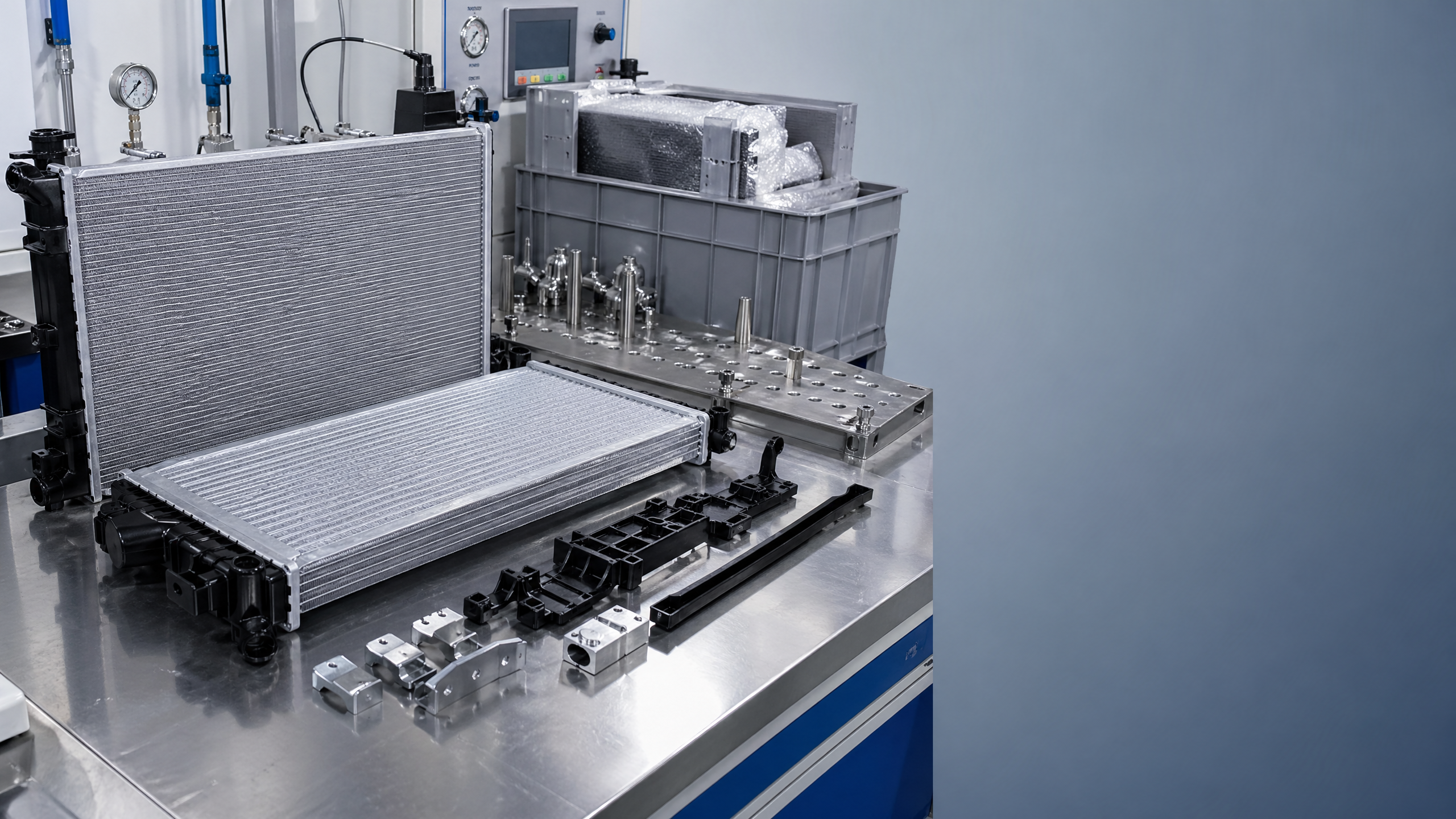
Before placing an order for a radiator module, procurement teams need more than just a competitive price. Asking the right questions about manufacturing capacity, material quality, testing standards, customization options, and delivery reliability can help reduce sourcing risks and protect long-term performance. For buyers evaluating global suppliers, a clear checklist is the first step toward choosing a dependable radiator module partner.
Why procurement teams should use a checklist before ordering a radiator module
A radiator module is not a simple commodity part. In heavy trucks, passenger vehicles, construction machinery, and new energy applications, it directly affects thermal balance, operating reliability, and service life. A price comparison alone rarely reveals the full sourcing picture. For procurement personnel, a checklist-based review helps verify whether a supplier can meet technical, commercial, and delivery expectations over a 6-month to 24-month purchasing cycle.
This method also reduces common sourcing mistakes. Buyers often focus on quotation speed, unit cost, and sample appearance, while underchecking braze quality, leak resistance, tube and fin specifications, packaging method, and after-sales response time. In radiator module sourcing, one overlooked detail can lead to repeated claims, delayed assembly schedules, or thermal performance issues in the field.
For parts buyers working with overseas manufacturers, a checklist creates a common review language. It makes supplier comparison easier across 5 key dimensions: manufacturing capability, product consistency, compliance and testing, customization support, and supply chain reliability. This is especially important when the order includes multiple SKUs, annual demand forecasts, or model-specific fitment requirements.
What a practical supplier review should cover
- Technical fit: core size, material, heat exchange structure, mounting points, and compatibility with the target cooling system.
- Manufacturing stability: brazing process, production line capacity, in-process inspection, and defect control methods.
- Commercial execution: MOQ, sample lead time, production lead time, packaging standard, and communication efficiency.
- Risk control: warranty handling, traceability, replacement policy, and response time for quality claims.
A well-structured review is not about making procurement slower. It is about making supplier selection more predictable. In many cases, asking 12 to 15 focused questions before order confirmation saves weeks of corrective work later.
Core questions to ask every radiator module supplier
The first stage of evaluation should cover the supplier’s basic technical and operational capability. Procurement teams should not assume that every manufacturer serving the auto parts sector can handle the same radiator module complexity. Some suppliers are strong in aftermarket replacement parts, while others are better suited for OE-style development, low-volume customization, or heavy-duty cooling assemblies.
The questions below help buyers move from a general inquiry to a qualified technical discussion. They also create clearer internal approval records, especially when engineering, quality, and sourcing teams must evaluate the same vendor together.
Priority checklist for supplier screening
- What radiator module types do you currently manufacture: water tank radiators, intercoolers, combined cooling units, or heavy-duty and new energy systems?
- What materials are used in the core, tank, brackets, and joints, and can you confirm aluminum grade or equivalent material range?
- What is your monthly production capacity for the requested model family, and what is the typical output range in peak season?
- What leak testing, pressure testing, and dimensional inspection steps are performed before shipment?
- Can you support drawing-based customization, sample development, or fitment adjustment within a 2-week to 6-week timeline?
- What is your standard lead time for samples, mass production, and repeat orders?
- How do you manage traceability for batch number, production date, and quality issue investigation?
- What packaging method is used to reduce fin damage, deformation, and moisture exposure during export shipment?
If the supplier cannot answer these items clearly, procurement risk increases. The issue is not only technical uncertainty. It may also indicate weak process control, limited documentation, or an inability to support scaling from trial order to container-level shipment.
Quick comparison table for initial supplier review
Use the following table as a practical scoring reference when comparing a radiator module supplier shortlist of 3 to 5 companies.
This table helps buyers separate marketing claims from operational evidence. A reliable radiator module supplier should provide specific answers, not vague assurances. Even when exact numbers vary by season, the response should show planning discipline and process transparency.
Technical checks that should never be skipped
Technical review is where many sourcing decisions succeed or fail. A radiator module may look acceptable in photos yet still underperform because of incorrect tube density, weak brazing points, poor tank sealing, or insufficient fitment accuracy. Procurement teams should therefore ask not only what the supplier makes, but how the supplier verifies performance consistency from batch to batch.
At minimum, buyers should confirm material type, design reference, testing steps, and operating conditions. For example, an aluminum brazing radiator for an automotive cooling system may require different performance emphasis than a construction machinery radiator exposed to continuous vibration, dust, and high-load operation for 8 to 10 hours per day.
Product-specific examples can also help clarify the discussion. A supplier offering Radiator for Lynk may describe a single-item aluminum unit for Link 06 / binyue applications, model 2069525700, with a size of 83X14X58 cm, 12-month warranty, and brazing radiator construction. Details like these are useful because they show whether the supplier can communicate precise application and structure information rather than only broad catalog claims.
Technical verification checklist
- Confirm whether the radiator module is designed for OE replacement, aftermarket adaptation, or custom project development.
- Check the material system, especially aluminum construction, core build, and joining method such as brazing.
- Ask for dimensional tolerance control on key mounting and connection points.
- Request leak test method, test pressure range, and final inspection frequency per batch.
- Verify expected thermal stability under target driving or operating conditions.
- Confirm warranty scope, exclusion terms, and claim handling steps within the first 12 months if applicable.
Technical review table for procurement and quality teams
The table below is useful during cross-functional review meetings when engineering, procurement, and supplier quality need the same evaluation points for a radiator module program.
Technical details often determine total cost more than the quoted price does. A slightly higher-cost radiator module from a supplier with stronger process control may reduce claim rates, line stoppage risk, and warranty exposure over the full purchasing period.
Commercial and delivery questions that protect your supply plan
After technical fit is confirmed, procurement should move to execution details. In the auto parts business, delivery reliability can be just as important as thermal performance. A radiator module that arrives 3 weeks late, poorly packed, or without correct labels can disrupt warehouse flow, customer commitments, and line-side inventory control.
This is also the stage where buyers should identify whether the supplier is built for one-time trading or long-term support. A dependable manufacturer should be able to explain MOQ, reorder strategy, packaging standards, lead time variation by season, and the process for urgent replenishment.
For international orders, ask about documentation flow, export packing, and communication points from PI confirmation to shipment release. A radiator module order usually involves at least 4 service nodes: quotation, sample or drawing confirmation, production approval, and shipping coordination. Weak control at any of these points creates avoidable delays.
Questions to ask about delivery and order execution
- What is the sample lead time, and how does it differ from repeat-order lead time?
- What is the MOQ per model, and can mixed-model orders be combined in one shipment?
- How are fins, tanks, and brackets protected in export packaging?
- What happens if a shipment contains damage, shortage, or labeling mismatch?
- Can the supplier support rolling forecasts for 3-month or 6-month demand planning?
If the supplier provides clear answers on these points, procurement gains better control over inventory timing, receiving inspection planning, and customer delivery commitments. This is particularly valuable when the radiator module is part of a broader parts purchasing program rather than a standalone spot buy.
Common blind spots buyers miss when evaluating a radiator module supplier
Even experienced buyers can miss hidden risk areas when comparing suppliers quickly. One common issue is assuming that a good sample guarantees stable mass production. In reality, the gap between sample quality and batch consistency is where many supply problems begin. Procurement should ask how the supplier maintains consistency across 100, 500, or 1,000 units, not only how one sample is made.
Another blind spot is underchecking application fit. A radiator module for passenger vehicle use differs from one for heavy truck, construction machinery, or new energy thermal systems. Operating vibration, heat load, airflow conditions, and installation space can all change the design emphasis. Buyers should therefore share target application details as early as possible rather than asking suppliers to quote from a generic description.
It is also wise to review the supplier’s business focus. A manufacturer such as Liaocheng Xinde Auto Parts Co., Ltd., established in 2018 with registered capital of 5 million RMB and total investment of 50 million RMB, focuses on water tank radiators, intercoolers, construction machinery radiators, heavy truck applications, and new energy radiator modules. For procurement teams, this kind of specialization matters because category experience often improves technical understanding, development speed, and communication efficiency.
Risk reminder checklist
- Do not compare suppliers only by unit price; include claim risk, packaging quality, and delivery consistency.
- Do not approve samples without confirming the batch inspection method used in mass production.
- Do not skip fitment details such as bracket position, inlet and outlet orientation, and mounting dimensions.
- Do not assume all aluminum radiators have the same thermal or structural performance.
- Do not leave warranty terms unclear, especially for export orders with longer logistics cycles.
These blind spots are manageable when procurement uses a disciplined supplier review process. In most radiator module projects, better front-end questioning leads to fewer commercial disputes and more predictable order execution.
How to move from inquiry to a qualified radiator module order
Once the supplier passes initial screening, procurement should prepare a structured RFQ package. This should include target application, reference number, key dimensions, annual quantity estimate, packaging needs, and expected delivery schedule. If customization is required, include drawings, sample photos, and any known problem points from previous sourcing history.
A good practice is to organize the decision in 3 stages. First, complete commercial and technical questioning. Second, review samples or drawings with engineering and quality teams. Third, confirm production and delivery terms before placing the first formal radiator module order. This sequence reduces the chance of commercial approval happening before technical clarity is established.
If you are evaluating a project-specific option like Radiator for Lynk, confirm application match, structure type, warranty expectation, and packaging before moving to bulk quantities. The product may offer the thermal stability required for demanding driving conditions and reflect advanced thermal engineering, but procurement still needs to verify fitment, order terms, and batch execution details in a practical way.
Recommended order preparation steps
- Prepare a complete inquiry sheet with part number, vehicle or equipment application, and target quantity.
- List the 8 to 10 questions that matter most to your internal quality and logistics teams.
- Request sample timing, mass production timing, and packaging photos before approval.
- Confirm warranty, claim response process, and batch traceability in writing.
- Use the first order to validate both product quality and communication efficiency.
Why choose us
For procurement teams sourcing radiator module products, the right partner should understand both product performance and execution discipline. Liaocheng Xinde Auto Parts Co., Ltd. focuses on the research, production, and global sales of water tank radiators, intercoolers, construction machinery radiators, heavy truck cooling parts, and new energy radiator modules. This industry focus helps buyers discuss technical details and delivery requirements with a supplier that works within the core auto parts field.
If you are comparing suppliers, we can support practical discussions around parameter confirmation, product selection, drawing or sample-based customization, lead time planning, packaging method, warranty scope, and quotation communication. Whether your requirement is for aftermarket replacement, project development, or stable repeat purchasing, early technical clarification can reduce sourcing risk and improve order accuracy.
Contact us to discuss your radiator module inquiry in detail. You can share part numbers, application scenarios, annual demand, certification expectations, sample needs, or target delivery dates, and we can help you review the most important checkpoints before order confirmation.