



Radiator Module vs Separate Components: Which Setup Makes More Sense
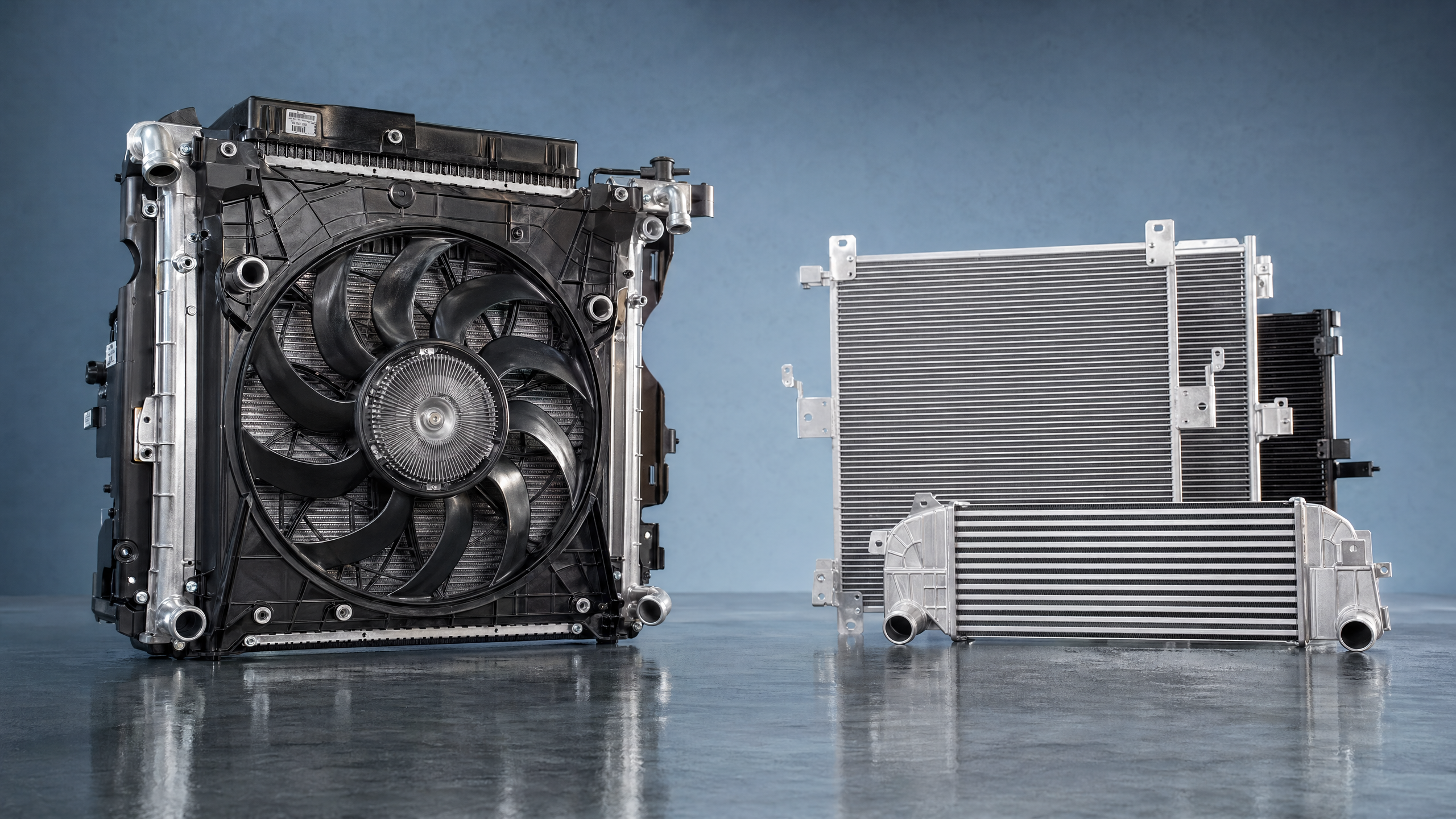
Choosing between a radiator module and separate cooling components can directly affect performance, packaging, maintenance, and long-term cost. For buyers comparing heavy truck, construction machinery, or new energy cooling systems, understanding how each setup works is essential. This guide explains the key differences, practical advantages, and selection factors to help information-focused readers decide which solution makes more sense.
What does a radiator module really change in a parts procurement decision?
In the auto parts sector, a radiator module is not simply a radiator sold with extra hardware. It usually refers to an integrated cooling assembly that combines the radiator with related elements such as the intercooler, condenser, fan shroud, mounting structure, or connecting interfaces, depending on the vehicle platform. By contrast, separate components are sourced, inspected, and assembled as individual parts during vehicle production or service replacement.
For information researchers, the key issue is not which concept sounds more advanced. The real question is whether a radiator module improves packaging efficiency, thermal coordination, and assembly consistency enough to justify the higher integration level. In heavy trucks, construction machinery, and new energy vehicles, this answer often depends on 3 core factors: available installation space, maintenance philosophy, and platform production volume.
A modular setup tends to make more sense when OEMs or fleet-oriented buyers want to reduce assembly steps from 4–6 stations to 1–2 installation points, shorten line-side handling, and improve fit consistency. Separate components often remain attractive when buyers need more flexibility in part substitution, field repairs, or phased replacement cycles over 12–36 months of equipment operation.
Liaocheng Xinde Auto Parts Co., Ltd., established in 2018 with a registered capital of 5 million RMB and total investment of 50 million RMB, focuses on water tank radiators, intercoolers, construction machinery radiators, and new energy radiator modules. That production focus matters because the module-versus-component decision is not only theoretical. It directly affects sourcing coordination, thermal matching, and global aftermarket support across demanding operating environments.
How buyers usually evaluate the two approaches
- They compare assembly complexity, including how many brackets, hoses, seals, and fasteners must be managed at the vehicle plant or service center.
- They review thermal interaction, especially whether airflow and heat rejection should be optimized as one system rather than as independent parts.
- They examine service strategy, asking whether field teams prefer replacing one integrated unit or changing only the failed element to control maintenance spending.
- They estimate supply risk, including lead time, quality coordination, and whether one supplier can support stable dimensional matching within practical tolerances such as hole position alignment and interface consistency.
Radiator module vs separate components: where are the practical differences?
At a high level, the radiator module usually wins on integration, installation efficiency, and system-level packaging. Separate components usually win on replacement flexibility and lower single-part purchasing barriers. But in actual B2B cooling system procurement, the decision becomes clearer when the differences are mapped against production, operating conditions, and service expectations.
For example, in heavy truck applications that run long routes and accumulate vibration over hundreds of operating hours per month, interface reliability matters as much as raw cooling capacity. An integrated radiator module can reduce the number of connection transitions, which may help simplify assembly control. In construction machinery, however, service accessibility in dusty or high-impact environments can make individually replaceable components more practical.
In new energy vehicles, the radiator module discussion becomes even more important because the cooling target is broader. Instead of handling only engine coolant, the system may also need to support battery packs, drive motors, and power electronics. This is one reason integrated thermal system thinking has become more common in the EV and hybrid supply chain over the last 3–5 years.
The table below shows how buyers typically compare the two setups when evaluating a radiator module for industrial or vehicle cooling platforms.
This comparison shows why there is no universal answer. If your program values platform efficiency, compact design, and system matching, a radiator module often makes more sense. If your priority is low-cost serviceability across scattered fleets or variable machine configurations, separate components may remain the smarter procurement path.
Where misunderstandings usually happen
Many buyers assume integrated means automatically expensive in total lifecycle terms. That is not always true. The purchase price of a module can be higher at the beginning, yet total installed cost may fall if assembly time, mismatch risk, and rework frequency are reduced. On the other hand, choosing a module without checking field service logic can increase replacement cost later.
Another common mistake is evaluating only the radiator core while ignoring mounting architecture, airflow path, fan matching, and adjacent heat exchangers. In real parts engineering, these elements interact. A cooling system that performs well on paper may still create vibration stress, installation interference, or maintenance access problems if the full package is not reviewed early.
Which setup fits heavy trucks, construction machinery, and new energy vehicles?
Application context is often the fastest way to decide between a radiator module and separate components. The same buyer may even choose different strategies across product lines. A road truck platform, a wheel loader, and an electric vehicle do not face the same vibration profile, airflow pattern, or service logic. That is why application-driven selection is more reliable than one-size-fits-all purchasing rules.
In heavy trucks, long operating cycles, front-end packaging pressure, and repeatable assembly needs often favor an integrated radiator module. If a fleet owner prioritizes uptime and the OEM wants more stable installation quality across medium- to high-volume production, the module route becomes attractive. Typical review points include hose routing length, fan shroud integration, and support durability over seasonal temperature variation.
In construction machinery, separate components still have a strong case. These machines may work in dust, mud, shock, and uneven load conditions where damage can be localized to one section. If service teams need to replace one heat exchanger in the field within a short maintenance window of 2–6 hours, individually accessible components may reduce downtime and simplify spare parts stocking.
In new energy vehicles, integration usually becomes more compelling because thermal management expands beyond a conventional engine radiator. For example, Radiator for BYD is developed for new energy vehicles and is intended for efficient cooling of battery packs, drive motors, and power electronics. For buyers studying EV cooling architecture, this illustrates how system-level heat exchange and precise fit can matter more than treating each cooling element as a separate commodity part.
Application-based selection table
The table below organizes common use cases to help information-focused buyers judge when a radiator module is more suitable and when separate components remain practical.
A practical conclusion emerges from these scenarios. The more your cooling system depends on integrated thermal control, tight packaging, and repeated installation accuracy, the more a radiator module tends to make sense. The more your operation depends on field replacement flexibility and mixed configuration support, the stronger the case for separate components.
A useful EV example for researchers
When reviewing EV-related projects, buyers often look for platform-specific examples. The model BYD476ZQB-1301010-025 is one such reference point in the new energy segment. Products in this category are engineered to meet rigorous thermal requirements and are designed for a precise fit and effective heat exchange. That makes them relevant when studying whether an integrated radiator module can better support EV safety and stable performance across different ambient conditions.
What should you check before choosing a radiator module?
A good procurement decision starts with the right checklist. Buyers should evaluate the radiator module not only by price and outline drawing, but by a structured set of technical and commercial criteria. In most B2B purchasing projects, 5 key checks can prevent costly mismatch: thermal load definition, packaging envelope, interface standardization, service strategy, and supplier response speed.
Thermal load definition means clarifying what the system must cool and under which duty cycle. A road vehicle, a high-idle machine, and a battery-electric platform may require different cooling priorities. If operating conditions include prolonged climbing, stop-start duty, or continuous electrical load, the radiator module should be assessed as part of a full heat management path rather than as an isolated heat exchanger purchase.
Packaging envelope review should include mounting points, neighboring components, airflow direction, and access for service. Even when dimensional tolerance requirements vary by project, buyers normally need confirmation on connection positions, frame compatibility, and installation sequence. In practical sourcing, the earlier these points are confirmed, the lower the risk of fitment correction during pilot builds or aftermarket replacement.
Supplier capability also matters. Liaocheng Xinde Auto Parts focuses on R&D, production, and global sales of radiators, intercoolers, construction machinery radiators, and new energy radiator modules. For buyers, this means one supplier can support both component-level and module-level discussion, which is useful when comparing 2 alternative cooling architectures instead of purchasing each item in isolation.
A practical 5-point selection checklist
- Confirm the cooling targets. Is the system for engine coolant only, or does it also serve intercooling, battery thermal management, motor cooling, or power electronics?
- Define the operating window. Review ambient temperature range, dust exposure, vibration level, and expected continuous working hours per shift.
- Check service philosophy. Will the customer replace a full radiator module, or do they expect sectional repair and separate spare inventory?
- Review commercial rhythm. Typical sample confirmation may take 7–15 days for existing patterns, while custom development often needs longer depending on drawings and validation steps.
- Ask about documentation. Buyers should request drawing confirmation, application matching, material details, and packaging or shipment planning for domestic or export supply.
Procurement comparison by decision priority
If your team is balancing design, purchasing, and service concerns, this table can help prioritize which setup better aligns with your actual business target.
Using this matrix, buyers can move the discussion beyond simple unit price. The best decision usually comes from matching product architecture to service model, not from assuming one format is always more economical.
Cost, lifecycle, and common risks buyers should not ignore
Cost comparison between a radiator module and separate parts should be done across at least 3 layers: purchase cost, installation cost, and service cost. A cheaper component list can become expensive if it increases assembly labor, mismatch handling, or warranty investigation. Likewise, a more integrated module can lose its advantage if the replacement policy forces unnecessary change of still-functional sections.
For OEM or large-volume buyers, installation efficiency can be a decisive hidden cost. Saving even a small number of assembly actions per unit matters when production repeats over months or quarters. For aftermarket and service-heavy channels, however, the economics can shift. If the installed base is widely distributed and equipment works in harsh conditions, replacing one damaged element instead of a full module may better control service inventory and downtime exposure.
Risk control should also include compliance and documentation review. While specific project standards vary, buyers commonly check material traceability, drawing version control, packaging protection, and export communication readiness. These practical details are especially important in cross-border parts sourcing, where a 2–4 week delay can come from clarification gaps rather than from manufacturing itself.
Companies with specialized production experience can reduce this uncertainty. Liaocheng Xinde Auto Parts has developed rapidly in the radiator and intercooler segment and has received provincial and municipal honors such as High-tech Enterprise, Civilized and Honest Enterprise, and Trustworthy Unit for Consumers. For buyers, that background is most useful when it translates into clearer technical communication, faster application confirmation, and more reliable module matching discussions.
Common mistakes to avoid
- Comparing only initial quotation without including mounting hardware, labor, packaging, and validation effort.
- Ignoring future spare parts strategy, especially for fleets or machinery expected to run through multiple service cycles each year.
- Treating a radiator module as interchangeable across platforms without checking interface location, airflow path, and system integration logic.
- Failing to define whether the project needs an existing model, an adapted pattern, or a fully customized solution with longer technical review time.
FAQ: how do buyers usually narrow down the right cooling setup?
Is a radiator module always better for modern vehicles?
No. A radiator module is often better for compact packaging, coordinated airflow, and efficient assembly, especially in heavy truck and new energy platforms. But if your operation depends on low-cost field repair, independent replacement, or frequent configuration changes, separate components may still be the more practical option.
When do separate components make the most sense?
They usually make sense in low-volume equipment, service-driven machinery fleets, and applications where damage often affects one specific section rather than the entire cooling pack. They are also useful when buyers already maintain approved vendor lists for different heat exchangers and want more sourcing flexibility over 1–3 year procurement cycles.
What information should I prepare before asking for a radiator module quotation?
Prepare at least 4 items: application type, dimensional or OE reference data, cooling targets, and expected order stage. If available, include drawings, sample photos, mounting point details, and whether the project is for replacement supply or new development. This shortens the technical review process and improves quotation accuracy.
How long does development or confirmation usually take?
Timing varies by complexity. Existing applications can often move faster than fully customized assemblies. As a practical range, basic confirmation may take 7–15 days when reference information is complete, while more complex module evaluation can take several weeks if interface review, sample validation, or cross-team approval is required.
Why choose us when comparing radiator module solutions?
If you are still deciding between a radiator module and separate components, the most useful supplier is one that can discuss both options from a parts-engineering perspective. Liaocheng Xinde Auto Parts specializes in water tank radiators, intercoolers, construction machinery radiators, and new energy radiator modules, serving global demand in the auto parts field. That gives buyers a more practical basis for comparing integration, fitment, and sourcing strategy.
We can support your evaluation with targeted communication on parameter confirmation, product selection, delivery planning, custom solution direction, certification-related questions, sample support, and quotation discussion. If your project involves heavy trucks, construction machinery, or new energy cooling systems, we can help clarify whether a radiator module or separate setup better matches your packaging, maintenance, and commercial goals.
For buyers researching EV-related applications, we can also discuss platform-specific options such as Radiator for BYD, including model reference BYD476ZQB-1301010-025 and its application in new energy vehicles. This is especially useful when your team needs to compare efficient cooling performance, fitment expectations, and system integration priorities before moving to sample or bulk procurement.
If you want a faster decision, send your drawing, OE number, vehicle or equipment application, required quantity range, and delivery expectation. With that information, the discussion can move from a general radiator module comparison to a practical recommendation built around your real procurement scenario.