



New Energy Vehicle Radiator Solutions Featured at Upcoming Trade Shows
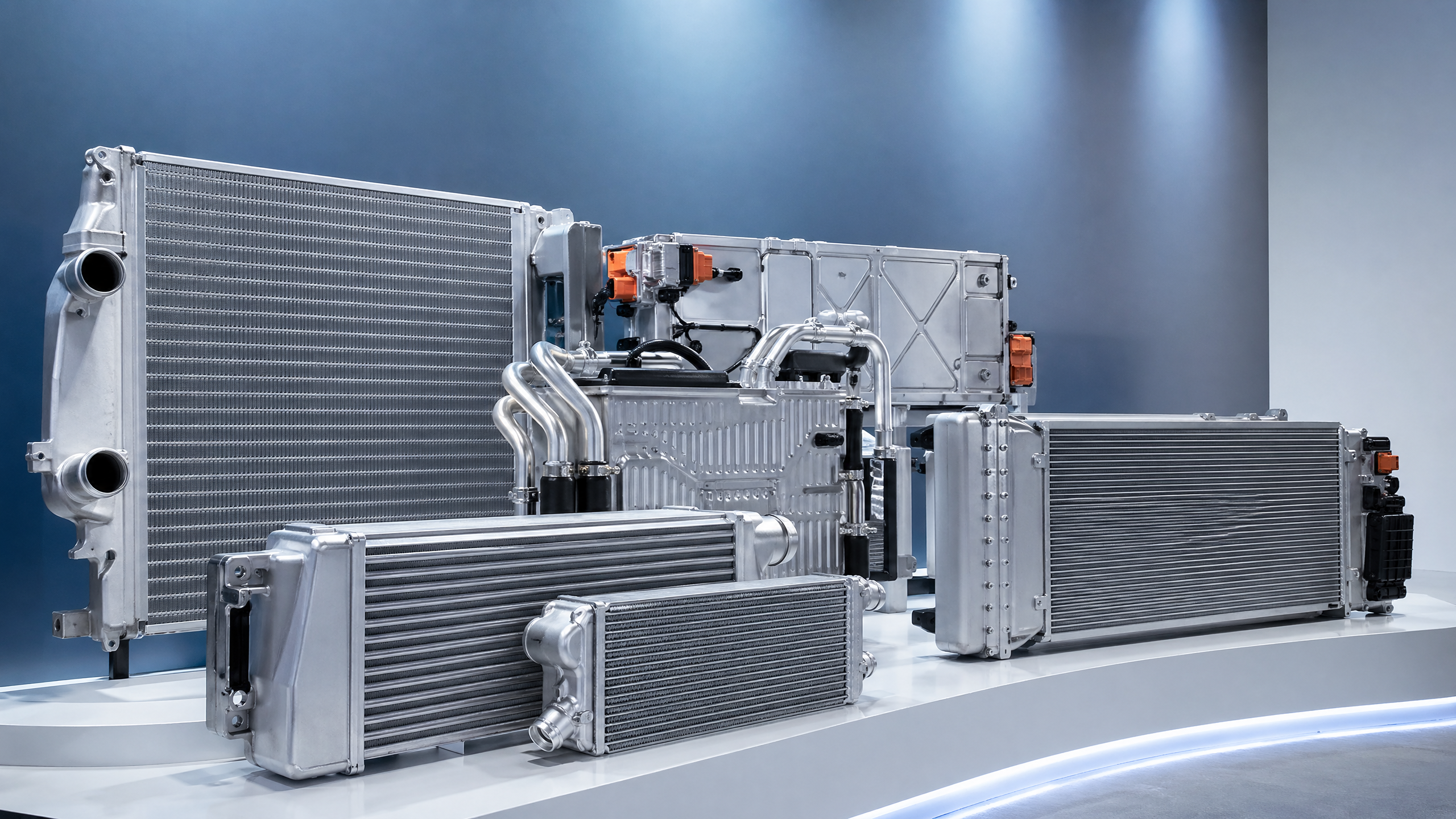
Discover how Liaocheng Xinde Auto Parts Co., Ltd. is bringing advanced New Energy Vehicle Radiator solutions to upcoming trade shows. Designed for distributors, dealers, and agents seeking reliable thermal management products, these innovations highlight the company’s strong manufacturing capabilities, fast growth, and expertise in radiators, intercoolers, and heavy-duty cooling modules for global markets.
Understanding New Energy Vehicle Radiator Solutions
A New Energy Vehicle Radiator is no longer a simple replacement part in the cooling loop. In electric and hybrid platforms, thermal management directly affects battery stability, motor efficiency, power electronics durability, and cabin comfort. For distributors and agents, this means radiator products must be understood as system components that support temperature control across multiple operating conditions, from urban stop-and-go traffic to sustained highway loads and commercial-duty cycles.
In practical terms, a modern New Energy Vehicle Radiator may work within a broader module that includes coolant channels, condensers, intercoolers, brackets, tanks, and connection points designed for tight vehicle packaging. Compared with conventional cooling parts, these solutions often need to manage more precise thermal thresholds, sometimes within a 5°C to 15°C control window depending on the subsystem. That higher precision is one reason trade show visitors are paying closer attention to radiator design, material quality, and manufacturing consistency.
Liaocheng Xinde Auto Parts Co., Ltd., established in 2018 with a registered capital of 5 million RMB and a total investment of 50 million RMB, has positioned itself in this specialized field through focused research, production, and global sales. Its product scope covers water tank radiators, intercoolers, construction machinery radiators, heavy truck cooling parts, and new energy radiator modules. For channel partners, this broad manufacturing base matters because it supports mixed product portfolios rather than a single-line offering.
Why the topic is receiving more attention
The market is focusing on New Energy Vehicle Radiator technology for three clear reasons. First, vehicle electrification is increasing the number of temperature-sensitive components in each platform. Second, thermal system failure can lead to reduced driving performance, shorter component life, or charging limitations. Third, buyers in the aftermarket and OE-support channels are asking for better compatibility, lighter materials, and more stable supply. As a result, a radiator is now evaluated not only by fitment, but also by heat transfer efficiency, brazing quality, and long-term corrosion resistance.
For dealers and regional distributors, this shift changes sales discussions. End customers increasingly ask about aluminum construction, leak resistance, module integration, and delivery reliability within 30 to 60 days for regular batches. Products shown at trade exhibitions are therefore important indicators of a manufacturer’s technical direction and production maturity.
- Thermal management now influences vehicle range, charging behavior, and component protection.
- Aluminum radiator structures remain widely preferred because they balance weight, conductivity, and manufacturability.
- Global buyers often evaluate warranty periods of 12 months or more as a baseline indicator of supplier confidence.
Industry Background and What Trade Show Visitors Want to See
Trade shows serve as a practical checkpoint for the auto parts industry. Buyers do not only look for new catalog items; they also evaluate whether a manufacturer can keep up with platform changes, material requirements, and export demands. In the new energy segment, the focus often falls on cooling modules that can serve passenger vehicles, commercial fleets, and crossover models with increasingly compact engine bay or battery area layouts.
For a company like Liaocheng Xinde Auto Parts Co., Ltd., upcoming exhibitions create a chance to show how a New Energy Vehicle Radiator is developed from both manufacturing and market perspectives. The company’s rapid growth since 2018 and its recognition as a High-tech Enterprise, Civilized and Honest Enterprise, and Trustworthy Unit for Consumers suggest operational momentum. For agents, those signs can be useful when assessing long-term cooperation stability, especially when entering a product category that may require repeat replenishment over 2 to 4 sales cycles each year.
Visitors usually compare suppliers across several factors at the booth level: product range depth, visible workmanship, response speed, communication clarity, and readiness for OEM or aftermarket adaptation. In the zero-emission and hybrid cooling field, they also pay closer attention to whether the supplier understands real vehicle operating conditions rather than only nominal part dimensions.
Key evaluation points at trade exhibitions
The table below summarizes the issues most distributors and agents commonly review when evaluating New Energy Vehicle Radiator suppliers at trade shows.
This comparison shows that technical performance and business execution are assessed together. A supplier may present a strong-looking part, but channel buyers also need confidence in communication speed, model matching support, and documentation consistency. That is why trade shows remain a high-value environment for supplier screening in the cooling parts sector.
How this affects distributor decisions
A distributor entering the NEV cooling category usually wants to limit product uncertainty in the first 3 to 6 months. Booth discussions therefore tend to focus on practical issues such as core dimensions, connection styles, warranty handling, packing standards, and whether the manufacturer can support both fast-moving references and lower-volume special applications. This is where an established production line in radiators and intercoolers becomes commercially relevant.
Liaocheng Xinde’s background in heavy truck and construction machinery radiators can also be meaningful to buyers outside the passenger car segment. These categories typically demand stronger vibration resistance and durable cooling performance, qualities that are increasingly valuable as new energy commercial platforms expand.
Business Value for Dealers, Distributors, and Agents
For channel partners, the value of a New Energy Vehicle Radiator line goes beyond adding one more SKU family. It can open a path into a higher-technical-value category with repeat demand, especially in markets where electric and hybrid vehicle parc growth is steadily increasing. A good thermal management product line can strengthen catalog depth, improve average order value, and create cross-selling opportunities with intercoolers, tanks, and related cooling components.
Another advantage is portfolio diversification. Dealers who historically focused on internal combustion cooling parts are now looking for products that help them serve both conventional and electrified fleets during a transition period that may last 5 to 10 years. Suppliers able to provide heavy truck radiators, new energy radiator modules, and related cooling assemblies are often easier to integrate into this mixed demand environment.
A well-positioned supplier can also support branding strategy. When a company offers stable aluminum radiator products, clear specifications, and application guidance, agents gain confidence in local promotion. This matters in technical categories where end buyers often ask not only whether the part fits, but whether it will maintain consistent thermal stability during high-load use, seasonal temperature swings, or long-distance driving.
Typical value areas for channel partners
- Broader product offering across passenger, commercial, and machinery cooling applications.
- Potential to reduce sourcing complexity by consolidating 2 to 4 product families under one manufacturer.
- Improved customer confidence when technical details such as size, material, and warranty are clearly defined.
- Support for both regular-volume and market-test orders before scaling a regional distribution program.
A practical product example within the portfolio
One example that reflects this manufacturing direction is the Radiator for Lynk. Built for the automotive cooling system, it uses aluminum material and a brazing radiator structure, with model 2069525700 intended for Link 06 / binyue applications. Its listed size is 83X14X58 cm, and the product includes a 12-month warranty. For channel partners, such details help speed up fitment review and reduce ambiguity during sample evaluation.
The product positioning emphasizes the thermal stability required for demanding driving conditions and highlights a fusion of European engineering standards with advanced thermal technology. While one part number does not define the whole catalog, examples like this show the type of specification clarity many importers expect when building a new energy or mixed-vehicle cooling range.
Common Applications and Product Categorization
Not every New Energy Vehicle Radiator serves the same operating environment. Some are designed for compact passenger vehicles, others for hybrid systems with complex front-end module arrangements, and others for heavy-duty or machinery-related platforms where vibration, dust, and extended duty cycles raise the thermal burden. Understanding these categories helps distributors avoid overgeneralizing performance requirements.
A useful approach is to classify products by vehicle type, duty profile, and thermal integration level. This can simplify stocking strategy, especially when channel partners plan inventory in phases, such as a first launch range of 20 to 50 references followed by local market expansion after demand validation. It also allows better planning for spare parts support, packaging needs, and customer training.
The table below outlines representative cooling application categories relevant to a supplier with capabilities in radiators, intercoolers, construction machinery radiators, and heavy-truck cooling systems.
This categorization is valuable because sales planning differs by segment. Passenger-car channels may prioritize faster model turnover and compact packing density, while truck and machinery channels often focus on durability, lower return rates, and supply continuity over longer service cycles. A manufacturer serving all three categories can help a distributor build a more balanced cooling product portfolio.
What applications reveal about supplier capability
Application breadth often signals production flexibility. If a manufacturer can support water tank radiators, intercoolers, construction machinery radiators, and new energy modules, it typically suggests stronger capability in tooling coordination, alloy handling, brazing processes, and dimensional control. For agents, this may reduce the need to qualify multiple factories for related product families.
At the same time, buyers should not assume all categories require identical performance metrics. It is better to review cooling objectives, vehicle fitment, mounting conditions, and local operating climate before setting stocking priorities. In hotter regions or high-mileage fleet markets, thermal reserve margins may deserve extra attention during technical review.
Practical Evaluation Advice Before and During Trade Shows
A successful trade show visit starts before the event. Dealers and distributors should arrive with a shortlist of target vehicle categories, expected annual volume ranges, and a clear distinction between immediate demand and exploratory demand. Without this preparation, it becomes difficult to compare suppliers in a category as technical as New Energy Vehicle Radiator products.
During booth discussions, practical questions are more useful than broad claims. Ask how the supplier handles material traceability, sample confirmation, packaging for export, and replacement support within the warranty period. For many buyers, a realistic first order may start with sample units or one mixed batch, followed by larger replenishment if fitment and field response are stable over the next 60 to 90 days.
It is also wise to evaluate communication efficiency. In international business, delayed specification confirmation can create more cost than the part itself. A supplier that can explain model application, product dimensions, and technical structure clearly is easier to work with in the long term, especially when adapting products to regional market conditions.
Recommended checklist for channel buyers
- Confirm target applications, including passenger EV, hybrid, heavy truck, or machinery cooling needs.
- Review product material, construction type, and dimensional information before requesting quotations.
- Ask about sample lead time, regular batch lead time, and packing method for export shipments.
- Clarify warranty coverage, commonly 12 months in many standard supply discussions.
- Check whether the supplier can support future catalog expansion beyond the first 10 to 20 references.
Points that deserve extra attention
For NEV-related cooling parts, fitment precision and thermal design detail matter more than a low entry price alone. If a part is poorly matched, the cost of return handling, field complaints, and brand reputation damage can quickly outweigh initial savings. That is why many experienced agents give more weight to technical consistency and communication reliability than to the lowest quotation in the first round.
Buyers should also consider growth potential. A supplier that already works across traditional radiators, intercoolers, and new energy modules may be better positioned to support future demand shifts. This becomes important when local markets transition unevenly and distributors must serve both legacy and electrified vehicle populations at the same time.
Why Work With Liaocheng Xinde Auto Parts Co., Ltd.
Liaocheng Xinde Auto Parts Co., Ltd. combines a focused manufacturing profile with a product range that speaks directly to the needs of cooling system distributors. Since 2018, the company has concentrated on research, production, and global sales of water tank radiators, intercoolers, construction machinery radiators, heavy truck cooling components, and new energy radiator modules. For partners building long-term supply channels, this combination offers both category depth and practical expansion potential.
The company’s development pace and industry recognition at provincial and municipal levels provide additional context for buyers looking for steady cooperation. More importantly, its product orientation aligns with a market where thermal management is becoming increasingly central to vehicle reliability and efficiency. Whether your focus is aftermarket distribution, regional dealership supply, or agency development, the ability to source from a manufacturer familiar with multiple cooling scenarios can simplify your business model.
If you are planning to visit upcoming trade shows, this is a good time to evaluate New Energy Vehicle Radiator options with a practical checklist in hand. Discuss application matching, material preferences, lead times, sample support, warranty expectations, and custom development possibilities. You can also ask about product selection for specific models, mixed orders across radiator and intercooler lines, and suitable solutions for heavy-duty or new energy fleet applications.
Contact us for specific cooperation topics
If you need support, contact us to discuss parameter confirmation, product selection, delivery schedules, customized cooling solutions, packaging requirements, sample arrangements, or quotation planning. For distributors and agents entering the NEV cooling segment, early technical alignment can save weeks in sourcing time and improve launch accuracy in your market.
Why choose us: we understand the radiator business from both manufacturing and application perspectives, we serve multiple cooling product categories, and we are prepared to support practical discussions that matter to channel partners. If you are comparing suppliers at upcoming exhibitions, bring your model list, target volumes, and technical questions, and start the conversation with a manufacturer ready to support real business decisions.