



How radiator core design changes cooling performance
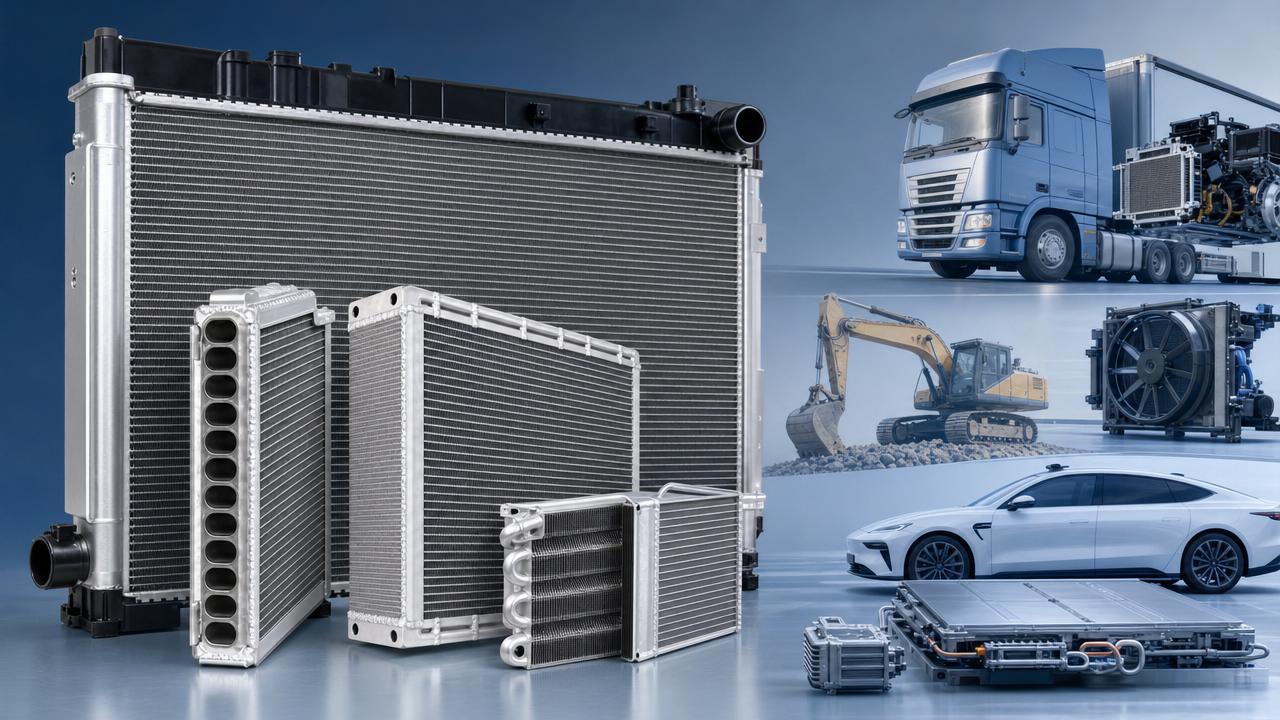
For technical evaluators, radiator core design is more than a structural detail. It directly affects heat transfer, airflow resistance, durability, and system stability across demanding operating conditions.
In heavy trucks, construction machinery, and new energy systems, the right radiator core can decide whether temperatures stay controlled or performance drops under load.
That is why radiator core selection has become a strategic engineering issue rather than a simple replacement choice. Small design changes often create measurable differences in cooling performance.
Liaocheng Xinde Auto Parts Co., Ltd., founded in 2018, has grown rapidly in this field through research, production, and global sales of radiators, intercoolers, and related thermal components.
Its experience in water tank radiators, heavy truck systems, construction machinery radiators, and new energy modules reflects how radiator core innovation is reshaping parts performance expectations.
Cooling performance expectations are rising across parts applications
Cooling systems now operate under tighter thermal limits. Engines run hotter, power density increases, and packaging space becomes more constrained in modern equipment.
This shift makes radiator core geometry more important than before. Core depth, fin density, tube layout, and material conductivity all influence the final thermal result.
A radiator core is no longer judged only by size. It is judged by how efficiently it moves heat while minimizing pressure loss and maintaining long-term reliability.
In practical terms, better radiator core engineering helps maintain coolant temperature, reduce thermal fatigue, and improve system consistency in stop-start, high-load, or off-road conditions.
The biggest trend signal is a move from basic capacity to optimized core architecture
Older cooling strategies often relied on increasing frontal area or coolant volume. Current design thinking focuses more on optimizing the radiator core itself.
This change is visible in both conventional and electrified systems. Engineers want more heat rejection from compact modules with lower airflow penalties.
As a result, radiator core development now emphasizes micro-level structure. Tube shape, fin profile, brazing quality, and internal flow paths are under closer technical review.
Key signals behind this shift
- Higher engine output and heavier duty cycles demand stronger thermal margins.
- Compact system layouts reduce available cooling package space.
- Fuel economy and energy efficiency targets punish excessive fan power demand.
- Longer service intervals require a radiator core that resists fouling and fatigue.
- New energy applications require stable thermal control for electronics and battery-adjacent systems.
Why radiator core design changes produce measurable thermal differences
Every radiator core balances three variables: heat transfer area, airflow resistance, and coolant-side pressure drop. Improving one area without control can hurt another.
That is why core design is a systems problem. Performance comes from integration, not from a single dimensional increase.
Design factors that matter most
For example, a denser radiator core may look stronger on paper. Yet if airflow resistance rises too much, fan demand increases and real-world cooling may not improve.
Likewise, a thicker radiator core can reject more heat, but only if airflow reaches deeper layers effectively. Otherwise, added thickness brings diminishing returns.
Different applications are changing what a radiator core must deliver
The same radiator core strategy does not fit every use case. Application conditions are now shaping design priorities much more clearly.
Heavy trucks
Heavy trucks need strong continuous heat rejection under long-haul load, climbing conditions, and variable ambient temperatures. Core durability and anti-fouling behavior are especially important.
Construction machinery
Construction machinery often works in dust, vibration, and low-speed environments. Here, the radiator core must balance cooling capacity with resistance to clogging and structural fatigue.
New energy systems
Electrified platforms need precise thermal management in tighter spaces. A radiator core for these systems must support compact packaging, controlled airflow, and dependable thermal consistency.
This is why some vehicle programs evaluate compact, high-efficiency solutions such as Radiator for AION, especially where advanced fluid dynamics and premium thermal materials matter.
The impact extends beyond temperature control alone
A well-designed radiator core improves more than cooling. It can influence system efficiency, maintenance frequency, uptime, and component life.
- Lower airflow restriction may reduce fan energy demand.
- Stable operating temperature helps protect seals, hoses, and adjacent parts.
- Better coolant distribution reduces local overheating risk.
- Higher structural integrity supports longer service life in vibration-heavy duty cycles.
In other words, radiator core quality affects total system behavior. It is directly connected to reliability, not just laboratory heat rejection numbers.
What deserves closer attention when comparing radiator core options
Cooling performance claims should be checked against actual design details. Not all radiator core products with similar dimensions deliver the same field performance.
Priority checkpoints
- Assess fin geometry, not only fin count.
- Review tube arrangement for even coolant flow.
- Check brazing consistency and joint quality.
- Compare thermal material grade and corrosion resistance.
- Consider operating dust load, vibration level, and airflow environment.
- Look at test conditions behind cooling capacity data.
Where replacement and repair are involved, matching the radiator core to real duty conditions is critical. An oversized or overly restrictive core can create new system inefficiencies.
Some modern solutions, including the model AIONV-1301010-0030, are built around high-performance stability and cooling efficiency under demanding workloads rather than simple dimensional equivalence.
A practical framework for judging future radiator core choices
As thermal requirements keep evolving, radiator core evaluation should follow a structured logic. This helps avoid selecting by appearance, habit, or nominal size alone.
This framework supports better technical decisions in the parts sector, especially as cooling modules become more integrated and performance-sensitive.
The next step is to treat radiator core design as a performance lever
The radiator core is not a background component. It is a major determinant of thermal efficiency, airflow behavior, durability, and long-term system confidence.
When evaluating new builds, replacements, or upgraded cooling modules, focus on core architecture, material quality, and application fit before comparing size alone.
A careful review of radiator core structure can reveal where real cooling gains are possible. It also helps identify solutions that keep systems peak-performing under grueling workloads.
For applications requiring compact, stable, and advanced thermal solutions, it is worth comparing engineered options in detail and validating how each radiator core performs under real operating demands.