



Heavy duty truck radiator updates seen at recent shows
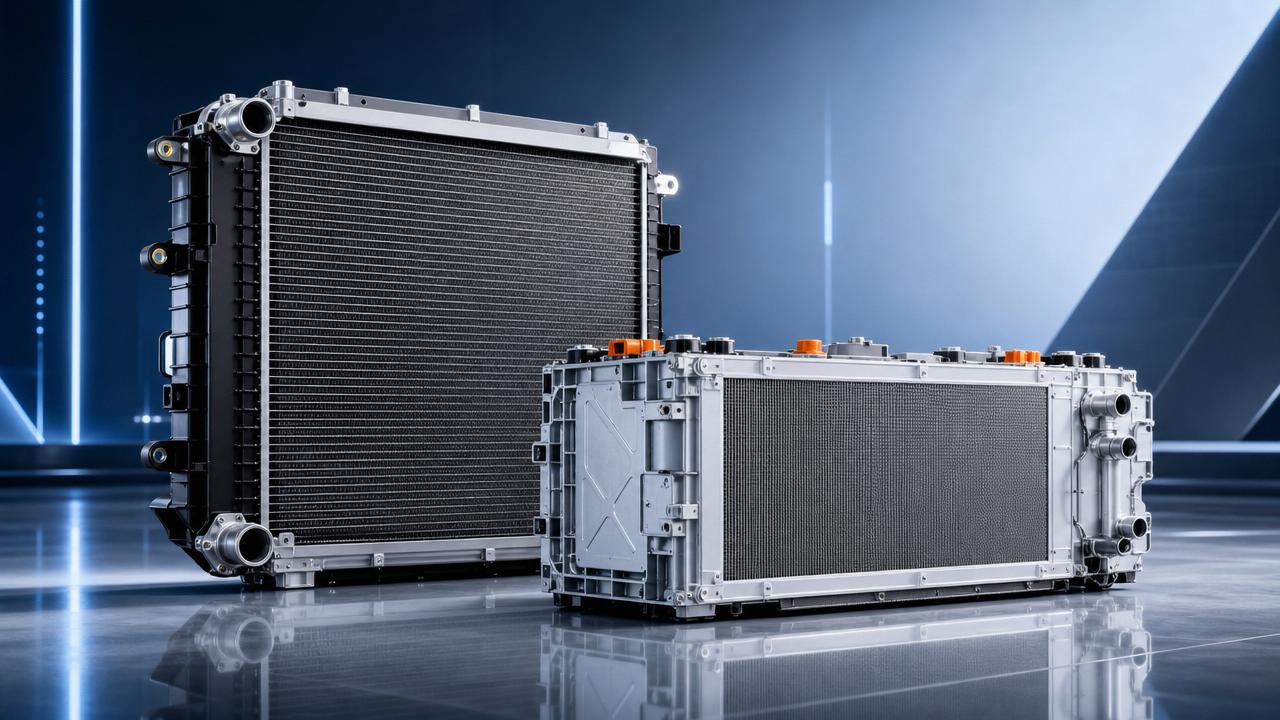
Recent trade shows have highlighted how Heavy duty truck radiator technology is evolving toward higher efficiency, durability, and compatibility with new energy platforms. For dealers, distributors, and agents, these updates signal fresh opportunities in a fast-growing parts market. Backed by strong R&D and manufacturing strength, Liaocheng Xinde Auto Parts Co., Ltd. is positioned to deliver reliable radiator and cooling solutions that meet changing global demand.
What recent show updates mean for Heavy duty truck radiator buyers
The latest exhibitions did not just display new products. They revealed where purchasing standards are heading. A Heavy duty truck radiator is no longer judged only by fitment and price. Buyers now compare thermal efficiency, vibration resistance, material quality, lifecycle stability, and compatibility with both diesel and new energy cooling systems.
For distributors and agents, this shift creates both pressure and opportunity. Pressure comes from customers asking more technical questions. Opportunity comes from stocking cooling parts that solve real field problems, reduce returns, and strengthen long-term channel relationships.
- Fleet operators want improved cooling reliability under heavy load, long-distance transport, and hot climate conditions.
- Repair networks want easier replacement matching, clear dimensions, and fewer installation disputes.
- Importers want suppliers who can support stable production, export communication, and practical product confirmation.
Liaocheng Xinde Auto Parts Co., Ltd., established in 2018 with registered capital of 5 million RMB and total investment of 50 million RMB, has built its business around these exact needs. The company focuses on water tank radiators, intercoolers, construction machinery radiators, related heavy truck components, and new energy radiator modules for global markets.
Why this matters in the parts channel
A cooling component sits in a high-risk category. If the part fails, the downstream cost may include engine overheating, vehicle downtime, delivery delays, and customer complaints. That is why channel buyers increasingly look beyond unit price and focus on total business risk.
Which technology trends are shaping the Heavy duty truck radiator market
Several trends stood out across recent trade shows. These trends help explain what products are likely to move faster in the coming procurement cycles and what stock strategies may become less efficient.
1. Higher thermal performance in limited space
Truck platforms are under pressure to balance power, emissions, fuel economy, and packaging constraints. As a result, a Heavy duty truck radiator is expected to deliver stable cooling capacity within tighter engine bay layouts. Better core design, optimized fin structures, and improved airflow management are receiving more attention.
2. Durability under vibration and variable road conditions
Heavy trucks operate on highways, construction routes, mining roads, and mixed logistics networks. Buyers are paying more attention to joint integrity, material consistency, and resistance to fatigue caused by long-term vibration and thermal cycling.
3. Cooling system integration for new energy and hybrid platforms
Trade shows also demonstrated that cooling demand is no longer limited to conventional engine applications. New energy radiator modules require broader system thinking, including thermal management for batteries, electronics, and integrated power systems. This affects future channel planning, especially for distributors serving mixed fleets.
4. Stronger demand for part traceability and clearer specifications
As cross-border parts trade grows, importers and agents need reliable dimensional data, model references, and application confirmation. This reduces mis-ordering and improves response time when serving workshops and fleet customers.
The table below summarizes the show-driven purchasing signals that matter most when selecting Heavy duty truck radiator inventory for commercial channels.
For a distributor, these trends are not theoretical. They influence returns, warehouse turnover, customer satisfaction, and future account growth. The more precisely a supplier supports technical matching, the lower the operational friction across the sales chain.
How dealers can evaluate Heavy duty truck radiator products more accurately
Many purchasing problems begin with incomplete evaluation. A buyer may compare only OEM references, or only dimensions, or only price. In practice, a stronger assessment combines fitment, thermal design, application load, service expectations, and communication efficiency with the manufacturer.
Key evaluation points before ordering
- Confirm model and cross-reference details, including OEM numbers and target vehicle application.
- Check dimensional compatibility, including core size, mounting points, and connection layout.
- Understand whether the unit supports AT, MT, or both, depending on the intended transmission configuration.
- Ask about production consistency and packaging protection for export transport.
- Review sample support and lead-time responsiveness for urgent customer programs.
One practical example for channel buyers is RADIATOR MERCEDES-BENZ XD315. Based on the available pre-processing data, it references OEM 9425001103, has size 952*808*48, and supports AT&MT. For distributors, this type of clear information speeds up matching and reduces confusion during inquiry handling.
The next table offers a practical selection guide for Heavy duty truck radiator purchasing decisions across channel scenarios.
A clear selection framework helps agents avoid dead inventory. It also helps them explain value to customers who might otherwise compare parts only by appearance or low quoted price.
What channel buyers often overlook in cost and replacement planning
Price matters, but a low purchase price does not always create a low business cost. In the Heavy duty truck radiator business, hidden costs usually appear later: wrong fitment, repeat orders, damaged goods in transit, emergency replacements, and customer dissatisfaction after installation.
Direct cost versus business cost
A distributor should evaluate not only the ex-factory unit price but also the likely cost of claim handling, stock aging, and technical clarification time. Even one problematic batch can affect account trust, especially when serving fleet maintenance customers who need predictable uptime.
- Lower-priced products may increase inspection work if specification control is weak.
- Poor packaging can turn a standard shipment into a dispute over transport damage.
- Unclear communication on application range can create costly reverse logistics.
This is where manufacturer capability matters. Liaocheng Xinde Auto Parts Co., Ltd. has developed rapidly since its establishment and focuses on research, production, and global sales. For channel buyers, that combination is important because parts sourcing requires not just factory output but also application understanding and export-oriented coordination.
Why manufacturing depth matters when sourcing Heavy duty truck radiator solutions
A trading-only source may provide a catalog quickly, but channel buyers often need more than a catalog. They need a partner who understands cooling system requirements, can handle dimensional confirmation, and can support both standard and market-specific demand.
Relevant strengths for distributors and agents
- Focused product scope in water tank radiators, intercoolers, construction machinery radiators, and heavy truck cooling components.
- Ability to align conventional heavy truck demand with new energy radiator module development.
- Fast-growing manufacturing base supported by ongoing expansion and industry recognition at provincial and municipal levels.
- A business model built for global sales, which is useful for overseas importers needing smoother communication and export process support.
Industry honors such as High-tech Enterprise, Civilized and Honest Enterprise, and Trustworthy Unit for Consumers do not replace technical validation, but they do suggest a serious operating posture. For channel partners, that can be a positive sign when assessing supplier stability and communication discipline.
How to handle standards, documentation, and export communication
In international parts trade, documentation quality often determines whether a transaction moves smoothly. A Heavy duty truck radiator may be technically suitable, yet still create delays if dimensions, model references, packing details, or application notes are incomplete.
Basic documentation distributors should request
- OEM or cross-reference information relevant to the target market.
- Dimensional data with key measurements and layout confirmation.
- Packing and loading details for export handling.
- Material or structural notes where needed for technical clarification.
- Lead-time expectations for samples, repeat orders, and peak season planning.
General compliance language may also be relevant depending on market destination, customer type, and the import process. Buyers should discuss these points early rather than after quotation approval.
Common buying mistakes in the Heavy duty truck radiator business
Many procurement issues are avoidable. They usually come from speed without structure, or from assuming one reference point is enough to confirm a radiator.
Frequent mistakes
- Buying only by photo or vehicle name without checking OEM and exact size.
- Ignoring whether the product serves AT, MT, or a broader application scope.
- Assuming all heavy truck cooling parts face the same load conditions across regions.
- Underestimating the value of technical response speed when customers need urgent replacements.
Even a product like RADIATOR MERCEDES-BENZ XD315 should be reviewed within the real application context. The presence of OEM reference, size, and AT&MT support is useful, but professional buyers still verify the target vehicle platform, market needs, and stock strategy before scaling orders.
FAQ for distributors, importers, and agents
How do I choose the right Heavy duty truck radiator for my market?
Start with the application mix in your customer base. If your market serves long-haul fleets, prioritize fitment accuracy and stable cooling performance under sustained load. If your market is repair-driven, focus on broad model coverage, clear cross-reference data, and fast replenishment. Always confirm OEM reference, dimensions, and transmission applicability before placing bulk orders.
What matters more, price or technical specification?
Neither should be viewed alone. A lower price may help short-term margin, but if technical details are weak, the overall business cost rises through returns and complaints. The best decision is usually a balanced one: competitive pricing supported by clear product data, consistent manufacturing, and responsive communication.
Are recent radiator updates relevant if I mainly sell conventional diesel truck parts?
Yes. Even if most of your volume still comes from diesel platforms, show updates in efficiency, durability, and modular cooling design influence customer expectations. They also shape future replacement demand. Buyers who watch these trends early can build a stronger product mix and avoid falling behind in technical conversations.
What should I ask a supplier before requesting a quotation?
Ask for OEM references, dimensions, application notes, transmission fitment, sample availability, packaging details, and estimated lead time. If your project has regional compliance or labeling requirements, raise them before the formal quote. This shortens the approval cycle and improves accuracy.
Can one supplier support both traditional heavy truck cooling parts and new energy development?
That depends on the supplier’s actual product focus. Liaocheng Xinde Auto Parts Co., Ltd. works in water tank radiators, intercoolers, construction machinery radiators, heavy truck related components, and new energy radiator modules. For channel partners, this broader scope can be useful when planning a future-ready cooling portfolio instead of sourcing from disconnected vendors.
Why choose us for Heavy duty truck radiator sourcing
For distributors, dealers, and agents, the right supplier should help reduce uncertainty, not add to it. Liaocheng Xinde Auto Parts Co., Ltd. combines manufacturing focus, product specialization, and export-oriented service in a category where technical details directly affect business performance.
- You can consult us for parameter confirmation, including OEM references, size checks, and transmission applicability.
- You can discuss product selection for heavy truck radiators, intercoolers, construction machinery radiators, and new energy radiator modules.
- You can ask about sample support, delivery cycle planning, and order coordination for your target market.
- You can communicate your customization needs, technical matching questions, packaging concerns, and quotation requirements in one process.
If your business is reviewing new suppliers after recent trade shows, this is a practical time to compare not only products but also response quality and technical support. A well-matched Heavy duty truck radiator program can improve customer retention, lower claim risk, and strengthen your position in a competitive parts market.