



What Shortens Heavy Truck Cooling System Life in Daily Service
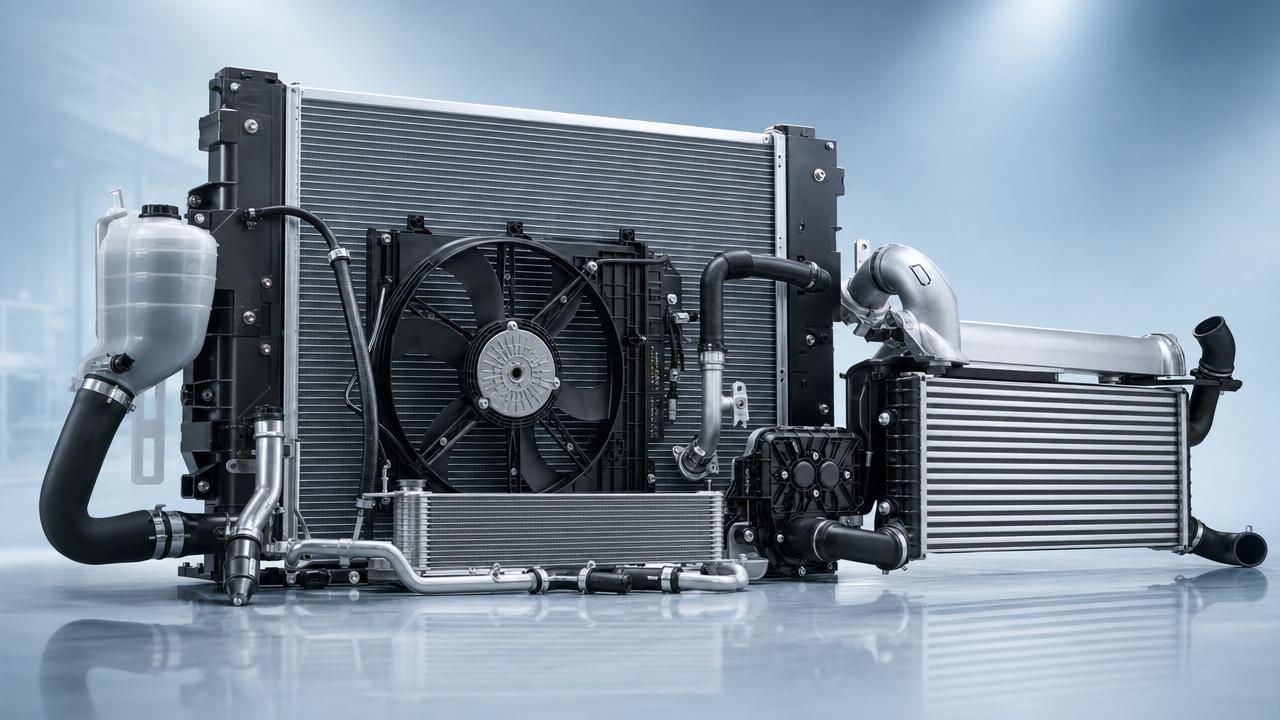
In daily service, the heavy truck cooling system often fails not because of a single major defect, but because of heat stress, contamination, poor coolant management, and delayed maintenance. For aftermarket maintenance personnel, understanding what shortens system life is essential to preventing radiator damage, reducing downtime, and improving vehicle reliability. This article explains the most common causes and practical inspection points that matter in real working conditions.
For workshops handling fleet service, long-haul tractors, dump trucks, and construction-duty vehicles, cooling system life is directly tied to uptime, repeat repair rates, and parts replacement cost. In most cases, service life does not drop suddenly; it declines over 3 to 12 months through small failures in coolant quality, airflow, pressure control, or installation practice.
For parts-focused businesses such as Liaocheng Xinde Auto Parts Co., Ltd., which manufactures radiators, intercoolers, construction machinery radiators, and new energy radiator modules, the maintenance side of the market is critical. Aftermarket personnel need practical inspection logic, not general advice, because a heavy truck cooling system is exposed to high thermal load, dust, vibration, and inconsistent service habits every day.
Why Cooling System Life Drops Faster in Daily Truck Operation
A heavy truck cooling system works under harsher conditions than many light commercial vehicles. Normal operating temperature may stay within target range, yet internal wear can still accelerate when the truck sees repeated hill climbs, stop-start hauling, overloaded runs, or idling periods above 30 minutes.
In actual service yards, the biggest issue is cumulative stress. A radiator core may survive one overheating event, but 5 to 10 smaller thermal cycles combined with contamination and pressure fluctuation can shorten useful life much faster than expected.
Four daily-service conditions that accelerate damage
- Frequent operation in dusty roads, mines, or construction zones, which blocks fins and reduces airflow by a noticeable margin within 2 to 6 weeks.
- Use of improper coolant concentration, including over-dilution with hard water or mixing incompatible coolant types.
- Poor maintenance intervals, such as skipping cap checks, hose inspection, or external cleaning for more than 3 months.
- Vibration and mounting stress caused by rough roads, loose brackets, or misaligned fan shrouds.
How small faults become costly failures
When airflow falls by even 10% to 15%, coolant temperature can rise enough to increase stress on tanks, seams, hoses, and water pump seals. If coolant chemistry is already weak, internal corrosion starts to work at the same time, affecting tubes, soldered joints, and metal surfaces.
For maintenance teams, this means that radiator leaks, hose hardening, cap failure, and scale buildup are often connected. Treating only the visible leak without correcting the cause usually leads to a return repair within the next service cycle.
Typical life-shortening chain
- Dust, oil mist, or mud blocks external fins.
- Heat rejection drops during climbing or heavy loading.
- Pressure rises and temperature becomes less stable.
- Weak hose, cap, or seam begins to fail.
- Coolant loss causes repeated overheating and larger component damage.
The table below helps maintenance personnel identify common daily-service conditions and the specific ways they reduce heavy truck cooling system life.
The key point is that service conditions rarely damage only one part. The heavy truck cooling system behaves as a linked assembly, so one neglected factor can reduce the life of the radiator, hoses, cap, thermostat, and pump together.
The Most Common Causes of Premature Cooling System Failure
Aftermarket maintenance personnel usually see repeated failure from a limited group of causes. Identifying them early can cut avoidable component replacement and reduce unplanned downtime from several hours to a full day or more.
1. Poor coolant management
Coolant is not only for temperature control. It also handles corrosion protection, lubrication support, and cavitation resistance. If concentration falls outside the common service range recommended for the vehicle, internal surfaces begin to degrade faster, especially in mixed-metal systems.
A common workshop mistake is topping off with untreated water repeatedly. Even if the truck does not overheat immediately, minerals can form deposits inside narrow tubes. Over a period of 6 to 18 months, flow area may drop enough to reduce heat exchange efficiency.
2. External contamination and blocked airflow
The radiator face often collects insects, mud, cotton fibers, and oil-laden dust. On trucks working in quarries, municipal sites, or mixed highway and off-road routes, the blockage layer can become severe in less than 4 weeks.
Cleaning methods also matter. High-pressure washing at the wrong angle can bend fins, reducing effective airflow even after dirt is removed. In practice, fin damage is a hidden reason why a heavy truck cooling system continues to run hot after cleaning.
3. Pressure imbalance and cap neglect
The radiator cap is a low-cost component with high system influence. If it opens too early, coolant can escape and boiling margin drops. If it fails to relieve correctly, pressure spikes can stress seams, hoses, and plastic tank connections.
For fleet maintenance, cap testing at fixed intervals such as every 20,000 to 30,000 km is more effective than waiting for visible coolant loss. This simple check often prevents repeat failures that are wrongly blamed on the radiator core itself.
4. Vibration, misalignment, and installation error
Heavy trucks create sustained vibration, especially on broken roads and under loaded conditions. If mounting points are uneven, bushings are missing, or the shroud contacts the core, stress concentrates at connection areas. Cracks may begin as micro-leaks and only become visible after thermal expansion.
Replacement parts must also match fitment accurately. Even a small alignment issue can create hose tension, poor fan clearance, or uneven load on side brackets. That is why experienced parts suppliers focus on dimensional fit and heat exchange performance together, not as separate issues.
5-point fault screening routine
- Check coolant appearance, level, and service record.
- Inspect radiator face for blockage, bent fins, and oil film.
- Pressure-test the cap, hoses, and visible joints.
- Inspect mounting brackets, cushions, and shroud clearance.
- Confirm thermostat and fan operation under load, not only at idle.
Besides heavy truck applications, maintenance teams increasingly serve mixed fleets that include new energy vehicles. In those cases, thermal management has a broader function. For example, Radiator for BYD, model BYD476ZQB-1301010-025, is designed for new energy vehicles and supports efficient cooling for battery packs, drive motors, and power electronics, with fit-focused construction and strong heat exchange capability.
This comparison is useful because it highlights a shared principle across conventional trucks and electrified systems: once heat rejection is reduced, component life and operating safety are both affected. Whether the load comes from an engine coolant circuit or an EV thermal module, routine inspection discipline remains essential.
Inspection Priorities for Aftermarket Maintenance Personnel
A workable inspection plan should be fast enough for real workshop use and detailed enough to catch hidden deterioration. For most fleets, a 10 to 15 minute visual inspection can identify more than half of early cooling system risks before deeper diagnosis begins.
Visual checks that should never be skipped
- Look for white, green, or rust-colored residue around seams, drain points, hose ends, and caps.
- Check if fins are crushed over more than 15% to 20% of the visible face area.
- Inspect hoses for hardening, swelling, abrasion, or clamp marks.
- Verify whether fan shroud position is centered and free from contact wear.
Operational checks under realistic load
Many cooling faults do not appear in the workshop yard. Testing should include loaded driving, climbing simulation, or at least elevated engine speed for a controlled period. A heavy truck cooling system may look stable at idle, then show rapid temperature rise once torque demand increases.
Maintenance records should also note repeat top-off volume. If a truck needs frequent coolant addition over 2 to 3 weeks, a leak, cap issue, or internal loss path should be investigated immediately rather than waiting for overheating.
The following table summarizes a practical inspection schedule that fits common aftermarket service routines.
This schedule works because it links inspection frequency to real failure modes. Instead of replacing parts too late or too early, maintenance teams can track condition-based signals and act before the heavy truck cooling system reaches unstable operation.
How Parts Selection and Service Practice Affect Long-Term Reliability
Even good maintenance cannot fully compensate for poor-fit replacement parts. In the parts industry, service life depends on material quality, core design, weld or joint consistency, and dimensional accuracy. For aftermarket personnel, selecting a radiator is not only about matching a model number.
What to evaluate before purchasing replacement radiators
- Core structure suitability for the truck’s duty cycle and cooling demand.
- Fit accuracy at mounting points, hose ports, and shroud interface.
- Resistance to vibration and pressure variation in daily transport service.
- Supplier capability in production consistency and technical communication.
Why manufacturing background matters
Liaocheng Xinde Auto Parts Co., Ltd., established in 2018 with 5 million RMB in registered capital and 50 million RMB total investment, focuses on research, production, and global sales of radiators, intercoolers, construction machinery radiators, and new energy radiator modules. For buyers and service managers, this kind of specialization matters because cooling products require process stability as much as catalog coverage.
The company’s growth and recognized provincial and municipal honors indicate a serious manufacturing orientation, which is especially relevant when maintenance teams need dependable replacement support across heavy truck and equipment applications. Reliable supply helps reduce the risk of repeated replacement caused by poor fit or inconsistent heat exchange performance.
Three service practices that extend cooling system life
- Standardize coolant handling with one approved specification and a documented refill method.
- Train technicians to inspect airflow path, not only coolant leaks, during every preventive maintenance cycle.
- Record each overheating complaint with load condition, ambient temperature, and previous repair action for trend tracking.
In practical terms, the heavy truck cooling system lasts longer when maintenance teams combine correct parts selection, shorter inspection intervals in severe duty, and disciplined coolant management. Most premature failures can be reduced with routine controls rather than emergency repairs alone.
If you are sourcing replacement radiators, intercoolers, or thermal management components for aftermarket service, choosing a manufacturer with focused production experience can improve fit, reduce return repairs, and support more stable vehicle operation across demanding routes.
For service teams working across both diesel and new energy vehicle fleets, solutions such as the Radiator for BYD also show how precise fit and effective heat exchange are becoming standard expectations across the broader parts market.
To reduce downtime, protect radiator life, and improve maintenance outcomes, contact us now to discuss product details, request a tailored replacement solution, or learn more about heavy truck and new energy cooling system components for your service needs.