



Heavy Truck Cooling System Upgrades That Pay Off in Harsh Routes
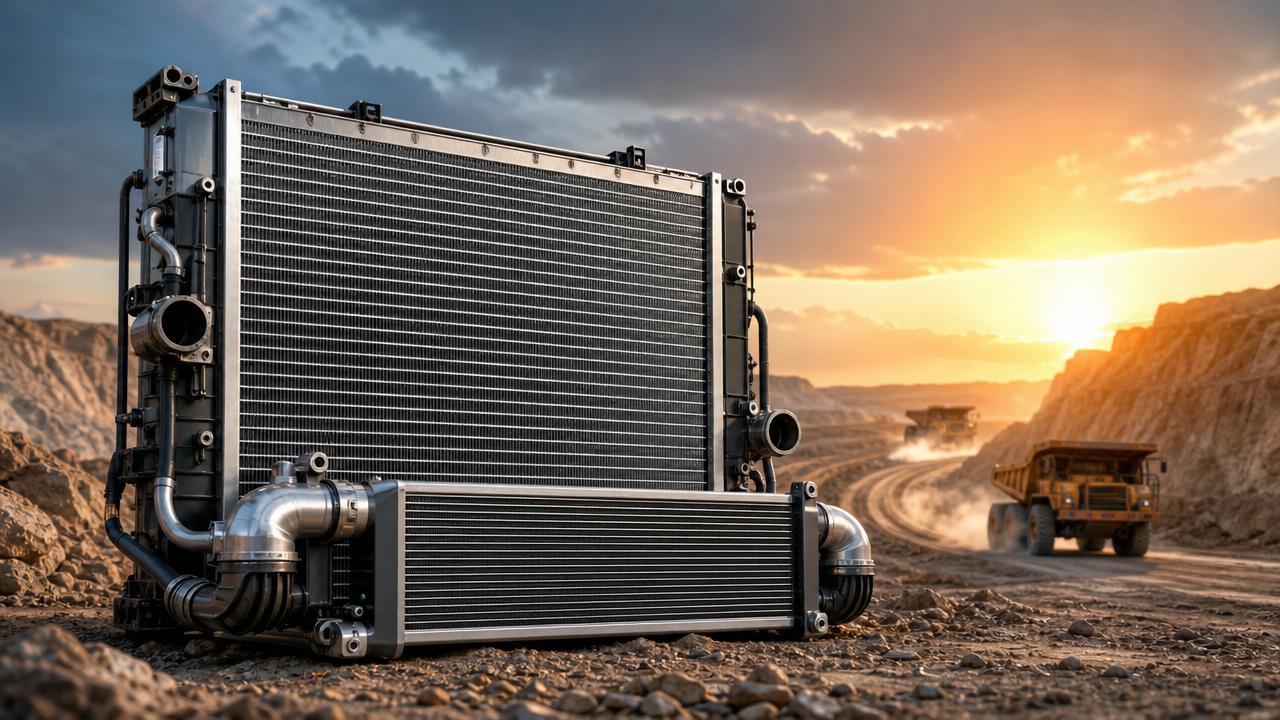
In harsh routes, a reliable heavy truck cooling system can be the difference between stable fleet performance and costly downtime. For business evaluators, the right upgrade is not just a maintenance choice but a measurable investment in durability, fuel efficiency, and lifecycle cost control. This article explores cooling system upgrades that deliver practical returns for demanding heavy-duty operations.
For fleets operating in mining corridors, steep mountain roads, desert haul routes, or long-idle construction transport cycles, cooling performance directly affects uptime, engine protection, and operating cost. A business-level assessment should therefore look beyond replacement price and focus on thermal efficiency, material durability, fitment accuracy, maintenance intervals, and support consistency.
In the parts sector, Liaocheng Xinde Auto Parts Co., Ltd. has built its business around radiators, intercoolers, construction machinery radiators, and new energy radiator modules for heavy trucks. Established in 2018 with a registered capital of 5 million RMB and a total investment of 50 million RMB, the company serves global markets and has expanded quickly in China’s manufacturing landscape. For evaluators comparing suppliers, that specialization matters because harsh-route cooling upgrades demand both product consistency and application knowledge.
Why Harsh Routes Expose Weaknesses in a Heavy Truck Cooling System
A standard heavy truck cooling system may perform adequately on flat highways with moderate loads, yet fail to maintain stable temperatures when duty cycles intensify. High ambient heat, low-speed climbing, repeated stop-and-go hauling, and dust-heavy airflow can raise thermal stress within 15 to 30 minutes of operation.
For evaluators, the cost impact is usually indirect at first. Engine derating, coolant loss, charge-air temperature rise, fan overuse, and unplanned shop visits often appear as scattered maintenance events. Over a 12-month fleet review, these small failures can become a meaningful cost center.
Typical route conditions that increase thermal risk
- Ambient temperatures above 35°C for extended periods
- Long-gradient climbs with gross vehicle loads near operating limits
- Dust, mud, or debris buildup reducing airflow by 10% to 25%
- Frequent idling that limits ram-air cooling while keeping heat generation active
- Mixed on-road and construction-site cycles with vibration and stone impact
What business evaluators should measure first
Before approving an upgrade, review 4 basic indicators: average coolant temperature range, overheating incidents per 100,000 km, cleaning frequency, and component replacement cycle. If any one of these indicators shows repeated instability, the current heavy truck cooling system may be underspecified for route reality.
The table below outlines how route severity should influence upgrade priorities instead of treating all trucks as a single maintenance group.
The key takeaway is that route mapping should come before part selection. A high-performing heavy truck cooling system on paper may still underperform if fin density, core thickness, and mounting design are not matched to actual duty cycles.
Cooling System Upgrades That Deliver Measurable Payback
Not every upgrade produces the same return. Business evaluators should prioritize improvements that reduce failure frequency, maintain thermal stability, and support predictable service intervals over 6 to 24 months. In most harsh-route applications, payback comes from fewer thermal events and lower maintenance disruption.
1. Higher-efficiency radiator core design
A radiator upgrade is often the first and most practical step. Improved tube-and-fin geometry, suitable core thickness, and consistent brazing quality can increase heat rejection without forcing major system redesign. In harsh routes, even a 5°C to 10°C improvement in operating stability can reduce overheating risk during peak load periods.
Evaluators should compare not only outer dimensions but also thermal surface area, material thickness tolerance, and resistance to vibration fatigue. A lower-cost radiator with weak joint quality may shorten replacement intervals and erase any initial savings.
2. Charge air cooling optimization
When turbocharged heavy trucks work under high load, intercooler efficiency influences combustion temperature, power consistency, and fuel use. If intake air remains too hot, the engine may lose performance or consume more fuel to sustain torque. For long-haul climbs or heavy construction transport, intercooler upgrade decisions should be reviewed alongside radiator upgrades.
3. Reinforced tanks, seals, and joints
In rough terrain, cooling failures often begin at connection points rather than across the full core. Reinforced plastic or metal tanks, better gasket materials, and stronger weld or crimp execution can reduce leak risk in high-vibration operation. This is especially relevant when trucks experience repeated chassis twist or uneven site roads.
4. Airflow and contamination control
A heavy truck cooling system cannot perform if airflow is compromised. Upgrades such as better shrouding alignment, improved fan coordination, and easier-to-clean core layouts can materially improve field performance. In dusty routes, maintenance teams may need cleaning every 1 to 2 weeks instead of once per month, so cleanability becomes a purchasing factor.
The following comparison helps separate upgrades with direct operational return from those that mainly add complexity.
For most B2B buyers, the strongest return usually comes from combining core efficiency, structural durability, and easier maintenance access. That combination protects both operating continuity and workshop planning.
How to Evaluate Supplier Fit and Part Suitability
Choosing a heavy truck cooling system upgrade is not only about technical data. Supplier fit affects lead time, model coverage, documentation accuracy, and after-sales response. For procurement and technical review teams, 5 evaluation points are especially useful during supplier comparison.
Check 1: Fitment accuracy and model matching
Confirm OEM references, dimensional consistency, transmission compatibility, and mounting points. Even small misalignment can increase installation time by 2 to 4 hours per unit or create hose stress that later causes leakage.
Check 2: Manufacturing specialization
Suppliers focused on radiators, intercoolers, and heavy-duty thermal modules are generally better equipped to discuss operating conditions, not just part numbers. This matters when the heavy truck cooling system must be adapted to demanding route profiles rather than simple standard replacement.
Check 3: Durability under vibration and contamination
Ask about material configuration, sealing method, and expected resistance to dust loading, coolant pressure cycling, and road shock. A part that performs in catalog conditions may not survive repeated off-road vibration over 8 to 12 months.
Check 4: Delivery planning and replenishment flexibility
For fleet maintenance programs, replenishment rhythm is often as important as the first order. Clarify typical production cycle, spare stock logic, and response time for repeat orders. A common planning window in cross-border parts sourcing is 2 to 6 weeks depending on quantity and specification complexity.
Check 5: Application-specific sample review
If a route is especially demanding, pilot installation on 2 to 5 vehicles can reveal practical issues before wider rollout. This approach helps evaluators compare thermal stability, leakage frequency, and cleaning burden under actual operating loads.
A relevant example in Mercedes-Benz truck applications is RADIATOR MERCEDES-BENZ XD315, associated with OEM 9425001103, size 952*808*48, and AT&MT compatibility. For evaluators, details like these are not minor catalog notes; they are part of fitment control, installation planning, and replacement accuracy.
Implementation and Maintenance: Turning Upgrades Into Real ROI
A strong heavy truck cooling system upgrade can still underperform if implementation is inconsistent. The best results usually come from a 3-stage process: route diagnosis, parts selection, and maintenance adjustment. This keeps procurement decisions linked to field outcomes rather than invoice completion alone.
Stage 1: Route and failure mapping
Review where failures occur, under what load, and in which season. If overheating events cluster during summer climbs or in high-dust work zones, upgrade specifications should be tied to those precise triggers.
Stage 2: Pilot installation and baseline tracking
Install upgraded parts on a small group and track coolant temperature trend, fan activation frequency, cleaning interval, and downtime over 30 to 90 days. This creates a practical business case before scaling across the fleet.
Stage 3: Maintenance schedule revision
Once upgraded, service intervals may need to shift. Harsh-route fleets should define 6 routine inspection items: fin blockage, hose integrity, coolant condition, clamp stability, tank leakage, and mounting stress. These checks can often be incorporated into existing PM cycles.
The table below shows how implementation discipline influences total return from cooling upgrades.
The main lesson is simple: ROI depends on both component quality and management discipline. A cooling upgrade should be tracked as a fleet performance project, not just a parts purchase.
Common Buying Mistakes in Heavy-Duty Cooling Projects
Commercial buyers often lose value when they compare quotations only by unit price. In harsh-route service, the cheapest heavy truck cooling system option may create higher labor cost, more vehicle stoppage, and shorter service life.
Mistake 1: Ignoring route-specific thermal load
A highway configuration is not automatically suitable for quarry or mountain work. Buyers should document at least 3 operating realities: average load, route slope, and contamination level.
Mistake 2: Treating dimension match as full suitability
Two radiators may share external dimensions but differ in internal structure, material robustness, and heat transfer behavior. Evaluators should ask for application details, not just basic size confirmation.
Mistake 3: Underestimating maintenance access
In dusty operations, cleanability influences downtime almost as much as core capacity. If a design is difficult to inspect or clean, service cost may rise steadily over 6 to 12 months.
A practical sourcing reminder
For parts such as RADIATOR MERCEDES-BENZ XD315, model data, OEM reference, size, and transmission type should be checked together. That discipline reduces mismatch risk and supports a more reliable procurement file for future replenishment.
Harsh-route transport exposes every weakness in a heavy truck cooling system, but it also makes smart upgrades easier to justify. Radiator efficiency, intercooler performance, reinforced structure, airflow management, and disciplined implementation can each improve uptime and reduce long-term cost when matched to real operating conditions.
For business evaluators, the best decision framework combines technical fit, supplier specialization, measurable pilot results, and maintenance planning. If you are reviewing heavy-duty radiator or intercooler solutions for demanding routes, now is the right time to discuss application details, request a tailored recommendation, and compare upgrade paths based on actual fleet needs. Contact us to get a customized solution, consult product details, and explore more heavy truck cooling system options for your market.