



What Shortens Excavator Radiator Life on High-Vibration Jobs?
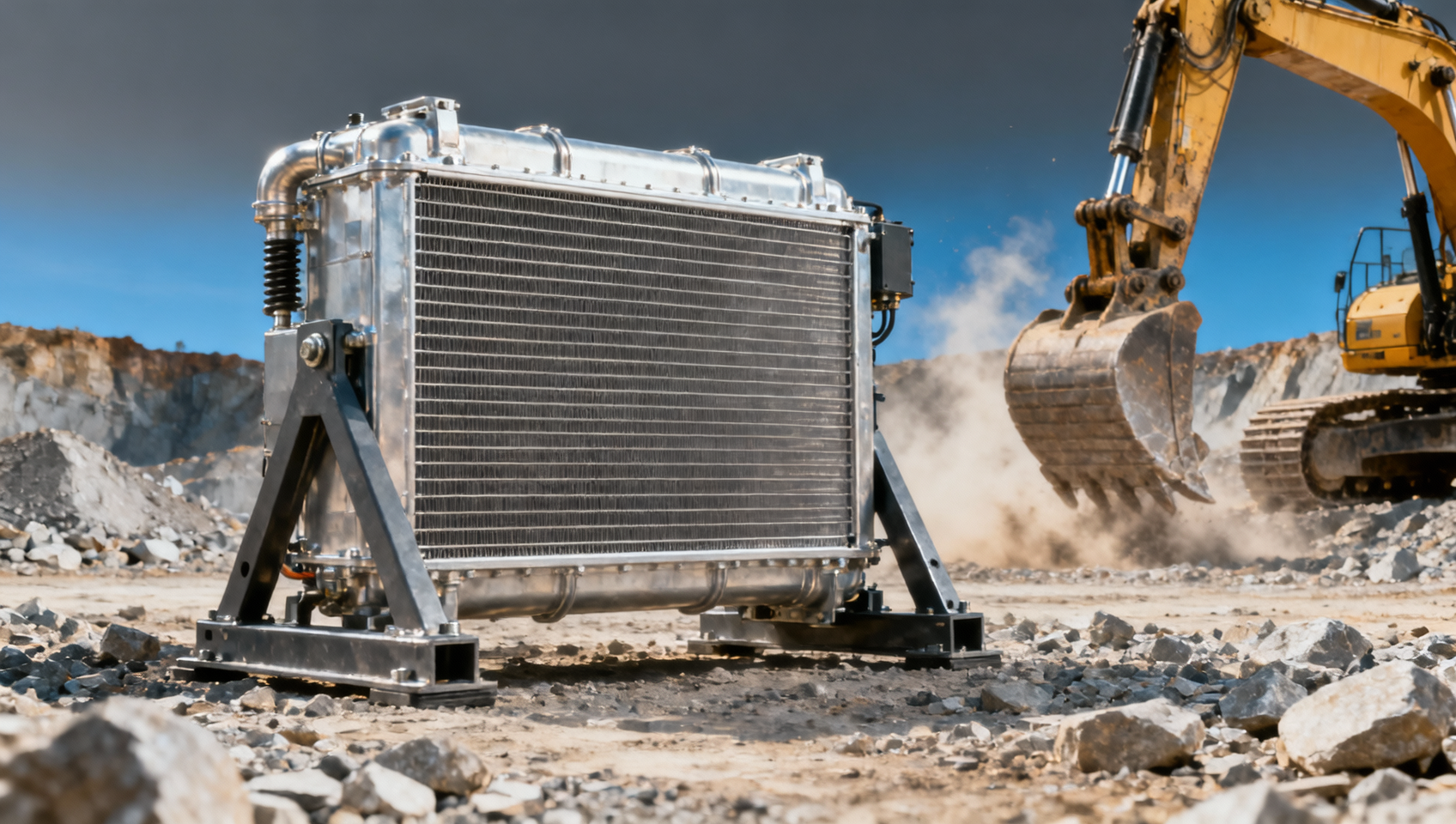
On high-vibration jobs, an Excavator radiator faces far more than heat alone—constant shock, dust, pressure fluctuation, and poor maintenance can quickly shorten service life. For technical evaluators, buyers, and decision-makers comparing a Vehicle radiator, Heavy duty truck radiator, Condenser, Agriculturaal radiator, or New Energy Vehicle Radiator, understanding these failure factors is essential to selecting durable cooling components that reduce downtime and protect equipment performance.
Why does vibration shorten excavator radiator life faster than many buyers expect?
In heavy-duty parts applications, heat is only one side of the problem. On quarry sites, demolition zones, mining roads, and compacted earthwork projects, an Excavator radiator is exposed to repeated vibration cycles for 8–12 hours per shift, often across 5–6 working days per week. Those vibration loads act on solder joints, tube-to-header connections, mounting points, fan shrouds, and surrounding brackets at the same time. If the cooling system was selected only by core size or price, service life can decline much earlier than expected.
For procurement teams and technical assessment staff, the key issue is not whether vibration exists, but how well the radiator structure absorbs or resists it. A radiator used in high-vibration jobs must tolerate thermal cycling, pressure pulsation, and frame movement together. When one of these factors is ignored, stress is concentrated into a few locations. Common results include fin fatigue, tube cracking, side plate looseness, and seal leakage that may begin as a minor seep and later force an unplanned machine stop.
This is why cooling parts in the excavator and construction machinery segment should never be evaluated as generic replacements. Liaocheng Xinde Auto Parts Co., Ltd., established in 2018 with a registered capital of 5 million RMB and a total investment of 50 million RMB, focuses on the research, production, and global sales of water tank radiators, intercoolers, construction machinery radiators, heavy truck cooling products, and new energy radiator modules. That manufacturing focus matters because vibration resistance is shaped by design, brazing process, aluminum quality, and production consistency rather than by appearance alone.
For business evaluators and company decision-makers, the cost impact is also broader than replacement price. A radiator that fails 3–6 months early can trigger labor expense, machine inactivity, coolant loss, and possible engine overheating risk. In fleet operations, even one failed unit can affect project progress, service scheduling, and spare-parts planning. The smarter purchasing question is therefore simple: which design features actually prevent life loss on high-vibration jobs?
- Structural fatigue often starts at mounting ears, brazed joints, and tube ends rather than in the core center.
- Pressure fluctuation and vibration together accelerate leakage more than temperature alone.
- Dust blockage raises operating temperature, which then worsens fatigue stress over repeated cycles.
- Selection errors typically appear when buyers compare only dimensions and basic fitment.
The main failure chain on rough-job equipment
A typical failure chain begins with vibration-induced movement between the radiator and its support frame. If the mounting system is too rigid, the core receives more direct shock. If it is too loose, oscillation increases. That movement then combines with internal pressure pulses from changing engine speed and cooling load. Over time, micro-fatigue develops. In field conditions, these issues may surface after hundreds of operating hours rather than immediately after installation, which is why early inspection schedules should be set at 100–200 hour intervals for new replacement units.
Which factors damage an Excavator radiator most on high-vibration jobs?
Not all vibration-related failures come from the same source. In parts industry practice, at least 5 key categories should be reviewed during selection and troubleshooting: mounting stress, core design weakness, pressure instability, contamination, and maintenance error. Technical evaluators should assess these categories as a system. A radiator may have acceptable heat exchange performance in a controlled setting but still show poor durability on a machine working over broken terrain for long continuous periods.
Mounting stress is often underestimated. If bracket positions do not align precisely, installers may force-fit the radiator during assembly. Even a small pre-load can create constant side stress. Under repeated vibration, that pre-load reduces fatigue life. Similarly, hardened rubber mounts, worn bushings, or missing isolators transfer impact directly into the aluminum structure. In construction machinery applications, mount condition should be inspected every month or every 250 operating hours, depending on job intensity.
Contamination creates another hidden problem. Dust, mud, fibers, and oil film restrict airflow and form uneven temperature zones across the core. That means some sections expand more than others during operation. Uneven expansion increases material stress at joints and header interfaces. In high-dust environments, cleaning frequency may need to move from quarterly to weekly. Without that adjustment, buyers may blame radiator quality when the root cause is actually heat imbalance caused by blocked fins.
Pressure fluctuation also matters. A cooling system with unstable caps, damaged hoses, or cavitation effects exposes the radiator to repeated internal load variation. Combined with vibration, that raises the chance of seam leakage. Decision-makers comparing suppliers should therefore request not only fitment confirmation but also guidance on pressure compatibility, material thickness range, and recommended service checks across the full cooling circuit.
The table below summarizes common life-shortening causes for an Excavator radiator and the practical implications for purchasing teams evaluating heavy equipment cooling parts.
For buyers, the practical takeaway is clear: durability comes from the interaction of structure, materials, and application match. A lower-cost unit may look equivalent on paper, yet perform differently once exposed to continuous vibration, debris, and fluctuating load. That is why supplier evaluation should move beyond a single quotation sheet and include engineering communication before purchase approval.
Where do failures usually appear first?
In field repairs, early visible signs often appear in 4 locations: mounting points, header-to-tube areas, side supports, and zones near hose connections. These are stress concentration points. If coolant residue appears around corners or seam lines, the issue may already be vibration-related fatigue rather than accidental impact damage. Procurement teams managing service contracts should ask maintenance crews to record these points during each inspection cycle so that pattern failures can be identified early.
How should technical teams compare radiator options for harsh-duty equipment?
When comparing an Excavator radiator with other cooling products such as a Vehicle radiator, Heavy duty truck radiator, Condenser, Agriculturaal radiator, or New Energy Vehicle Radiator, the mistake is assuming that all aluminum heat exchangers face similar duty loads. They do not. Excavators typically experience stronger chassis movement, more concentrated impact transfer, and a dirtier airflow environment. Therefore, selection should be based on 3 layers: structural durability, thermal capacity under load, and maintenance compatibility in field conditions.
A good procurement review also separates “fit” from “fitness.” A part may fit the machine dimensions but still fail because the core layout, tube strength, or bracket design is not appropriate for the actual work cycle. This is relevant not only for construction machinery but across other parts segments. For example, in passenger vehicle cooling, a compact brazed aluminum solution such as Radiator for Lynk with model 2069525700, designed for Link 06 / binyue in an automotive cooling system, highlights how application-specific engineering improves thermal stability. It uses aluminum construction, a brazing radiator design, a single-item configuration, and an 83X14X58 cm size, with a 12-month warranty. The broader lesson for B2B buyers is that radiator life depends on precise application matching, not category-level similarity.
For excavator use, buyers should request structured technical information before releasing purchase orders. That includes material type, joining method, key dimensions, mounting arrangement, intended operating environment, and any notes on vibration or heavy-duty service. A disciplined review process can reduce mismatch risk during the first 2–4 weeks after installation, which is the period when mounting and system compatibility issues usually become visible.
Liaocheng Xinde Auto Parts Co., Ltd. serves global cooling-component demand with products covering water tank radiators, intercoolers, construction machinery radiators, heavy truck applications, and new energy modules. For sourcing teams, this product breadth is useful because it supports comparative engineering thinking across multiple duty environments while keeping production rooted in a specialized radiator manufacturing base.
A practical comparison framework for procurement teams
The comparison table below can be used during supplier meetings, internal evaluations, or sample approval stages. It helps technical, purchasing, and business teams align on what really affects lifespan in demanding work conditions.
This comparison shows why a parts decision cannot rely on vehicle category alone. Procurement professionals should compare application severity, not just part labels. In many projects, that shift in evaluation method is what prevents recurring replacement purchases and budget leakage over a 12-month operating cycle.
Five checks before approving a supplier
- Confirm the radiator is intended for the real job environment, not only machine fitment.
- Review joining method and aluminum material consistency for fatigue resistance.
- Ask about packaging and transport protection, because damaged fins and brackets reduce service life before installation.
- Align on warranty scope, inspection process, and sample confirmation timing.
- Verify standard lead time, especially if your project needs delivery in 7–15 days or staged supply over several batches.
What maintenance and installation practices prevent early radiator failure?
Even a well-designed Excavator radiator can lose life quickly if installation and maintenance are weak. For maintenance managers and technical buyers, this is important because repeated claims are not always product defects. In many field cases, the actual cause is installation stress, contaminated coolant, incorrect hose routing, or delayed cleaning. A practical prevention plan should begin during installation and continue through the first 500 operating hours, when system mismatch and maintenance gaps most often emerge.
Installation should follow a simple rule: never force the radiator into position. If bolt holes do not align naturally, bracket geometry or machine-side distortion should be checked first. Forced assembly creates residual stress that combines with vibration from day one. Hose angle also matters. A hose under twist or constant pull transfers movement into the connection neck and accelerates cracking. After installation, teams should inspect mount compression, hose clearance, fan shroud alignment, and leak points during the first 24–48 operating hours.
Maintenance frequency should match environment severity. In clean logistics applications, inspection may be monthly. In dusty excavation or aggregate handling, weekly inspection is often more realistic. Cleaning should be done carefully to avoid fin deformation. Coolant quality should also be reviewed at regular intervals because corrosion and deposit formation reduce thermal efficiency and can increase internal stress. For fleet buyers, a basic checklist can significantly extend service life without increasing parts inventory.
For companies comparing suppliers, service support also matters. A manufacturer able to discuss installation points, common failure patterns, and matching precautions provides more value than one that only supplies a part number. This is one reason specialized radiator manufacturers are preferred in B2B sourcing, especially for mixed fleets that include construction machinery, heavy trucks, and different cooling module types.
Recommended field checklist
- Inspect mounts and rubber isolators every 100–200 hours in high-vibration applications.
- Check for fin blockage, oil film, and mud buildup at least once per week on dusty sites.
- Review hose routing and clamp condition after the first 24–48 hours following replacement.
- Monitor coolant condition and refill quality according to the service plan used by the equipment owner.
- Record recurring leak location patterns to distinguish system issues from isolated part damage.
FAQ for buyers, engineers, and decision-makers
How do I know whether radiator failure is caused by vibration or overheating?
The two often overlap, but the visible clues are different. Overheating problems usually show broad thermal stress signs such as coolant boil-over, repeated high temperature alarms, or widespread fin contamination. Vibration-related failure is more likely to appear at brackets, seams, corners, and connection necks. If leakage begins at repeated stress points while the core shows no major blockage, vibration and mounting should be investigated first. A review of operating hours, site roughness, and mount condition over the last 1–3 months is usually helpful.
What should procurement focus on besides price and dimensions?
At minimum, focus on 4 areas: application match, structural durability, production consistency, and support capability. Ask whether the radiator is intended for construction machinery or only cross-referenced by size. Review material and joining method. Confirm normal lead time, sample policy, and warranty terms. If your business runs multiple fleets or export projects, also ask whether the supplier supports technical clarification for heavy truck radiators, intercoolers, condensers, and new energy modules, since centralized sourcing often improves communication and spare-parts planning.
Are aluminum brazed radiators suitable for demanding duty cycles?
Yes, when designed and manufactured for the application. Aluminum brazed structures are widely used because they offer good heat transfer and weight advantages. However, suitability depends on design details, process stability, and operating conditions. The same basic material can perform very differently in passenger vehicle use compared with excavation, mining, or agricultural machinery. That is why evaluating the supplier’s specialization in radiator manufacturing is more useful than judging by material alone.
What is a reasonable lead-time discussion for B2B orders?
Lead time varies by product type, order size, and stock position. In practice, buyers should discuss 3 stages: sample confirmation, production scheduling, and shipment arrangement. For urgent maintenance demand, teams often ask whether supply can be arranged in 7–15 days. For planned procurement or multi-model demand, 2–4 weeks may be more realistic depending on specifications and quantity. The key is to confirm schedule before failure-driven emergency purchasing begins.
Why work with a specialized radiator manufacturer for high-vibration applications?
In the parts industry, durability is not created by catalog volume alone. It comes from focused manufacturing knowledge, process discipline, and the ability to understand application differences across construction machinery, heavy trucks, passenger vehicles, and new energy cooling modules. Liaocheng Xinde Auto Parts Co., Ltd. has concentrated on radiator and related thermal products since 2018, with business spanning research, production, and global sales. Its development pace and recognition as a High-tech Enterprise, Civilized and Honest Enterprise, and Trustworthy Unit for Consumers reflect a company structure built for long-term manufacturing credibility rather than short-term trading only.
For technical evaluators, that means access to discussions centered on application matching, materials, and cooling structure. For procurement personnel, it means a better chance to align price with lifecycle value instead of initial invoice value alone. For business reviewers and decision-makers, it supports a lower-risk sourcing model, especially when comparing suppliers for radiators, intercoolers, heavy-duty cooling parts, and new energy radiator modules under one supply relationship.
If your current challenge involves short radiator life on rough-terrain equipment, recurring leakage after replacement, uncertain model matching, or the need to compare options across excavator, truck, and vehicle applications, a structured supplier conversation can save both time and operating cost. You can discuss parameters, fitment details, expected duty cycle, warranty scope, sample arrangements, and delivery planning before final sourcing decisions are made.
Contact us to review radiator specifications, vibration-related failure risks, product selection, delivery timing, sample support, and quotation planning. If you also need cross-application reference for automotive cooling products, including solutions such as Radiator for Lynk, we can help organize the discussion around actual operating conditions, technical priorities, and procurement targets rather than generic catalog comparison.