



New Energy Vehicle Radiator Designs Are Changing Faster Than Expected
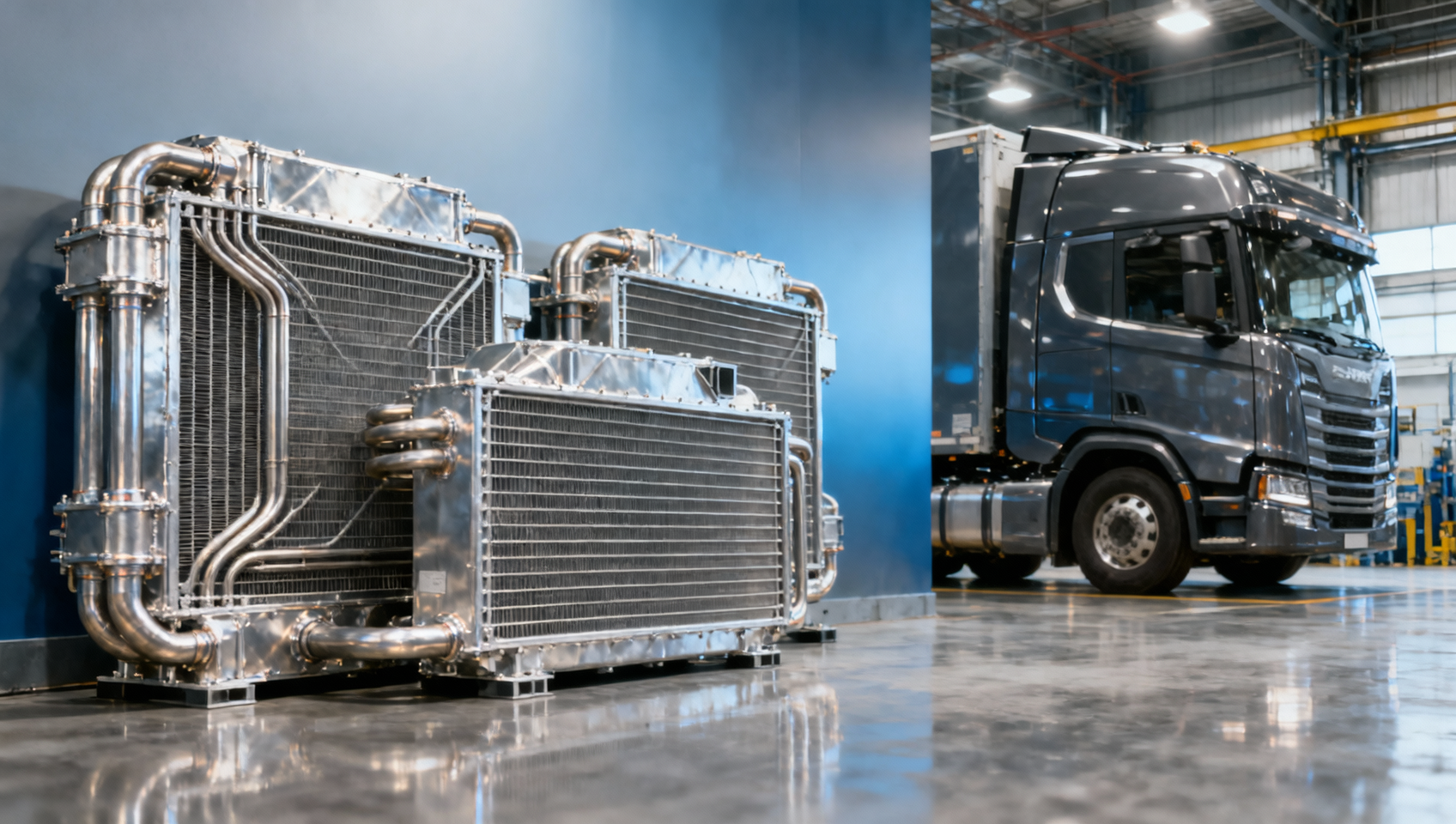
New Energy Vehicle Radiator innovation is accelerating far beyond market expectations, reshaping performance standards for every Vehicle radiator used in modern fleets and industrial applications. From Heavy duty truck radiator upgrades to Condenser, Agriculturaal radiator, and Excavator radiator solutions, buyers and technical evaluators now face faster design shifts, higher efficiency demands, and tougher sourcing decisions—making product reliability, thermal performance, and supplier capability more critical than ever.
For technical reviewers, this shift means older evaluation logic is no longer enough. A radiator is no longer judged only by core size, material thickness, or basic leak resistance. In new energy applications, cooling modules must work with battery systems, power electronics, electric drive assemblies, and compact vehicle packaging. Even in traditional heavy-duty and machinery sectors, heat load profiles are changing because engines, compressors, and hybrid configurations are operating under tighter efficiency targets.
For procurement teams and business evaluators, the challenge is equally practical: how to compare suppliers when product lifecycles are shorter, model revisions are faster, and performance claims sound similar on paper. Delivery stability, aluminum brazing quality, dimensional consistency within common tolerances such as ±0.5 mm to ±1.0 mm, and after-sales responsiveness within 24–72 hours can have more impact than a small unit price difference.
Liaocheng Xinde Auto Parts Co., Ltd., established in 2018 with a registered capital of 5 million RMB and total investment of 50 million RMB, has grown by focusing on radiator-related components for water tank radiators, intercoolers, construction machinery radiators, heavy truck cooling systems, and new energy radiator modules. For decision-makers looking at supplier capability, that specialization matters because cooling performance is increasingly tied to system integration, manufacturing discipline, and application-specific engineering support.
Why radiator design cycles are shortening in new energy and industrial vehicle markets
The first reason is thermal density. New energy vehicles and electrified commercial platforms generate heat in concentrated zones rather than in one conventional engine block. Battery packs, motor controllers, onboard chargers, and DC-DC systems may each require separate or integrated cooling paths. As a result, radiator and heat exchanger layouts are being updated in 12–24 month cycles instead of the slower 3–5 year rhythm seen in many traditional vehicle platforms.
The second reason is packaging pressure. OEMs want lighter assemblies, smaller frontal area, and better airflow efficiency at the same time. This affects fin geometry, tube design, header structure, and mounting interfaces. In heavy-duty truck radiator and construction machinery radiator projects, even a 5% to 10% gain in heat rejection or airflow utilization can influence fuel economy, battery life, or uptime under high-load duty cycles.
The third reason is application overlap. A supplier that once made separate solutions for passenger vehicles, excavators, agricultural machinery, and condensers now sees technologies crossing over between sectors. Anti-vibration reinforcement, corrosion control, brazed aluminum construction, and modular assembly techniques are being shared across product families. That creates opportunity, but it also compresses design expectations for every vehicle radiator manufacturer serving multiple markets.
For procurement teams, this faster design turnover creates a hidden risk: buying to a drawing that becomes outdated before the next sourcing round. For technical assessment teams, the better approach is to verify whether the supplier can support revision control, sample updates, and validation rework within defined windows such as 7–15 days for drawing feedback and 2–4 weeks for prototype preparation.
Key drivers behind faster radiator redesign
- Higher thermal loads from batteries, inverters, and electric drive systems in compact spaces.
- More demanding durability targets in heavy truck, excavator, and agricultural radiator applications.
- Pressure to reduce weight through aluminum structures without sacrificing burst strength or vibration resistance.
- OEM demand for faster validation, often with 2–3 rounds of sample optimization before mass production.
The table below outlines how design expectations differ across key application categories and why sourcing teams should avoid one-size-fits-all radiator evaluation criteria.
The key takeaway is simple: radiator design is changing faster because system-level demands are changing faster. Buyers that still compare products mainly by external dimensions and quoted price are likely to overlook the engineering support and validation speed now required in modern cooling programs.
What technical evaluators should check before approving a radiator supplier
Technical evaluation should start with manufacturing method and material consistency. In many new energy and automotive cooling projects, brazed aluminum radiators remain the preferred solution because they combine low weight, efficient heat transfer, and scalable production. However, brazing quality is not just a process label. Reviewers should ask about fin-to-tube bonding stability, leak test method, pressure resistance, and how dimensional accuracy is controlled from sample stage to volume production.
A practical example can be seen in Radiator for Lynk, model 2069525700, designed for the automotive cooling system of Link 06 / binyue. This aluminum brazing radiator has a single-item specification, a size of 83X14X58 cm, and a 12-month warranty. For reviewers, such details are useful not because one model defines the whole market, but because they show the type of data that should be available during evaluation: vehicle fitment, material, process route, packaging dimension, and warranty terms.
Another critical factor is validation under realistic operating conditions. Thermal stability in demanding driving or industrial use depends on more than peak cooling output. Technical teams should request information on pressure testing, thermal cycling, vibration exposure, and corrosion-related checks. Even when exact OEM protocols differ, a supplier should be able to explain its internal acceptance logic and what failure thresholds trigger design revision.
Liaocheng Xinde Auto Parts focuses on radiators, intercoolers, construction machinery radiators, and new energy radiator modules. That product concentration is relevant because specialized manufacturers usually build process knowledge around recurring issues such as braze voids, tank sealing, mounting fatigue, and airflow mismatch. For engineering teams, supplier specialization can reduce the time needed to move from inquiry to sample confirmation by 1–2 development cycles.
Four technical checkpoints that matter most
1. Thermal performance margin
A radiator should not only meet nominal demand. It should maintain acceptable temperature control during peak ambient conditions, uphill loading, idle-heavy operation, or low-speed airflow conditions. In many projects, a reasonable evaluation target is to preserve stable cooling performance across at least 10% to 15% load variation.
2. Structural durability
Heavy trucks, excavators, and agricultural machines face vibration and shock that can shorten radiator life if brackets, tubes, or headers are poorly matched. Durability review should include mounting design, joint quality, and fatigue resistance under repeated motion.
3. Process repeatability
A supplier may deliver one good prototype and still fail in mass production. Review whether process controls can support repeated output over batches of 100, 500, or more units without unstable brazing, leakage spikes, or fitment deviation.
4. Change response speed
With product updates happening quickly, a supplier should respond to revised drawings, connector changes, or mounting updates in days rather than months. A response cycle of 24–72 hours for technical clarification is often a practical baseline in B2B sourcing.
How procurement and business teams should compare radiator suppliers
Procurement teams often face a familiar tension: low quotation versus long-term supply reliability. In the radiator business, the cheapest offer can become the most expensive if it causes repeated fitment issues, delayed samples, or unstable batch quality. For buyers serving OEMs, distributors, or fleet maintenance channels, a strong supplier is usually one that balances cost, technical clarity, lead time, and communication discipline across the full project lifecycle.
Business evaluators should also examine the supplier’s growth logic. Liaocheng Xinde Auto Parts, founded in 2018, expanded rapidly and has received provincial and municipal honors such as High-tech Enterprise, Civilized and Honest Enterprise, and Trustworthy Unit for Consumers. These recognitions should not replace technical due diligence, but they can support a broader view of operational credibility, especially when combined with product scope, export readiness, and responsiveness during commercial negotiation.
A disciplined sourcing process should include at least 4 evaluation dimensions: product capability, manufacturing consistency, commercial terms, and service support. Under each dimension, buyers should define measurable checkpoints. Examples include sample lead time of 2–4 weeks, warranty clarity of 12 months, packaging protection for long-distance shipment, and communication turnaround within 1 business day for urgent issues.
Buyers should also ask whether the supplier can support different radiator categories under one cooperation framework. Companies dealing with heavy-duty truck radiator, condenser, agricultural radiator, excavator radiator, and new energy modules often reduce sourcing complexity when one manufacturer can cover multiple cooling-related product lines with stable technical documentation and coordinated production planning.
Supplier comparison framework for B2B buyers
The table below provides a practical evaluation structure for procurement, technical, and business teams reviewing radiator manufacturers.
This type of matrix helps internal teams avoid subjective decisions. It also allows decision-makers to compare suppliers on total cooperation value, not just unit price. In radiator sourcing, stable execution over 12 months often matters more than a marginal discount in the initial quotation.
Common sourcing risks in fast-changing radiator programs and how to reduce them
One common mistake is focusing too much on nominal compatibility. A radiator may match the vehicle model or machinery platform on paper, yet still underperform because airflow conditions, fan configuration, or operating temperature assumptions are different from the original design basis. This is especially relevant when sourcing replacement cooling components for regional markets with hotter climates, higher dust levels, or heavier duty cycles.
Another risk is underestimating process variation. In aluminum brazed radiators, small changes in manufacturing conditions can affect joint quality and long-term leak resistance. Buyers should request clarity on inspection steps rather than relying only on broad quality claims. Even a simple 3-stage verification logic—incoming material check, in-process leak control, and final dimensional inspection—gives more confidence than general marketing language.
There is also a commercial risk tied to communication gaps. When drawings are revised, mounting points change, or packaging standards are updated, the cost of misunderstanding can spread across shipping, warranty, and customer complaints. In export radiator business, clear revision coding, confirmation records, and packaging sign-off reduce disputes significantly during the first 1–3 shipments.
Finally, companies should avoid assuming that all suppliers can support both standard catalog products and customized module development. Some are stronger in aftermarket replacement supply, while others are better prepared for engineering adaptation. Before placing larger orders, buyers should verify whether the supplier’s team can handle sample iteration, application review, and volume scheduling without extending lead times beyond acceptable planning windows.
Risk control checklist
- Confirm application environment, including temperature range, load profile, and vibration severity.
- Check whether sample and batch products share the same material and process route.
- Request documented dimensions, packaging details, and warranty terms before shipment.
- Align on technical response time, replacement process, and defect feedback channel.
- Review whether the supplier supports future design changes within a defined development timeline.
A practical sourcing reminder
The most reliable purchasing decision is usually made when engineering, procurement, and business teams review the same project together. In fast-moving new energy radiator programs, internal alignment across 3 functions can prevent many downstream issues that no single department can catch alone.
Implementation, support, and selection trends for the next sourcing cycle
As radiator designs continue to evolve, supplier selection is moving from pure product purchasing to capability-based cooperation. Buyers increasingly prefer manufacturers that can support a repeatable 5-step path: inquiry review, drawing confirmation, sample development, pilot validation, and batch delivery. This matters not only for new energy vehicle radiator projects, but also for heavy truck radiator, condenser, excavator radiator, and agricultural radiator programs that require application-specific refinement.
Support capability is especially important when model adaptation is frequent. A supplier with experience across water tank radiators, intercoolers, construction machinery radiators, and new energy modules is often better prepared to discuss heat rejection logic, structural trade-offs, and packaging constraints early in the project. That reduces the risk of late-stage changes, which can otherwise add 2–6 weeks to sourcing schedules.
Product selection trends also point toward more integrated thinking. Buyers are no longer asking only whether a radiator fits. They are asking whether it can deliver stable thermal performance, long-term durability, smoother installation, and lower service disruption. In a product example such as the second mention of Radiator for Lynk, the stated core function—providing the thermal stability required for demanding driving conditions—and its emphasis on the fusion of European engineering standards with advanced thermal technology reflect the kind of value language B2B buyers increasingly want supported by clear technical facts.
For companies evaluating partners in China, it is also useful to consider operational maturity. A manufacturer with focused investment, export orientation, and recognized local credibility may offer a more stable platform for long-term cooperation than a supplier chosen purely on short-term price. The right partner should be able to discuss lead time, customization, quality checkpoints, and commercial coordination in one coherent process rather than as separate promises.
FAQ for procurement and technical teams
How long does radiator sample development usually take?
For standard or lightly modified products, sample timing is often around 2–4 weeks. If the project involves drawing changes, bracket redesign, or packaging adjustment, the cycle may extend depending on tooling and validation needs.
Which industries should pay extra attention to durability rather than only cooling capacity?
Heavy trucks, excavators, and agricultural machinery usually require stronger attention to vibration resistance, fatigue life, and contamination exposure. In these sectors, heat rejection and structural durability must be evaluated together.
What are the most useful documents to request from a supplier?
At minimum, ask for fitment details, material information, process type, dimensions, packaging data, warranty terms, and a clear confirmation of application scenario. These documents improve internal review and reduce sourcing mistakes.
When should a buyer switch from price comparison to total-value comparison?
As soon as the project includes custom fitment, repeat ordering, export shipment, or any risk of downtime. In these cases, communication speed, batch consistency, and after-sales handling often have greater financial impact than a small price gap.
Radiator design is changing faster because the vehicles and machines around it are changing faster. For technical assessors, procurement managers, business reviewers, and decision-makers, the smarter approach is to evaluate not just the product, but the supplier’s ability to support thermal performance, production consistency, and design adaptation over time.
Liaocheng Xinde Auto Parts brings a focused background in water tank radiators, intercoolers, construction machinery radiators, heavy truck cooling components, and new energy radiator modules. If your team is reviewing a new sourcing project, comparing radiator suppliers, or planning a customized cooling solution, now is the right time to move from general inquiry to structured technical discussion.
Contact us to discuss application details, request product information, or get a tailored radiator solution for your market and operating conditions.