



Excavator Radiator Leaks Often Start with Mounting Stress
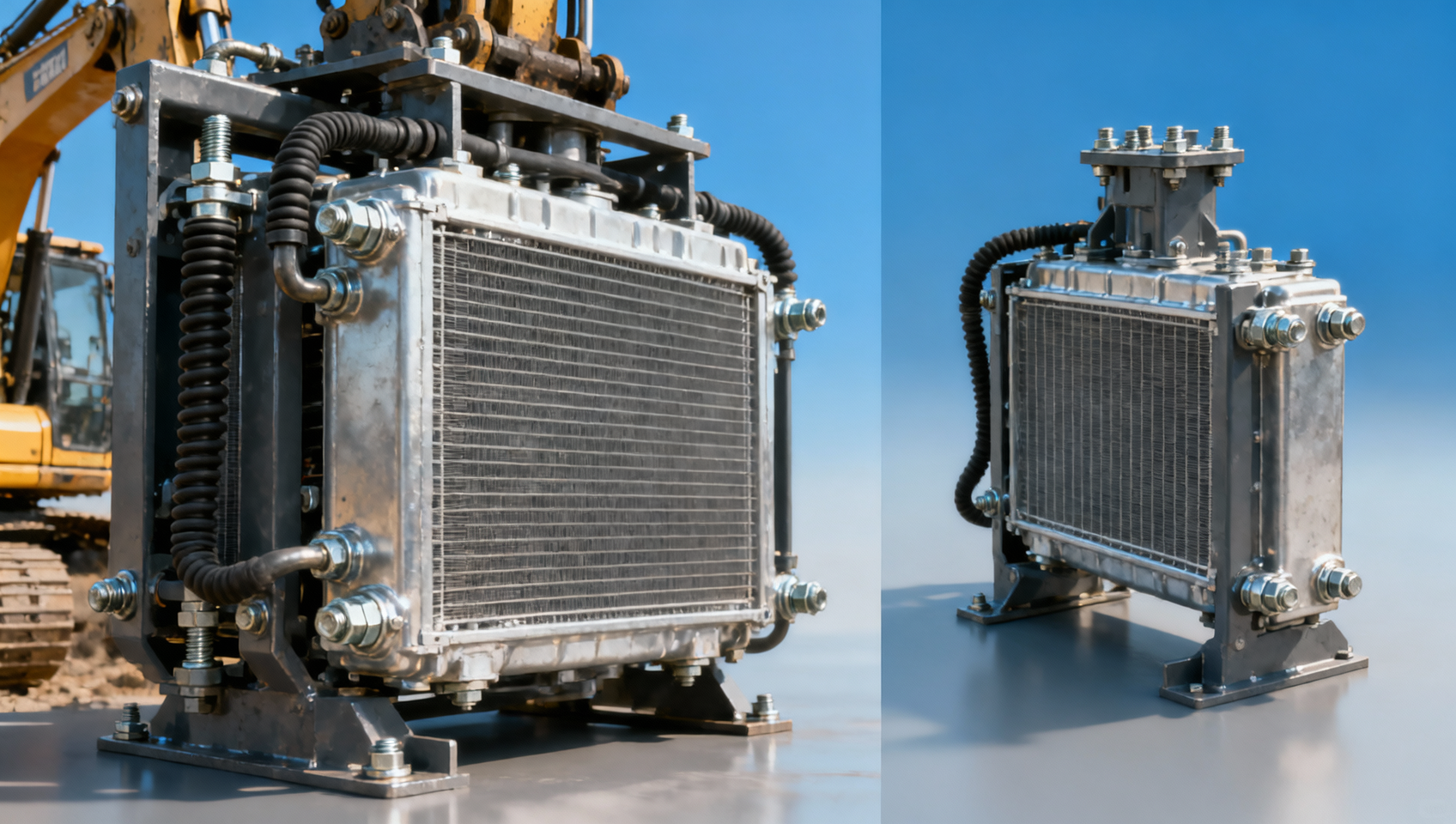
Excavator radiator leaks often do not begin with a bad core or poor coolant quality. In many cases, the real trigger is mounting stress: constant twisting, uneven bracket load, over-tightened fasteners, or vibration transfer from the machine frame. For technical reviewers, procurement teams, commercial evaluators, and decision-makers, this matters because a leak caused by installation stress can look like a product defect, create repeated replacement cycles, and increase downtime, warranty claims, and total ownership cost. The same failure logic also affects a Heavy duty truck radiator, Vehicle radiator, Condenser, Agriculturaal radiator, and New Energy Vehicle Radiator, making it a broader reliability issue rather than a single excavator problem.
Why mounting stress is often the real starting point of radiator leaks
When an excavator radiator starts leaking, many people first suspect tube quality, brazing issues, or external impact. Those are valid possibilities, but in field conditions, mounting stress is one of the most overlooked root causes. A radiator is designed to transfer heat efficiently, not to act as a structural member that absorbs machine distortion. If the mounting system forces the radiator to carry frame movement, engine vibration, or misalignment, stress concentrates at the tank-to-core joints, tube connections, and bracket areas. Over time, microscopic fatigue becomes visible leakage.
This is especially common in construction machinery because excavators operate under shock, uneven terrain, repeated arm movement, and long work cycles. In these conditions, even a high-quality radiator can fail early if the mounting geometry is wrong. For buyers and evaluators, the practical conclusion is simple: repeated leakage is not always a material issue; it is often a system issue.
What technical evaluators and buyers should check first
If your goal is to judge whether a radiator solution is reliable, the inspection should go beyond core thickness and cooling capacity. A more useful evaluation starts with the mounting environment. Key checkpoints include:
- Whether brackets are aligned without forcing the radiator into position
- Whether rubber isolators are present, correctly specified, and not overly compressed
- Whether bolt torque is controlled instead of tightened excessively during assembly
- Whether surrounding structures allow thermal expansion and vibration movement
- Whether hose routing pulls the radiator sideways during engine motion
- Whether the fan shroud, condenser, and radiator pack create additional preload
These checks help distinguish a true radiator manufacturing defect from a mounting-related fatigue failure. For procurement teams, this distinction is critical because replacing the same unit repeatedly without correcting the mounting condition only increases cost and supplier disputes.
How mounting stress creates hidden cost for enterprises
For enterprise decision-makers, the issue is not only leakage itself, but the chain reaction that follows. A radiator leak can stop equipment unexpectedly, delay project schedules, increase coolant loss, raise maintenance labor cost, and create spare parts inventory pressure. If the root cause is misdiagnosed, the business may keep purchasing replacement parts while the real failure source remains unchanged.
From a commercial evaluation perspective, mounting-stress failures create at least four hidden cost layers:
- Downtime cost: idle equipment reduces utilization and project efficiency
- Warranty risk: repeated claims damage supplier relationships and complicate responsibility definition
- Replacement cost: multiple radiator changes raise direct purchasing and labor expenses
- Reputation risk: end users may blame the part brand even when installation conditions are the real cause
This is why experienced buyers increasingly evaluate not only product price, but also structural compatibility, mounting tolerance, and vibration durability.
What a good radiator supplier should help you verify
A capable radiator manufacturer should do more than deliver a part number. They should support the customer in identifying whether the cooling module can survive the actual operating environment. In heavy-duty and machinery applications, strong suppliers pay attention to fitment, bracket interface, vibration isolation, and long-cycle durability.
Liaocheng Xinde Auto Parts Co., Ltd., established in 2018, focuses on the research, production, and global sales of water tank radiators, intercoolers, construction machinery radiators, and related cooling components for heavy trucks and new energy systems. For buyers and technical review teams, this kind of manufacturing focus matters because cooling-system reliability depends on both thermal performance and structural suitability in real operating conditions.
In practical sourcing, a useful supplier discussion should include:
- Application-specific mounting configuration
- Vibration and fatigue considerations
- Material and brazing consistency
- Compatibility with multi-component cooling packs
- Field failure feedback and improvement response speed
This is also relevant beyond excavators. The same discipline applies when evaluating passenger and commercial vehicle cooling products, including solutions such as Radiator for Hongqi, where long-term reliability, quiet efficiency, and fitment accuracy are important for luxury engines, new energy systems, H series sedans, and HS luxury SUVs.
Signs a leak is caused by mounting stress rather than core quality
Knowing the failure pattern can help teams make better warranty, sourcing, and maintenance decisions. Mounting-stress-related leaks often show different symptoms from corrosion or random impact damage. Typical signs include:
- Leaks repeatedly appearing near brackets, header areas, or tank joints
- Cracks developing after a period of vibration rather than immediately after installation
- One side of the radiator showing more stress than the other
- Evidence that bolt holes or brackets were forced into alignment during assembly
- Rubber mounts flattened, missing, hardened, or installed incorrectly
- Leak recurrence even after replacing the radiator with a new unit
By contrast, a pure manufacturing defect may appear as early leakage unrelated to bracket stress concentration, while corrosion-related leakage usually shows broader material degradation. This distinction helps technical and commercial teams avoid inaccurate conclusions.
How to reduce leak risk before it becomes a repeat failure
The most effective way to reduce radiator leak risk is to treat the radiator as part of a dynamic system, not an isolated component. Preventive action should include both design-side and maintenance-side controls:
- Verify bracket alignment before installation
- Use proper rubber isolation and replace aged mounts on schedule
- Follow torque specifications instead of over-tightening by habit
- Check hose flexibility and movement under real working conditions
- Inspect the surrounding frame and fan shroud for interference
- Review whether machine vibration levels exceed expected design conditions
- Track leak position data across equipment fleets to identify patterns
For procurement managers, this means supplier selection should include technical support capability. For maintenance teams, it means installation quality and mounting inspection are as important as choosing the radiator itself. For business decision-makers, it means investing in root-cause control can lower long-term operating cost more effectively than simply buying lower-priced replacements.
What this means for purchasing and supplier evaluation
If excavator radiator leaks often start with mounting stress, then the best purchasing decision is not automatically the lowest-price unit or the highest-specification core on paper. The better decision is the solution that matches the real machine environment and comes with reliable production quality, application understanding, and responsive technical support.
When comparing suppliers, consider these questions:
- Can the supplier discuss mounting stress and vibration failure mechanisms clearly?
- Do they understand construction machinery and heavy-duty operating conditions?
- Can they provide consistent quality for radiators, intercoolers, condensers, and related modules?
- Do they help identify root causes when field leakage happens?
- Is their product range suitable for both conventional and new energy cooling applications?
These factors provide more business value than a simple unit-price comparison. In many cases, a radiator that lasts longer under correct mounting conditions delivers better total-cost performance than a cheaper part with repeated replacement history. This logic also applies when evaluating specialized vehicle products such as OE NO. 1301010HA01, model EQM5, where warranty terms, fitment confidence, and long-term reliability all influence purchasing quality.
Conclusion
Excavator radiator leaks often start with mounting stress because the radiator is exposed to vibration, misalignment, and structural load it was never meant to carry. For technical reviewers, procurement professionals, commercial evaluators, and enterprise leaders, the key takeaway is clear: do not judge radiator failure only by the leaking point. Look at the full mounting system, installation method, vibration isolation, and application match.
Once this root cause is understood, teams can make better warranty decisions, reduce repeat failures, improve supplier evaluation, and control downtime cost more effectively. In real-world cooling system reliability, the most valuable insight is often not just which radiator to buy, but whether the radiator is being allowed to work under the right mechanical conditions.