



What New Excavator Radiator Features Are Showing Up at Trade Fairs?
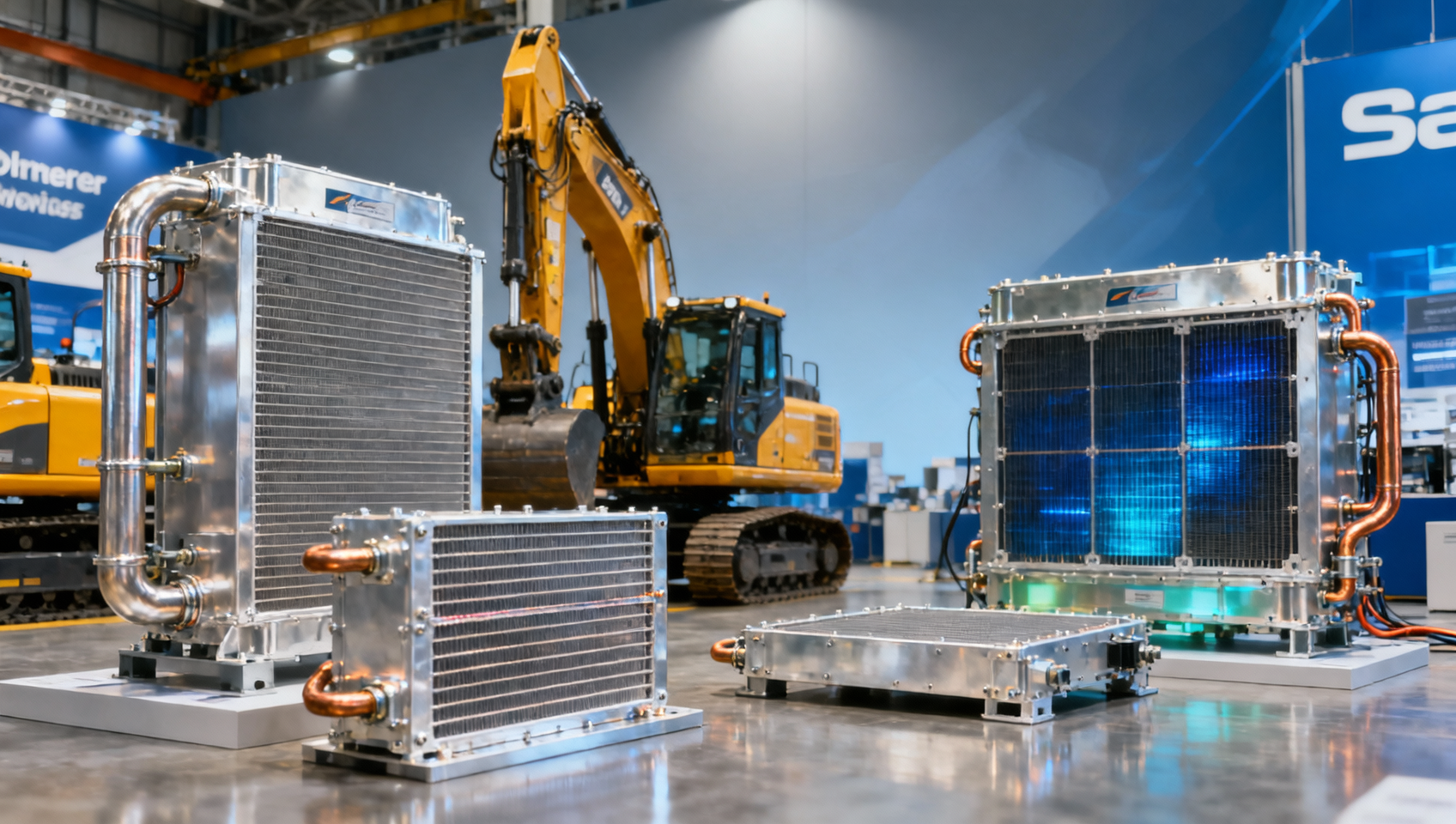
At global trade fairs, the latest Excavator radiator designs are drawing attention for higher cooling efficiency, lightweight structures, and better durability in harsh working conditions. Buyers comparing Heavy duty truck radiator, Vehicle radiator, Condenser, Agriculturaal radiator, and New Energy Vehicle Radiator solutions are also noticing how innovation is reshaping construction machinery cooling systems. This article explores the standout features that matter most to technical evaluators, procurement teams, and business decision-makers.
For B2B buyers in the parts industry, trade fairs are more than display events. They are practical inspection grounds where radiator core design, aluminum quality, brazing consistency, sealing methods, and vibration resistance can be compared side by side in a single day. For technical assessment teams, the focus is performance under heat load. For procurement teams, it is cost stability, lead time, and supplier reliability. For business evaluators and executives, it is whether a cooling solution can reduce total lifecycle risk across multiple equipment categories.
That is why excavator radiator trends now matter beyond construction machinery alone. The same development logic is influencing cooling modules for heavy trucks, buses, intercoolers, and new energy vehicle radiator systems. Manufacturers such as Liaocheng Xinde Auto Parts Co., Ltd., established in 2018 with a registered capital of 5 million RMB and total investment of 50 million RMB, are part of this shift, focusing on research, production, and global sales of water tank radiators, intercoolers, construction machinery radiators, and related thermal management components for heavy-duty and new energy applications.
Key Excavator Radiator Features Buyers Are Seeing First at Trade Fairs
The first visible trend is higher heat exchange efficiency in a more compact package. Many new excavator radiator displays highlight optimized fin geometry, improved tube density, and better airflow management. In practical terms, buyers are increasingly asking whether a radiator can maintain stable coolant temperatures within a working range such as 85°C to 105°C under sustained load, while still fitting into tighter engine compartments.
The second trend is weight reduction without sacrificing durability. Premium-grade aluminum has become a preferred material in many new-generation radiator assemblies because it offers a favorable balance between thermal conductivity and structural weight. Compared with older, heavier cooling structures, lightweight modules can support fuel efficiency goals, easier installation, and lower handling costs during assembly or service.
A third feature appearing more often is reinforcement for harsh-duty operation. Excavators face repeated vibration, dust loading, pressure fluctuations, and thermal cycling. Trade fair samples now commonly show thicker side plates, stronger mounting zones, anti-vibration bracket designs, and more controlled brazing seams. These details matter because radiator failure in construction equipment often begins at joints, tanks, or vibration-stressed corners rather than in the core alone.
Another change is wider platform compatibility. Procurement managers increasingly prefer suppliers that can support not just excavator radiator programs but adjacent categories such as heavy duty truck radiator modules, vehicle radiator assemblies, condensers, and agricultural radiator systems. This reduces supplier fragmentation and shortens sourcing cycles from 4 to 8 weeks in multi-project procurement environments.
What technical visitors usually inspect on-site
- Core thickness options, often ranging from 26 mm to 68 mm depending on equipment size and airflow demand.
- Fin and tube joining consistency, especially whether brazed areas appear uniform across the full core surface.
- Tank material and sealing method suitability for pressure and vibration conditions.
- Surface finish quality, including corrosion-resistance treatment for high-humidity or dusty job sites.
- Mounting point robustness, because installation stress can shorten service life if bracket design is weak.
These visible product details often reveal manufacturing maturity more clearly than a brochure. Companies that specialize in radiators and intercoolers for construction machinery and heavy vehicles are typically better prepared to discuss pressure test routines, brazing control, batch consistency, and aftermarket support in measurable terms.
How Performance Expectations Are Changing Across Equipment Categories
Trade fairs also show that excavator radiator innovation is no longer isolated. Buyers are evaluating thermal solutions across mixed fleets that may include excavators, trucks, buses, agricultural machines, and electric platforms. As a result, performance discussions increasingly center on total thermal management rather than a single part number. A radiator supplier now needs to explain how design logic changes between diesel engines, hybrid systems, and battery-related cooling modules.
For traditional diesel construction machinery, the priority is high-load heat rejection during long operating cycles of 6 to 12 hours per day. For new energy platforms, temperature stability and packaging integration become just as important as raw cooling capacity. That cross-industry trend is why many decision-makers also pay attention to bus and commercial vehicle cooling systems. In public transportation, for example, thermal management directly affects uptime and maintenance intervals.
This broader perspective is where product examples outside excavators can help buyers assess a supplier’s engineering depth. A relevant case is Radiator for Ankai, designed for public transportation applications. Built with premium-grade aluminum and advanced brazing technology, it is intended to provide optimal thermal management for both traditional diesel and new energy electric buses while helping minimize downtime and maximize engine life. Even though the end-use differs from excavators, the same core purchasing concerns apply: heat efficiency, material consistency, and long service durability.
Comparison of what buyers now expect by application
The table below shows how thermal management priorities are shifting across major equipment and vehicle categories often compared at trade fairs.
The key takeaway is that buyers increasingly favor suppliers that understand more than one cooling scenario. A factory serving construction machinery, heavy trucks, intercoolers, and new energy radiator modules is often better positioned to support platform upgrades, mixed procurement plans, and future product development.
Why this matters for sourcing strategy
If one supplier can support 3 to 5 related product lines with similar quality control logic, buyers can reduce qualification effort, simplify communication, and improve spare-parts planning. This is especially useful for distributors, OEM support teams, and regional importers managing diverse thermal component portfolios.
Material, Structure, and Manufacturing Details That Separate Strong Suppliers
At trade fairs, appearance alone is not enough. Experienced technical evaluators quickly move from product shape to process discipline. In excavator radiator manufacturing, the biggest quality differences often come from aluminum grade stability, brazing quality, cleanliness control before assembly, and dimensional precision at the mounting interfaces. Even a well-designed core can fail early if process control is inconsistent.
Advanced brazing technology remains one of the most important indicators. Uniform brazing improves joint integrity, reduces the risk of micro-leakage, and supports consistent thermal transfer across the core. Buyers often ask whether the supplier performs pressure testing, leak checks, and visual inspection on each batch, and whether tolerance control is maintained within practical limits such as ±0.5 mm to ±1.0 mm on key interfaces.
Material selection is equally important. Premium-grade aluminum is favored not only for thermal performance but also for corrosion resistance and mass efficiency. In both excavator and bus cooling systems, it can help lower structural weight while maintaining acceptable strength under repeated temperature cycling. The value is not theoretical: fewer stress-related failures can directly reduce service interruptions and replacement frequency.
Manufacturers with dedicated experience in water tank radiators, intercoolers, construction machinery radiators, and heavy-vehicle cooling components are often more prepared to explain how they adapt structure according to real operating conditions. That includes dust-heavy sites, stop-start city operation, and high ambient summer temperatures above 40°C.
Key manufacturing checkpoints buyers should verify
- Raw material consistency: Ask whether aluminum input standards are stable across batches.
- Brazing quality: Check for visible uniformity, clean joints, and controlled deformation after processing.
- Pressure verification: Confirm routine leak or pressure tests before shipment.
- Dimensional control: Review drawings or inspection routines for hole position, bracket alignment, and core fit.
- Packaging and export readiness: Good products can still arrive damaged if packaging is weak for long-distance shipping.
For commercial transport applications, the same logic can be seen again in products like Radiator for Ankai, where advanced brazing technology and premium-grade aluminum support thermal management goals for diesel and electric buses. This kind of product example helps buyers judge whether a supplier’s process capability extends beyond one niche category.
Procurement Criteria: How to Compare Exhibitors Beyond Product Display
Procurement teams often face a common problem at trade fairs: many radiator samples look similar, but supply outcomes are very different. A strong sourcing decision should combine technical fit, manufacturing capacity, communication efficiency, and delivery reliability. In most B2B parts programs, the supplier that answers questions clearly on day one will also be easier to manage during sampling, revision, and repeat orders.
Lead time is one of the first operational filters. For standard radiator programs, sample preparation may take around 7 to 20 days, while mass delivery can range from 20 to 45 days depending on order size, tooling status, and export schedule. Buyers should ask not only for best-case timing but also for realistic timing under peak season conditions. A quotation without production rhythm detail is incomplete.
Another point is engineering responsiveness. If a buyer needs drawing confirmation, bracket adjustment, or cooling capacity refinement, how quickly can the supplier provide feedback? In practical sourcing, a 24 to 72 hour response window for technical clarification is far more useful than general claims about service. Procurement teams should also confirm whether the supplier can support mixed orders across radiators, intercoolers, and related components.
A practical procurement comparison framework
The following table can help sourcing teams compare exhibitors in a structured way after a trade fair visit.
This type of comparison turns trade fair impressions into purchasing decisions. It also helps business evaluators explain supplier selection logic internally, especially when the final choice depends on long-term operational fit rather than only unit price.
Common procurement mistakes
- Choosing by appearance alone without checking process consistency.
- Comparing price without comparing packaging, warranty handling, or sampling support.
- Ignoring whether the supplier can support future model extensions.
- Assuming all aluminum radiators offer the same durability in vibration-heavy applications.
What Decision-Makers Should Ask Before Moving from Trade Fair Contact to Order
For enterprise decision-makers, the final question is not simply which excavator radiator looks advanced. The real question is which supplier can reliably convert displayed capability into a repeatable supply relationship. That means checking business fundamentals as well as technical details: company development stage, investment strength, production focus, export communication ability, and credibility built over time.
Liaocheng Xinde Auto Parts Co., Ltd. offers a relevant example of a manufacturer positioned around this broader value proposition. Since its establishment in 2018, the company has focused on water tank radiators, intercoolers, construction machinery radiators, heavy truck components, and new energy radiator modules. With 5 million RMB in registered capital and 50 million RMB in total investment, its business profile aligns with buyers seeking a specialized manufacturer rather than a general trader. Its provincial and municipal recognitions, including High-tech Enterprise and Trustworthy Unit for Consumers, can also matter to buyers who assess supplier stability as part of risk control.
Before placing trial orders, decision-makers should ask for a clear validation path. In most cases, a practical sequence includes 3 stages: drawing and requirement review, sample confirmation, and batch delivery assessment. Each stage should have measurable checkpoints, such as dimensional verification, leakage testing, and packaging acceptance. This reduces internal disagreement between engineering, purchasing, and management.
Suggested pre-order checklist
- Confirm application details, including equipment model, operating environment, and cooling load expectations.
- Request technical drawings or sample photos for interface and mounting review.
- Clarify sample timing, mass production timing, and packaging method for export transport.
- Verify whether the supplier supports related product categories for future expansion.
- Align on after-sales communication process in case of installation or batch issues.
FAQ for buyers after a trade fair visit
Many procurement teams leave exhibitions with dozens of contacts but limited clarity on who should move to the next stage. The following questions help narrow the list.
How do I know whether a displayed excavator radiator is suitable for my market?
Start with operating conditions. If your market includes high dust, long idle periods, or summer temperatures near 40°C, ask specifically about vibration resistance, anti-clogging design, and service accessibility. A visually attractive radiator is not enough if it cannot handle real field conditions.
What is a reasonable sample and validation cycle?
For standard products, 1 to 3 weeks is common for sample preparation. Validation may take another 1 to 2 weeks depending on test requirements and shipping distance. More complex customized projects can take longer, especially when tooling or bracket revision is involved.
Which three indicators should procurement prioritize first?
A useful starting point is technical matching, process consistency, and delivery reliability. Price should come after those three, because a low-cost radiator with unstable leakage performance or delayed delivery can create a much higher total cost.
Trade fairs reveal where the excavator radiator market is heading: lighter aluminum structures, stronger brazed assemblies, better vibration durability, and broader thermal management capability across diesel and new energy platforms. For technical evaluators, the priority is measurable cooling and structural reliability. For procurement teams, it is lead time, process consistency, and supplier range. For executives, it is long-term supply security and scalable cooperation.
If you are comparing construction machinery radiators, heavy-duty truck radiator solutions, vehicle radiator assemblies, condensers, agricultural radiators, or new energy radiator modules, a specialized manufacturing partner with clear product focus can help reduce sourcing risk and improve project efficiency. To discuss specifications, request product details, or obtain a tailored cooling solution for your market, contact us today and explore the right next step for your procurement plan.