



Agricultural Radiator Trends to Watch at 2026 Industry Exhibitions
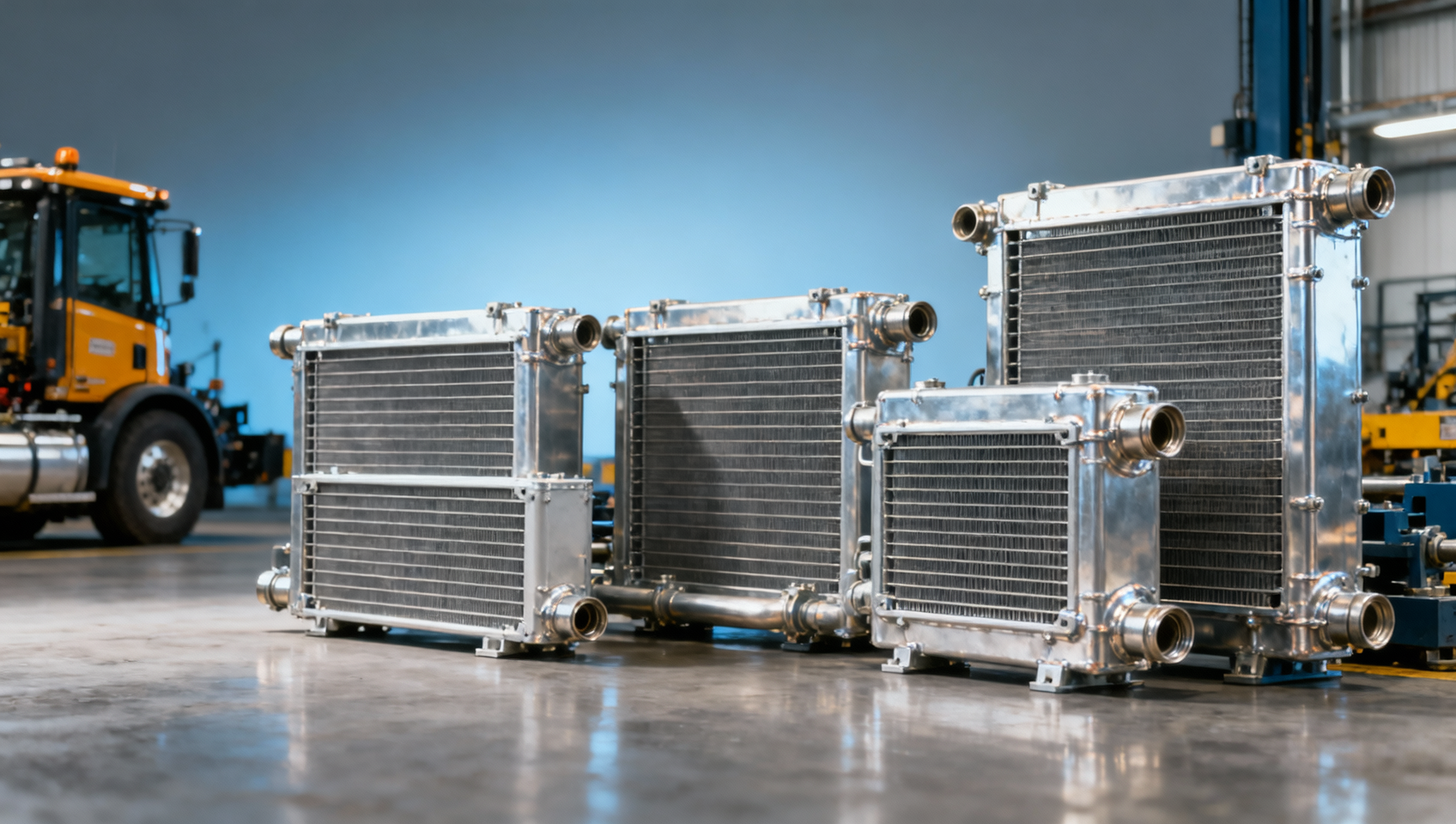
At 2026 industry exhibitions, buyers and technical evaluators will closely track how Heavy duty truck radiator, Vehicle radiator, Condenser, Agriculturaal radiator, Excavator radiator, and New Energy Vehicle Radiator technologies are evolving. From stronger thermal performance to lightweight materials and application-specific designs, these trends will shape sourcing decisions, product comparisons, and long-term cooperation opportunities across the agricultural and heavy equipment parts market.
For technical reviewers, procurement teams, business evaluators, and corporate decision-makers, exhibitions are no longer just product display events. They have become fast-moving checkpoints for comparing heat exchange efficiency, structural durability, material consistency, manufacturing capability, and supplier responsiveness. In the agricultural radiator segment especially, buyers are increasingly focused on whether a supplier can deliver stable cooling performance under dust, vibration, long-hour operation, and changing seasonal loads.
Liaocheng Xinde Auto Parts Co., Ltd., established in 2018 with a registered capital of 5 million RMB and a total investment of 50 million RMB, has built its business around the research, production, and global sales of water tank radiators, intercoolers, construction machinery radiators, heavy truck cooling parts, and new energy radiator modules. For exhibition visitors evaluating future partners, this kind of manufacturing background matters because rapid development, product specialization, and recognized enterprise credibility often indicate better support for long-term sourcing and technical cooperation.
Why Agricultural Radiators Will Draw More Attention in 2026
Agricultural equipment is being pushed harder than before. Modern tractors, harvesters, sprayers, and supporting field machinery are expected to operate for 8 to 14 hours per day during peak seasons, often under high ambient temperatures, dense dust conditions, and frequent load changes. Under these conditions, the agricultural radiator is no longer viewed as a basic commodity part. It has become a performance-critical component that directly affects uptime, engine protection, and maintenance cost.
At 2026 industry exhibitions, buyers will pay attention to how manufacturers improve heat dissipation without increasing excessive weight or installation complexity. The most discussed questions will likely include fin density optimization, tube structure reliability, aluminum brazing consistency, corrosion resistance, and fitment accuracy. For procurement teams, even a dimensional deviation of ±1.0 mm can create installation issues or rework costs in large-volume orders.
Technical evaluators will also compare whether a radiator has been designed for actual agricultural duty cycles rather than simply adapted from general vehicle platforms. A field machine working at low speed with heavy torque demand creates a different cooling profile than a highway truck. That is why exhibition comparisons in 2026 will increasingly focus on application-specific engineering rather than generic specification sheets alone.
For business decision-makers, the radiator category matters because the cost of failure is much higher than the cost of the part itself. A cooling issue during a narrow harvest window can lead to equipment downtime, labor disruption, delayed crop handling, and avoidable service calls. This is one reason why more buyers are moving from short-term price comparison to total lifecycle evaluation over 12 to 24 months.
Key reasons exhibitions matter more this cycle
- New agricultural engines and hybrid platforms are creating more diverse thermal management requirements.
- Global buyers want to compare 3 to 5 suppliers in one place to shorten evaluation cycles.
- After-sales risk, not just unit price, is becoming a central purchasing factor.
- Heavy equipment and agricultural cooling technologies are showing more material and process overlap.
The table below summarizes the practical factors that are expected to influence exhibition discussions around agricultural radiator procurement in 2026.
The main conclusion is clear: the 2026 exhibition conversation will not stop at visible product appearance. Buyers will connect thermal design, manufacturability, and supply assurance into one broader purchasing decision. Suppliers that can explain all 4 dimensions clearly will stand out faster.
The Most Important Design Trends Buyers Should Track
One major trend is the shift toward lighter yet more durable aluminum radiator structures. In agricultural and heavy-duty cooling systems, aluminum remains attractive because it supports effective heat transfer while helping reduce overall assembly weight. However, buyers in 2026 will look beyond the basic claim of “aluminum construction” and examine whether the brazing quality, internal flow path, and header strength can withstand vibration, pressure fluctuation, and repeated thermal cycling over hundreds of operating hours.
A second trend is application-specific core design. Not every agricultural machine needs the same fin geometry or coolant flow arrangement. Radiators for low-speed, high-load operation often require different optimization compared with equipment used in transport-linked farm logistics. For this reason, product engineering with targeted airflow and debris resistance will gain more attention than broad compatibility claims.
A third trend is modular thermal integration. Many exhibition visitors will compare how radiator suppliers handle combined cooling requirements involving condensers, intercoolers, oil coolers, or new energy thermal modules. Even in conventional agricultural machinery, compact packaging and service accessibility are becoming more important because engine compartments are more crowded than they were 5 to 10 years ago.
Another visible trend will be manufacturing consistency. Buyers sourcing for repeat orders of 200, 500, or 1,000 units need stable process control, not one good sample. This is where supplier capability in tooling repeatability, leak testing, brazing process stability, and inspection records can directly influence qualification decisions.
Technical shifts likely to influence sourcing decisions
1. Stronger focus on thermal stability under variable load
Field equipment rarely operates at one steady load point. Radiators that maintain cooling efficiency across low-speed and high-torque conditions will be preferred, especially where ambient temperatures can fluctuate from 10°C to above 40°C during the same operating season.
2. Better debris tolerance and easier cleaning access
Agricultural radiators are exposed to chaff, dust, mud, and organic residue. Designs that improve airflow retention and simplify periodic cleaning can reduce maintenance interruptions. In practice, maintenance intervals may tighten from every 250 hours to every 100 hours in dusty conditions, so accessibility matters.
3. Higher expectations for cross-segment engineering
Manufacturers active in heavy truck radiators, construction machinery radiators, and new energy cooling modules can often transfer process know-how across categories. That matters because agricultural buyers increasingly prefer suppliers with broader thermal management experience rather than narrow single-line assembly capacity.
A useful example of how modern radiator development is moving toward integrated thermal performance can also be seen in passenger vehicle cooling applications. Products such as Radiator for Lynk, model 2069525700, use aluminum construction and a brazing radiator structure for the automotive cooling system, with a 12-month warranty and dimensions of 83X14X58 cm. While the application is different, the emphasis on thermal stability, precision manufacturing, and compact packaging reflects the same engineering direction buyers are evaluating across commercial, agricultural, and equipment radiator categories.
How Procurement and Technical Teams Should Evaluate Exhibition Suppliers
For procurement teams, exhibition evaluation should begin with a structured comparison framework. Too many buyers still rely on catalog appearance, informal conversation, or an isolated sample. A better approach is to combine 4 dimensions: technical fit, process reliability, commercial feasibility, and service responsiveness. This approach reduces the risk of choosing a supplier that looks strong in one area but fails in volume delivery.
Technical evaluators should request clear data on material type, joining process, leak testing method, dimensional tolerance approach, and application matching. Even when exact proprietary process values are not shared, a capable supplier should still explain how the product is verified before shipment and what common failure modes are being controlled. Typical checkpoints include pressure resistance, joint integrity, vibration endurance, and fitment inspection.
Business evaluators should then connect these technical details with commercial realities. Ask about sample lead time, normal production lead time, response cycle for quality claims, and packaging suitability for export or multi-point distribution. In many radiator sourcing projects, a sample may be ready in 7 to 15 days, while repeat production may require 20 to 40 days depending on order complexity and material scheduling.
Decision-makers should finally assess whether the supplier can support product evolution over time. This is especially important when agricultural equipment platforms change every 2 to 3 model cycles. A supplier with in-house development orientation is usually more valuable than one focused only on fixed-volume replication.
Recommended exhibition evaluation checklist
- Confirm whether the radiator is designed for actual agricultural duty conditions or adapted from another vehicle category.
- Review material and core construction details, including aluminum grade usage and brazing process consistency.
- Ask for common testing items such as leak inspection, pressure verification, and dimensional checks.
- Compare response speed for drawing review, sample confirmation, and corrective action handling.
- Assess whether the supplier can support future variants, not only the current part number.
The comparison table below can help teams standardize supplier scoring during or after exhibition meetings.
The benefit of using a structured table is that it turns exhibition impressions into measurable sourcing decisions. It also helps cross-functional teams align faster after the event, especially when technical and commercial priorities are not identical.
Common Risks, Misjudgments, and What Buyers Should Avoid
One common mistake is assuming that a radiator performing well in a vehicle or general industrial application will automatically perform well in an agricultural machine. In reality, field equipment often faces a very different mix of thermal load, contamination exposure, idle-to-load transitions, and maintenance behavior. A product can look similar externally while having meaningful differences in internal flow performance and durability margins.
Another risk is overvaluing price reductions of 3% to 8% while underestimating the downstream cost of poor fitment, insufficient packaging protection, or unstable brazing quality. A radiator failure that causes unplanned downtime, warranty handling, or emergency freight can erase the savings from a lower quotation in a single incident. This is particularly relevant for distributors and OEM-supporting buyers operating during seasonal peaks.
Some buyers also fail to verify whether the supplier has the organizational capability to support communication after shipment. In B2B radiator procurement, the real test often begins after the first batch leaves the factory. Response discipline within 24 to 48 hours, corrective action speed, and technical clarity are essential when any issue appears in the field.
There is also a documentation risk. If installation references, part confirmation records, packaging identification, and shipment details are weak, the buyer may face confusion in inventory control or replacement matching. This becomes more serious when handling multiple models across agricultural, heavy truck, and construction machinery radiator lines.
Frequent sourcing errors at exhibitions
- Choosing based on booth presentation without comparing technical verification depth.
- Approving a sample before confirming batch consistency and repeat production conditions.
- Ignoring application environment factors such as dust load, vibration, and maintenance frequency.
- Assuming all aluminum radiators deliver the same durability and cooling behavior.
A practical risk-control approach
Buyers can reduce sourcing risk through a 3-stage method: initial exhibition screening, sample validation, and pilot order review. Stage 1 narrows the supplier list to 2 or 3 qualified options. Stage 2 checks performance, fitment, and packaging details. Stage 3 confirms whether delivery, communication, and defect handling remain stable under real order conditions. This sequence is more reliable than moving directly from exhibition contact to bulk order placement.
For example, when a supplier presents advanced thermal technology or strong cross-industry engineering, buyers should still validate how those strengths translate into practical use. A product line such as the Radiator for Lynk highlights a combination of European-oriented engineering standards and thermal performance focus for demanding driving conditions, but experienced buyers know that every application must still be assessed against its own installation space, operating load, and service expectations.
What Strong Suppliers Will Demonstrate at 2026 Exhibitions
In 2026, strong radiator suppliers will not rely only on displaying finished products. They will demonstrate how design logic, production capability, and export-oriented service come together. For buyers in the agricultural and heavy equipment parts market, this combination is often more important than any single feature because long-term cooperation depends on consistency across the full supply cycle.
Suppliers with focused manufacturing backgrounds in water tank radiators, intercoolers, construction machinery radiators, heavy-duty truck cooling parts, and new energy radiator modules are likely to attract attention because this range shows broader thermal system understanding. Liaocheng Xinde Auto Parts Co., Ltd. has developed in this direction since 2018, building around R&D, production, and global sales while serving multiple cooling-related product categories. For exhibition visitors, that breadth signals stronger ability to support product matching and technical communication across adjacent segments.
A capable supplier should also show evidence of process discipline. That may include clear product drawings, sample confirmation flow, packaging logic, and a realistic timeline from inquiry to shipment. In many B2B parts projects, buyers want to know not just “Can you make it?” but “Can you maintain the same quality in the next 6 to 12 months?” This is especially true for repeat procurement and private-label distribution channels.
Another sign of supplier strength is communication maturity. Technical reviewers need direct answers, procurement teams need timing and documentation clarity, and executives need confidence in the partner’s long-term reliability. Suppliers that can address these 3 layers in one discussion will be better positioned to convert exhibition traffic into serious cooperation.
What buyers should expect from a reliable partner
The table shows that supplier value is cumulative. Engineering, process control, service ability, and business trust all contribute to purchasing success. This is why exhibitions remain important: they allow buyers to assess all 4 areas in a short but focused time window.
FAQ for exhibition visitors and sourcing teams
How should buyers compare agricultural radiator suppliers quickly at an exhibition?
Use a shortlist of 5 criteria: application fit, material structure, testing method, lead time range, and after-sales response. This allows a first-pass comparison in 15 to 20 minutes per supplier and helps eliminate weak options early.
What lead times are reasonable for samples and production?
For many radiator projects, a sample cycle of 7 to 15 days and a production lead time of 20 to 40 days is common, although complexity, tooling needs, and order size will affect the exact range.
Which technical details matter most for agricultural applications?
Cooling stability, anti-vibration design, debris tolerance, cleaning accessibility, and dimensional accuracy are usually more important than broad generic claims. Buyers should also assess whether the design matches seasonal heavy-duty usage.
Why are heavy truck and construction radiator suppliers relevant to agricultural buyers?
Because these suppliers often have experience with high-load thermal systems, brazed aluminum structures, and demanding service conditions. That cross-segment knowledge can improve product reliability and development support in agricultural projects.
The radiator trends to watch at 2026 industry exhibitions are clear: stronger thermal stability, lighter and more durable materials, application-specific engineering, and supplier capability that extends beyond the part itself. For technical evaluators, the goal is to verify real performance logic. For procurement teams, it is to balance cost, consistency, and delivery. For business leaders, it is to identify partners that can support future growth across agricultural, heavy truck, construction machinery, and new energy cooling applications.
Liaocheng Xinde Auto Parts Co., Ltd. operates in exactly this performance-driven cooling parts space, with ongoing focus on radiators, intercoolers, construction machinery radiators, and related thermal management components. If you are reviewing suppliers for upcoming sourcing plans, now is the right time to compare capabilities, request technical details, and align product strategy with long-term market needs.
To discuss agricultural radiator requirements, heavy-duty cooling parts, or customized thermal solutions in more detail, contact us now to get product information, evaluate fitment options, and explore a practical cooperation plan for your next project.