



New Energy Vehicle Radiator Debuts at Exhibitions Signal What Next
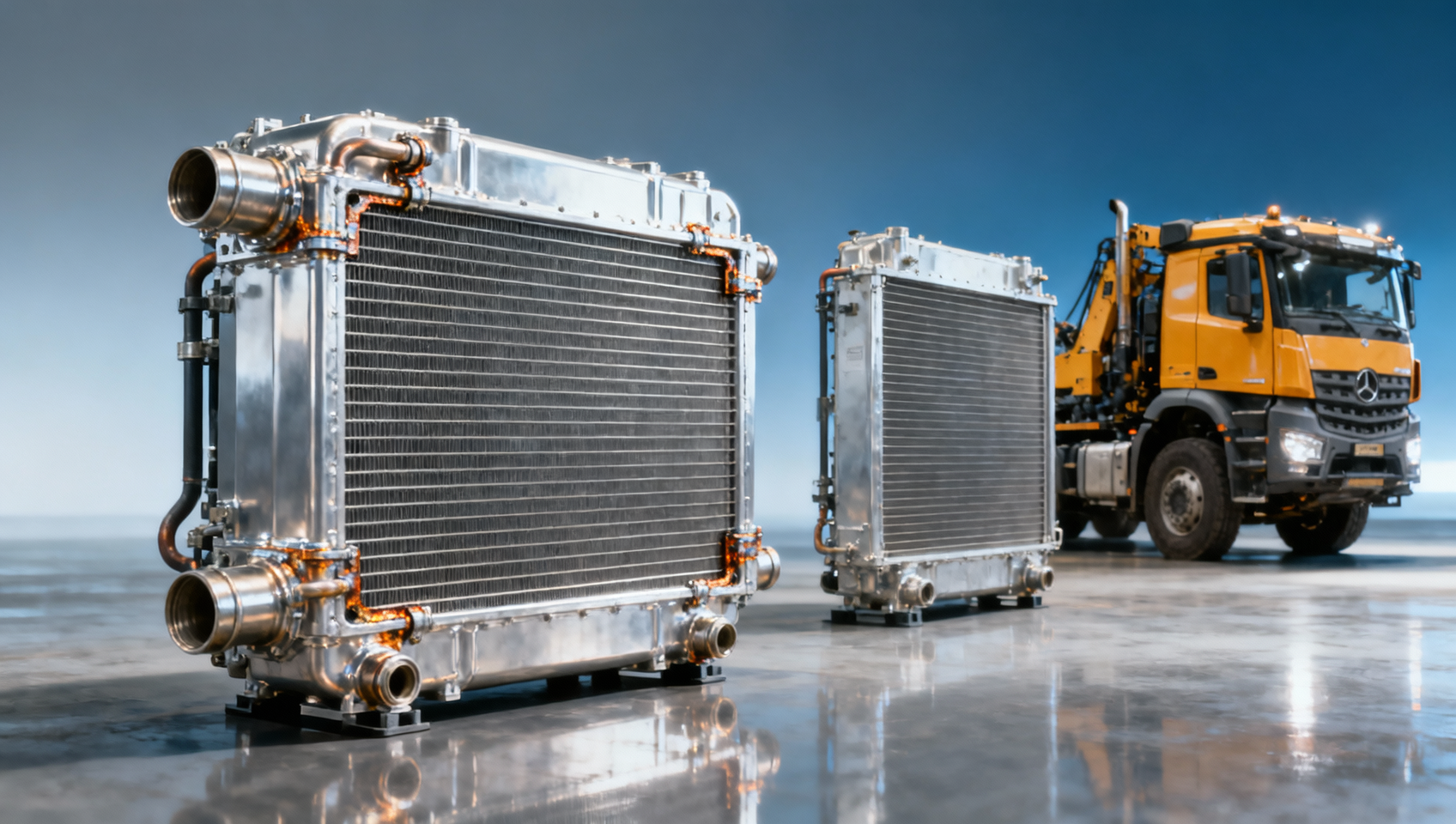
As New Energy Vehicle Radiator solutions debut at major exhibitions, buyers and technical evaluators are asking what comes next for thermal management in commercial and industrial applications. From heavy duty truck radiator and vehicle radiator systems to condenser, agricultural radiator, and excavator radiator products, the market is moving toward higher efficiency, durability, and integrated performance—creating new opportunities for global procurement and strategic sourcing.
The short answer is this: exhibition launches are not just marketing events. They usually signal that radiator suppliers are accelerating toward higher heat exchange efficiency, lighter structures, better corrosion resistance, smarter module integration, and faster platform adaptation for both conventional and new energy vehicles. For procurement teams, technical reviewers, and business decision-makers, the real question is not whether new energy radiator products are gaining attention, but which design directions are mature enough for sourcing, validation, and long-term supply cooperation.
What Do New Energy Vehicle Radiator Debuts at Exhibitions Really Signal?
For professional buyers and evaluators, exhibition releases often reveal where the market is heading 12 to 36 months ahead. In the radiator sector, a new product debut usually points to several practical changes in demand and supply.
First, thermal management is becoming more system-oriented. Buyers are no longer evaluating a standalone radiator only by dimensions and basic cooling capacity. They increasingly assess how a radiator works with intercoolers, condensers, batteries, motors, inverters, or construction machinery cooling loops as an integrated module.
Second, lightweight materials and optimized brazing structures are becoming standard expectations. Aluminum remains a key choice because it offers a strong balance between thermal conductivity, weight control, manufacturability, and cost. This matters even more in new energy applications, where every kilogram and every watt of thermal efficiency can affect range, reliability, or operating cost.
Third, durability is moving to the center of supplier evaluation. Exhibition samples may look advanced, but serious buyers want proof of resistance to vibration, thermal cycling, pressure fluctuation, corrosion, and long service intervals in harsh working conditions. This is especially true for heavy-duty trucks, agricultural equipment, and excavators, where thermal load and environmental stress are high.
In other words, when a new energy vehicle radiator debuts publicly, it often signals that the industry is shifting from basic cooling components to higher-value thermal management solutions with stronger engineering requirements.
What Are Technical Evaluators and Procurement Teams Most Concerned About?
For the target audience in this market, the decision process is rarely driven by appearance or trend language. It is driven by validation risk, supply stability, fit-for-use performance, and long-term cost.
Technical assessment personnel usually focus on:
- Heat dissipation performance under real operating loads
- Material quality and brazing consistency
- Pressure resistance and leak prevention
- Compatibility with vehicle or equipment platform requirements
- Durability in high-vibration, dusty, wet, or corrosive environments
- Ease of installation and maintenance
Procurement managers are more likely to ask:
- Can the supplier deliver consistent quality at scale?
- Is the quotation competitive without hidden lifecycle costs?
- How mature is the export and after-sales process?
- Can the manufacturer support customization for multiple models?
- What is the warranty policy and response speed?
Business evaluators and enterprise decision-makers usually look at broader factors:
- Whether the supplier has long-term manufacturing capability rather than only trade capability
- Whether the product roadmap aligns with future market demand in heavy trucks, machinery, and new energy systems
- Whether the supplier can support global expansion and stable sourcing strategy
- Whether honors, growth record, and technical positioning reflect real competitiveness
This is why exhibition visibility alone is never enough. Buyers need evidence that a product launch reflects manufacturing depth and not just promotional packaging.
How Should Buyers Judge Whether a New Radiator Product Has Real Commercial Value?
The best way to assess a newly presented radiator product is to move through four practical layers: performance, manufacturability, application fit, and supply reliability.
1. Performance under application-specific thermal loads
A radiator that performs well in one passenger vehicle platform may not be suitable for heavy trucks, agricultural machinery, or industrial equipment. Buyers should request testing data tied to actual operating conditions, including ambient temperature range, coolant flow conditions, pressure parameters, and heat rejection targets.
2. Manufacturing process stability
In this sector, process quality matters as much as design quality. Aluminum brazing quality, fin structure consistency, header integrity, and sealing reliability all influence long-term field performance. A capable manufacturer should be able to explain process controls clearly rather than relying on generic claims.
3. Platform compatibility and customization flexibility
Many buyers need radiator solutions adapted to specific vehicle models or machinery layouts. A strong supplier should be able to support dimensional adaptation, connection interface changes, and module integration according to customer requirements.
4. Supply chain and after-sales confidence
Even the best radiator design creates risk if supply is unstable. Lead time, quality traceability, packaging standards, export readiness, and warranty support are all part of the actual commercial value.
A useful example of how product-level details support evaluation is Radiator for Lynk, designed for the automotive cooling system. With an aluminum structure, brazing radiator type, 12-month warranty, and application for Link 06 / binyue, this kind of model-specific solution reflects what many buyers now expect: thermal stability for demanding driving conditions combined with engineering practicality rather than generic one-size-fits-all supply.
What Technology Trends Are Likely to Shape the Next Stage of the Radiator Market?
The next stage is likely to be defined by practical engineering upgrades rather than radical reinvention. Several trends are already becoming visible.
Integrated thermal modules
More OEMs and equipment manufacturers want compact systems that combine radiator, condenser, intercooler, or other cooling functions in ways that save space and improve overall thermal coordination. This reduces assembly complexity and can improve system efficiency.
Higher efficiency in smaller packaging spaces
As equipment platforms become more compact, the challenge is to achieve stronger cooling performance in limited space. This pushes suppliers toward improved fin design, better flow path optimization, and tighter process tolerances.
Stronger adaptation for electrified and hybrid platforms
New energy and hybrid applications require increasingly precise thermal control for batteries, power electronics, and electric drive components. While the architecture differs from conventional engine cooling, the market still depends heavily on radiator and heat exchange expertise.
Durability as a competitive differentiator
In many procurement decisions, products that reduce downtime will win over products that only reduce unit price. For commercial vehicles and industrial applications, lifecycle reliability often matters more than the cheapest initial quote.
Global sourcing with localized application needs
International buyers continue to search for manufacturers that combine competitive Chinese production with strong technical responsiveness. This is especially relevant in categories like heavy duty truck radiator, vehicle radiator, condenser, agricultural radiator, and excavator radiator products.
Why Manufacturer Capability Matters More Than Exhibition Exposure
Exhibition launches can attract attention, but purchasing decisions should ultimately return to manufacturer capability. Liaocheng Xinde Auto Parts Co., Ltd., established in 2018 with registered capital of 5 million RMB and total investment of 50 million RMB, represents the type of manufacturer many buyers look for today: a company combining research, production, and global sales across water tank radiators, intercoolers, construction machinery radiators, heavy truck cooling products, and new energy radiator modules.
For decision-makers, this matters because supplier strength is often reflected in breadth of product coverage and pace of development. A company that has expanded rapidly and earned recognitions such as High-tech Enterprise, Civilized and Honest Enterprise, and Trustworthy Unit for Consumers may offer stronger confidence than a supplier with only catalog-level trading capability.
That does not mean buyers should rely on honors alone. Rather, those signals should be combined with product validation, plant capability checks, sample testing, and commercial review. The point is simple: exhibitions can start the conversation, but only manufacturing depth can support long-term cooperation.
How Can Buyers Reduce Risk When Sourcing New Energy Radiators After an Exhibition Launch?
If a new product introduced at an exhibition seems promising, the next step should be structured verification. A disciplined sourcing process can reduce both technical and business risk.
- Request core technical drawings, dimensions, and performance data
- Verify material specifications and brazing process details
- Confirm model compatibility and required customization range
- Check sample consistency before moving to larger orders
- Review warranty terms, packaging method, and shipping readiness
- Assess response time for engineering changes and after-sales issues
- Evaluate whether the supplier can support future product expansion
For buyers comparing products across multiple categories, one useful benchmark is whether the supplier can deliver both standardized and platform-specific solutions. For example, a product such as a model-focused radiator with dimensions like 83 x 14 x 58 cm and a single-item supply structure may suggest clearer application targeting than broad but vague catalog claims. In many cases, that specificity is a good sign of engineering seriousness.
What Should Enterprise Decision-Makers Take Away from These Exhibition Signals?
The most important takeaway is that the radiator market is becoming more strategic. Thermal management is no longer a background component category handled only on price. It now affects reliability, energy efficiency, maintenance cost, and platform competitiveness across automotive, heavy truck, agricultural, and construction machinery applications.
For enterprise decision-makers, this means three things. First, supplier selection should be based on long-term capability, not short-term exhibition visibility. Second, technical validation and commercial evaluation need to work together from the start. Third, companies that build relationships with responsive, specialized radiator manufacturers early may gain stronger cost control and faster adaptation as new energy demand grows.
Products positioned with a combination of advanced thermal technology and practical platform fit—such as solutions developed under European engineering-oriented standards—are likely to attract more attention as buyers seek both performance assurance and scalable procurement value.
In summary, when new energy vehicle radiator products debut at exhibitions, the real signal is not simply that a new model has been launched. It signals a broader move toward integrated, durable, and application-specific thermal solutions. For technical evaluators, procurement professionals, business reviewers, and decision-makers, the smartest response is to look beyond the display stand and focus on what truly matters: verified performance, manufacturing quality, customization capability, and dependable long-term supply.