



What Makes a Reliable Radiator for Commercial Vehicles in Long-Haul Use
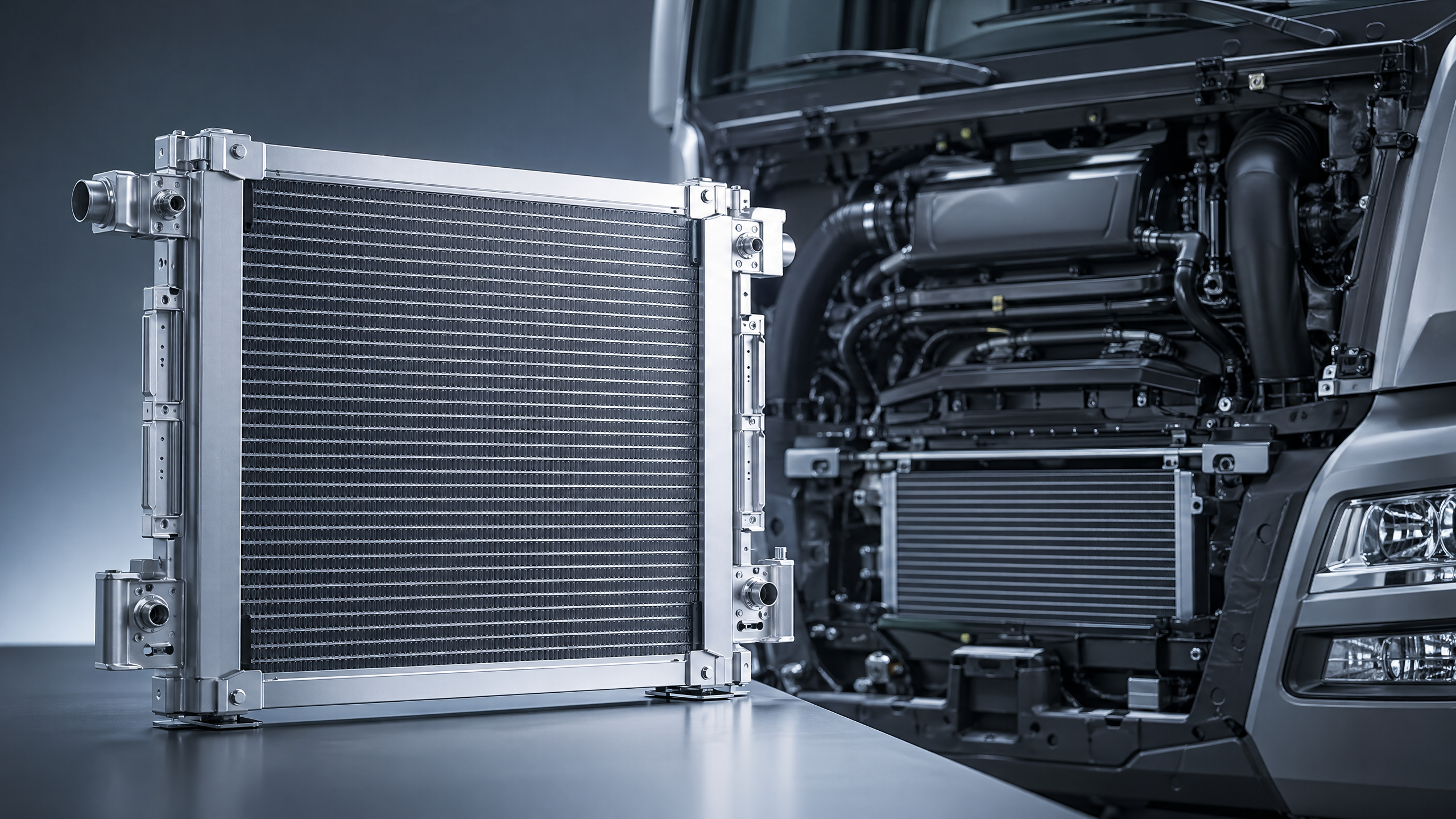
For distributors, dealers, and agents serving the heavy-duty transport market, choosing a reliable radiator for commercial vehicles is critical to long-haul performance, reduced downtime, and customer trust. From heat dissipation efficiency to material strength and manufacturing consistency, the right radiator directly affects vehicle durability and operating costs. This article explores the key features that define dependable cooling solutions for demanding commercial applications.
Why a checklist approach works better for long-haul radiator selection
For the aftermarket and OE-replacement channel, buying a radiator for commercial vehicles is rarely just about matching a part number. Long-haul trucks often run 8 to 14 hours per day, cover thousands of kilometers per week, and face changing loads, road dust, vibration, and high ambient temperatures. A distributor that relies only on catalog appearance or low-price offers may later face returns, repeat claims, and damaged customer confidence.
A checklist-based evaluation helps buyers compare products using practical decision points: cooling capacity, core structure, brazing consistency, leak resistance, material grade, fitment accuracy, and supply stability. This method is especially useful when the same buyer manages multiple fleets, mixed engine platforms, and several regional climate conditions. In many cases, one overlooked detail such as fin density mismatch or poor tank sealing can shorten service life by months rather than years.
For channel partners, this approach also improves communication with end customers. Instead of selling a generic radiator for commercial vehicles, you can explain why one model is more suitable for high-mileage operations, steep-gradient routes, refrigerated logistics, or stop-and-go construction hauling. That level of clarity supports stronger quotations, better stock planning, and fewer disputes after installation.
The first points to confirm before quoting
- Vehicle operating pattern: average daily distance, engine load cycle, idle time, and terrain profile.
- Cooling system configuration: engine type, intercooler layout, fan shroud dimensions, hose connection direction, and mounting points.
- Thermal environment: typical ambient range such as -10°C to 45°C, dust exposure, humidity, and traffic density.
- Service expectation: whether the buyer needs standard replacement, reinforced durability, or fleet-level preventive stocking.
When these four points are clarified early, a distributor can reduce mismatch risk and quote a more reliable radiator for commercial vehicles with better confidence on performance and delivery.
Core checklist: what makes a radiator dependable on long-haul routes
The most reliable radiator for commercial vehicles combines heat transfer efficiency with structural durability. In long-haul use, both matter equally. A radiator that cools well in short tests but weakens under vibration, thermal cycling, or pressure fluctuation can still create expensive field failures. The checklist below highlights the key evaluation points distributors should review before adding a model to inventory.
These criteria are especially important in markets where vehicles may operate continuously for 200,000 to 400,000 kilometers before major cooling-system service. At that duty level, even small differences in tube design, fin bonding, or sealing quality become commercially significant.
Primary judging standards
Use this table as a practical screening tool when comparing suppliers or product lines for long-haul applications.
The table shows that a dependable radiator for commercial vehicles is not defined by one specification alone. Buyers should assess the complete relationship between cooling performance, mechanical stability, and installation accuracy. If one area is weak, the product may still fail under real fleet conditions.
Operational checklist for channel buyers
- Confirm whether the radiator is intended for standard highway use, mixed logistics, or heavy-load duty with frequent thermal stress.
- Ask for dimensional drawings or fitment references before stocking more than 20 to 50 units.
- Check whether pressure and leakage testing are part of regular factory process control.
- Review packaging strength for export handling, especially if sea freight transit takes 20 to 45 days.
This process helps reduce avoidable costs not only in product failure, but also in claims handling, warehouse damage, and delayed customer installation.
How to judge suitability by route, fleet type, and cooling demand
Not every radiator for commercial vehicles should be evaluated the same way. Long-distance transport fleets, mining support trucks, urban delivery vehicles, and specialty energy platforms generate different heat loads and service patterns. A dealer who understands these use-case differences can recommend more suitable inventory and avoid pushing one universal solution into every application.
For example, trucks running stable highway speeds may prioritize cooling efficiency and low airflow resistance, while vehicles in dusty or stop-start environments may need stronger fouling resistance and easier maintenance access. In high-temperature regions above 35°C, cooling margin becomes more important than in temperate routes where average running temperatures remain moderate for most of the year.
The same logic applies to mixed portfolios. Some distributors support not only heavy trucks but also passenger-derived premium platforms and new energy thermal systems. In those cases, product matching becomes more detailed and application-specific.
Scenario-based selection guide
The following comparison can help buyers decide what to emphasize when selecting stock for different customer segments.
One example in this broader category is Radiator for Hongqi, designed for Hongqi-compatible applications including luxury engines, new energy systems, H series sedans, and HS luxury SUVs. With OE NO. 1301010HA01, model EQM5, universal specification, and a 6-month warranty, this type of product highlights how compatibility, quiet efficiency, and long-term reliability matter when the vehicle platform differs from heavy truck use but still requires disciplined thermal management.
Useful scenario questions to ask customers
- What is the average payload and how often does the vehicle operate near full load?
- Is the vehicle running mostly at highway speed, in city traffic, or in off-road construction support?
- Does the operator need direct replacement stock, upgraded durability, or a thermal solution for a newer energy system?
- How quickly is the customer expecting supply, such as same-week dispatch, 15-day replenishment, or scheduled bulk delivery?
These questions help channel partners recommend the right radiator for commercial vehicles while also identifying adjacent demand for intercoolers, water tanks, or full cooling modules.
Commonly missed risks that lead to returns, downtime, and margin loss
Many product complaints are not caused by obvious defects. They often result from details that were never checked during sourcing. For distributors, the biggest risk is assuming that visual similarity means functional equivalence. Two radiators may look close in size, yet differ in internal tube structure, fin arrangement, pressure tolerance, or mounting stress behavior.
Another frequent issue is overlooking the total installed environment. Fan condition, coolant cleanliness, hose aging, and system pressure caps all affect cooling performance. If a radiator for commercial vehicles is sold without verifying these surrounding components, a healthy unit may be blamed for system-level problems after only 2 to 8 weeks of use.
Supply-chain inconsistency is also a hidden cost. A good sample is not enough if batch-to-batch production shifts over time. This is why experienced buyers review manufacturing stability, packaging discipline, and traceability practices alongside technical specifications.
Risk reminders for inventory and aftersales teams
- Do not approve bulk orders only from sample appearance; ask for repeated production consistency.
- Check inlet and outlet orientation carefully, because small angle differences can increase installation stress.
- Review carton protection and pallet stability if the goods will pass through multiple warehouses or long export transit.
- Prepare clear claim-handling records, including installation date, route type, coolant condition, and photos of surrounding components.
A structured claim record often reveals whether the issue comes from product weakness, misuse, poor installation, or broader cooling-system neglect. That distinction protects distributor margins and improves future sourcing decisions.
Practical sourcing checklist: what distributors should verify with the manufacturer
Before committing to a long-term radiator supply program, distributors should evaluate not only the product but also the manufacturer’s operating capability. Liaocheng Xinde Auto Parts Co., Ltd., established in 2018 with registered capital of 5 million RMB and total investment of 50 million RMB, focuses on the research, production, and global sales of water tank radiators, intercoolers, construction machinery radiators, related heavy truck components, and new energy radiator modules. For channel buyers, this type of specialization matters because it usually supports broader platform understanding and more practical communication.
A manufacturer with dedicated experience in cooling components is better positioned to discuss application matching, core structure preferences, and recurring field issues. This is especially useful when you need support across several product categories rather than one isolated SKU. In a procurement cycle of 30 to 90 days, responsive technical communication can be as important as base price.
The checklist below can guide supplier discussions before sample approval, stocking decisions, or regional distribution cooperation.
Manufacturer evaluation checklist
When these points are verified, buyers can source a radiator for commercial vehicles with stronger control over quality, communication, and delivery risk. This is particularly important when planning repeat orders, exclusive regional distribution, or multi-model stocking strategies.
Execution tips before placing a bulk order
- Start with a sample or pilot batch and document installation results across at least 2 or 3 application cases.
- Confirm lead times for both standard stock and non-standard requests before offering delivery promises to customers.
- Align packaging, labeling, and part identification to reduce warehouse confusion and aftersales errors.
- Discuss warranty handling, replacement process, and technical response timing in advance.
These steps help transform product sourcing into a more stable business program instead of a price-driven transaction with uncertain follow-up cost.
Why choose us and what to discuss next
For distributors, dealers, and agents, the ideal supply partner should offer more than a catalog. You need practical support in selecting the right radiator for commercial vehicles, understanding route-specific thermal demands, and managing supply reliability over time. Our business focuses on water tank radiators, intercoolers, construction machinery radiators, heavy truck components, and new energy radiator modules, which allows us to support buyers serving multiple vehicle segments.
We understand that purchasing decisions are often driven by a combination of fitment accuracy, operating durability, lead-time control, and claim reduction. That is why discussions should begin with real project details: vehicle model, OE reference, operating temperature range, road condition, annual mileage, target order volume, and required delivery window. Even a 10-day difference in replenishment planning can affect stock pressure and customer response time.
If you are evaluating new suppliers or expanding your cooling parts portfolio, contact us with your parameter list and sourcing goals. We can help you confirm product selection, application matching, delivery cycle, sample support, quotation details, and possible customization direction. If needed, you can also share specific platform requirements, including premium applications such as Radiator for Hongqi, so that the discussion starts from fitment and performance rather than from guesswork.