



What Makes a Radiator Suitable for Harsh Climates
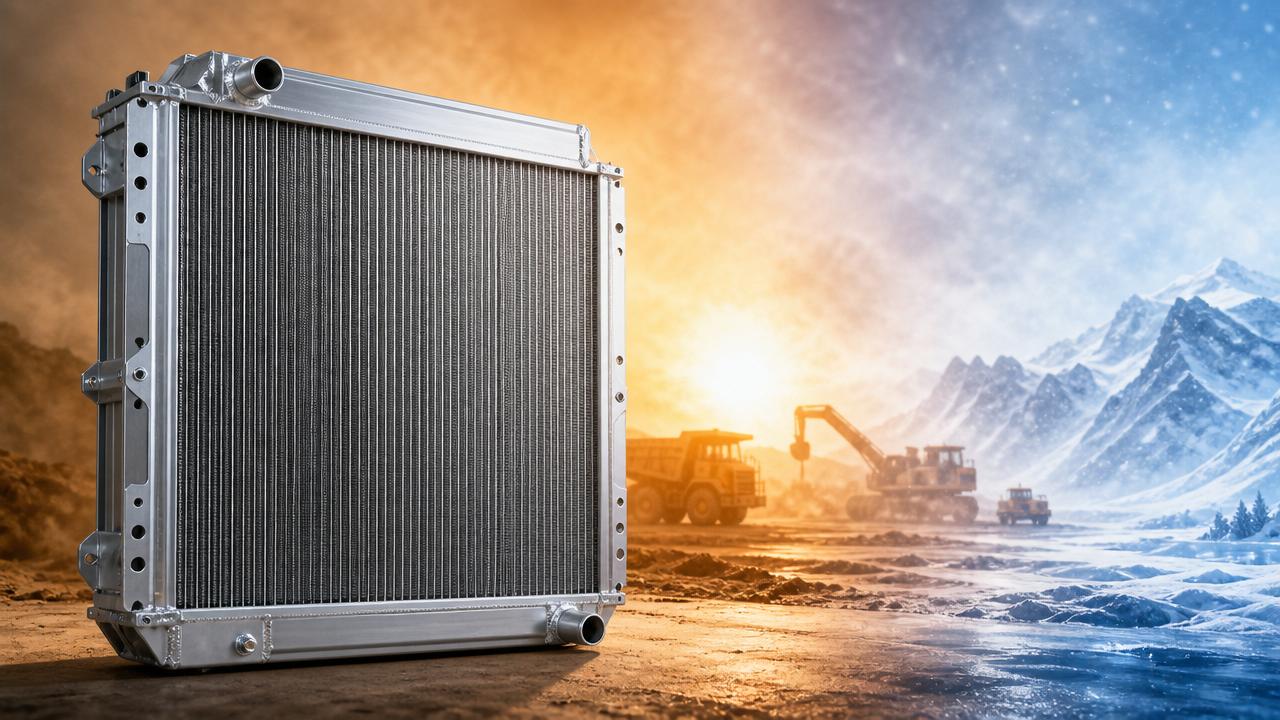
For project managers operating heavy trucks, construction machinery, or new energy fleets in extreme heat, freezing cold, dust, and high-load conditions, choosing the right Radiator is critical to uptime, safety, and lifecycle cost control. A radiator suitable for harsh climates must deliver stable cooling performance, corrosion resistance, structural durability, and easy maintenance under continuous stress. This article explores the key features that define climate-ready radiator solutions and how reliable component selection can help reduce downtime, protect engines, and improve project efficiency in demanding environments.
Why harsh climates change the Radiator selection standard
A standard Radiator may perform acceptably in moderate conditions, but harsh climates expose every weakness in materials, welding, airflow, coolant passages, and mounting stability.
For engineering projects, the issue is not only temperature. Dust, vibration, altitude, long idle time, stop-start loading, and corrosive environments all affect thermal reliability.
The real operational risks
- Engine overheating can stop a vehicle during a critical lifting, hauling, or transport operation, increasing labor and equipment standby costs.
- Poor corrosion resistance may cause leakage, pressure loss, and coolant contamination before the expected maintenance cycle is reached.
- Insufficient structural strength can lead to tube cracking or tank deformation under vibration from mining, road building, or off-road logistics.
- Low maintainability increases cleaning time when dust, mud, leaves, or debris block the fin area and reduce heat exchange efficiency.
For project managers, a suitable Radiator is therefore a risk-control component. It protects operating schedules, fuel efficiency, engine life, and contract delivery commitments.
Which climate conditions are hardest on a Radiator?
Different climates create different failure patterns. Before procurement, managers should connect the Radiator specification with the actual worksite profile, not only the vehicle model.
This comparison shows why a Radiator decision cannot rely on price alone. The best choice is the one aligned with climate, duty cycle, and service access.
Technical features that define a climate-ready Radiator
A Radiator for heavy-duty or new energy applications should be evaluated through measurable engineering factors rather than general appearance or supplier claims.
Core structure and heat transfer capacity
Core design determines how effectively coolant heat transfers to air. Tube size, fin density, flow distribution, and brazing consistency all influence cooling stability.
In dusty environments, extremely dense fins may trap debris faster. In hot climates, insufficient fin area may cause temperature rise during peak load.
Material selection and corrosion resistance
Aluminum structures are common because they balance thermal conductivity and weight. However, material grade, surface treatment, and joining quality still matter greatly.
For coastal projects, construction sites with chemical exposure, or fleets using mixed coolant quality, corrosion resistance should be reviewed before bulk purchasing.
Pressure tolerance and vibration durability
Harsh climates often combine with harsh roads. A suitable Radiator must withstand pressure fluctuation and vibration without cracking at tubes, brackets, or tank joints.
- Check whether the mounting points match the vehicle frame and allow stable installation without forced alignment.
- Review whether welding and brazing areas are clean, consistent, and suitable for long-term pressure cycling.
- Confirm that the Radiator works with the fan, shroud, intercooler, and surrounding modules without airflow conflict.
Procurement checklist for project managers and engineering teams
Radiator procurement becomes easier when the evaluation is converted into a practical checklist. The following table supports technical and commercial decision-making.
A checklist helps avoid fragmented purchasing. It also gives technical teams, procurement departments, and site managers a shared basis for approval.
Application scenarios: from heavy trucks to new energy systems
A climate-ready Radiator is not limited to one type of vehicle. Different equipment categories require different cooling priorities and installation considerations.
Heavy trucks and logistics fleets
Long-distance trucks face heat accumulation during sustained highway operation, uphill loading, and traffic congestion. Stable coolant temperature supports fuel economy and engine protection.
Construction machinery and off-road equipment
Excavators, loaders, and cranes work near dust, mud, and vibration. Their Radiator systems need strong frames, cleanable cores, and reliable leakage control.
New energy radiator modules
New energy vehicles and electric systems require controlled temperatures for motors, batteries, and electronic modules. Cooling stability directly affects efficiency and service life.
For passenger and new energy platforms, a product such as Radiator for Hongqi may be considered when Hongqi compatibility is required.
Its listed information includes EQM5 application, OE NO. 1301010HA01, universal specification, and a six-month warranty for compatible replacement planning.
Cost control: cheapest Radiator or best lifecycle value?
Budget pressure is real, especially when a project runs multiple vehicles. However, the lowest initial price may increase total operating cost.
A Radiator failure can create towing expenses, emergency labor, missed production time, and secondary engine damage. These costs often exceed part savings.
For engineering projects, lifecycle value is usually the stronger decision metric. The correct Radiator reduces unplanned stops and supports predictable maintenance windows.
Common mistakes when buying a Radiator for harsh environments
Many project teams only replace parts after failure. A better approach is to identify risk factors before the equipment enters extreme operating conditions.
- Selecting only by appearance, without checking OE reference, mounting point, pipe position, and coolant system compatibility.
- Ignoring airflow around the Radiator, especially when additional guards, hydraulic coolers, or intercoolers are installed nearby.
- Using coolant without proper maintenance discipline, which may accelerate corrosion, scaling, and internal blockage.
- Failing to keep replacement units in stock for critical machines working in remote or schedule-sensitive projects.
These mistakes are avoidable. Clear specifications, supplier communication, and preventive maintenance usually cost less than emergency repair under project pressure.
Supplier capability: what should engineering buyers verify?
A Radiator supplier should be assessed not only by catalog coverage, but also by manufacturing focus, technical response, and ability to support repeated orders.
Liaocheng Xinde Auto Parts Co., Ltd. was established in 2018 with registered capital of 5 million RMB and total investment of 50 million RMB.
The company specializes in research, production, and global sales of water tank radiators, intercoolers, construction machinery radiators, and new energy radiator modules.
Its development has been supported by honors such as High-tech Enterprise, Civilized and Honest Enterprise, and Trustworthy Unit for Consumers at provincial and municipal levels.
Questions worth asking before cooperation
- Can the supplier confirm the Radiator model according to vehicle platform, OE number, photos, drawings, or installation details?
- Can they support heavy truck, construction machinery, and new energy cooling requirements under different duty cycles?
- Can sample evaluation, packing requirements, delivery planning, and replacement part communication be handled before bulk ordering?
FAQ: practical Radiator questions from project teams
How do I know if a Radiator is suitable for extreme heat?
Check the core size, fin condition, coolant flow path, fan compatibility, and operating temperature history. Also review whether the vehicle regularly hauls heavy loads.
Is a larger Radiator always better?
Not always. A larger unit may not fit the space, match airflow, or connect properly. Correct engineering compatibility is more important than size alone.
What should be checked before bulk procurement?
Confirm model, OE number, installation layout, warranty terms, packing needs, expected delivery schedule, and whether samples are needed for installation verification.
How often should radiators be cleaned in dusty sites?
Cleaning frequency depends on dust density and working hours. Site teams should inspect fin blockage regularly and clean before temperature trends become abnormal.
Why choose us for climate-ready Radiator sourcing?
For project managers, the right Radiator supplier should help reduce uncertainty from model confirmation to delivery, rather than simply offering a part number.
Liaocheng Xinde Auto Parts Co., Ltd. supports cooling component needs for heavy trucks, construction machinery, and new energy systems with focused manufacturing experience.
If your project faces extreme heat, freezing weather, dusty jobsites, or high-load operating cycles, you can consult us for parameter confirmation and product selection.
Our team can discuss OE reference matching, custom requirements, sample support, delivery cycle planning, certification-related documentation needs, and quotation details for fleet procurement.
Choosing a suitable Radiator is a practical way to protect equipment uptime. Early technical communication can prevent costly mistakes before the project starts.