



Radiator Selection Tips for Heavy-Duty Vehicles
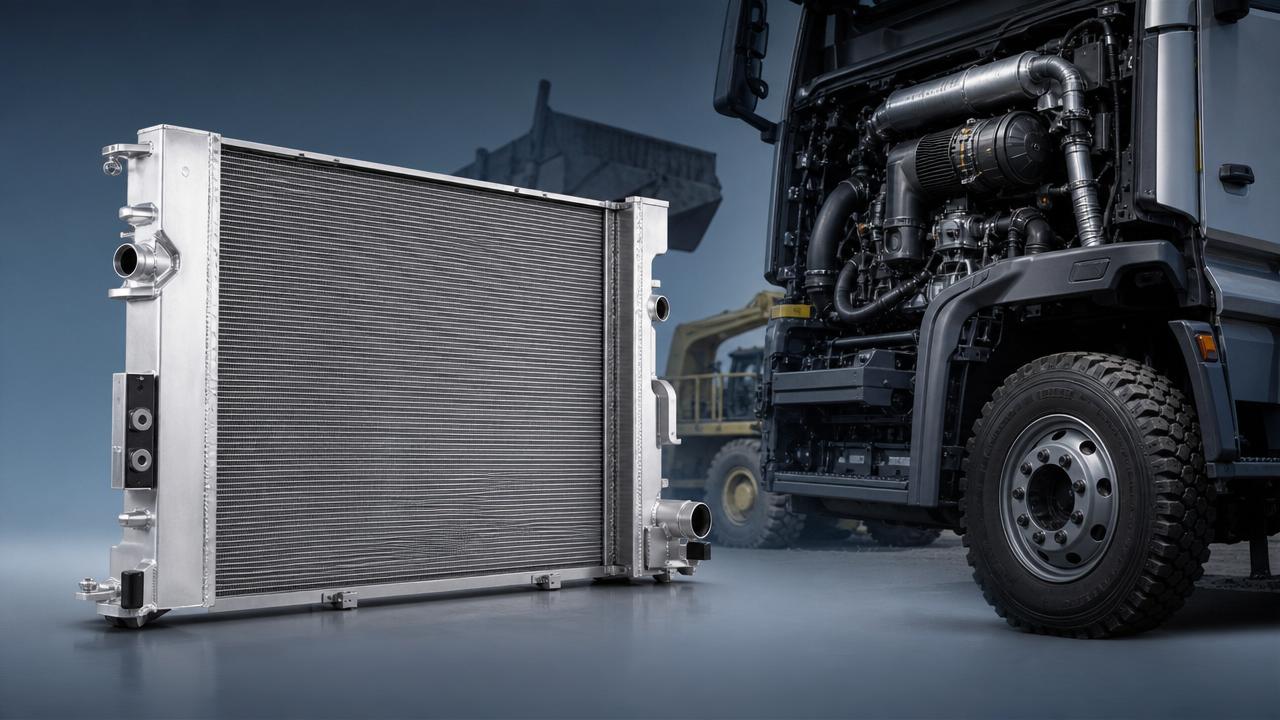
Choosing the right Radiator is essential for keeping heavy-duty vehicles running safely, efficiently, and with less downtime. For drivers, operators, and fleet users working under high loads, long hours, or harsh road conditions, a dependable cooling system helps protect the engine from overheating and costly damage. This guide explains practical Radiator selection tips, from matching vehicle specifications to evaluating material quality, cooling performance, and supplier reliability.
In heavy trucks, construction machinery, and long-haul vehicles, the cooling system is not a small accessory. It is a working component that must handle heat, vibration, dust, pressure changes, and long operating cycles that may last 8–12 hours per shift.
For operators, a poor Radiator choice often becomes visible only after coolant loss, high temperature alarms, reduced engine power, or unexpected roadside maintenance. Selecting correctly at the beginning is far cheaper than replacing damaged engine parts later.
Understand the Vehicle Duty Cycle Before Selecting a Radiator
A Radiator should be selected according to how the vehicle actually works, not only by appearance or installation size. Two trucks with similar engines may need different cooling capacity if their loads, roads, and climates are different.
Match cooling demand to real operating conditions
Heavy-duty vehicles often operate in 3 demanding environments: stop-and-go urban hauling, high-speed long-distance transport, and low-speed high-load construction sites. Each environment creates a different heat pattern.
For example, a dump truck working at low speed with frequent lifting cycles may have limited airflow through the front grille. In this case, core efficiency and fan matching become more important than simple size comparison.
Key application questions for operators
- Does the vehicle work more than 10 hours per day under high load?
- Is the normal road environment dusty, muddy, or at high altitude?
- Does the temperature gauge rise during climbing, towing, or idling?
- Has the vehicle had 2 or more cooling failures within one maintenance cycle?
These questions help narrow the selection from a general replacement part to a Radiator suited for practical working stress. Operators should record overheating frequency, coolant refill intervals, and operating temperature behavior before purchasing.
The table below shows how different vehicle scenarios influence Radiator selection priorities. It can help users communicate more clearly with suppliers or maintenance teams.
The main conclusion is simple: a Radiator should match the heat load and environment, not just the truck model. When conditions are severe, choosing a slightly more robust design can reduce stoppages across a full service season.
Check Fitment, Core Design, and Material Quality
Correct fitment is the first technical requirement. Even a high-quality Radiator can fail early if mounting points, hose connections, pressure ratings, or fan clearance do not match the original cooling layout.
Verify dimensions and connection points
Operators should check at least 6 basic items before ordering: overall size, core thickness, inlet diameter, outlet diameter, mounting bracket position, and cap or expansion tank compatibility.
Small errors matter. A 5 mm bracket mismatch may create stress during installation, while an incorrect hose angle can cause rubbing, leakage, or coolant flow restriction after several thousand kilometers.
Evaluate core structure and heat transfer ability
The Radiator core is where heat exchange happens. Tube design, fin spacing, brazing quality, and coolant passage uniformity all affect how quickly engine heat moves into the air stream.
In dusty areas, extremely tight fin spacing may trap dirt faster. In long-haul use, a balanced fin design can provide stable cooling while remaining easier to clean during routine maintenance every 15–30 days.
Material considerations
Aluminum cores are widely used because they balance heat transfer and weight. Copper-brass structures may still appear in certain applications, but weight, repair method, and cost must be considered.
Tank material also matters. Plastic tanks should be inspected for heat resistance and sealing stability, while metal tanks are often preferred where mechanical impact or repeated pressure cycles are common.
For turbocharged heavy-duty vehicles, operators should also consider surrounding cooling components. A suitable Intercooler for Mercedes-Benz can support intake air temperature control, helping the full thermal system work more efficiently.
Compare Cooling Performance, Pressure Resistance, and Durability
A reliable Radiator must manage temperature under pressure, not only during light-load testing. Operators should ask whether the product has passed leakage, pressure, and vibration checks appropriate for heavy-duty use.
Pressure and leakage performance
Typical cooling systems in heavy vehicles may operate around 0.9–1.5 bar, depending on engine design and cap rating. A replacement Radiator should safely support the specified pressure range.
Leakage usually starts at weak points: welded joints, tube-to-header connections, plastic tank seals, and drain plugs. Inspecting these areas before installation can prevent repeat disassembly and labor waste.
Durability under vibration and contamination
Heavy trucks create constant vibration from road impact, engine movement, and chassis flex. A Radiator with poor reinforcement may crack near brackets after 3–6 months of harsh operation.
Contamination is another hidden risk. Mud, insects, oil mist, and mineral deposits reduce heat transfer. Even a correctly selected Radiator can overheat if the front surface is not cleaned regularly.
The following table outlines practical performance checks that operators can use during purchase, installation, and early operation. These checks do not require laboratory equipment but greatly improve decision quality.
The key point is to treat the Radiator as a pressure-bearing thermal component. Checking appearance alone is not enough; installation fit, airflow, coolant flow, and vibration control must be reviewed together.
Avoid Common Radiator Selection Mistakes
Many cooling failures are not caused by a single defective part. They often come from a mismatch between vehicle demand, part specification, installation practice, and maintenance habits.
Mistake 1: choosing only by the lowest price
A low-cost Radiator may appear attractive for one repair, but a premature failure can cost more through towing, lost working hours, coolant loss, and repeat labor.
For fleet users, even 1 day of downtime can affect delivery schedules or construction progress. Selection should compare total operating cost over 6–12 months, not just the invoice price.
Mistake 2: ignoring the rest of the cooling system
Replacing the Radiator without checking the thermostat, water pump, fan clutch, coolant quality, and hoses may not solve overheating. A blocked hose or weak fan can still cause high temperature alarms.
Operators should inspect 5 related parts during Radiator replacement: upper hose, lower hose, fan operation, coolant cap, and expansion tank. This simple checklist reduces repeated workshop visits.
Mistake 3: using water instead of proper coolant
Plain water increases corrosion, scaling, and freezing risk. A suitable coolant mixture helps control boiling point, corrosion protection, and temperature stability across seasonal changes.
In many operating regions, coolant condition should be checked every 10,000–20,000 km or according to the maintenance schedule. Color change, oil contamination, or sediment requires immediate attention.
Simple operator checklist before purchase
- Confirm vehicle model, engine type, and original part reference when available.
- Measure the existing Radiator and take photos of brackets and hose positions.
- Describe daily load, climate, road dust level, and typical working hours.
- Ask about pressure testing, packaging protection, and after-sales support.
- Plan installation with coolant replacement and system bleeding.
Following these 5 steps helps operators turn a purchase into a complete cooling repair. It also gives suppliers enough information to recommend the correct Radiator more accurately.
Choose a Supplier With Manufacturing and Support Capability
For heavy-duty vehicle users, supplier reliability matters as much as product structure. A stable supplier can help with model matching, technical communication, packaging, delivery, and replacement planning.
Why manufacturer background matters
Liaocheng Xinde Auto Parts Co., Ltd. was established in 2018 with registered capital of 5 million RMB and total investment of 50 million RMB.
The company focuses on research, production, and global sales of water tank radiators, intercoolers, construction machinery radiators, and related heavy truck cooling components.
Its product direction also includes new energy radiator modules, which reflects the market shift toward integrated thermal management for commercial vehicles and machinery.
Since its establishment, the company has developed rapidly and has received provincial and municipal honors including High-tech Enterprise, Civilized and Honest Enterprise, and Trustworthy Unit for Consumers.
Supplier questions operators should ask
- Can the supplier confirm compatibility using photos, measurements, or part references?
- What packaging method protects fins, tanks, and brackets during long-distance transport?
- Is there a clear response process if leakage or fitment issues appear after installation?
- Can the supplier support mixed orders of Radiator, intercooler, and related cooling parts?
These questions are practical for users and fleet teams. They also help reduce procurement risk when purchasing parts for 5, 20, or even more vehicles across different applications.
Installation and Maintenance Tips for Longer Service Life
Even a correctly selected Radiator needs proper installation and maintenance. Most early failures can be reduced by careful handling, clean coolant, correct bleeding, and regular inspection.
Installation practices that reduce early failure
Before installation, flush the cooling system if old coolant shows rust, sludge, or oil contamination. Installing a new Radiator into a dirty system can block passages quickly.
During installation, avoid forcing brackets into place. Mounting stress may not leak immediately, but it can create cracks after repeated vibration over 2–4 weeks of work.
Maintenance intervals for operators
- Check coolant level before every long shift or long-distance trip.
- Inspect visible hoses, clamps, and tank seams every 7–15 days.
- Clean the front core surface every 15–30 days in dusty environments.
- Monitor temperature gauge behavior after heavy climbing or extended idling.
Operators should never ignore small coolant loss. A slow leak of only a few hundred milliliters per day can become a serious overheating event under full load.
For fleets, maintenance records are valuable. Tracking Radiator replacement date, coolant type, mileage, and failure symptoms helps identify whether issues come from parts, installation, or operating conditions.
Practical Buying Advice for Heavy-Duty Vehicle Users
The best Radiator is not always the largest or the most expensive one. It is the part that fits correctly, cools reliably, withstands pressure, and is supported by a responsible supplier.
Operators should focus on 4 decision factors: vehicle compatibility, thermal performance, structural durability, and service support. When these factors are clear, purchasing decisions become faster and safer.
When to replace instead of repair
Minor external blockage or loose clamps may be fixed through cleaning or tightening. However, repeated leakage, damaged core tubes, cracked tanks, or severe corrosion usually require replacement.
If the same Radiator has been repaired 2–3 times within a short period, replacement is often more practical. Repeated repairs may hide deeper fatigue in the core or tank structure.
How to communicate with a supplier
Provide clear photos from the front, side, top, mounting points, and hose connections. Add measurements and vehicle operating details to reduce the chance of receiving an unsuitable part.
For heavy trucks and machinery working in harsh conditions, discuss reinforced structures, cleaning access, and packaging protection. These details can influence real service life more than catalog descriptions.
Choosing the right Radiator protects engine performance, supports safe operation, and reduces downtime for drivers, operators, and fleet users. The selection process should combine vehicle data, working conditions, material quality, and supplier capability.
Liaocheng Xinde Auto Parts Co., Ltd. provides cooling system components for heavy trucks, construction machinery, and new energy applications. For model matching, technical details, or a customized cooling solution, contact us to discuss your vehicle requirements and operating conditions.