



Radiator Quality Checks Before Bulk Orders
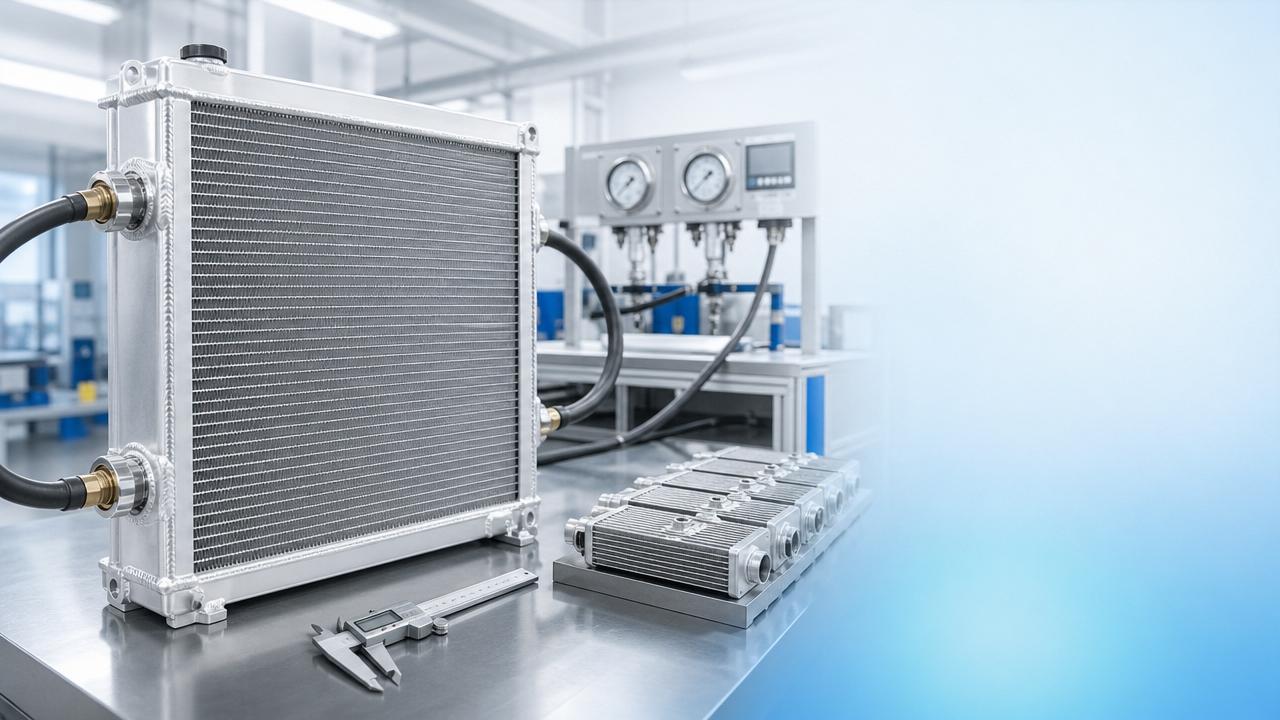
Before placing a bulk order, every Radiator must be evaluated with the same discipline applied to safety-critical components.
Small defects in materials, welding, pressure resistance, or heat dissipation can cause costly failures, downtime, and compliance risks.
This guide outlines Radiator quality checks that verify supplier reliability, product consistency, and long-term performance before mass procurement.
Radiator Quality Is Becoming a Strategic Order Decision
The Radiator market is moving from simple replacement demand to performance-driven selection across heavy trucks and new energy platforms.
Fleet uptime, emission pressure, higher engine loads, and thermal management upgrades are changing how bulk orders are evaluated.
A Radiator is no longer judged only by size, price, and installation fit. Its internal consistency now carries greater value.
The clearest trend is stricter verification before volume release. Buyers increasingly require proof, not only supplier promises.
Trend Signals Showing Why Pre-Order Checks Are Rising
Several signals show why Radiator inspection is becoming more structured before bulk production begins.
- Heavy-duty engines operate under higher thermal stress and longer working cycles.
- Construction machinery requires stable cooling in dust, vibration, and high-load environments.
- New energy radiator modules demand cleaner assembly and tighter leakage control.
- International aftersales markets expect interchangeable parts with reliable dimensional accuracy.
- Warranty claims are becoming more traceable through batch records and test data.
These signals mean each Radiator batch must prove repeatability before it reaches service environments.
Key Drivers Behind Stricter Radiator Verification
Quality checks are increasing because the cost of failure is rising faster than the cost of inspection.
Material Checks Decide the Foundation of Radiator Reliability
Material inspection should begin before any Radiator sample is accepted as a bulk order reference.
Aluminum strip, tubes, fins, tanks, gaskets, and brackets must match the agreed technical specification.
Material thickness variation can reduce pressure resistance. Poor alloy control can weaken brazing and corrosion performance.
For a heavy truck Radiator, even small deviations may shorten life under vibration and thermal cycling.
- Confirm alloy grade and supplier certificates.
- Measure tube wall thickness and fin thickness.
- Check tank material strength and surface quality.
- Verify gasket hardness and coolant resistance.
Dimensional Accuracy Is Becoming More Critical
A Radiator can pass pressure testing yet still fail in assembly if dimensions drift during production.
Mounting holes, inlet position, outlet position, core thickness, and bracket alignment require strict measurement.
Fitment checks are especially important for replacement parts supplied to international vehicle applications.
For example, XD92108 radiator for international supports reference models such as oem 238704, 3S012484, 3S013471, and 2601807C91.
Such model-linked parts should be checked against mounting drawings and vehicle-side installation requirements.
Welding and Brazing Quality Reveal Process Maturity
Welding and brazing determine whether a Radiator can survive pressure, vibration, and repeated thermal expansion.
Visual inspection should identify cracks, uneven seams, burnt areas, excessive filler, and incomplete bonding.
A stable Radiator supplier should maintain controlled furnace temperature, fixture accuracy, and operator process discipline.
- Check tube-to-header bonding consistency.
- Inspect tank joints and side plate seams.
- Review brazing furnace records when available.
- Confirm repair procedures do not hide systemic defects.
A single good sample is not enough. Process repeatability must be visible across multiple units.
Pressure and Leakage Testing Should Be Non-Negotiable
Every bulk Radiator program should define pressure testing before shipment approval.
Leakage may appear at joints, tubes, tanks, drain plugs, or gasket contact areas.
Testing pressure should reflect application requirements rather than a generic factory habit.
For heavy trucks and construction machinery, vibration and pressure pulsation require a conservative inspection approach.
Heat Dissipation Testing Links Quality to Real Performance
A Radiator must do more than hold pressure. It must remove heat efficiently under working conditions.
Fin density, tube arrangement, core depth, airflow resistance, and coolant flow all affect thermal performance.
When bulk orders target demanding routes or machines, heat dissipation verification becomes a performance gate.
Comparative testing against an approved reference Radiator helps detect design shortcuts and production variation.
- Measure coolant-side pressure drop.
- Check airflow-side resistance.
- Compare outlet temperature reduction under load.
- Inspect fin damage after vibration simulation.
Surface Treatment and Corrosion Resistance Affect Lifecycle Cost
Corrosion resistance is becoming a stronger Radiator selection factor as service environments become harsher.
Road salt, humidity, industrial dust, and poor coolant quality can quickly expose weak materials.
Surface inspection should cover coating uniformity, oxidation marks, scratches, blocked fins, and tank contamination.
Salt spray data, coolant compatibility records, and aging tests help judge long-term Radiator durability.
Traceability Is Changing Supplier Evaluation
Modern Radiator orders increasingly require batch traceability from incoming material to final shipment.
Traceability helps isolate problems, reduce recall scope, and support warranty investigation.
A reliable factory should provide production dates, inspection records, operator references, and packaging labels.
Liaocheng Xinde Auto Parts Co., Ltd., established in 2018, focuses on radiators, intercoolers, and related cooling components.
Its product scope covers heavy trucks, construction machinery, and new energy radiator modules for global sales.
Honors such as High-tech Enterprise and Trustworthy Unit for Consumers support its emphasis on manufacturing credibility.
How Quality Gaps Affect Different Business Links
A weak Radiator batch creates impacts beyond the cooling system itself.
- Assembly operations face rework when brackets or ports are misaligned.
- Service channels face higher returns when leakage appears after installation.
- Fleet operations lose uptime when overheating forces unplanned stops.
- Brand reputation declines when repeated Radiator failures appear in the field.
The impact is cumulative. One defect mode can spread into logistics, warranty, and customer confidence.
Core Checkpoints Before Releasing a Bulk Radiator Order
A practical pre-order review should combine documents, samples, testing, and factory process evidence.
- Confirm drawings, application references, and model compatibility.
- Approve material specifications and supplier certificates.
- Inspect sample dimensions against tolerance requirements.
- Review welding, brazing, and assembly process controls.
- Require pressure, leakage, and selected performance test records.
- Check packaging strength for long-distance transport.
- Define batch sampling rules before mass shipment.
A Response Framework for Safer Bulk Decisions
The next step is not only finding a low-risk Radiator. It is building a repeatable approval method.
Final Judgment Before Bulk Procurement
A Radiator supplier should be judged by consistency, not only by one attractive sample.
Strong checks reduce overheating risk, leakage claims, shipment disputes, and hidden lifecycle costs.
Bulk order confidence improves when material control, dimensional accuracy, pressure safety, and heat dissipation data align.
Before confirming a Radiator order, request sample validation, batch inspection standards, and traceable test records.
This disciplined approach turns cooling component procurement into a measurable quality decision.