



What Makes a Radiator Module Easier to Service in the Field
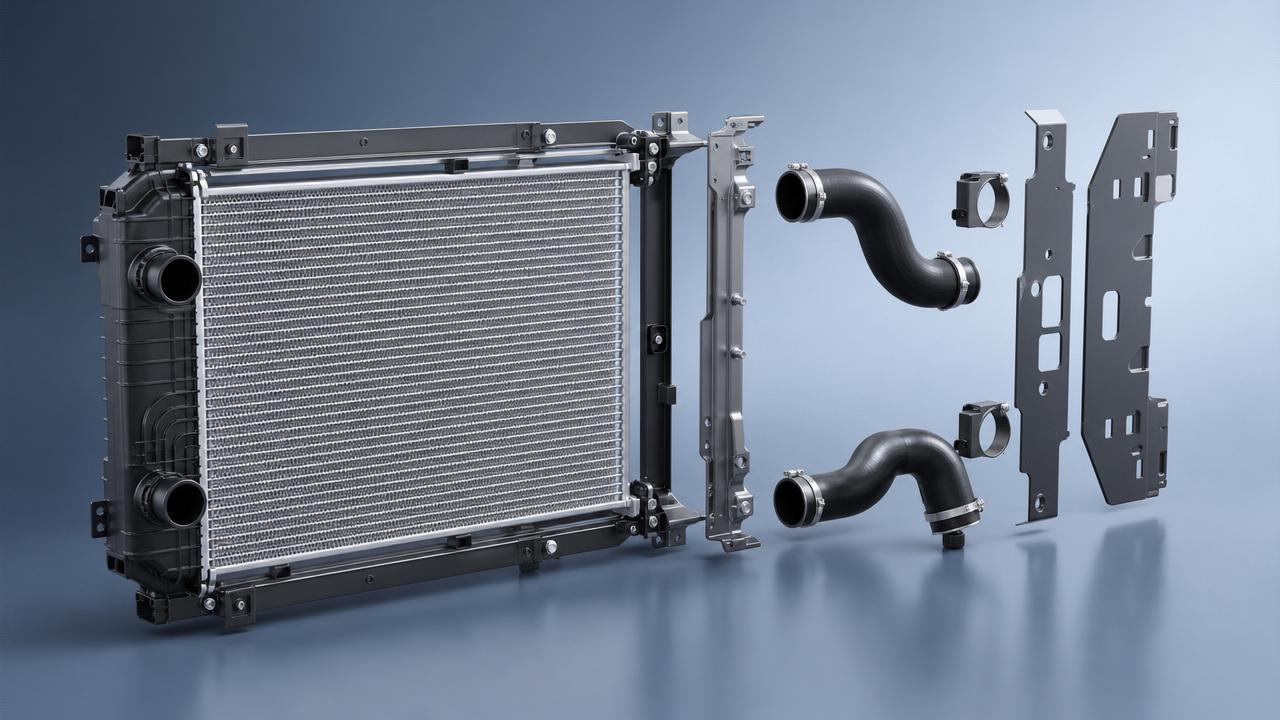
For aftermarket maintenance teams, a radiator module that is easy to service in the field can reduce downtime, simplify repairs, and improve equipment reliability. From accessible core components to durable connections and modular design, the right radiator module helps technicians work faster under real operating conditions. Understanding these service-friendly features is key to choosing parts that support long-term performance.
Why does field serviceability matter so much for a radiator module?
For after-sales maintenance personnel, the real test of a radiator module is not only cooling efficiency. It is how quickly the unit can be inspected, removed, repaired, and returned to work on a roadside truck, a construction machine, or a fleet vehicle under schedule pressure.
A poorly serviceable radiator module often turns a minor leak, bracket crack, or hose issue into extended downtime. When access points are blocked, mounting hardware is inconsistent, or replacement parts are difficult to match, labor time rises and the risk of installation errors increases.
In the auto parts sector, especially for heavy trucks, machinery, and new energy thermal systems, maintenance teams usually work with tight budgets, uneven operating environments, and urgent delivery expectations. That is why service-friendly design is not a luxury feature. It is a practical purchasing criterion.
- Less disassembly means shorter repair cycles and lower labor cost per intervention.
- Standardized interfaces reduce the chance of fitting mistakes in the field.
- Durable connections help avoid repeat failures after emergency maintenance.
- Modular replacement improves inventory planning for workshops and distributors.
A radiator module that supports fast diagnosis and predictable replacement can improve uptime across an entire fleet. That is the outcome most service teams are really buying.
What features make a radiator module easier to service in the field?
Field serviceability comes from design choices that reduce handling difficulty and improve access. Technicians usually judge a radiator module by what happens after dirt, vibration, heat cycling, and long operating hours begin to affect the assembly.
Accessible service points
Drain plugs, hose joints, and mounting positions should be reachable without removing multiple surrounding components. When the radiator module can be isolated quickly, inspection and partial replacement become much more efficient.
Modular construction
A modular radiator module allows damaged sections or related components to be serviced without replacing the complete assembly in every case. This is useful in fleets where downtime cost can be higher than the part cost itself.
Strong but repair-friendly joints
Service teams need reliable brazed or welded areas, but they also need hose and fitting layouts that do not require special tools for every intervention. The best radiator module balances sealing integrity with practical maintenance access.
Consistent dimensions and fitment
A replacement unit should match original installation conditions closely. Inconsistent thickness, mounting hole alignment, or inlet and outlet positions can turn a standard job into a workshop problem in the field.
Material durability in harsh environments
Road debris, vibration, corrosion, coolant quality issues, and thermal shock all affect a radiator module. Durable materials and stable manufacturing reduce the frequency of field failures and therefore reduce service pressure on maintenance teams.
The table below shows how maintenance teams can evaluate a radiator module from a field-service perspective rather than from cooling capacity alone.
These factors are practical, measurable, and directly linked to downtime. For maintenance buyers, they are often more valuable than broad claims about general quality.
Which service scenarios expose a weak radiator module design?
Some radiator module weaknesses only appear under real maintenance conditions. A unit may perform acceptably in controlled use, but fail repeatedly when vibration, dust, and rushed repairs become part of normal operation.
Heavy truck roadside repairs
Roadside teams need straightforward access. If the radiator module requires excessive teardown or uses awkward connector positions, repair time increases and vehicles remain out of service longer than necessary.
Construction machinery in dusty sites
Construction environments add contamination and vibration. A radiator module with fragile fins, poor bracket stability, or hard-to-clean surfaces becomes more costly to maintain over time.
Fleet workshop preventive maintenance
In fleet maintenance, repeatability matters. Technicians prefer a radiator module that can be inspected and replaced using standard procedures, standard tools, and predictable labor hours.
The comparison below helps identify which design characteristics support field maintenance across different operating environments.
This is why maintenance teams should not evaluate every radiator module with the same checklist. The field conditions shape what “easy to service” really means.
How should maintenance buyers compare radiator module options?
Choosing a radiator module for aftermarket work is rarely just an engineering decision. Buyers must balance fitment risk, stock availability, repair time, and operating cost. In many cases, the lowest purchase price does not produce the lowest maintenance cost.
Look beyond the core
Heat exchange performance matters, but service teams should also inspect tanks, side frames, weld areas, mounting brackets, and neck geometry. Many field failures start at structural or connection points rather than at the cooling core itself.
Check replacement compatibility
A radiator module that appears similar may still create installation delays if size, interface position, or mounting spacing differs. Confirmation of model, application, and key dimensions should happen before order release.
Assess supply support
After-sales teams benefit from suppliers that can respond quickly with parameter confirmation, drawings, production follow-up, and replacement guidance. Support speed can matter as much as product quality during urgent service events.
- Confirm OEM number, application, and dimensional match before procurement.
- Review service access, connection layout, and bracket design with technicians, not only buyers.
- Compare expected downtime cost against unit price differences.
- Ask whether the supplier can support urgent replenishment or sample confirmation.
For example, in MAN applications, maintenance teams may need a replacement unit that matches both installation envelope and service expectations. One reference point can be RADIATOR FOR MAN XD145, associated with OEM 81061016492 and size 590*610 for Man application, where dimensional clarity helps reduce fitment uncertainty during parts verification.
What technical details should be verified before ordering?
A service-friendly radiator module starts with correct technical confirmation. Small mismatches can delay installation, increase leakage risk, or force temporary modifications that reduce reliability later.
The checklist below is useful for aftermarket maintenance personnel who need a practical selection process.
This verification step is especially important when the radiator module will be installed outside a factory workshop, where corrections are slower and more expensive.
How can supplier capability reduce field maintenance risk?
The radiator module itself matters, but supplier capability often determines whether a service event is resolved smoothly. Maintenance teams need clear technical communication, steady production quality, and practical support before and after the sale.
Liaocheng Xinde Auto Parts Co., Ltd., established in 2018 with a registered capital of 5 million RMB and total investment of 50 million RMB, focuses on the research, production, and global sales of water tank radiators, intercoolers, construction machinery radiators, related heavy truck components, and new energy radiator modules.
For aftermarket maintenance personnel, this product focus is relevant because it reflects concentration in thermal system components rather than a broad but shallow catalog. The company’s rapid development and provincial and municipal recognitions such as High-tech Enterprise, Civilized and Honest Enterprise, and Trustworthy Unit for Consumers indicate a structured operating foundation, although buyers should still confirm product details against their own application needs.
- Focused manufacturing scope supports better understanding of radiator module fitment and service conditions.
- Experience with heavy trucks and construction machinery aligns with demanding after-sales environments.
- New energy radiator module involvement supports evolving thermal management requirements.
- Global sales orientation can help buyers who need communication around export supply and cross-market replacement needs.
In practical terms, a capable supplier shortens the path from fault identification to confirmed replacement. That reduces downtime risk for workshops, distributors, and fleet operators.
Common mistakes when selecting a radiator module for aftermarket service
Many replacement problems are preventable. They come from selection shortcuts rather than from unusual technical failures.
Mistake 1: Buying only by price
A low-cost radiator module may still become expensive if installation takes longer, sealing is unstable, or repeat replacement is required. Total service cost includes labor, downtime, coolant loss, and customer disruption.
Mistake 2: Ignoring service access
Some buyers confirm fitment but overlook whether technicians can actually work on the radiator module efficiently once installed. This causes delays during future maintenance events.
Mistake 3: Assuming all replacement parts are dimensionally identical
Even small dimensional deviations can create hose stress, mounting problems, or shroud interference. A radiator module should be checked against actual service conditions, not only against a general model description.
Mistake 4: Skipping communication on lead time and stock plan
For frequently serviced models, stock planning matters. If the radiator module cannot be replenished on time, maintenance teams may be forced to use temporary solutions or delay vehicle release.
FAQ: what do maintenance teams ask most about a radiator module?
How do I know if a radiator module is suitable for field replacement rather than workshop-only service?
Check whether the radiator module has accessible mounting points, clear interface positions, and a layout that allows hose and clamp work with common service tools. Also review whether the unit can be installed without major surrounding disassembly.
What matters more for aftermarket service, cooling performance or installation convenience?
Both matter, but for maintenance teams the better choice is the radiator module that balances required cooling performance with dependable fitment and repair efficiency. Strong performance alone does not help if field installation is slow or failure points repeat.
Should I replace the full radiator module or only damaged connected parts?
That depends on damage location, part availability, and downtime cost. If the core, tanks, or structural joints are compromised, full radiator module replacement is often safer. If the issue is limited to external hoses or clamps, partial repair may be practical.
Which data should I send a supplier to confirm the right radiator module?
Send the OEM number, vehicle or machine application, overall dimensions, photos of connection positions, and any special mounting details. This helps reduce mismatch risk and speeds quotation and delivery confirmation.
Why choose us for radiator module support?
If your team is evaluating a radiator module for heavy truck, construction machinery, or related thermal management service, practical support should start before the purchase order. Liaocheng Xinde Auto Parts Co., Ltd. can support buyers who need focused communication around radiator and intercooler applications, replacement matching, and supply coordination.
You can contact us to discuss specific needs such as parameter confirmation, OEM cross-checking, product selection, delivery timing, sample support, application-based customization, and quotation communication for aftermarket service programs. If you are reviewing MAN-related replacement demand, you may also reference RADIATOR FOR MAN XD145 during your inquiry to speed up fitment discussion.
A field-serviceable radiator module lowers downtime only when the part, the fitment, and the supplier response all work together. That is the standard maintenance teams should expect when selecting replacement cooling components.